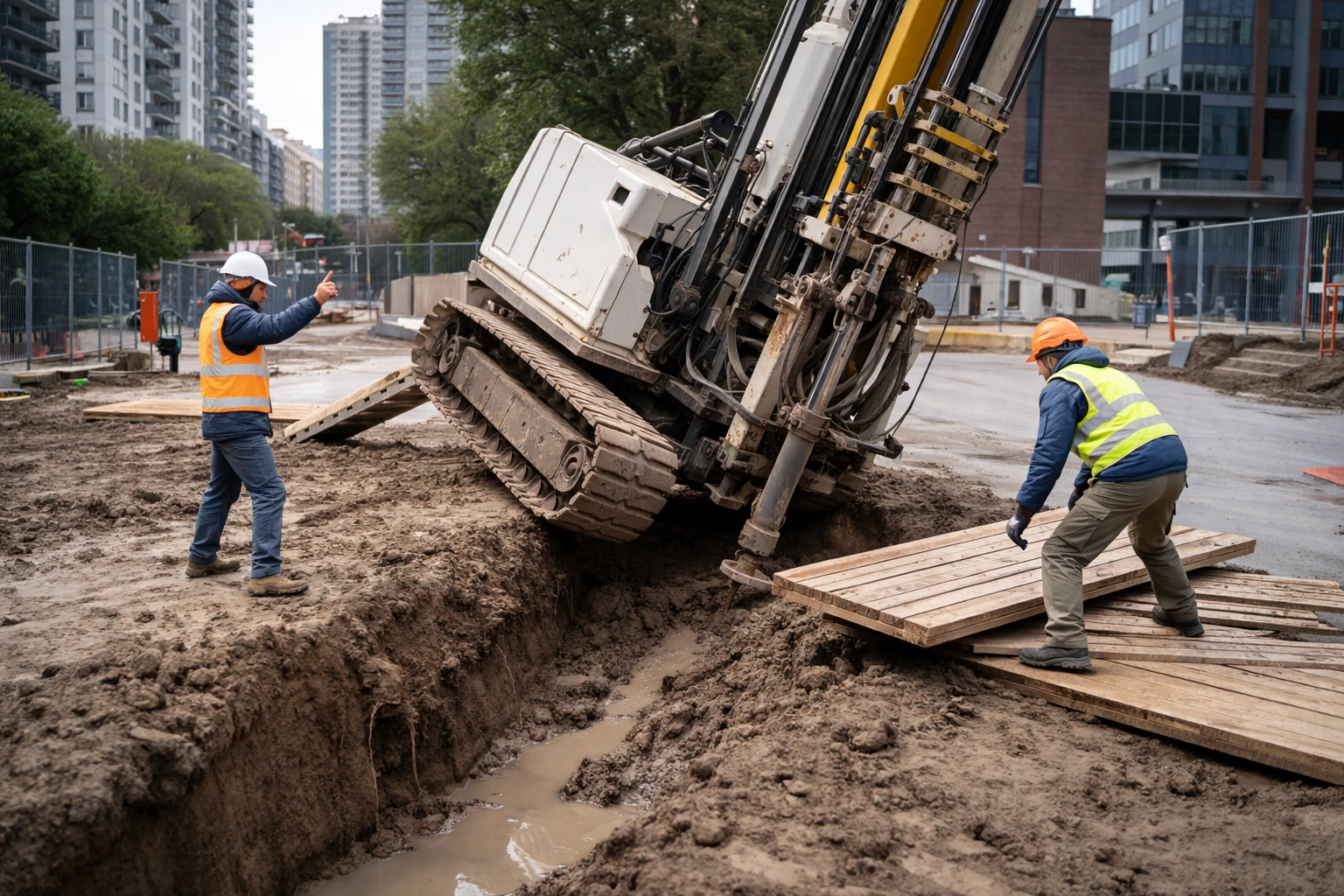
Urban infill and redevelopment projects in NYC and New Jersey present some of the most complex subsurface challenges in the industry. You're not dealing with a virgin greenfield: you're working with decades (sometimes centuries) of disturbance, undocumented fill, abandoned utilities, and soil conditions that have been altered by previous construction.
The stakes are high. A geotechnical investigation mistake on a redevelopment site doesn't just delay your project: it can blow your budget, trigger regulatory scrutiny, and leave you holding the bag on foundation failures that could have been avoided with proper due diligence upfront.
Here's the reality: most of these mistakes are preventable. Let's walk through the most common geotechnical investigation errors we see on redevelopment sites and how to avoid them.
Mistake #1: Conducting an Inadequate Site Investigation
This is the big one. Insufficient investigation depth and scope is the leading cause of geotechnical failures on redevelopment projects.
We get it: budgets are tight, timelines are compressed, and there's pressure to move fast. But cutting corners on your boring program or skipping in-situ testing like Standard Penetration Tests (SPTs) and Cone Penetration Tests (CPTs) is a false economy.
On redevelopment sites specifically, the subsurface is rarely what you expect. Previous construction, demolition debris, and uncontrolled fill materials can obscure actual soil conditions. What looks like competent bearing material at 10 feet might be sitting on top of a compressible layer that wasn't discovered because the borings didn't go deep enough.
The fix: Invest in a comprehensive investigation that accounts for the site's history. More borings, deeper penetration, and site-specific testing are not luxuries: they're risk management.
Mistake #2: Assuming Subsurface Uniformity
Here's a scenario we've seen play out more times than we can count: a developer conducts a boring program that meets minimum code requirements, gets a clean-looking report, and proceeds with confidence. Then, during excavation, they hit a compressible soil layer or unexpected fill that wasn't captured in the investigation.
The assumption that subsurface conditions are uniform across a site is one of the most dangerous mistakes you can make: especially on urban infill projects where the ground has been disturbed multiple times over decades.
"Even when boring programs meet minimum code requirements, compressible or unexpected soil layers can exist between sample points. One well-documented case involving the Taipei Mass Rapid Transit Systems demonstrated that a compressible soil layer went undetected despite adequate borehole spacing."
What we recommend:
- Never rely solely on generalized soil properties: insist on site-specific laboratory testing
- Increase boring density on sites with known historical disturbance
- Use geophysical methods to fill in gaps between borings when budget allows
- Always assume there's something you haven't found yet
Mistake #3: Overlooking Site History
This mistake is particularly costly on redevelopment sites. Failing to review planning records, as-built drawings, and permit approvals from previous development can leave you blind to underground hazards.
We're talking about:
- Undocumented fill from previous demolitions
- Abandoned foundations and utilities
- Old underground storage tanks
- Historical grading changes that altered drainage patterns
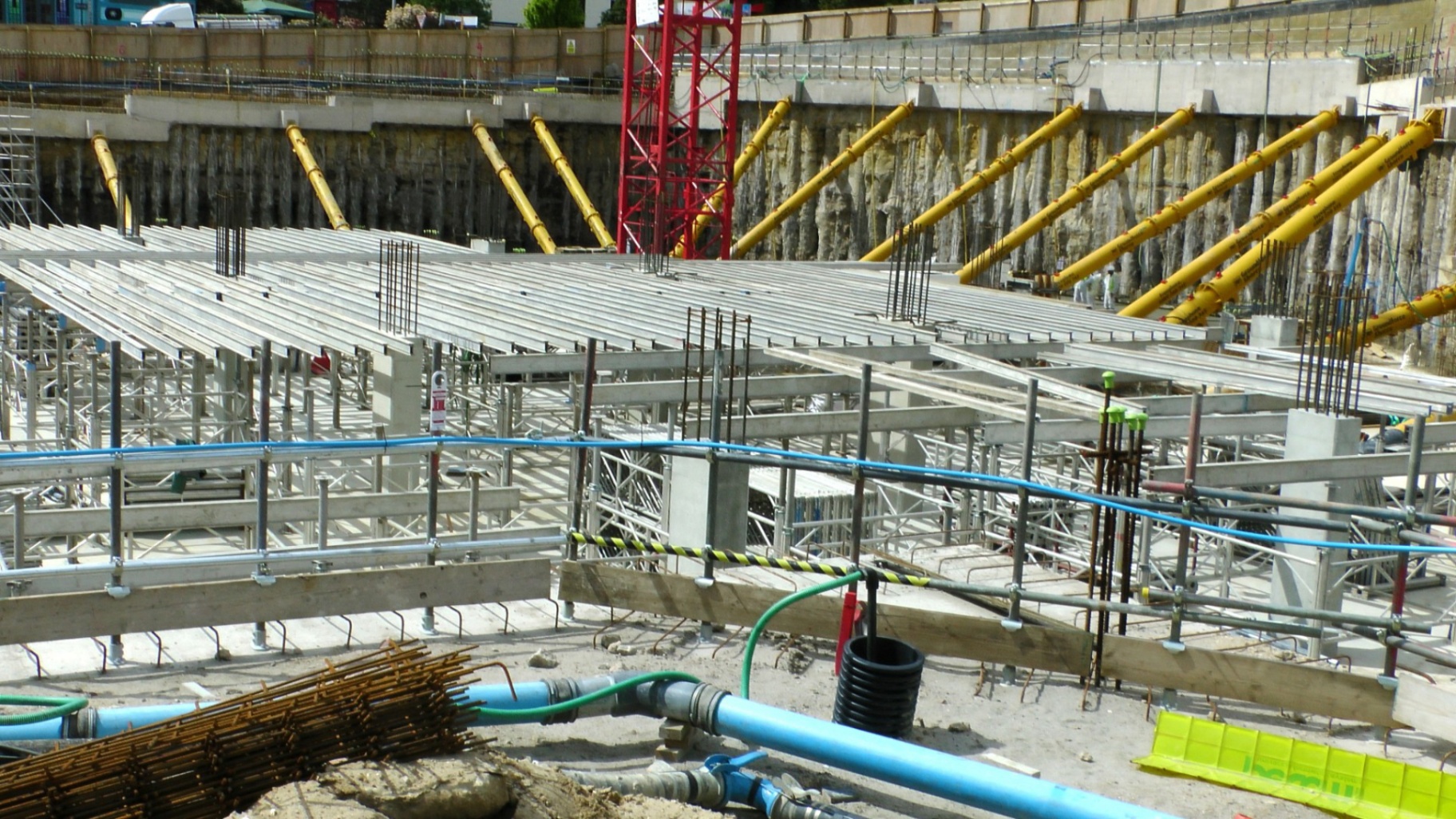
A thorough environmental site assessment should always precede or run parallel to your geotechnical investigation. The historical research conducted during a Phase I ESA often reveals critical information about previous site uses that directly impacts your geotechnical approach.
Pro tip: Cross-reference your geotechnical findings with environmental data. If a Phase II ESA identified contaminated fill in a specific area, that same fill likely has geotechnical implications that need to be addressed.
Mistake #4: Ignoring or Partially Applying Geotechnical Recommendations
Your geotechnical engineer delivers a thorough report with specific recommendations for soil improvement, foundation design, and drainage systems. Then, somewhere between design and construction, those recommendations get value-engineered out of the project.
This happens more often than you'd think. Contractors omit recommended subdrains to save costs. Developers skip specified soil improvements to accelerate the schedule. The geotechnical report ends up as a reference document rather than a construction mandate.
The result? Foundation settlement, drainage failures, and remediation costs that far exceed what the original recommendations would have cost to implement.
The bottom line: Geotechnical recommendations exist for a reason. If budget constraints require modifications, bring your geotechnical engineer back to the table to evaluate alternatives: don't make those decisions unilaterally.
Mistake #5: Failing to Account for Groundwater
Groundwater is the wild card on redevelopment sites. Historical modifications: old foundations, underground structures, altered drainage patterns: may have fundamentally changed how water moves through the subsurface.
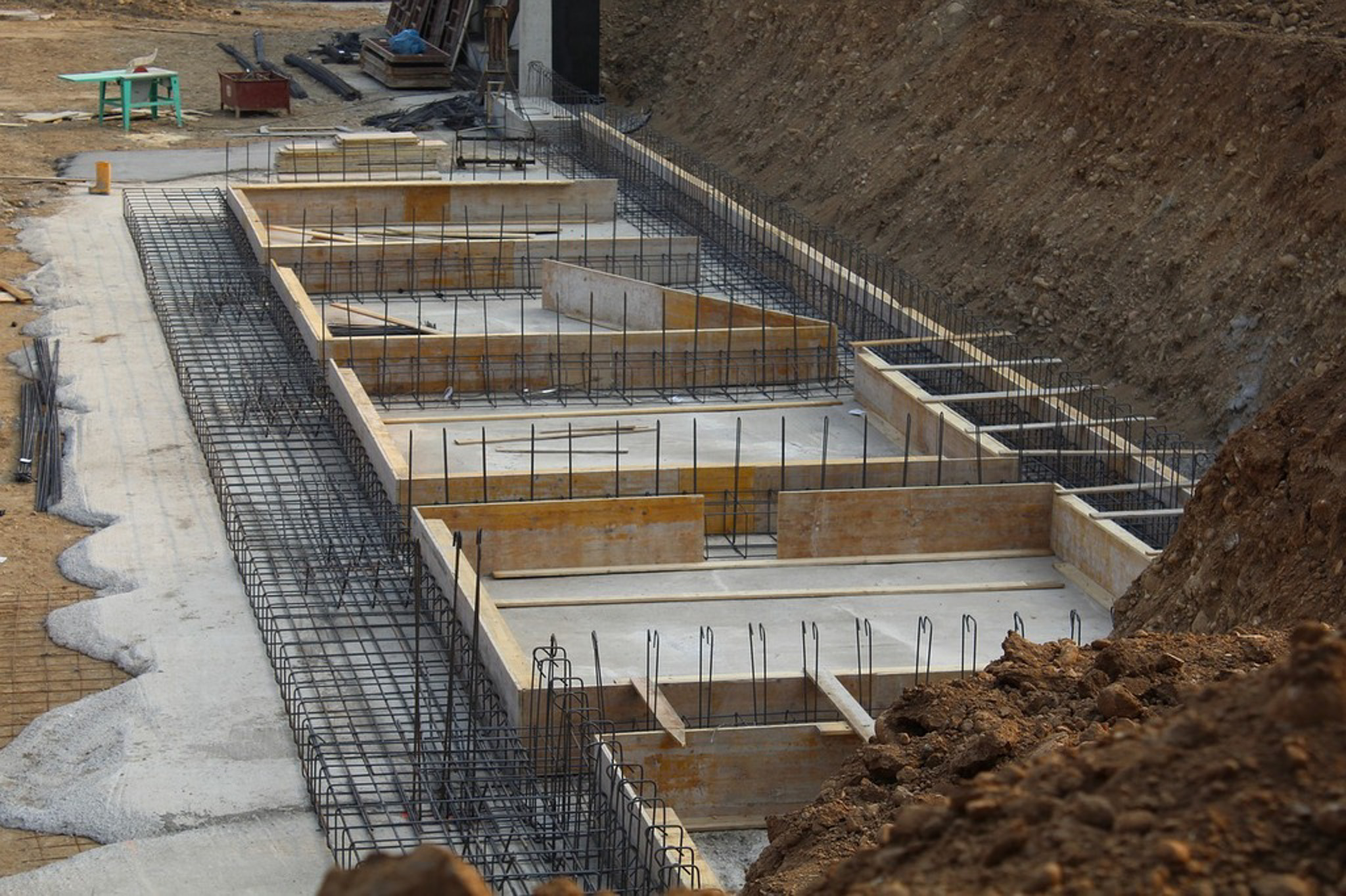
Failing to properly account for groundwater levels and seasonal fluctuations can lead to:
- Buoyancy issues with below-grade structures
- Soil movement and settlement during wet seasons
- Dewatering complications during construction
- Long-term drainage problems that compromise foundation integrity
On urban infill sites in the NY/NJ metro area, we frequently encounter perched water tables, historic stream channels that have been filled, and groundwater contamination that requires coordination between geotechnical and environmental teams.
What to do: Monitor groundwater levels over time if possible. A single measurement during a dry season won't tell you what happens during spring thaw or after heavy rainfall. Factor seasonal variation into your design assumptions.
Mistake #6: Poor Construction Oversight and Quality Control
Even the best geotechnical investigation and design can be undermined by poor execution in the field. We've seen projects where:
- Specified subdrains were omitted without approval
- Fill was placed without proper compaction testing
- Excavation support deviated from approved plans
- Erosion control measures were never implemented
Construction quality gaps are especially problematic on redevelopment sites where conditions can change rapidly as you expose different soil layers and encounter unexpected subsurface features.
"Rigorous quality control during construction is just as important as the investigation itself. Deviations from approved plans: even minor ones: can have cascading effects on foundation performance."
Our approach: We recommend having your geotechnical engineer on-site during critical construction phases: not just available by phone. Real-time observation allows for immediate adjustments when field conditions differ from what was anticipated in the report.
How to De-Risk Your Next Redevelopment Project
Avoiding these mistakes isn't complicated, but it does require discipline and a willingness to invest appropriately in the investigation phase. Here's the playbook:
- Conduct comprehensive investigations that go beyond minimum code requirements
- Review historical records thoroughly before finalizing your boring program
- Integrate geotechnical and environmental data for a complete subsurface picture
- Follow all recommendations from your geotechnical report: or formally evaluate alternatives with your engineer
- Monitor groundwater over time, not just at a single point
- Maintain quality control during construction with on-site engineering oversight
At Envicon, we've supported complex urban infill and redevelopment projects across New York and New Jersey where getting the subsurface right was the difference between a successful development and a costly delay. Our integrated approach: combining environmental assessment, geotechnical investigation, and civil engineering: ensures nothing falls through the cracks.
The Bottom Line
Geotechnical investigation mistakes on redevelopment sites are almost always more expensive to fix than to prevent. The cost of additional borings, deeper investigations, and thorough historical research is a fraction of what you'll spend addressing foundation failures, regulatory issues, or construction delays caused by unexpected subsurface conditions.
Don't let budget pressure or schedule constraints push you toward shortcuts that create long-term risk. Invest in the investigation upfront, follow the recommendations, and maintain quality control through construction.
Your foundation: and your bottom line( will thank you.)
Leave a Reply