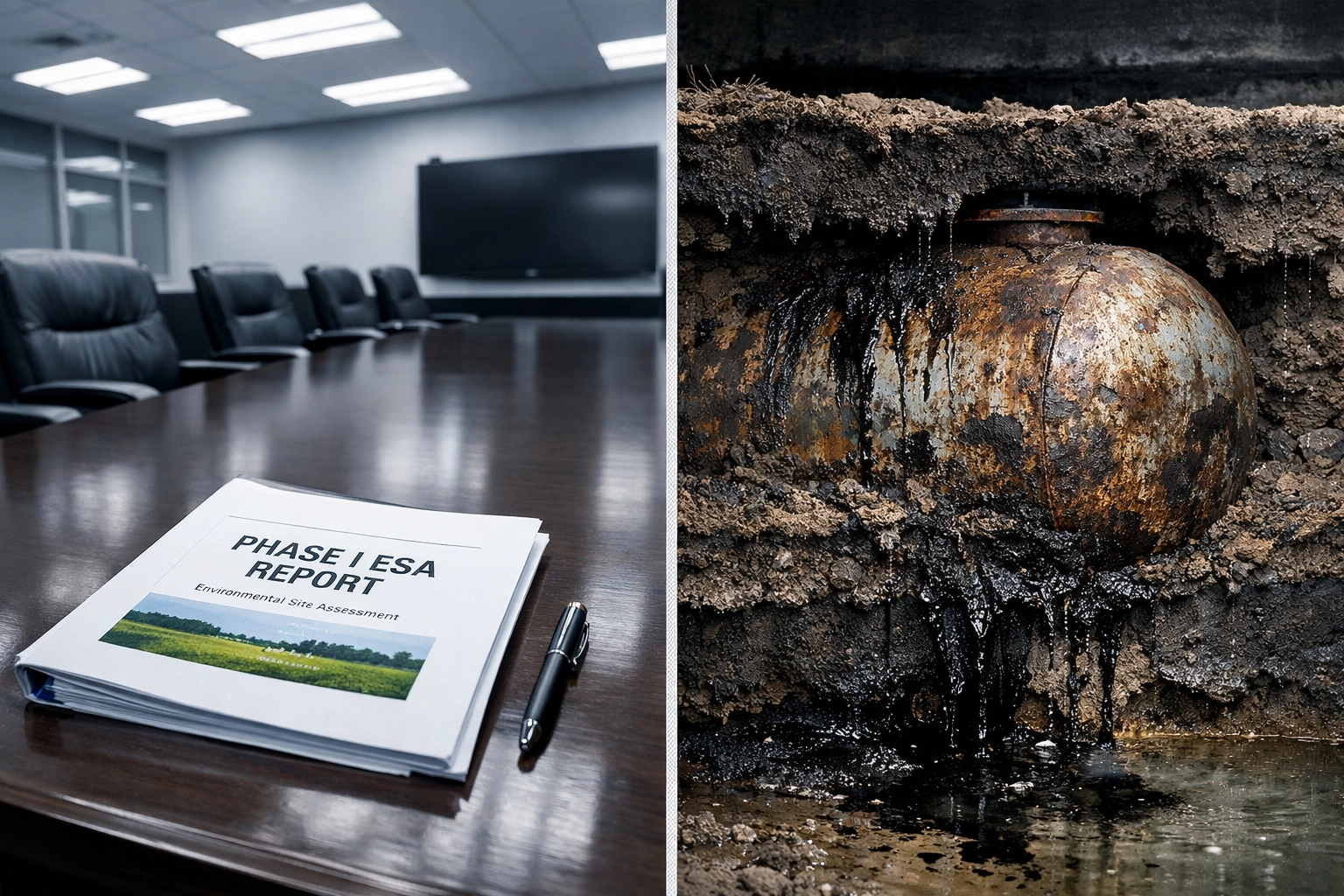
You just closed on a 3-acre industrial property in Newark. The Phase I ESA came back "clean": no Recognized Environmental Conditions (RECs), nothing but a few historical dry cleaners two blocks over. Your lender greenlit the deal. You're feeling good.
Here's the problem: that Phase I ESA is a snapshot, not an X-ray. And it's got blind spots the size of a Mack truck.
Lenders know this. They've seen enough deals blow up six months post-closing to understand that a "clean" Phase I doesn't mean you're in the clear. It means you passed the minimum standard: a standard that was never designed to catch everything lurking under your new investment.
Let's talk about what your Phase I ESA isn't telling you, why that matters, and what you should actually be doing during due diligence if you want to sleep at night.
The Dirty Secret: Phase I ESAs Are Wildly Inconsistent
Here's something most environmental consultants won't admit: two professionals can walk the same site and deliver completely different Phase I reports.
What one consultant flags as a REC, another might gloss over as "no further action." The ASTM E1527-21 standard provides a framework, but interpretation? That's where things get messy. There's no central audit authority ensuring every consultant applies the same rigor. You're essentially rolling the dice on who shows up with the clipboard.
This inconsistency creates a massive problem for lenders. They can't rely on the report alone because they've seen too many cases where a "second opinion" Phase I uncovered issues the first consultant missed entirely. That's why savvy lenders are increasingly requiring Phase II subsurface investigations even when Phase I results come back clean: especially on industrial or commercial redevelopment sites in New Jersey and New York.
What's Not in the Report (But Should Keep You Up at Night)
A Phase I ESA has a defined scope. That's both its strength and its fatal flaw. Here's what's technically excluded from a standard Phase I assessment:
- Asbestos-containing materials (ACM)
- Lead-based paint
- Radon gas
- Mold and indoor air quality
- Drinking water quality
- Current operational safety hazards
Read that list again. These are the exact issues that can kill your renovation budget or halt your construction timeline cold. But they're not required components of a Phase I ESA under ASTM standards.
Sure, a thorough consultant might mention them in passing or recommend additional studies. But they're under no obligation to do so. And if your consultant is trying to keep costs down to win the bid? Those recommendations might never make it into the executive summary your lender actually reads.
The Subsurface Problem: What You Can't See Will Hurt You
The biggest limitation of a Phase I ESA? It doesn't dig.
There's no soil sampling, no groundwater testing, no subsurface investigation. The entire assessment is based on visible conditions, historical records, and interviews. In other words, if the contamination is underground: where most contamination actually lives: your Phase I isn't going to find it.
Case in point: we've reviewed Phase I ESAs that completely missed abandoned underground storage tanks (USTs) because they were installed before 1970, never properly documented, and had no visible surface evidence. The property owner didn't know they existed. The seller didn't mention them. And the Phase I consultant had no reason to suspect them based on the site's "official" historical use.
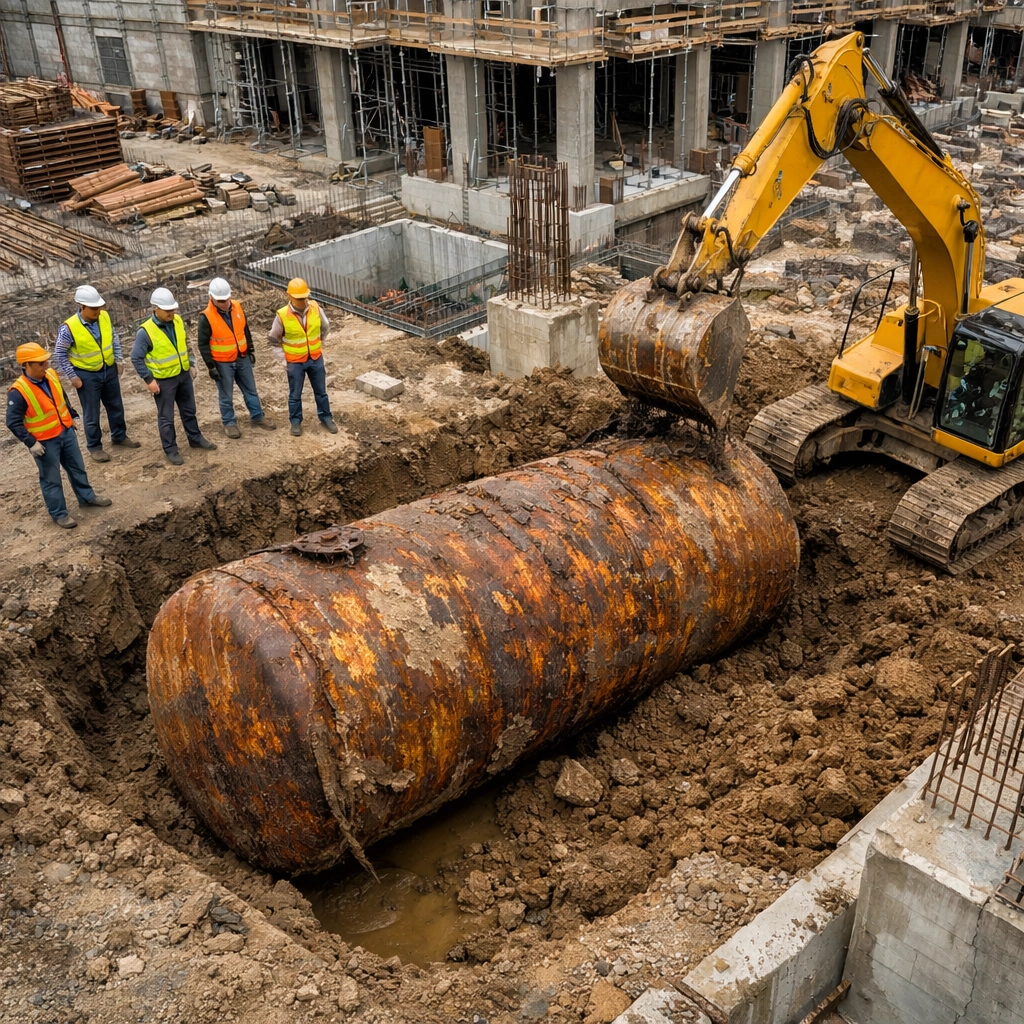
Fast forward six months: the excavator hits a single-walled steel tank full of petroleum product. Your construction timeline just exploded, your lender is demanding answers, and you're looking at a six-figure remediation bill no one budgeted for.
The 180-Day Expiration Date Nobody Talks About
Here's another fun fact: Phase I ESAs go stale. Fast.
According to ASTM standards, a Phase I report is valid for 180 days. After that, it requires a comprehensive update before lenders will accept it. Why? Because environmental conditions change. A building that looked stable in March might have a collapsed roof by September, leading to water intrusion and mold growth throughout the structure.
More importantly, the Phase I captures conditions only up to the date of the site visit. Any contamination event that occurs after the consultant leaves the property: say, a hydraulic fluid spill from construction equipment or an illegal dumping incident: won't appear in your report. You're buying a historical document, not a guarantee of current conditions.
This time sensitivity creates real problems in transactions with extended due diligence periods or delayed closings. That "clean" Phase I you received eight months ago? Your lender might demand a new one before they'll fund the deal.
The Data Gap Problem: Garbage In, Garbage Out
A Phase I ESA is only as good as the information fed into it. And here's the uncomfortable truth: property owners often don't know their own site history.
Pre-1980s industrial operations were rarely documented with the rigor we see today. Records get lost, companies go out of business, buildings change hands a dozen times. The result? Significant data gaps that make it impossible for even the best consultant to piece together a complete environmental profile.
When critical information is missing, the consultant is required to note it as a "Significant Data Gap" in the report. But here's the catch: that designation doesn't stop the transaction. It just shifts the risk: usually onto you, the buyer.
Lenders understand this dynamic. They know that a Phase I with multiple data gaps is essentially a high-stakes guessing game. That's why institutional lenders are increasingly requiring buyers to address these gaps with Phase II investigations before closing, rather than accepting them as unavoidable limitations.
What Your Lender Already Knows (That You Should Too)
Let's be clear: sophisticated lenders don't treat Phase I ESAs as comprehensive protection. They understand the limitations we've outlined here, and they're factoring that risk into their underwriting.
Here's what they're doing that you probably aren't:
- Running supplementary title searches for environmental cleanup liens and deed restrictions that might not appear in a standard Phase I
- Checking state databases for activity use limitations (AULs) or institutional controls tied to the property
- Requiring additional assessments (vapor intrusion surveys, lead/asbestos testing) on properties with any industrial history
- Building environmental contingency reserves into the loan structure to cover unexpected remediation costs
In other words, they're not relying on the Phase I alone. Neither should you.

The Solution: Integrated Due Diligence From Day One
At Envicon, we've seen this movie play out too many times. A buyer commissions the cheapest Phase I they can find, gets a clean report, closes the deal, and then discovers the real environmental conditions during demolition or excavation. By then, your negotiating leverage is gone and your budget is cooked.
Our approach? Front-load the investigation. Don't wait for problems to surface: hunt them down during due diligence when you still have options.
That means:
- Phase II subsurface sampling on any property with commercial or industrial history, regardless of Phase I results
- Integrated civil and environmental engineering to identify geotechnical surprises before you finalize your site plan
- Pre-acquisition regulatory review to understand existing obligations, cleanup liens, and long-term monitoring requirements
Is this more expensive than a bare-bones Phase I? Sure. But it's a fraction of the cost of a blown timeline, a lender recall, or a contamination discovery mid-construction.
We work with developers and investors who understand that due diligence is a strategy, not a checkbox. The goal isn't to generate a document your lender will accept: it's to actually understand what you're buying so you can price the deal correctly and execute without surprises.
The Takeaway: Trust, But Verify
Phase I ESAs serve a purpose. They're the industry standard for initial environmental screening, and they provide a defensible baseline for demonstrating "appropriate inquiry" under federal liability protections.
But if you're treating them as the final word on your property's environmental condition, you're setting yourself up for expensive surprises. Lenders already know the limitations of Phase I assessments: that's why they're building in additional protections and pushing more risk onto buyers.
The smart move? Work with an environmental consultant who tells you what's actually on (and under) your property, not just what's required to close the deal. Because the only thing worse than discovering contamination is discovering it after you own the property.
Want to talk about what a real due diligence process looks like for your next acquisition? Let's talk. We'll tell you what your Phase I ESA isn't saying: before it costs you six figures to find out the hard way.
![[FOOTER] Envicon Strategic Solutions](https://cdn.marblism.com/h17_j7aDBku.webp)
Leave a Reply