
Here's a contrarian take: green infrastructure isn't expensive. Your approach to it is.
Most developers treat stormwater management and green compliance like a mandatory tax, something to be minimized, outsourced to the lowest bidder, and forgotten about until the city inspector shows up. That mindset is costing you six figures per project, and you don't even realize it.
The truth? Green infrastructure can actually reduce your total project costs when you stop treating it like a regulatory burden and start treating it like what it is: engineered infrastructure that serves multiple purposes. But first, let's talk about why you're bleeding money.
The "Check-the-Box" Trap
Walk me through your typical project timeline. You acquire the site, finalize your architectural plans, secure financing, and then, maybe six months in, someone remembers to call an environmental consultant to handle the "green stuff." By that point, you've already:
- Locked in your site plan
- Committed to specific building footprints
- Finalized your grading design
- Scheduled your construction timeline
Now you're asking your consultant to retrofit green infrastructure into a design that wasn't built for it. Of course it's expensive. You're essentially paying for two designs: the one you wanted, and the compliance overlay you're forced to add.
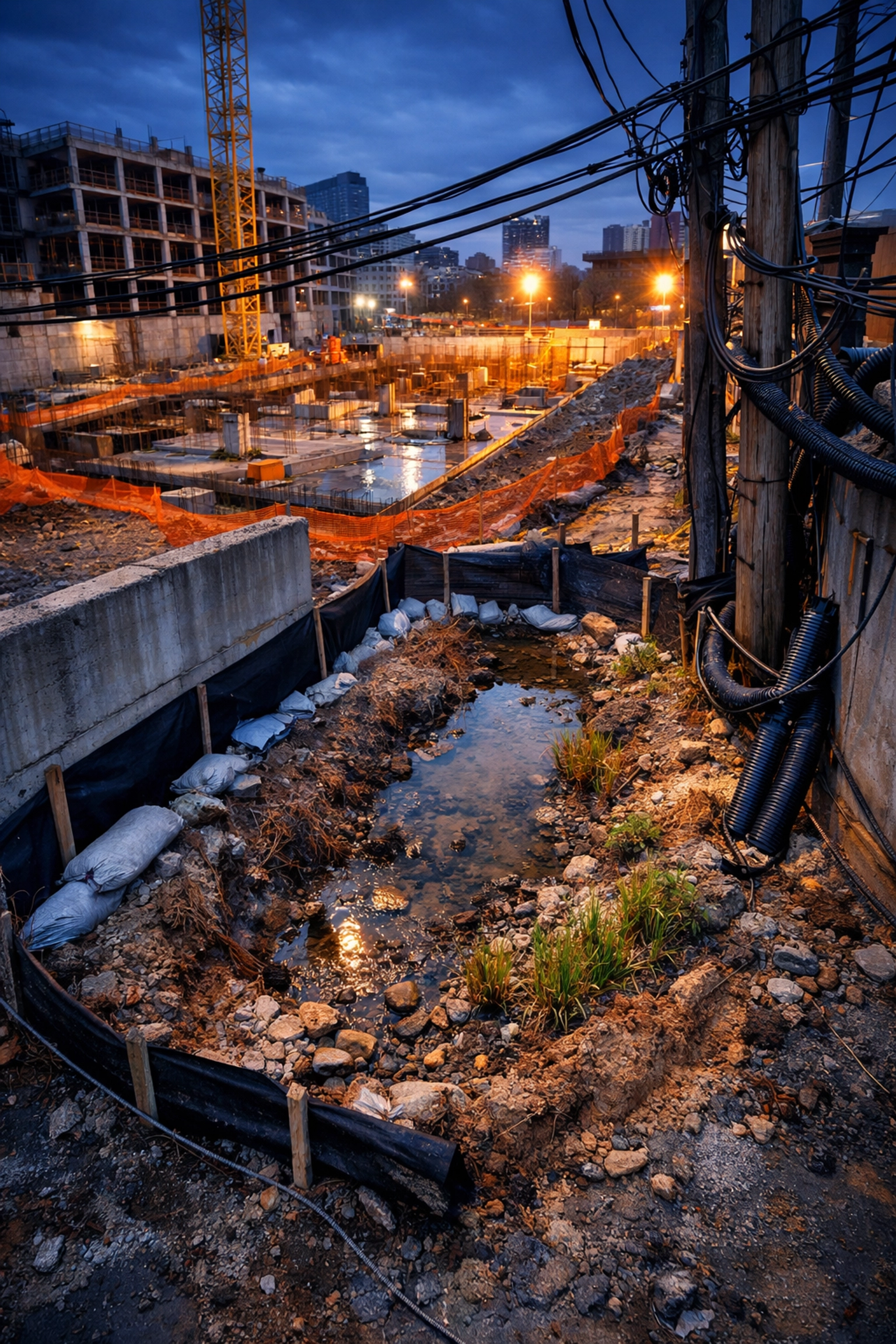
This is like hiring an interior designer after the house is built. Sure, they can make it work, but you're going to pay a premium for their creative problem-solving, and the results will always be compromised.
The Real Cost of NYC Stormwater Compliance
Let's get specific. In New York City, if your project disturbs more than one acre or creates more than 20,000 square feet of impervious surface, you're subject to MS4 stormwater requirements. The city wants you to manage the first inch of rainfall on-site through green infrastructure.
Most developers approach this with a checklist mentality:
- Install some bioswales? Check.
- Add a green roof? Check.
- Install permeable pavement somewhere? Check.
Then they get the bill: $150,000 to $300,000 for a mid-sized project. They grumble about regulatory overreach and move on.
Here's what they're missing: that same infrastructure could have been designed to reduce your site work costs, lower your ongoing maintenance expenses, and potentially unlock additional FAR or zoning benefits. But only if you plan for it from day one.
The Alternative Compliance Loophole (That Nobody Talks About)
NYC and most municipalities offer something called "alternative compliance" or "off-site mitigation" for stormwater. Translation: if it's not economically feasible to manage all your stormwater on-site, you can pay into a municipal fund or contribute to an off-site green infrastructure project.
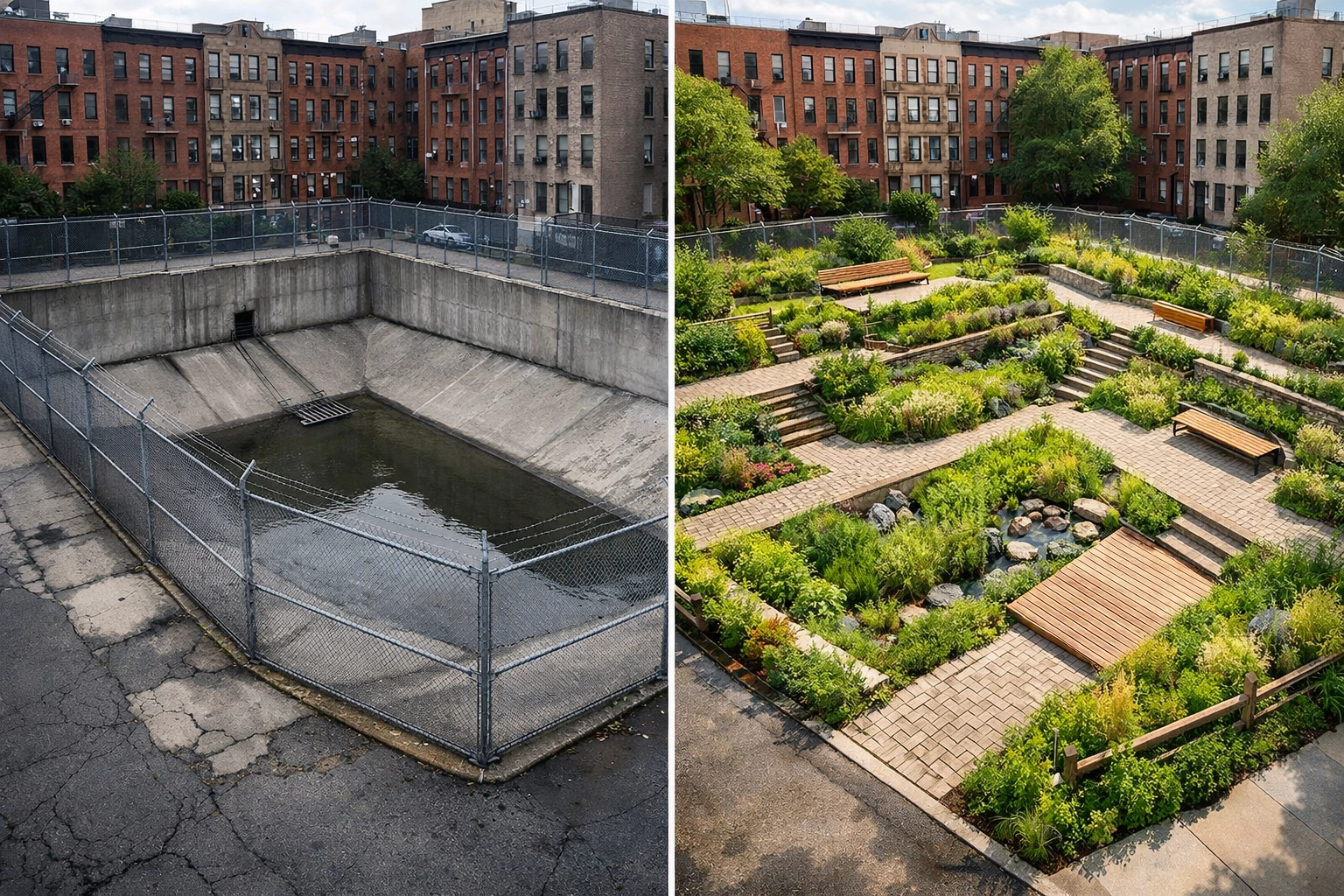
For some projects, particularly in dense urban environments where every square foot counts, this is dramatically cheaper than trying to shoehorn bioswales into your site plan. We've seen developers save $100,000+ by strategically using alternative compliance for a portion of their stormwater obligation.
But here's the catch: you need to know this option exists before you finalize your site design. If you've already committed to on-site management in your plans, going back to request alternative compliance looks like you're trying to weasel out of requirements. Regulators don't like that.
The Tax Credit Game You're Not Playing
While we're talking about money you're leaving on the table, let's discuss Section 179D and Section 45L tax incentives. These federal programs offer substantial deductions, up to $5.81 per square foot for commercial projects and $2,500 to $5,000 per residential unit, for buildings that meet energy efficiency standards.
Most developers know these programs exist. What they don't realize is that green infrastructure investments often qualify as part of the energy efficiency calculation. That bioswale you installed grudgingly? It might be generating tax credits.
The deadline to maximize these benefits is June 30, 2026, less than five months away. If your project is wrapping up before then, you need to be documenting your green infrastructure investments now to claim these deductions.
But here's where developers shoot themselves in the foot: to get the enhanced deductions, you need to meet prevailing wage and apprenticeship requirements. Most developers don't plan for this, so they either:
- Miss out on the enhanced deductions entirely (leaving $4+ per square foot on the table)
- Scramble to retrofit prevailing wage compliance after construction is underway (paying penalties and higher labor costs)
Both options are expensive. The smart move is to structure your project for prevailing wage compliance from the start if the enhanced deductions justify the higher labor costs. For most projects over 50,000 square feet, they do.
Integration Is the Answer (It Always Is)
At Envicon, we've stopped separating "environmental compliance" from "civil engineering" because that separation is artificial and expensive. Your stormwater management system is your site's drainage infrastructure. Your soil remediation plan is your excavation and grading plan. Your environmental monitoring wells are your geotechnical investigation.
When you integrate these disciplines from day one, three things happen:
- You eliminate redundant work. One soil boring can serve geotechnical, environmental, and stormwater infiltration testing purposes. One site survey can inform civil design, remediation planning, and green infrastructure placement.
- You unlock design efficiencies. Maybe that required bioswale can replace an expensive underground detention system. Maybe your green roof reduces your stormwater obligation enough that you don't need that cistern. Maybe your remediation excavation creates the perfect location for infiltration basins.
- You compress your timeline. When civil and environmental engineers are talking to each other from the start, you're not waiting for sequential approvals. You're processing permits in parallel.
This integrated approach is exactly how we work with our architectural partners to turn environmental requirements into design opportunities rather than compliance headaches.
The Prevailing Wage Calculation
Let's be honest about the prevailing wage elephant in the room. Yes, it increases your labor costs. For a typical project, you might see a 15-25% increase in labor expenses for the work covered by prevailing wage requirements.
But here's the math nobody's doing: if prevailing wage compliance unlocks an additional $4.65 per square foot in tax deductions (the difference between enhanced and standard Section 179D benefits), and your effective tax rate is 30%, you're getting $1.40 per square foot in real tax savings.
On a 100,000 square foot building, that's $140,000 in your pocket. If the prevailing wage premium costs you $80,000 in additional labor, you're still $60,000 ahead: plus you've built in workforce development requirements that improve your project's community benefits profile for future approvals.
The developers who are "overpaying" are the ones who see prevailing wage as pure cost rather than an investment with a quantifiable return.
What You Should Do Differently Tomorrow
Stop treating green infrastructure as a compliance afterthought. Here's your new playbook:
Before Site Acquisition:
- Request preliminary stormwater calculations for any site over one acre
- Evaluate whether alternative compliance makes sense for dense urban sites
- Factor green infrastructure costs into your proforma (3-5% of hard costs is realistic)
During Design Development:
- Loop your environmental consultant into your first civil engineering meeting
- Evaluate tax credit opportunities and structure for prevailing wage if beneficial
- Look for integration opportunities (green roofs that serve multiple functions, bioswales that replace conventional landscaping)
Before Construction:
- Document everything for tax credit purposes
- Verify prevailing wage compliance if you're claiming enhanced deductions
- Build green infrastructure maintenance into your long-term operations budget
The bottom line: green infrastructure stops being a "tax" when you stop treating it like one. It's infrastructure. Plan for it accordingly.
The Bottom Line
Most developers overpay for green infrastructure compliance because they approach it reactively, treat it as separate from their core site work, and miss available incentives. The solution isn't lobbying for weaker regulations: it's integrating environmental planning into your development process from day one.
We've watched clients cut their green infrastructure costs by 30-40% simply by changing when they bring environmental expertise to the table. Earlier is always cheaper.
If you're starting a project in the NYC metro area and want to avoid the "green infrastructure tax," let's talk before you finalize your site plan. The conversation might save you more than the consulting fee.
![[FOOTER] Envicon Strategic Solutions](https://cdn.marblism.com/iL_cQAc3jVV.webp)
Leave a Reply