
Your lender wants a Phase I Environmental Site Assessment. It's the weekend before closing. You call the cheapest consultant you can find, they send a report, and you assume you're good to go.
Three months later, during excavation, your contractor hits an underground storage tank. Now you're staring at a $200,000+ remediation bill, construction delays, and a lender threatening to pull funding. Worse, you've lost the liability protection you thought you had.
This happens more than you'd think, and it's entirely preventable.
If you're acquiring property in New York or New Jersey, understanding Phase I ESA cost and what actually goes into a quality assessment isn't optional anymore. Here are the seven mistakes we see developers, investors, and property owners make repeatedly, and exactly how to avoid them.
Mistake #1: Hiring the Cheapest Consultant (Without Checking Credentials)
Price shopping your Phase I ESA is like hiring a surgeon based on Groupon. Sure, you'll save $1,500 upfront. But when your consultant misses an underground storage tank or fails to identify historical contamination, you're on the hook for six figures in cleanup costs.
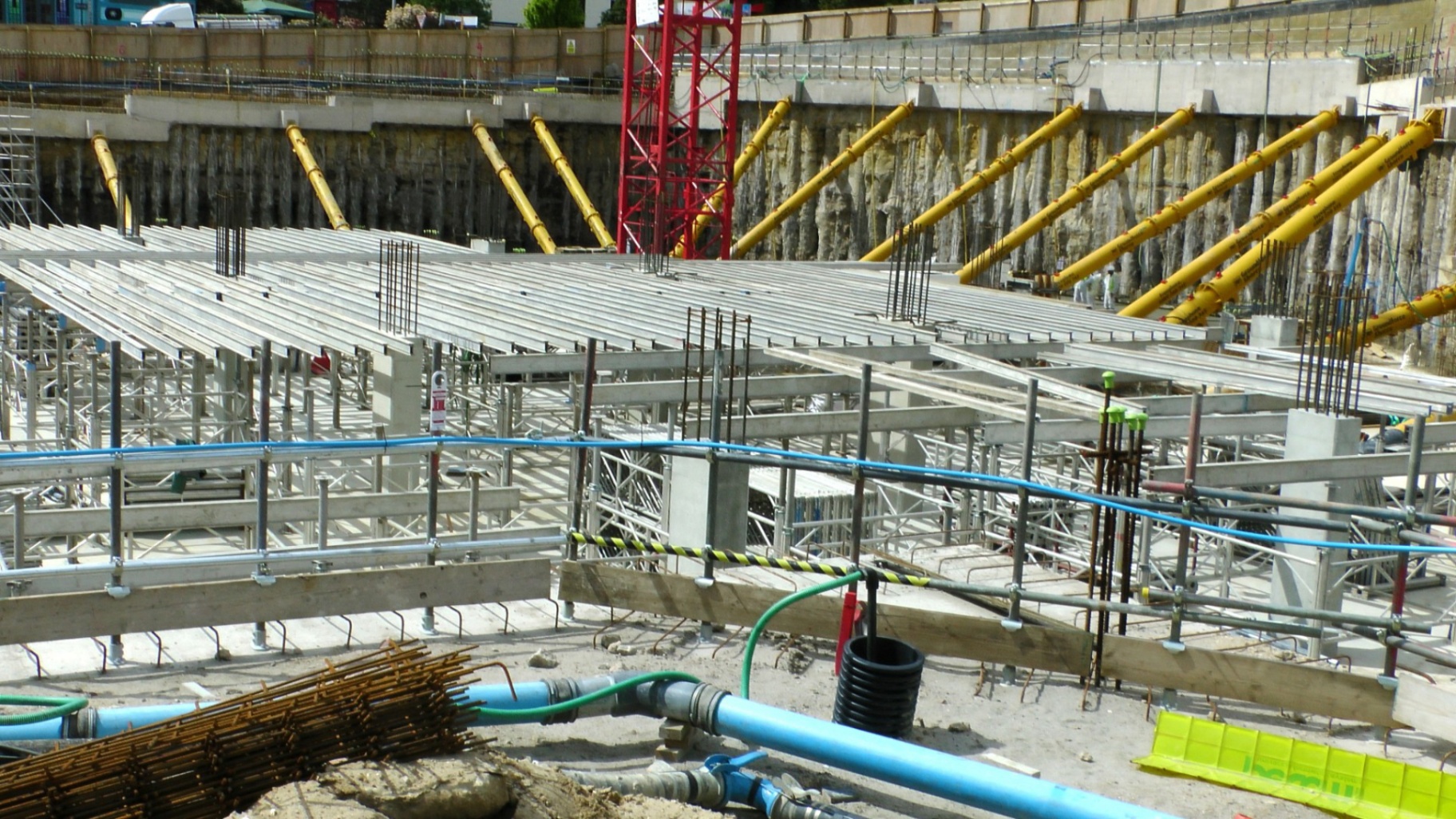
We've seen this play out in real transactions. One consultant failed to identify clear evidence of an underground storage tank at a redevelopment site: it was only discovered during excavation work, halting the entire project. The buyer lost their liability defense because the Phase I didn't meet ASTM standards.
How to fix it: Before signing any agreement, verify your consultant holds current credentials: Professional Geologist (PG), Professional Engineer (PE), or Certified Environmental Professional (CEP). Interview them directly. Ask about their experience with properties similar to yours in the NY/NJ market. Request references from lenders or attorneys who've worked with them. A quality Phase 1 environmental site assessment cost in NYC typically ranges from $2,500 to $4,500: if someone's quoting you $1,200, there's a reason.
Mistake #2: Letting the Seller Order Your Phase I
This one's subtle but devastating. If the property seller commissions the Phase I ESA, you: the buyer: lose your status as a "bona fide prospective purchaser" (BFPP) under CERCLA. That means if contamination surfaces later, you can't use the defense that you conducted "all appropriate inquiry" before purchase.
We've had clients walk into our office after closing, holding a seller-provided Phase I, asking why they're now personally liable for soil contamination from a 1970s dry cleaner that operated three doors down. The answer: they weren't the party who commissioned the report.
How to fix it: The entity taking title to the property must be the one who orders and receives the Phase I ESA report. Period. Even if the seller offers to provide one "to save you money," politely decline and commission your own. This preserves your legal protections and demonstrates compliance with environmental liability regulations. Your lender will thank you.
Mistake #3: Assuming a Clean-Looking Property Is Actually Clean
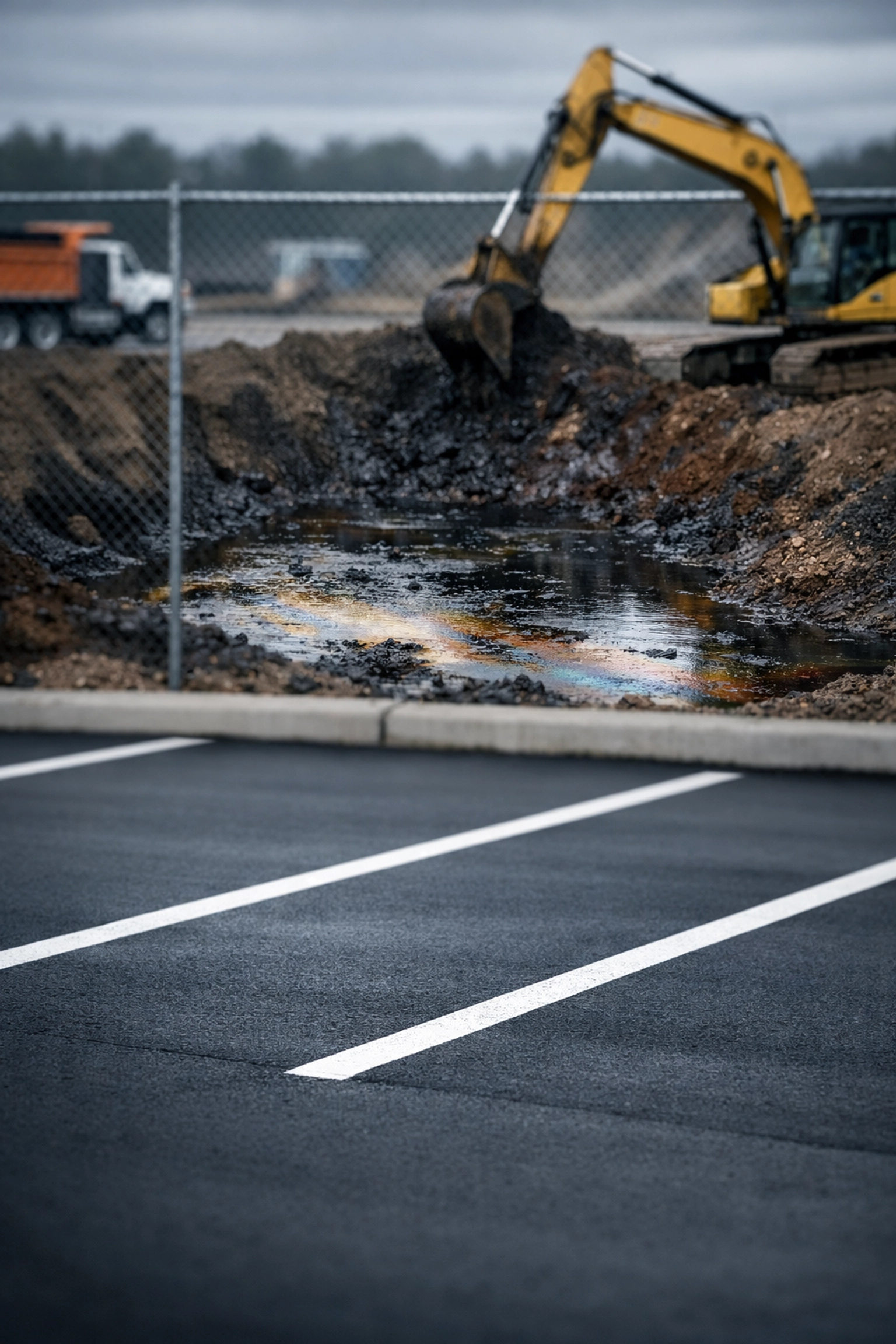
Contamination doesn't announce itself. There's no flashing neon sign that says "PETROLEUM PLUME HERE." That strip mall with fresh asphalt? Could be covering up a former gas station. That vacant lot surrounded by new construction? Might have groundwater contamination migrating from an adjacent industrial site.
One investor purchased a former auto repair shop in Hudson County without a Phase I because "it looked fine." During foundation work, contractors hit oil-saturated soil. Remediation cost $230,000 and delayed the project nine months. The building permit was suspended until the NJDEP signed off on a cleanup plan.
How to fix it: Understand that your site visit is only one piece of the puzzle. A thorough Phase I investigates historical records, reviews Sanborn Fire Insurance maps, checks NJDEP databases, and assesses adjacent properties for potential contamination migration. Envicon's Phase I reports include detailed historical research going back decades: because what happened on a property in 1965 absolutely matters in 2026.
Mistake #4: Only Ordering Phase I for Industrial Properties
We hear this constantly: "It's just a mixed-use building, we don't need environmental assessment." Wrong. Retail centers, multi-family apartment buildings, undeveloped land, and even residential properties can carry environmental risks based on historical land use.
That residential parcel you're eyeing? Check the historical records: it might have been a coal yard in 1940. That retail center? The tenant space on the corner was a dry cleaner for 30 years, and those solvents have a nasty habit of migrating through soil and groundwater.
How to fix it: Make Phase I ESAs a standard part of every acquisition in NY/NJ, regardless of property type. If your underwriting checklist doesn't include environmental due diligence, you're accepting risk you can't quantify. Our clients who treat Phase I as non-negotiable close faster, negotiate better purchase prices when issues surface, and sleep better at night.
Mistake #5: Using an Outdated or Non-Compliant Phase I Report
The ASTM International E1527-21 standard became effective in early 2023, yet we still see Phase I reports prepared using older methodologies or failing to comply with the All Appropriate Inquiry (AAI) Rule. If your Phase I doesn't meet current standards, it won't hold up with your lender: and more importantly, it won't protect you from environmental liability.
One developer brought us a Phase I from 2024 that failed to address vapor intrusion risks or evaluate the property for PFAS contamination: both critical issues in New Jersey as of 2026. The lender rejected the report, delaying closing by three weeks while we prepared a compliant assessment.
How to fix it: Before your consultant starts fieldwork, confirm in writing that the Phase I will comply with ASTM E1527-21 and AAI Rule requirements. Request draft language showing how they'll address emerging contaminants like PFAS, 1,4-dioxane, and vapor intrusion pathways. At Envicon, we deliver lender-ready reports that meet or exceed current regulatory standards: because we know your transaction timeline doesn't allow for do-overs.

Mistake #6: Treating Phase I as Your Complete Environmental Checklist
Here's what a Phase I ESA does not assess: asbestos-containing building materials, lead-based paint, radon, mold, drinking water quality, or compliance with environmental regulations. It's also non-invasive: meaning no soil or groundwater sampling.
If your Phase I identifies a Recognized Environmental Condition (REC): like historical petroleum storage, dry cleaning operations, or industrial use: you'll need a Phase II ESA to collect physical samples and confirm contamination levels. Skipping this step doesn't make contamination go away; it just means you'll discover it during construction instead of during due diligence.
How to fix it: Understand Phase I limitations upfront. When RECs are identified, immediately discuss Phase II scope and costs with your consultant. At Envicon, we provide verbal findings within 48 hours of site visits, allowing you to make informed decisions while your inspection contingency is still active. We've helped clients walk away from contaminated properties before signing contracts: and negotiate $500K+ purchase price reductions on others where remediation was feasible.
Mistake #7: Ignoring Data Gaps and Post-Assessment Activities
A Phase I ESA is only as strong as the information available to the environmental professional. If historical records are incomplete, tenant interviews aren't conducted, or adjacent property data is unavailable, you'll see "Significant Data Gaps" noted in the report. These gaps can conceal serious risks.
Additionally, Phase I assessments don't account for activities occurring after the report is completed. If there's a major water leak, chemical spill, or other environmental incident between your Phase I and closing, that report is no longer current.
How to fix it: Request a draft report and verbal findings immediately following the site visit. This allows you to identify data gaps early and begin addressing RECs before they derail your transaction. Gather old environmental reports, underground storage tank records, and NJDEP correspondence before the Phase I starts. If there's a delay between assessment and closing, discuss with your consultant whether a site re-visit is warranted.
The Bottom Line: Speed and Quality Both Matter
Phase I ESAs aren't just a box to check for your lender. They're your first line of defense against catastrophic environmental liability: and they're critical for de-risking acquisitions in the NY/NJ market.
At Envicon, we know your transaction timelines are compressed. That's why we deliver lender-ready Phase I reports in 7-10 business days without sacrificing thoroughness. Our team has assessed thousands of properties across New York and New Jersey, from former industrial sites in Newark to mixed-use developments in Brooklyn.
When you're paying anywhere from $2,500 to $5,000 for a Phase 1 environmental site assessment in New Jersey or NYC, you deserve a consultant who understands local regulations, has relationships with NJDEP and NYSDEC staff, and can turn reports around fast enough to keep your deal on track.
Because the biggest mistake of all? Thinking environmental due diligence is something you can shortcut.
Need a Phase I ESA that won't slow down your closing? Contact our team to discuss your project timeline and site-specific risks.
Leave a Reply