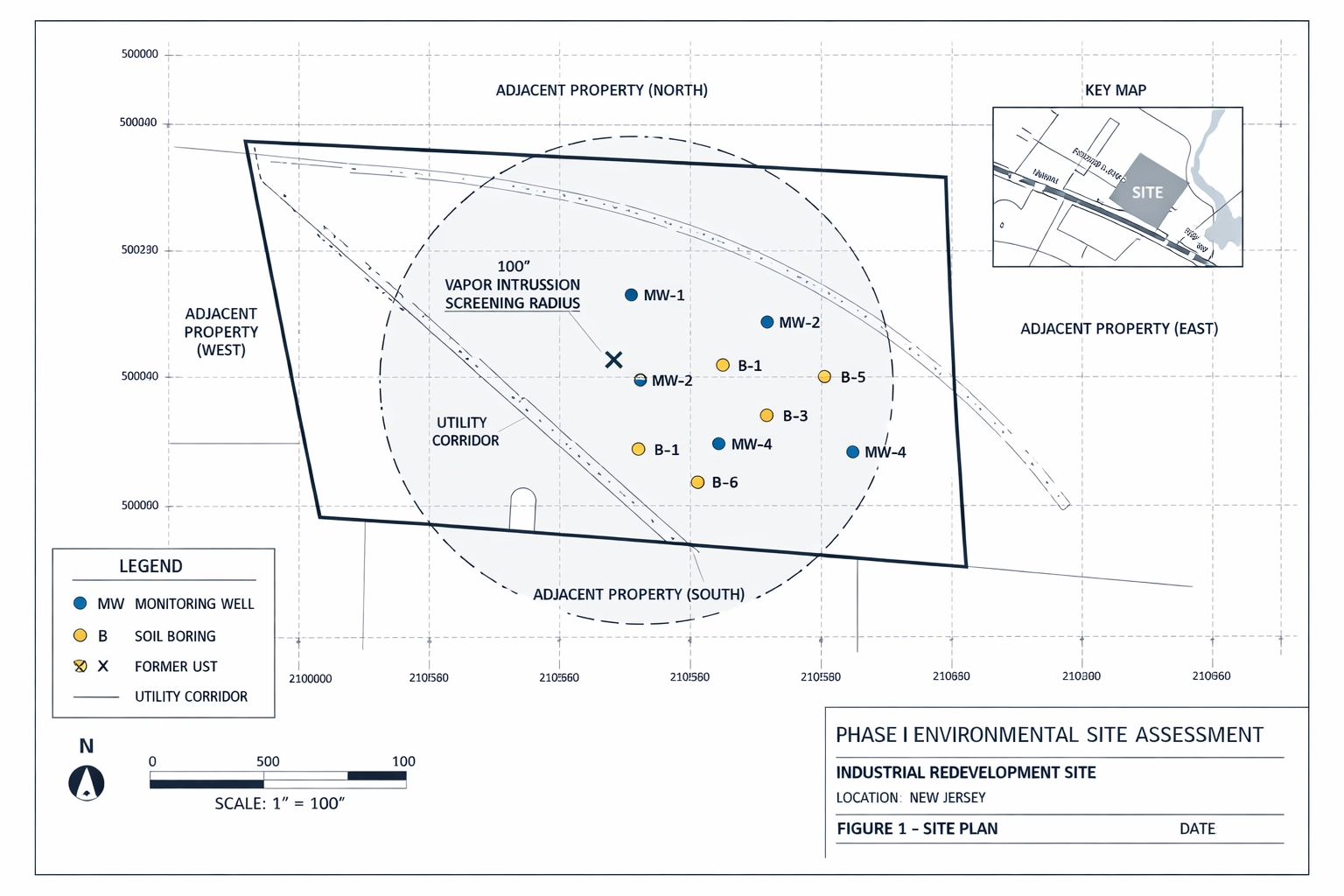
If you’re developing property in New Jersey or the surrounding tri-state area, you know that the Phase I Environmental Site Assessment (ESA) is the gatekeeper of your deal. It’s the document that satisfies the "All Appropriate Inquiries" (AAI) requirement under CERCLA, providing you with that crucial status as a Bona Fide Prospective Purchaser.
However, since the transition to the ASTM E1527-21 standard, we’ve seen a recurring trend: developers are treating these reports as a commodity check-the-box exercise, while the technical nuances: the "fine print" that determines liability and project timelines: are being glossed over by high-volume, low-cost consulting shops.
In the world of professional services, a Phase I is only as good as the Environmental Professional (EP) signing it. At Envicon Strategic Solutions, we’ve spent years navigating the shift from the old E1527-13 standard to the rigorous 2021 update.
Here are the technical nuances of ASTM E1527-21 that most developers miss, and why they matter for your next acquisition.
1. The "Likely" Presence: A Subjective Threshold with Objective Consequences
The updated definition of a Recognized Environmental Condition (REC) is one of the most significant shifts in the standard. It now encompasses three distinct scenarios:
- The presence of hazardous substances due to a release.
- The likely presence of hazardous substances due to a release.
- The presence of hazardous substances under conditions that pose a material threat of a future release.
The word "likely" is where most developers get tripped up. Under the -13 standard, there was more room for "professional judgment" to dismiss potential concerns. Under ASTM E1527-21, "likely" is defined as "that which is neither certain nor proved, but can be expected or believed based on the logic and experience of the EP."
For our clients, this means that if we see a historical record of a dry cleaner on an adjacent property with no documented cleanup, it’s no longer just a "business risk": it’s a REC. This shift forces a Phase II investigation far more often than it used to. If your consultant is still using the "we didn't see a spill, so it's fine" logic, they are leaving your AAI protection at risk.
2. The Mandatory "Big Three" Historical Sources
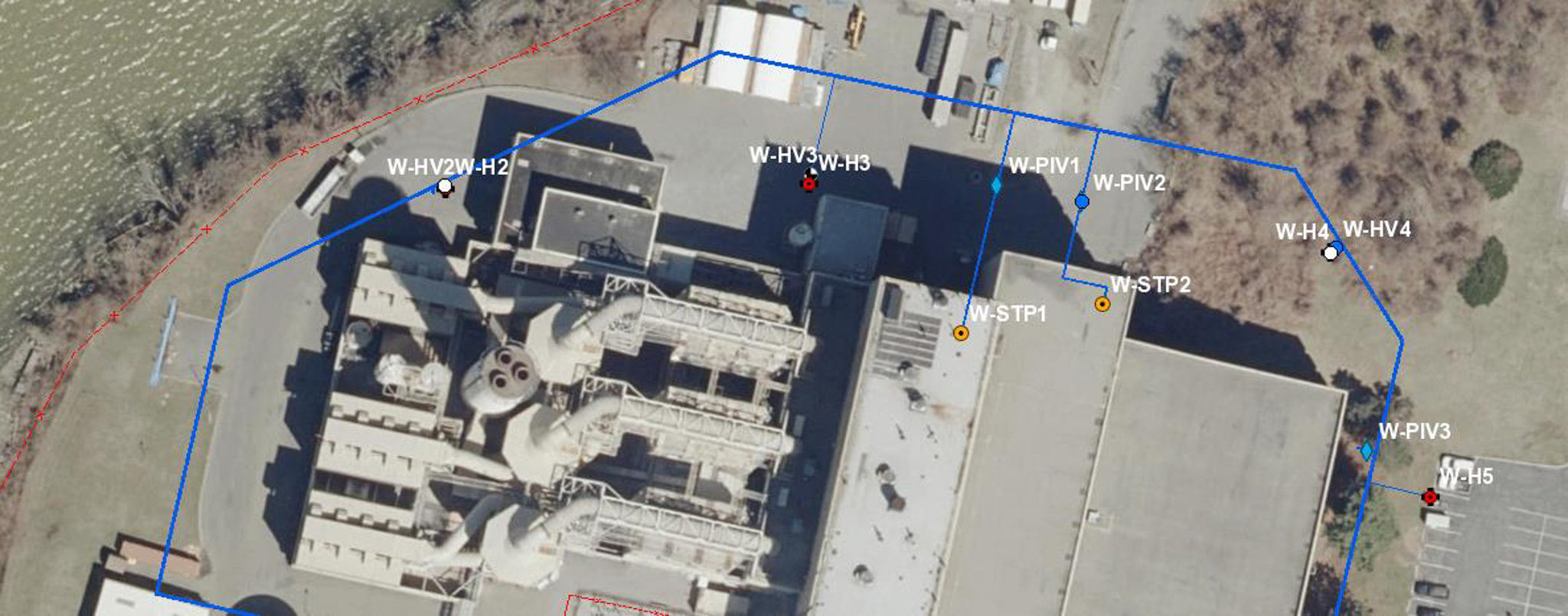
In the past, an EP could use their discretion to determine which historical sources were "reasonably ascertainable." ASTM E1527-21 has removed much of that flexibility. The standard now mandates that the EP must review the following four sources for the subject property and adjoining properties:
- Aerial Photographs
- Sanborn Fire Insurance Maps
- City Directories
- Topographic Maps
If these sources are not reviewed, the EP must document why they weren't available. We often see reports from large, national firms that skip the Sanborn maps because they are "not available for this specific rural block." At Envicon, we dig deeper. In New Jersey, where industrial history is layered like an onion, skipping a 1920s Sanborn map could mean missing a buried gasoline tank that wasn't registered with the state but was clearly marked a century ago.
3. The "Material Threat" of a Future Release
This is a forward-looking nuance. The -21 standard explicitly includes the "material threat" of a future release. Think of an aging, abandoned underground storage tank (UST) that hasn't leaked yet, but is past its structural prime.
Most developers view environmental due diligence as an audit of the past. ASTM E1527-21 turns it into a forecast of the future. If a site has infrastructure that is failing, even if the soil is currently "clean," it can be flagged as a REC. This changes the capital expenditure (CapEx) conversation during the due diligence period. You aren't just buying the land; you're buying the liability of a potential future breach.
4. The 180-Day "Shelf Life" Clock
Time is the enemy of every real estate deal. ASTM E1527-21 clarifies the shelf life of a Phase I ESA. To remain valid for AAI, the report must be completed within 180 days of the acquisition date. However, several components have specific "start dates":
- Interviews
- Search for recorded environmental cleanup liens
- Review of government records
- Visual inspection
- The declaration by the EP
These components must be updated if they are older than 180 days. If your deal drags on for a year (as they often do in Hudson County), a simple "update" letter won't cut it. You need a full refresh of these five components to maintain your legal shield. We’ve seen developers lose their CERCLA protection because their "big firm" consultant let the clock run out without a proper update.
5. Vapor Encroachment: The Invisible Deal-Breaker
Vapor intrusion (VI) is no longer an afterthought. The -21 standard reinforces the requirement to evaluate the Vapor Encroachment Screen (VES). In high-density areas like Newark or Jersey City, where volatile organic compounds (VOCs) from a neighbor’s historic dry cleaner can migrate through the soil gas into your proposed basement, this is a critical health and safety issue.
Even if your soil and groundwater are clean, vapor can make a building uninhabitable or trigger massive mitigation costs (like sub-slab depressurization systems). Our approach at Envicon is to integrate the VES into the very first stage of due diligence, ensuring you know if you're buying a "vapor cloud" before you commit to the project.
6. The "NFA" Trap: Why Old Closures Aren't Forever
A "No Further Action" (NFA) letter or a Response Action Outcome (RAO) from an LSRP is a great asset, but it is not a "get out of jail free" card under ASTM E1527-21.
The EP must now reassess whether a historical REC (HREC) still meets the definition of an HREC based on current regulatory standards. For example, if a site was closed in 1995 based on a 100 ppm cleanup standard, but the current NJDEP standard is now 5 ppm, that old "closure" is actually a Controlled Recognized Environmental Condition (CREC) or even an active REC.
"Uncertainty cannot be fully eliminated. No environmental site assessment can wholly eliminate uncertainty regarding the potential for recognized environmental conditions in connection with a subject property." : ASTM E1527-21 Standard Practice
We don't just look at the piece of paper that says "Closed." We look at the data behind it to see if it holds up against today’s more stringent environmental laws.
7. Emerging Contaminants (PFAS) and "Non-Scope" Risks
Technically, PFAS (Per- and Polyfluoroalkyl Substances) are "non-scope" considerations under the current ASTM E1527-21 standard because they haven't been fully classified as hazardous substances under CERCLA yet.
However, ignoring PFAS in New Jersey is a massive risk. The NJDEP is a national leader in PFAS regulation, with some of the strictest MCLs (Maximum Contaminant Levels) in the country. A "standard" Phase I that follows the letter of the ASTM but ignores "non-scope" PFAS is doing the developer a massive disservice. At Envicon, we treat emerging contaminants as a vital part of our environmental due diligence because we know the state will care, even if the ASTM standard doesn't require it yet.
Why Envicon is the Strategic Choice for NJ Developers
Most large environmental consulting firms operate on a "production line" model. They churn out Phase I reports by the hundreds, often assigning the bulk of the research to junior staff who have never stepped foot on a construction site.
At Envicon Strategic Solutions, we operate differently. We are a visionary, multi-disciplinary firm that integrates civil engineering, geotechnical expertise, and environmental science. We don't just provide you with a list of problems; we provide you with a roadmap for development.
- Concise Strategy over Fluff: We don't hide behind 500 pages of boilerplate text. Our reports are designed for the decision-maker: clear, actionable, and technically bulletproof.
- Local Accountability: We understand the specific soil strata of New Jersey and the regulatory nuances of the NJDEP. We aren't a national firm trying to figure out local rules; we are the local experts.
- Adaptability: Whether you’re dealing with a complex Brownfield in Environmental Justice communities or a suburban redevelopment, we adapt our scope to match your specific risk tolerance.
Don't let a "standard" Phase I miss a non-standard risk. If you’re looking for a partner who sees the technical nuances and protects your investment, let’s talk.
Summary Takeaways for Developers:
- Assume "Likely" means "Will require investigation": The -21 standard lowers the bar for calling out a REC.
- Check the Clock: If your acquisition date is more than 6 months from your report date, you need an update.
- Vapor is Real: Even on "clean" sites, off-site migration is a major liability in NJ/NYC.
- PFAS is Coming: Just because it’s "non-scope" doesn't mean it’s not your problem.
- Old NFAs Expire: Regulatory standards change; your due diligence must account for today's numbers, not yesterday's.
Ready to move forward with confidence?
Explore our Services | View our Projects | Contact an Expert
Leave a Reply