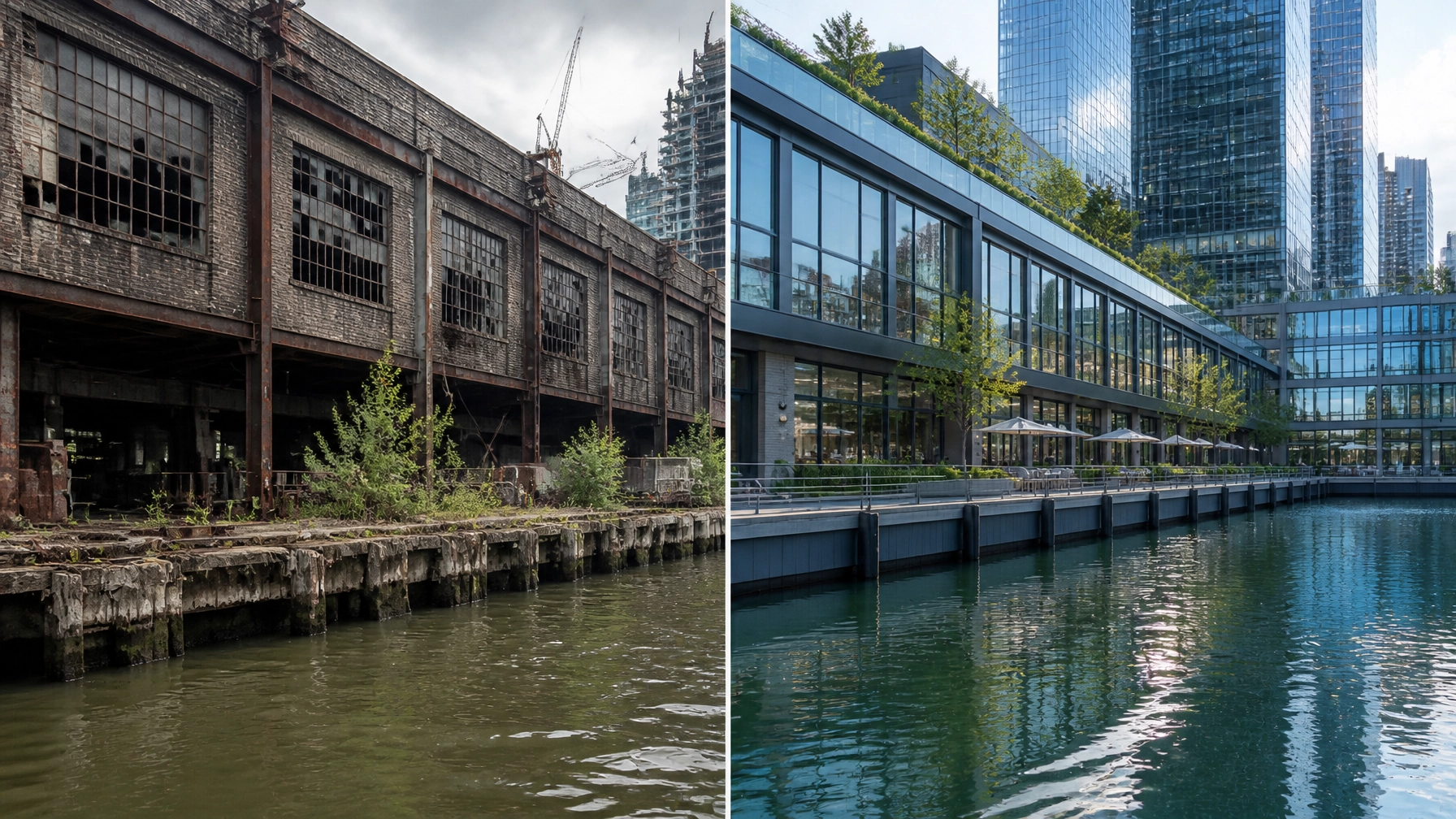
For most developers in New Jersey, a contaminated site feels like a liability. It’s a hole in the ground that swallows capital, stalls timelines, and creates endless regulatory friction. But in 2026, the math has shifted. What was once a "distressed asset" can now be the highest-margin project in your portfolio: if you know how to leverage the New Jersey Brownfields Redevelopment Incentive Program (BRIP).
Managed by the NJ Economic Development Authority (NJEDA), the BRIP offers a one-time, transferable corporate tax credit that can cover up to 100% of your remediation costs. This isn't just a "nice to have" incentive; it’s a strategic tool designed to close the financing gap on high-stakes developments.
The problem? Most big-box environmental firms treat these credits like an administrative afterthought. They’ll hand you a bloated report and wish you luck with the application. At Envicon Group, we don’t sell reports: we sell cleared paths. We understand that securing a $10 million tax credit requires more than just technical data; it requires a field-first strategy that aligns your site investigation with NJEDA’s strict competitive requirements.
The BRIP Numbers: Turning Remediation into ROI
The BRIP program is competitive, and the awards are significant. Depending on your project’s location and type, the tax credit can drastically alter your pro forma.
- Solar on Landfills: In Government-Restricted Municipalities (GRM) or Qualified Incentive Tracts (QIT), you can see a 100% credit for remediation costs, capped at $12 million.
- Commercial & Mixed-Use: In GRMs like Atlantic City, Paterson, or Trenton, you can secure up to 80% of remediation costs, capped at $12 million. In other areas of NJ, the credit typically covers 60%, capped at $8 million.
- Residential Expansion: As of the 2026 legislative updates (Bill A4914), the program has expanded to include qualifying residential redevelopment projects, making brownfield sites even more attractive for multi-family developers.
The most critical feature of these credits is that they are transferable. If your project doesn’t have the NJ tax liability to use the credit internally, you can sell it to an entity that does, providing an immediate infusion of liquidity to the project.

The "Lethal" Mistake: Don’t Touch the Dirt Yet
There is one rule that kills more tax credit applications than any other: The Timing Rule.
Under NJEDA regulations, if you start significant remediation work: beyond investigation and assessment: before you apply for the BRIP, you are disqualified. Many developers, pushed by aggressive schedules or bad advice from junior-staff consultants at national firms, jump into the cleanup to "keep things moving."
By the time they realize they could have saved $4 million in costs, it’s too late. The agency’s stance is clear: if you could afford to start the cleanup without the credit, you didn't have a "financing gap," and therefore, you don’t need the incentive.
At Envicon, we act as your strategic filter. We coordinate directly with your LSRP and the NJEDA to ensure every soil boring and groundwater sample supports your application without triggering the "start of remediation" trap. We understand the NJDEP LSRP rules aren't suggestions: they are the guardrails for your project's financial success.
Why Your Current Consultant is Costing You Money
When you hire a large national firm, you talk to a partner at the pitch and then never see them again. Your project gets handed to a junior associate who is more worried about billable hours than your IRR.
This "big-box" approach creates three major points of friction:
- Defensive Reporting: They write reports to protect themselves, not to move your project. Their documents are often so bloated that regulatory reviewers at the NJDEP or NJEDA put them at the bottom of the pile.
- The Communication Black Box: You never know who is actually talking to your reviewer. Alignment with local officials and state agencies is how projects actually get done, yet big firms treat regulatory coordination like a secret society.
- Scope Creep: Without a field-first mentality, these firms often miss the nuances of site conditions, leading to change orders that inflate your budget mid-cleanup.
Envicon works differently. We are family-owned, PE-led, and regulator-facing. We sit at the table with the NJDEP and NJEDA: not behind a queue. Our real-time project dashboards give you full visibility into field activity, so you’re never in the dark about your remediation status or your credit eligibility.

Navigating the Competitive Landscape
Securing a BRIP award isn't automatic. It’s a competitive process where projects are scored based on economic impact, local support, and technical feasibility. To win, you need to prove:
- A Financing Gap: You must demonstrate that the project is not economically feasible without the tax credit.
- Prevailing Wage Compliance: All remediation and construction work must pay NJ construction prevailing wage.
- Green Standards: Your project must meet specific Green Building and Green Remediation standards.
- Local Support: You need a formal letter of support from the local governing body.
This is where remedial design becomes a tactical advantage. We design cleanups that aren't just compliant: they are optimized for the tax credit scoring criteria. We help you navigate the compliance and permit matrix to ensure your project stands out to NJEDA reviewers.
Action Plan: 5 Steps to Secure Your NJ Brownfield Tax Credit
- Stop Remediation Immediately: If you haven’t applied yet, don't move a single yard of contaminated soil. Limit your activity to Phase I and Phase II Site Assessments.
- Verify Brownfield Status: Ensure your site meets the NJEDA's definition of a brownfield. We can provide a Brownfield Opportunity Report to confirm eligibility.
- Get Local Buy-In: Start the conversation with the municipality early. A resolution of support is a non-negotiable requirement.
- Run the Math: Work with an engineering firm that understands the BRIP percentages. If you aren't in a GRM or QIT, your cap is lower, and your equity contribution requirement is higher (20% vs 10%).
- Engage a "Field-First" Partner: Hire a firm that picks up the phone and knows your reviewer by name. You need an advocate on site at 7 AM, not a project manager reading notes from someone they've never met.

The Bottom Line
"Integrity is not just ethical behavior: it is about delivering the truth and never cutting corners." At Envicon Group, we apply that philosophy to every brownfield project we touch. We help you transform underused, contaminated properties into thriving assets by removing the obstacles between you and a buildable site.
The NJ Brownfield Tax Credit is a powerful lever for developers who move with precision and urgency. Don’t let a slow, generic consulting firm stall your project or leave millions of dollars on the table.
Ready to unlock the potential of your site? Contact Envicon Group today to discuss your NJ Brownfield strategy.
Summary Takeaway
- NJ BRIP credits cover 60% to 100% of remediation costs (up to $12M).
- Credits are transferable, providing critical project liquidity.
- Timing is everything: Starting remediation before your application is a fatal error.
- Expertise matters: Choose a firm with direct agency relationships and a field-first approach to maximize your chances in a competitive program.
Leave a Reply