For decades, stormwater management in the NY/NJ metro area has been treated as a box to check. Install some catch basins, lay some pipe, route it to the municipal system, and move on to the real work. But here's the thing: that "check-the-box" mindset is leaving money on the table and missing a massive opportunity.
What if your SWPPP compliance infrastructure could also be a selling point for tenants? What if your stormwater system could increase property values instead of just draining your budget? That's not wishful thinking: it's the reality of modern green infrastructure design.
We're not just cleaning up the past anymore. We're designing for the future.
The Old Way is Costing You More Than You Think
Traditional gray infrastructure: concrete pipes, detention basins, underground storage tanks: gets the job done. But it does exactly one thing: move water from Point A to Point B. That's it. No added value. No aesthetic appeal. No competitive edge in a crowded real estate market.
Worse, aging gray infrastructure across NYC and New Jersey is increasingly overwhelmed during storm events. Combined sewer overflows (CSOs) remain a persistent problem, and regulators are tightening the screws. NYC's Department of Environmental Protection and the NJDEP are both pushing developers toward more sustainable solutions: not because it's trendy, but because the old approach simply isn't working at scale.
The developers who recognize this shift early aren't just staying compliant. They're turning a regulatory requirement into a genuine site amenity.

Green Infrastructure: Compliance That Actually Adds Value
Green infrastructure isn't a single technology: it's a toolkit of nature-based solutions that manage stormwater while delivering multiple co-benefits. We're talking about:
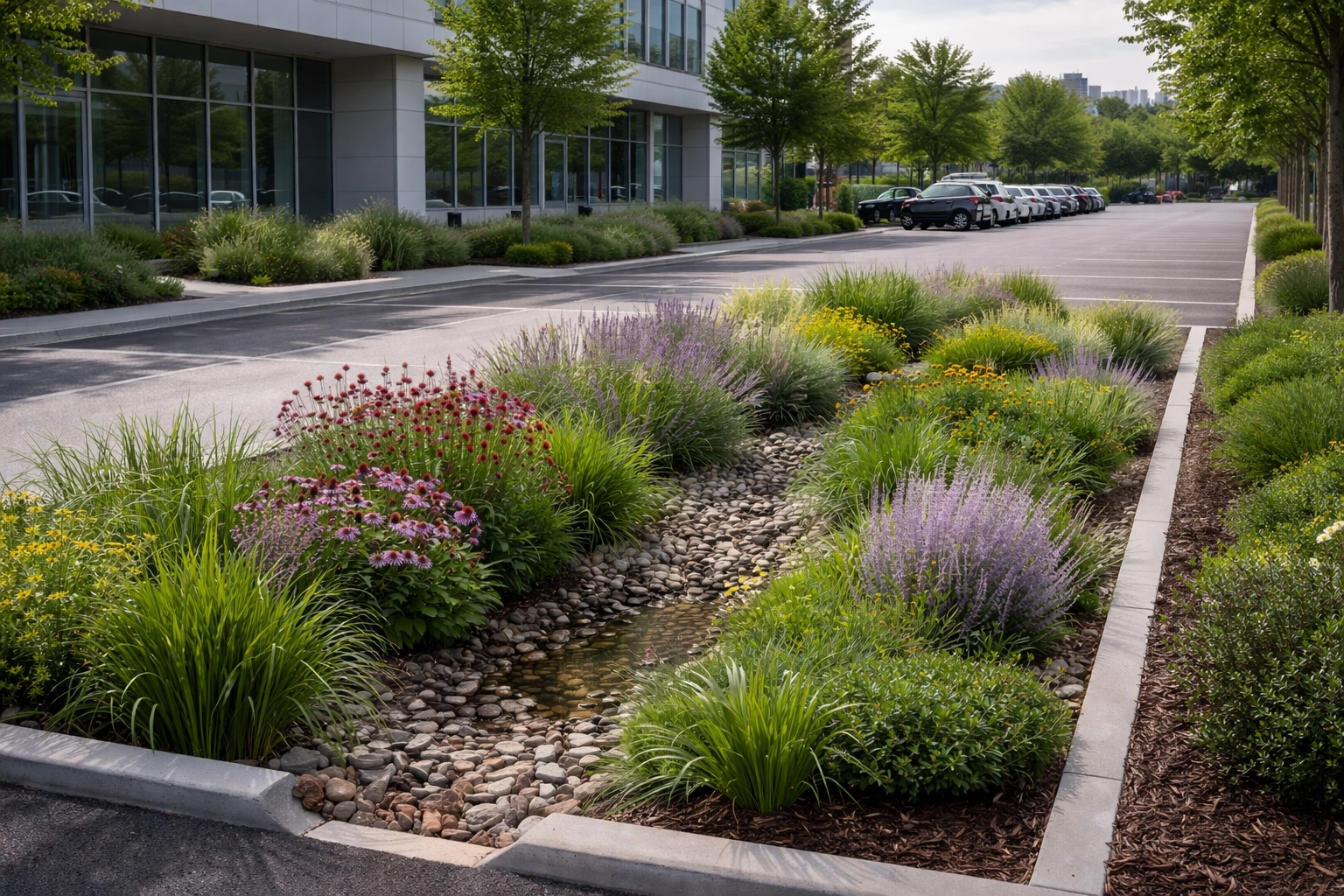
- Rain gardens and bioswales that filter runoff through engineered soil media while adding landscaping appeal
- Permeable pavement for parking lots and walkways that eliminates standing water and reduces heat island effects
- Green roofs that capture rainfall, reduce cooling costs, and extend roof membrane lifespan
- Tree plantings and urban canopy expansion that intercept rainfall before it ever hits the ground
- Curb extensions and bioretention bump-outs that calm traffic while treating street runoff
Each of these systems treats stormwater as a resource rather than waste. During dry weather, they prevent pollutants from reaching waterways. During storms, they filter runoff through soil and vegetation where natural processes break down contaminants. The result? Cleaner water, reduced flooding, and a more attractive property.
"Green infrastructure practices create functional and appealing site drainage that delivers benefits far beyond regulatory compliance."
For NYC developers navigating NYC OER requirements or dealing with E-Designations, integrating green infrastructure early in the design process can actually streamline the path to shovel-ready status. It demonstrates environmental stewardship that regulators want to see.
Meeting NY/NJ Stormwater Requirements the Smart Way
Let's get specific about compliance. In New York City, any new development or major renovation must meet stormwater performance standards that increasingly favor green infrastructure approaches. The NYC Green Infrastructure Program has been expanding for over a decade, and developers who incorporate these systems often find smoother approvals and faster timelines.
In New Jersey, the NJDEP's stormwater management rules require on-site retention and treatment for new development. Green infrastructure solutions can meet: and often exceed: these requirements while reducing the footprint of traditional detention systems.
Here's what smart developers are doing:
- Integrating permeable pavers in parking areas to meet infiltration requirements without sacrificing usable space
- Installing bioretention planters along building perimeters that double as attractive landscaping
- Designing green roofs on commercial and multifamily projects that reduce stormwater fees and utility costs simultaneously
- Using tree trenches and silva cells in streetscape improvements that satisfy both DOT and DEP requirements
The key is approaching stormwater not as an afterthought but as a design opportunity from day one. That's where integrated environmental engineering expertise makes the difference.

The Business Case: Why Green Infrastructure Pays Off
We get it: you're not developing property to win environmental awards. You're developing property to generate returns. So let's talk dollars and cents.
Green infrastructure compliance can be achieved at comparable cost to traditional gray infrastructure like storage tanks, with several distinct advantages:
Phased implementation. Unlike a massive underground detention system that requires full capital outlay upfront, green infrastructure can be installed in phases that match available funding and deliver immediate community benefits.
Reduced long-term maintenance. Properly designed rain gardens and bioswales require less maintenance than mechanical stormwater systems. No pumps to replace. No confined space entries. Just seasonal landscaping care.
Increased property values. Multiple studies have shown that properties with visible green amenities: tree canopy, attractive landscaping, green roofs: command premium rents and higher sale prices. Your stormwater system becomes a marketing asset.
Stormwater fee reductions. Both NYC and many NJ municipalities offer fee credits for properties that reduce impervious surface or install certified green infrastructure. These savings compound year after year.
Tenant attraction and retention. In competitive multifamily and commercial markets, sustainability features matter to tenants. A beautifully landscaped bioretention area tells a different story than a chain-link fence around a detention pond.
"Green infrastructure can be incorporated into street improvements, including bump-outs and curb extensions, which also serve as 'complete streets' features for traffic calming and pedestrian safety."

SWPPP Inspection Requirements: Don't Let Compliance Become a Liability
Here's where many projects stumble. You can design the most beautiful green infrastructure system on paper, but if your SWPPP inspection requirements aren't met during construction, you're exposing yourself to violations and costly delays.
Green infrastructure systems are particularly sensitive during the construction phase. Sediment-laden runoff can clog permeable pavement. Heavy equipment can compact bioretention soils. Improper staging can damage tree root zones before trees are even planted.
That's why SWPPP compliance for green infrastructure projects requires specialized attention:
- Pre-installation soil testing to verify infiltration rates match design assumptions
- Phased inspections that protect green infrastructure elements as they're installed
- Post-construction verification to ensure systems are functioning as designed
- Maintenance training for property management staff
A "check-the-box" approach to SWPPP inspections is a recipe for costly fines: and for green infrastructure that fails within years of installation. We've seen it happen. The developers who succeed treat construction-phase environmental compliance as seriously as the design itself.
Bringing It All Together: Integrated Environmental Engineering
The magic happens when civil engineering, environmental engineering, and landscape architecture work together from project inception. That's the Envicon approach.
When we evaluate a site for stormwater management, we're not just calculating required detention volumes. We're looking at:
- Soil conditions and infiltration potential from our geotechnical investigations
- Existing contamination that might affect green infrastructure placement
- Regulatory pathways including NYC OER requirements and NJDEP standards
- Site programming to identify where green infrastructure can enhance rather than compete with development goals
- Long-term maintenance realities that make or break system performance

This integrated perspective is how we help clients find value engineering wins: like the NJ site where relocating a bioretention area allowed for additional parking while actually improving stormwater performance. Or the Brooklyn mixed-use project where a green roof met both stormwater requirements and provided a rooftop amenity space that commanded premium rents.
The Future is Already Here
The regulatory trajectory is clear. NYC and New Jersey are both moving toward stricter stormwater standards, more emphasis on green infrastructure, and greater scrutiny of conventional gray systems. Developers who get ahead of this curve aren't just avoiding future compliance headaches: they're creating properties that stand out in the market.
Stormwater doesn't have to be a cost center. With the right green infrastructure design and environmental engineering expertise, it becomes a competitive advantage.
Ready to turn your next project's stormwater requirements into a genuine site amenity? Reach out to our team to discuss how integrated green infrastructure design can work for your NY/NJ development.
Leave a Reply