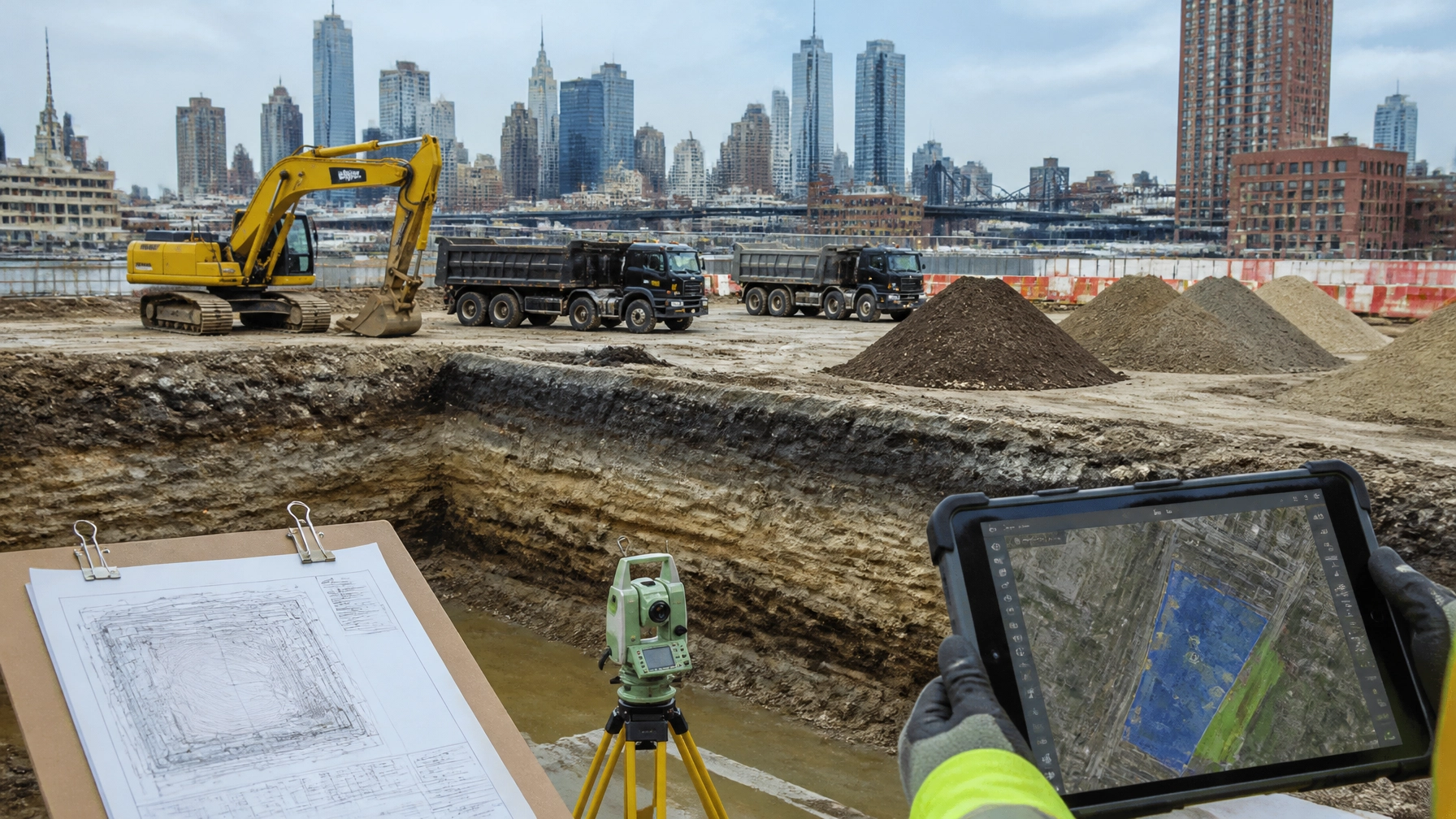
In New York City, dirt is rarely just dirt. Depending on how you manage it, it’s either a six-figure liability or a strategic asset.
If you are a developer excavating a site in the five boroughs, you already know the pain of the "dirt tax." Between testing, hauling, and astronomical tipping fees at regional landfills, soil management can easily become one of the top five line items in your budget. But there is a technical loophole that most big-box consulting firms overlook because it requires more effort than simply checking a box: the NYC Clean Soil Bank (CSB).
Managed by the NYC Office of Environmental Remediation (OER), the Clean Soil Bank is a soil recycling exchange. It allows "generating sites" to off-load excess clean soil at zero tipping fees and "receiving sites" to import it for free. You only pay for the trucking.
At Envicon, we don’t just write reports telling you your soil is clean; we build the technical bridge to get that soil into the CSB, saving our clients hundreds of thousands of dollars in disposal costs. Here is the technical breakdown of how to navigate eligibility and turn your excavation into a profit center.
The Financial Reality: Why "Clean" Costs So Much
Most developers are shocked to find that even if their soil is "clean" by environmental standards, it still costs $50 to $100 per ton to dispose of at a traditional facility. Why? Because landfills charge for space, regardless of quality.
The NYC Clean Soil Bank flips this. By matching your site with a city project or another private development that needs fill, the tipping fee is eliminated. For a typical mid-sized excavation of 5,000 cubic yards, the math is simple:
- Traditional Disposal: $60/ton x 7,500 tons = $450,000
- Clean Soil Bank: $0/ton tipping fee + Trucking = Significant Savings
Are You Eligible? The Technical Thresholds
Not every pile of dirt qualifies. To get a Beneficial Use Determination (BUD) from the OER, your soil must meet specific regulatory and physical criteria.
1. Native Soil Only (No Anthropogenic Fill)
The CSB is primarily interested in native, virgin soil: the glacial sands and silts that sit beneath the historic fill layer. If your site is covered in "black mayonnaise" or urban fill containing brick, ash, or glass, it’s a non-starter for the bank. We look for the transition point where the historic fill ends and the native material begins.
2. Meeting the Part 375 Standards
Your soil must be tested and proven to meet the lower of:
- 6 NYCRR Part 375-6.8(b) Residential Standards
- Protection of Groundwater Standards
This requires a rigorous soil characterization plan. We see many developers get burned here because their consultant didn't take enough samples or failed to analyze for the specific parameters the OER requires. If your data is incomplete, the OER will reject the application, and you'll be stuck paying landfill rates while your trucks sit idle.

The "Generating Site" vs. "Receiving Site" Dynamic
The Clean Soil Bank operates as a matchmaker.
- Generating Sites: These are typically deep excavations for foundations or utilities. To qualify, you must submit a Soil Availability Form to the OER along with your waste characterization data, boring logs, and a site map.
- Receiving Sites: These are projects that need clean fill for grading, capping, or backfill. This includes NYC Parks projects, school gardens, and even private developments in the NYC Voluntary Cleanup Program (VCP).
The key is timing. The OER doesn't store your soil indefinitely; they match "just-in-time" deliveries. This is where your consultant’s relationship with the agency matters. At Envicon, we sit at the table with the OER regularly. We know which city projects are looking for soil and how to align your excavation schedule with their intake needs.
Why Your Current Consultant is Costing You Money
If you’re working with a large national firm, they likely have a "standard operating procedure" for soil. That SOP usually involves calling a broker, getting a price for the nearest landfill, and putting it in a report. It’s the path of least resistance for them, but the most expensive for you.
Big firms are defensive. They write reports to protect themselves from liability, not to optimize your bottom line. They often lack the local "boots on the ground" agility to coordinate the sampling, OER submittals, and logistics required for a successful CSB transfer.
The Envicon Difference:
- Field-First Mentality: We identify native soil layers during the initial boring phase, not after the excavator is already digging.
- Regulatory Fluency: We know the OER reviewers by name. We don't guess what they want; we provide the exact data sets they need for a quick BUD approval.
- Proactive Management: We use our digital solution dashboards to track soil volumes and quality in real-time, ensuring that every yard of qualifying soil is diverted from the landfill.

Step-by-Step: How to Qualify for the Clean Soil Bank
- Early Characterization: Do not wait until you have a pile of dirt. Conduct your Phase II Site Investigation with the CSB in mind. Sample deep into the native layers.
- Delineate the "Clean" Zone: Have your engineer create a clear 3D model or site plan showing exactly where the clean native soil begins. This prevents cross-contamination during excavation.
- Submit the Soil Availability Form: Work with a firm that understands OER's specific electronic submittal process. Precision here prevents delays.
- Logistics Coordination: Once approved, your soil needs a destination. This requires coordination between your site superintendent, the trucking company, and the receiving site.
The "Dirt is Money" Takeaway
In a city where every square foot is a battle, the NYC Clean Soil Bank is one of the few true "win-win" scenarios. It supports the city's sustainability goals while putting hundreds of thousands of dollars back into your project's contingency fund.
However, the CSB is not a "set it and forget it" program. It requires technical precision, aggressive regulatory follow-up, and a consultant who views your budget as their own. If your current firm hasn't mentioned the Clean Soil Bank for your NYC excavation, you are likely leaving six figures in the ground.
At Envicon, we remove the obstacles between you and a buildable site. Whether it’s navigating NYC OER E-Designations or optimizing your soil management plan, we provide the cleared path you need to move dirt: and your project: forward.
Ready to see if your site qualifies?
Don’t pay another tipping fee until you’ve had a professional review of your soil data. Contact the Envicon team today to turn your excavation liability into a clean asset.
Summary of Benefits:
- Zero Tipping Fees: Eliminate the largest cost of soil disposal.
- Regulatory Compliance: Full OER oversight ensures you are protected from future liability.
- Sustainability Credits: Qualify for "Green" points by recycling soil locally.
- Shorter Hauls: Many CSB matches are within the five boroughs, reducing trucking time and fuel costs.
Leave a Reply