DRAFT
New Jersey’s June 15, 2026 adoption added a formal groundwater quality standard for GenX and updated the regulatory framework developers, property owners, lenders, and contractors must consider when PFAS affects a site.
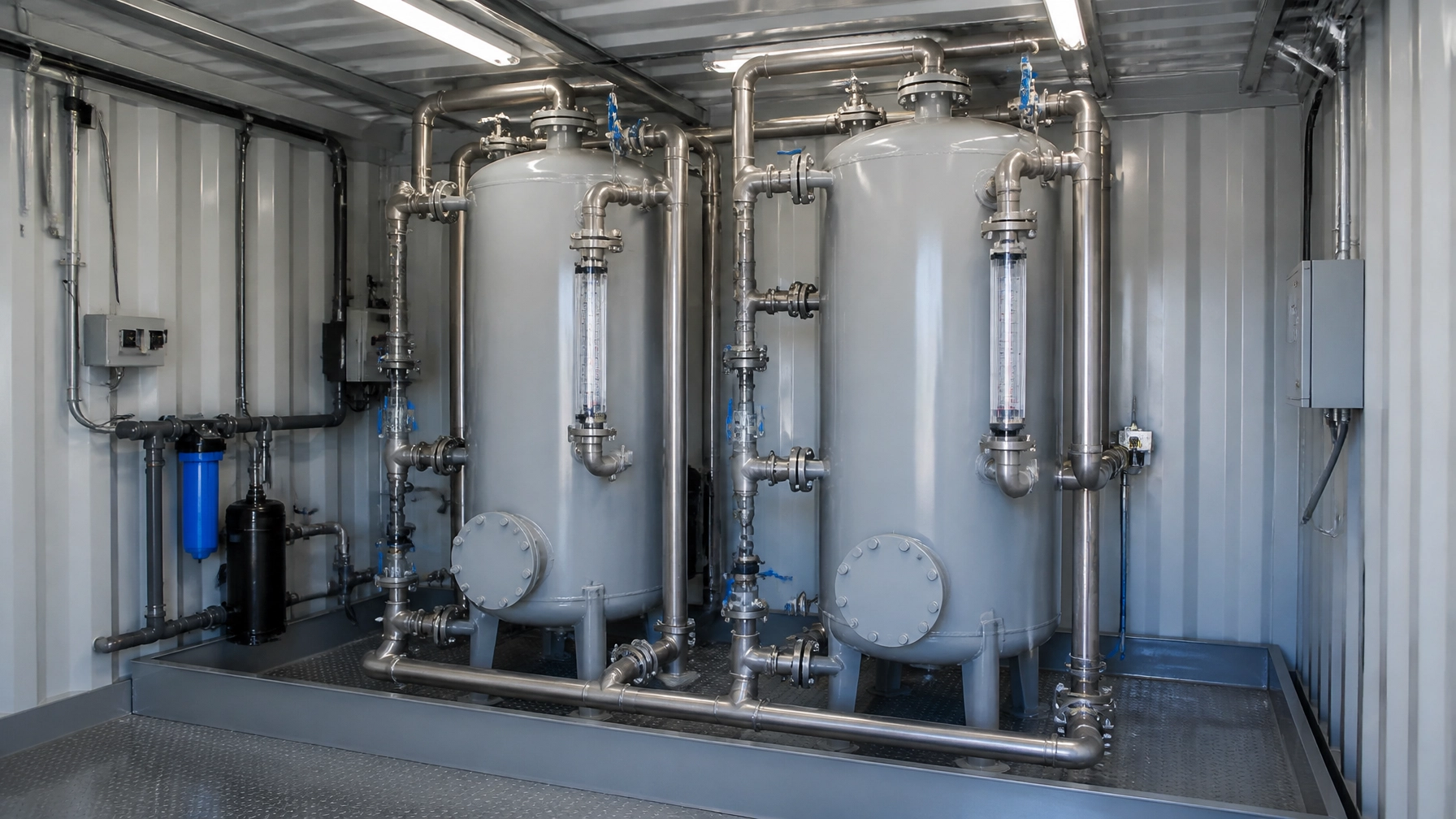
For projects in Jersey City, Newark, Hoboken, Bayonne, Hudson County, Bergen County, and Essex County, PFAS treatment is not a simple equipment purchase. The treatment system must match the groundwater chemistry, flow rate, PFAS profile, discharge pathway, residuals plan, and NJDEP closure strategy.
The right question is not, “Should we use GAC or ion exchange?”
The right question is, “What treatment train can reliably meet the applicable standard and support the project’s regulatory endpoint?”
New Jersey PFAS groundwater standards for 2026
NJDEP’s Ground Water Quality Standards page identifies the following Class II-A groundwater standards:
| Constituent | Groundwater standard | Approximate equivalent |
|---|---|---|
| PFOA | 0.014 µg/L | 14 ppt |
| PFOS | 0.013 µg/L | 13 ppt |
| PFNA | 0.013 µg/L | 13 ppt |
| GenX chemicals | 0.020 µg/L | 20 ppt |
The GenX standard took effect through NJDEP’s June 15, 2026 adoption. NJDEP also lists a GenX practical quantitation level of 0.0075 µg/L.
A practical quantitation level, or PQL, is the lowest concentration a laboratory can reliably quantify under routine operating conditions. It matters because PFAS decisions often depend on results measured in parts per trillion.
NJDEP explains that the applicable groundwater standard is generally the higher of the health-based criterion and the corresponding PQL. The actual standard and regulatory pathway remain site-specific.
Review the official NJDEP Ground Water Quality Standards, the June 15, 2026 GenX adoption, and NJDEP’s PFAS standards and regulations before finalizing a remedial design.
Analytical requirements changed the front end of site investigation
Under the amended New Jersey Technical Requirements for Site Remediation, PFNA, PFOS, PFOA, GenX chemicals, and 2,3,7,8-TCDD may be required across relevant media when hazardous substances at an Area of Concern are unknown or poorly documented.
That can affect:
- Phase II Environmental Site Assessments
- Preliminary Assessments and Site Investigations
- Remedial Investigations
- Brownfield acquisitions
- Industrial property transfers
- Sites with historic firefighting foam use
- Manufacturing and plating facilities
- Airports, fire-training areas, and logistics properties
- Properties with incomplete historical records
The analytical plan should address more than groundwater alone. PFAS can move through a soil and groundwater pathway, migrate with dissolved groundwater, remain in soil, and create a continuing source after excavation or treatment.
A defensible program typically evaluates:
- Soil, groundwater, and, where relevant, soil leachate
- Upgradient and downgradient conditions
- Potential source areas
- Hydraulic gradients and groundwater flow direction
- Historical uses and PFAS-containing materials
- Laboratory reporting limits
- Quality assurance and quality control
- Sampling equipment and material compatibility
- Data validation and regulatory comparison
Envicon’s Phase II ESA service is designed around the question the investigation must answer. Borings and wells should be placed against the recognized environmental conditions, not scattered across a site without a decision framework.
Treatment selection starts with influent chemistry
GAC and ion exchange can both remove PFAS. Neither is automatically the correct answer for every New Jersey site.
Before sizing a system, the design team should understand the influent:
- PFOS, PFOA, PFNA, GenX, and other detected PFAS
- Short-chain and long-chain PFAS distribution
- Total organic carbon, or TOC
- Dissolved organic carbon
- pH, alkalinity, hardness, and conductivity
- Iron, manganese, suspended solids, and turbidity
- Co-contaminants such as petroleum hydrocarbons or chlorinated solvents
- Groundwater temperature
- Design flow and peak flow
- Expected pumping duration
- Discharge limits and receiving pathway
TOC is especially important for GAC because organic matter can compete for adsorption sites. Iron, manganese, and suspended solids can foul media and increase pressure loss. A treatment system that looks adequate on paper may perform poorly if the influent chemistry was not characterized before media selection.
Flow also drives the design. A short-term excavation dewatering system may require different equipment from a long-term pump-and-treat system with continuous groundwater extraction.
GAC versus ion exchange for PFAS treatment

| Treatment approach | Strengths | Limitations and design concerns | Typical fit |
|---|---|---|---|
| Granular activated carbon, or GAC | Familiar technology, available in multiple grades, effective for many long-chain PFAS, straightforward vessel configuration | TOC and co-contaminants can reduce capacity. Short-chain PFAS may break through sooner. Spent carbon requires management. | Broad PFAS treatment, polishing, and projects with manageable organic loading |
| Ion exchange, or IX | Often strong performance at low PFAS concentrations. Can provide high treatment capacity for selected PFAS profiles. | Resin selection is chemistry-dependent. Fouling, regeneration, resin disposal, and supplier requirements must be evaluated. | Low-concentration groundwater, challenging short-chain PFAS profiles, or sites needing compact treatment |
| Foam fractionation | Can concentrate PFAS into a smaller residual stream and reduce dissolved mass in appropriate influent conditions | Not a universal replacement for polishing. Requires careful evaluation of surfactant behavior, foam stability, concentrate management, and downstream treatment. | Higher-concentration PFAS streams or treatment trains where concentration and destruction or off-site management are available |
| Combined treatment train | Allows pretreatment, primary removal, and polishing to address different PFAS and chemistry issues | More equipment, controls, sampling points, residuals, and operating decisions | Complex sites, variable influent, strict discharge requirements, or long-term treatment |
The treatment comparison is a planning framework, not a substitute for bench testing, pilot testing, or site-specific design.
When GAC makes sense
GAC is often selected because it is widely understood and can be configured in lead-lag vessels. The lead vessel captures most of the contaminant load. The lag vessel provides polishing and a warning point before breakthrough reaches the discharge.
GAC design must account for:
- Empty bed contact time
- Vessel diameter and bed depth
- Hydraulic loading
- Influent TOC
- PFAS chain length
- Competing contaminants
- Pressure drop
- Breakthrough curves
- Media changeout logistics
- Spent carbon transportation and disposal or reactivation
Media replacement should be based on monitoring data and design expectations. A calendar-only changeout schedule may waste media or fail to protect the effluent.
When ion exchange makes sense
Ion exchange resin can be effective where low PFAS concentrations, short-chain compounds, or limited space make GAC less attractive. Resin selection must match the PFAS profile and groundwater chemistry.
The design team should confirm:
- Resin selectivity
- Expected capacity
- Pretreatment requirements
- Sensitivity to iron, manganese, oil, and suspended solids
- Regeneration options
- Spent resin handling
- Supplier performance data
- Effluent monitoring frequency
Ion exchange can reduce treatment-system footprint, but a smaller system is not automatically a lower-risk system. Resin exhaustion can occur quickly if the influent chemistry was underestimated.
Where foam fractionation fits
Foam fractionation may be appropriate for selected higher-concentration PFAS streams, especially where PFAS can be concentrated into a smaller residual volume before polishing or off-site management.
It requires careful planning for:
- Influent concentration
- Surfactant behavior
- Foam stability
- Concentrate volume
- Downstream treatment
- Residual classification
- Discharge or disposal authorization
Foam fractionation should not be presented as a universal solution for low-level groundwater. It is a treatment option that must fit the chemistry and the residuals pathway.
Monitoring, discharge, and residuals are part of the design

A PFAS treatment system is not complete when the vessels are installed. The project also needs a monitoring and operating plan.
That plan should define:
- Influent, interstage, and effluent sampling points
- PFAS laboratory method and reporting limits
- Sampling frequency during startup
- Routine monitoring frequency
- Trigger levels for media replacement
- Pressure and flow checks
- Backup or bypass procedures
- Residuals characterization
- Spent GAC or resin shipment documentation
- Discharge permit requirements
- NJDEP reporting and communication
- Confirmation sampling after treatment
Discharge cannot be assumed. Depending on the project, treated water may require authorization before discharge to a sewer, surface water, or reinfiltration system. A treatment design that ignores the discharge pathway creates a construction and regulatory problem later.
Envicon’s remediation and brownfield service integrates treatment planning with investigation, remedial design, field oversight, soil and groundwater management, and regulatory closure. For New Jersey cases, NJ LSRP services can carry the regulatory strategy through NJDEP coordination and closure documentation.
What drives PFAS treatment cost in Jersey City and Newark?
There is no responsible universal price for “PFAS treatment cost Jersey City” or “PFOA PFOS groundwater remediation Newark.” Site-specific conditions control the budget.
Major cost drivers include:
- Number and depth of extraction wells
- Groundwater flow rate
- Treatment duration
- PFAS concentrations and chain-length distribution
- TOC and co-contaminant loading
- Pretreatment requirements
- GAC or resin capacity
- Pilot testing
- Equipment rental or purchase
- Electrical and controls
- Secondary containment
- Discharge permitting
- Sampling and laboratory frequency
- Media changeout and transportation
- Residual disposal or regeneration
- Winterization and site access
- NJDEP coordination and reporting
A technically credible estimate should separate capital costs, operating costs, laboratory costs, residuals management, and contingency. It should also identify which assumptions could change the price.
FAQ
What is the GenX groundwater standard in New Jersey?
NJDEP’s June 15, 2026 adoption lists a GenX groundwater quality standard of 0.020 µg/L, or approximately 20 ppt. The listed PQL is 0.0075 µg/L.
Is GAC always the best PFAS treatment technology?
No. GAC may be effective for many PFAS profiles, but TOC, short-chain PFAS, co-contaminants, flow, and treatment duration can change the selection. Ion exchange, foam fractionation, or a combined train may be more appropriate.
Does PFAS testing apply to soil as well as groundwater?
Potentially. Where contaminants at an Area of Concern are unknown or poorly documented, New Jersey’s Technical Requirements may require PFAS-related analysis across relevant media. The exact scope depends on site history, regulatory program, and professional judgment.
How often must PFAS treatment media be changed?
There is no universal interval. Changeout depends on influent concentrations, flow, TOC, media capacity, breakthrough monitoring, and the treatment objective. Lead-lag vessel monitoring is commonly used to manage this decision.
Can treated PFAS groundwater be discharged to a sewer?
Not automatically. The discharge pathway must be evaluated and authorized under the applicable requirements. Sewer acceptance, NJPDES requirements, receiving-water limits, and local utility conditions may apply.
Does Envicon design PFAS remediation systems in Hudson County?
Envicon supports PFAS assessment, groundwater investigation, remedial design, treatment planning, construction oversight, and regulatory coordination in Jersey City, Hoboken, Bayonne, Newark, Hudson County, Bergen County, and Essex County.
Next step: design the treatment path before mobilization
If PFAS is affecting your site, start with the data that controls the remedy. Envicon can help you move from investigation to an actionable treatment and regulatory plan.
- Call Envicon now
- Get a free site-specific quote
- Review remediation and brownfield services
- Explore Phase II groundwater investigation services
Precision matters at parts-per-trillion concentrations. The right treatment plan protects the project, the schedule, and the path to closure.

Leave a Reply