SEO title: Former Dry Cleaner Sites 2026: PCE Vapor Intrusion Risk in NY and NJ Retail Redevelopment
Meta description: Learn how former dry cleaner sites create PCE vapor intrusion risks in New York and New Jersey, and how a properly scoped Phase II ESA supports mitigation and regulatory closeout.
A drive-by inspection can tell you what a property looks like today. It cannot tell you what operated there in 1958, where solvent was stored, or whether PCE migrated beneath the neighboring retail unit.
Former dry cleaners remain one of the most common and underestimated contamination sources in older commercial corridors across New York and New Jersey. The concern is not limited to the former cleaner’s parcel. Tetrachloroethene, commonly called PCE or perchloroethylene, can migrate through soil, groundwater, utility trenches, floor drains, and sewer corridors.
For buyers, landlords, and attorneys evaluating a retail strip in Hudson County, the Bronx, or Queens, this history matters before closing.
Why former dry cleaners create a vapor intrusion concern
PCE was widely used in commercial dry cleaning. Releases occurred through leaking equipment, solvent transfer, floor drains, waste handling, and improper storage. Trichloroethene, or TCE, may also be present. Both chemicals are volatile organic compounds that can move from subsurface sources into soil vapor.
The U.S. Environmental Protection Agency defines vapor intrusion this way:
“Vapor intrusion occurs when vapor-forming chemicals migrate from a subsurface source into an overlying building.”
Once PCE or TCE enters the subsurface, several pathways can develop:
- Soil and groundwater migration: Dissolved contamination can move with groundwater below the site or toward adjacent properties.
- Utility corridors: Sewer lines, electrical trenches, and other backfilled pathways can provide lower-resistance routes for vapor movement.
- Building penetrations: Cracks, floor drains, sumps, joints, and utility penetrations can allow vapors to enter a slab-on-grade building.
- Lateral migration: Vapor can move beneath connected retail spaces, party walls, sidewalks, and neighboring structures.
PCE can also break down into other chlorinated compounds, including TCE, dichloroethene, and vinyl chloride. The contaminant list should reflect the site history and the likely degradation pathway.
The EPA vapor intrusion resource provides the federal framework. New Jersey and New York apply their own technical guidance and screening procedures.
A historical Sanborn review catches what a drive-by misses
A current tenant may be a pharmacy, restaurant, or vacant storefront. The property may look clean. That does not eliminate the need to investigate its historical use.
A proper Phase I ESA should examine historical sources that can identify dry cleaning operations, laundries, garment cleaning facilities, and related solvent use. Historical Sanborn fire insurance maps are especially useful because they may show:
- Former dry cleaner or laundry names
- Cleaning and pressing operations
- Rear additions or detached boiler and storage areas
- Former commercial uses on adjacent parcels
- Building footprints that no longer exist
- Shared walls, alleys, and service corridors
A drive-by inspection cannot identify a dry cleaner that closed 40 years ago. It also cannot show whether a former operation occupied the neighboring suite or whether a solvent storage area was located behind the building.
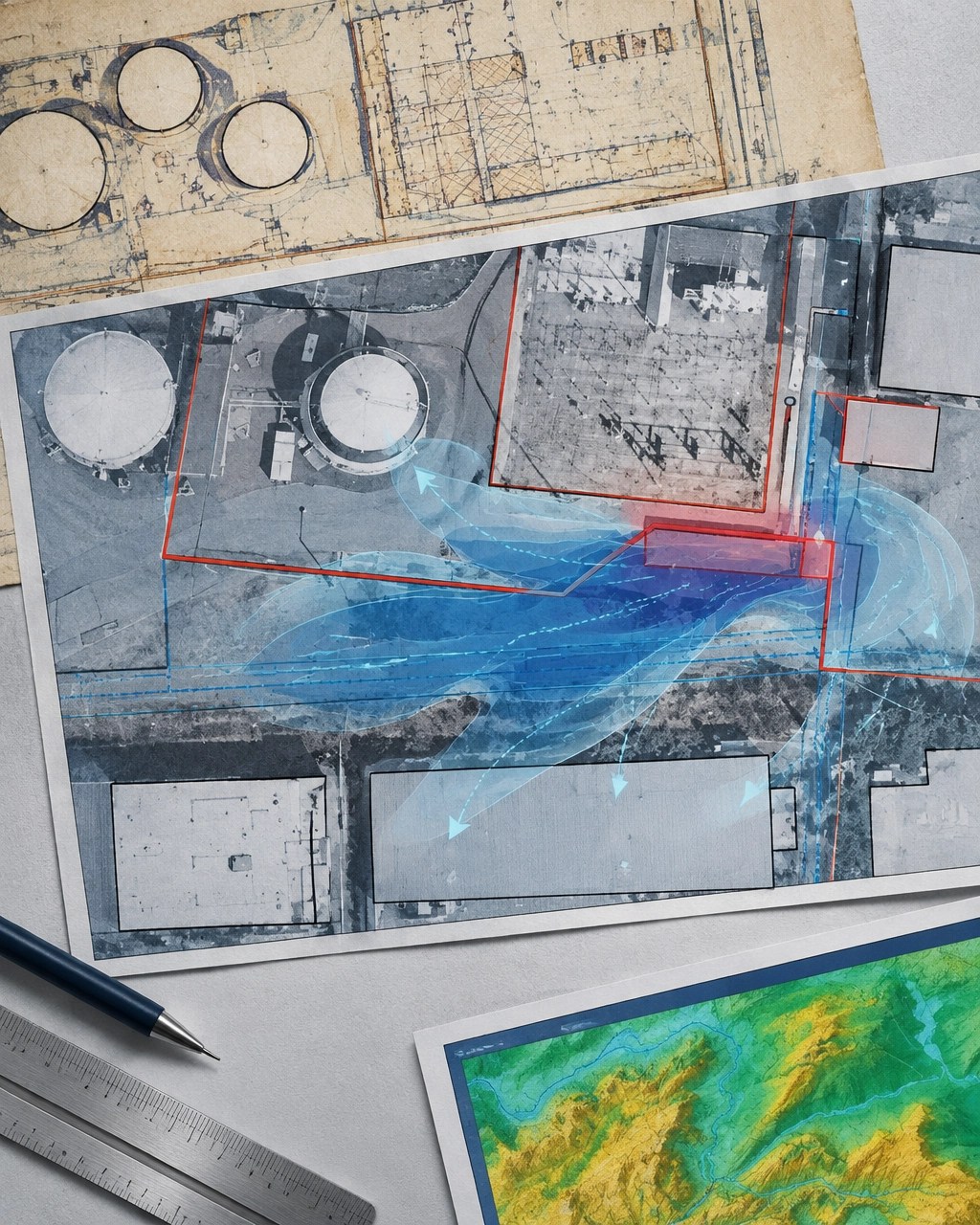
At Envicon, the historical research is performed by the professional engineer who signs the report. That matters. The person interpreting the historical evidence understands how it affects the sampling plan. You do not receive a template narrative that separates historical research from field decisions.
How to spot a former laundry before closing
Buyers, landlords, and attorneys can identify warning signs before authorizing intrusive work.
Look for:
- Historical listings that reference “cleaners,” “laundry,” “pressing,” or “tailoring”
- A former cleaner in the same strip or directly adjacent to the target property
- Floor drains, sumps, pits, or patched concrete inside the unit
- Solvent odors, stained concrete, or abandoned equipment pads
- Utility corridors connecting the former cleaner to other buildings
- Shallow groundwater or basements beneath the commercial corridor
- Prior environmental reports that mention VOCs, chlorinated solvents, soil gas, or indoor air
- Existing vapor barriers, sub-slab depressurization systems, or monitoring points
- Nearby residential units, schools, or occupied basements
A former dry cleaner is not an automatic deal killer. It is a reason to build the right conceptual site model before you set a purchase price or commit to construction.
What a Phase II ESA should include
A generic soil sampling package may not answer the real question. At a former dry cleaner, the central issue is often whether PCE or TCE created a complete vapor intrusion pathway.
A defensible Phase II environmental site assessment in NJ or New York should be tailored to the building and its history.
1. Confirm the source areas
The investigation should identify likely release points, including:
- Former machine locations
- Solvent storage and transfer areas
- Waste and filter handling areas
- Floor drains and sumps
- Rear service areas
- Former tanks or waste storage locations
- Adjacent properties that may have operated as cleaners
2. Collect soil and groundwater data
Soil borings and groundwater sampling help determine whether chlorinated VOCs are present and how they are distributed. The laboratory suite commonly includes PCE, TCE, cis-1,2-DCE, trans-1,2-DCE, and vinyl chloride, along with other site-specific VOCs.
Sampling should consider upgradient, downgradient, and cross-gradient conditions. A single boring in an accessible location may not represent a plume beneath a connected retail strip.
3. Add soil vapor and sub-slab sampling
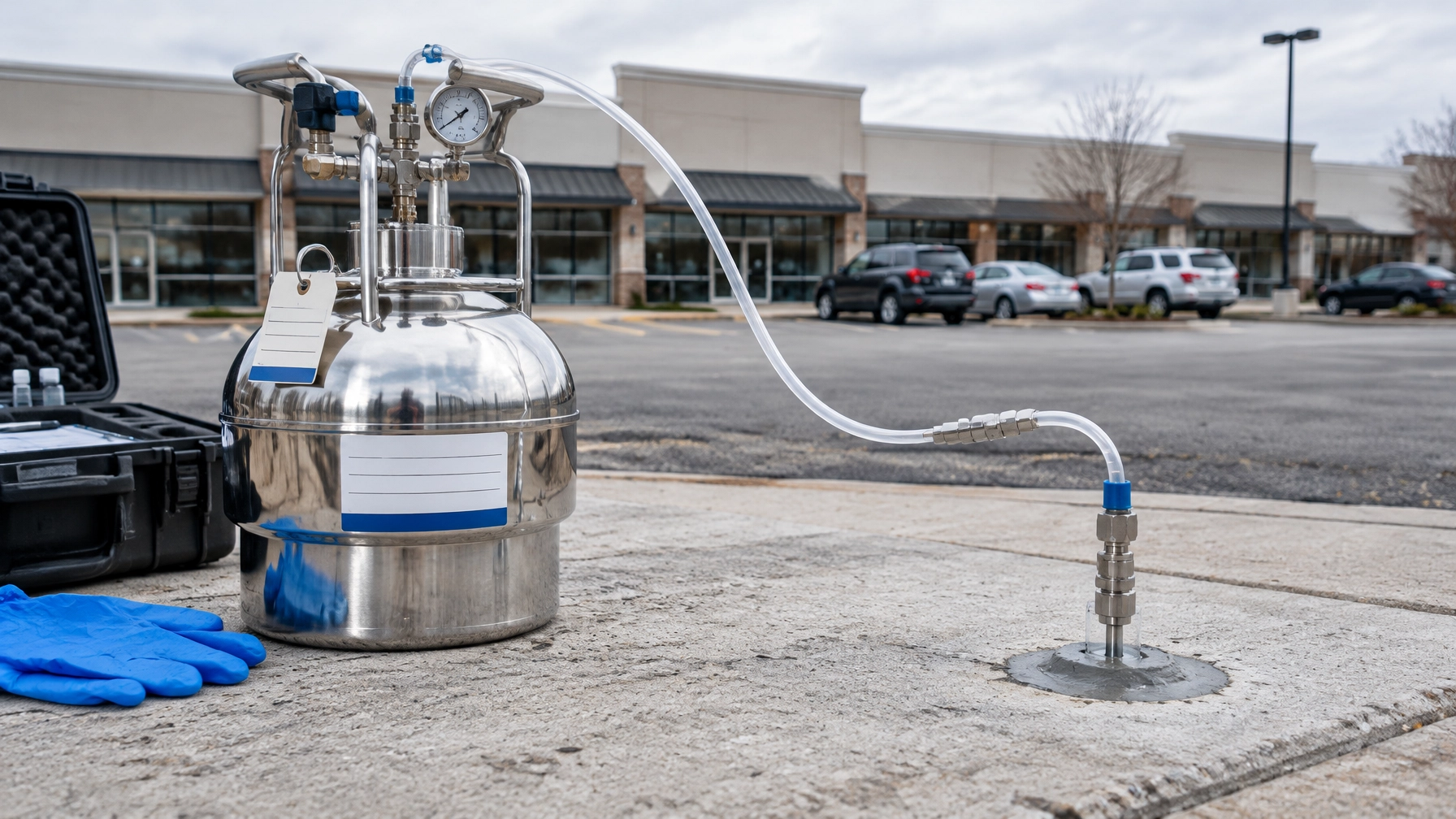
Soil vapor samples can help define the extent of a source. Sub-slab samples are more directly tied to the building exposure pathway.
A practical scope may include:
- Exterior soil vapor points near the former source area
- Soil vapor points between the source and neighboring structures
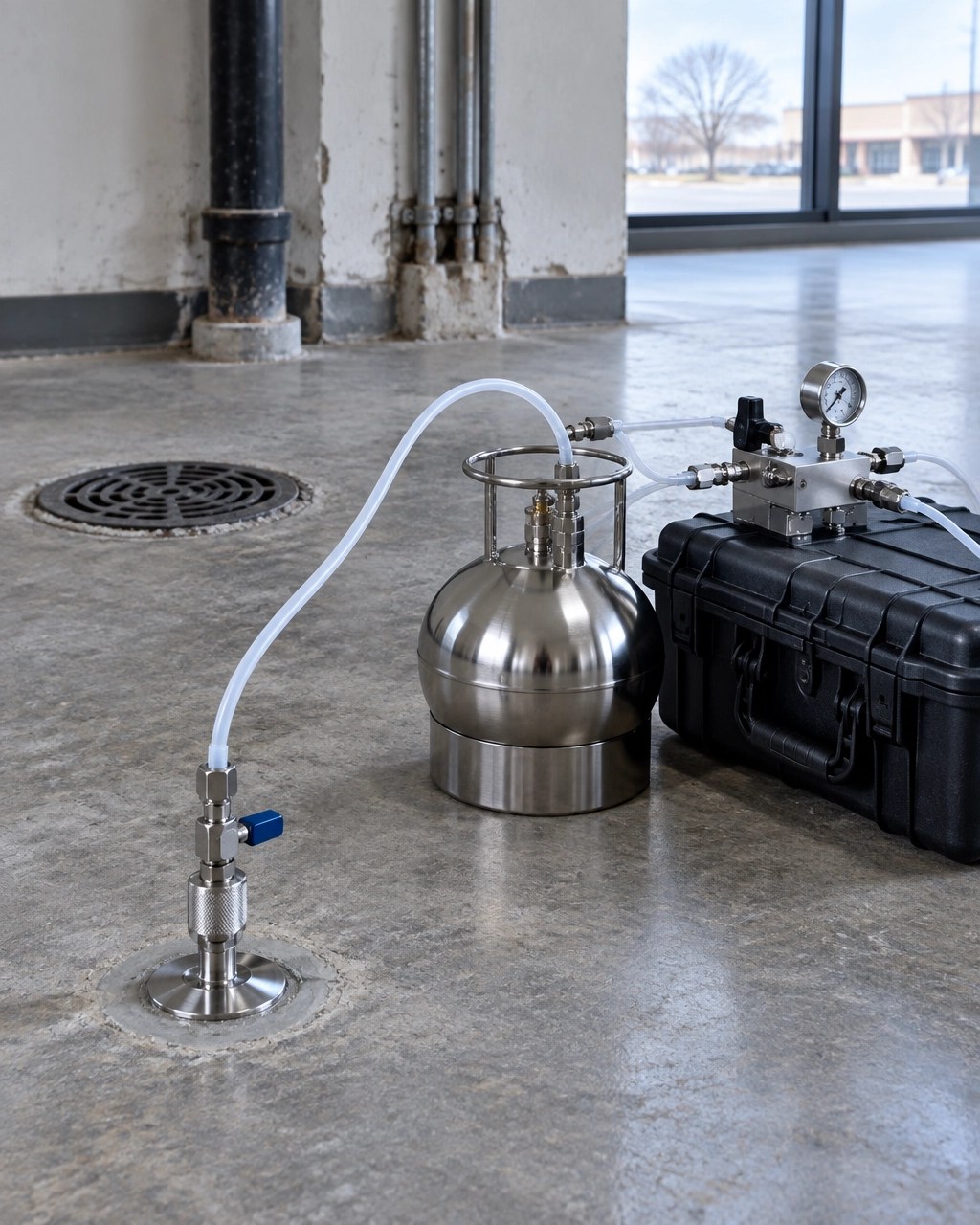
- Sub-slab ports beneath the former cleaner
- Sub-slab ports in adjacent tenant spaces
- Indoor air and ambient air samples where the data support potential intrusion
- Building surveys to identify products that may contain PCE or other VOCs
NJDEP’s Vapor Intrusion Guidance addresses groundwater, soil gas, sub-slab soil gas, and indoor air. New York projects should reference NYSDEC vapor intrusion guidance and current NYSDOH vapor intrusion resources.
Sampling conditions matter. HVAC operation, building occupancy, weather, floor drains, and product storage can affect indoor air results. The report should document those conditions instead of treating every result as a simple pass or fail.
What mitigation can look like
If the data confirm a vapor intrusion concern, the solution depends on the source, building design, and redevelopment plan.
Common controls include:
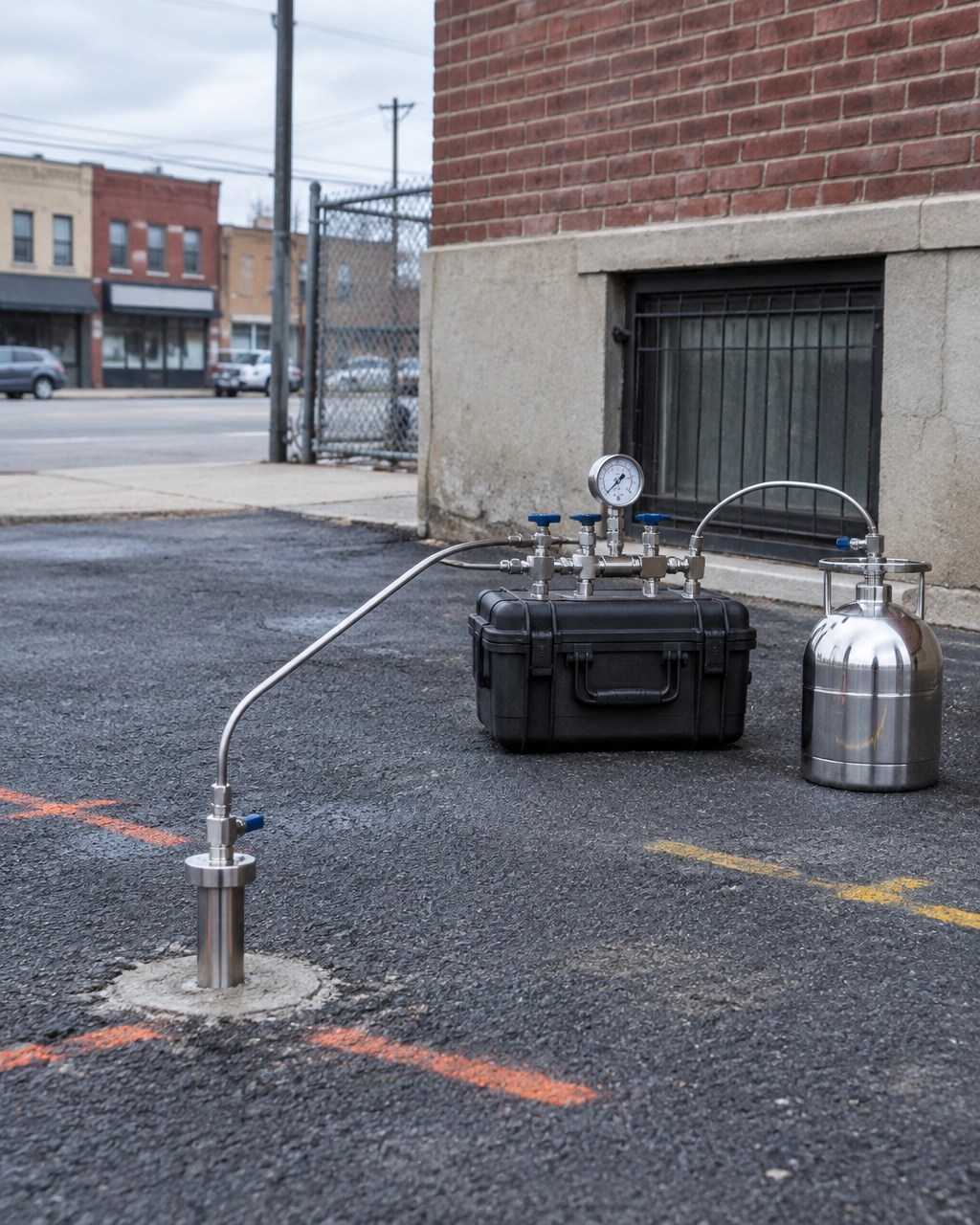
- Sub-slab depressurization
- Active soil vapor extraction
- Vapor barriers beneath new slabs
- Sealing cracks, joints, sumps, and utility penetrations
- Improved ventilation where appropriate
- Source removal or targeted excavation
- Groundwater treatment or monitored natural attenuation
- Long-term operation, maintenance, and monitoring
A new retail or mixed-use building may allow the design team to install a vapor barrier and passive or active venting system during construction. An existing occupied strip may require a sub-slab depressurization system with monitoring points and access for future maintenance.
The mitigation design should connect directly to the investigation data. A system selected from a template may not address vapor entering through a sewer corridor or migrating beneath an adjacent tenant space.
NJDEP and NYSDEC closeout is part of the redevelopment plan
Environmental closeout should not be treated as paperwork after construction. It should shape the investigation and remedy from the beginning.
In New Jersey, the Licensed Site Remediation Professional, or LSRP, may coordinate with NJDEP, evaluate the pathway, oversee remedial actions, and document the response action outcome. Direct communication with the NJDEP case manager can prevent avoidable delays when the sampling data raise questions.
In New York, the path may involve NYSDEC oversight, a Brownfield Cleanup Program work plan, an interim remedial measure, a site management plan, or a Certificate of Completion depending on the program and site conditions. The final package may need to address:
- Investigation findings
- Remedy performance
- Engineering controls
- Institutional controls
- Operation and maintenance
- Confirmatory sampling
- Remaining restrictions or monitoring obligations
Our team works directly with regulators, attorneys, architects, contractors, and owners. We produce documentation that supports the next decision instead of handing you a report and leaving the interpretation to someone else.
For related transaction planning, review our guidance on NYC OER E-designation closeout for Queens, Brooklyn, and the Bronx and coordinated compliance work in Jersey City and Hoboken.
The practical takeaway for 2026 buyers
Before closing on an older retail property in New York or New Jersey:
- Review historical Sanborn maps and city directories.
- Ask whether a dry cleaner, laundry, or pressing operation occupied the site or an adjoining suite.
- Inspect floor drains, sumps, slab penetrations, and utility corridors.
- Require a Phase I ESA that addresses vapor intrusion potential.
- Scope the Phase II ESA around PCE, TCE, soil vapor, sub-slab vapor, and groundwater.
- Consider adjacent buildings and tenant spaces, not only the target parcel.
- Establish the NJDEP or NYSDEC closeout path before construction begins.
- Use current agency screening criteria. Values and guidance can change.
A former dry cleaner does not have to stop a redevelopment project. An incomplete investigation can.
Envicon provides Phase II environmental assessment and site investigation services for buyers, developers, attorneys, and property owners across New York and New Jersey. We bring field experience, direct regulator coordination, and clear deliverables to complex sites in Hudson County, the Bronx, Queens, and throughout the region.
Ready to evaluate a former dry cleaner site?
Do not wait until a lender, regulator, or contractor finds the problem after closing.
- Call Envicon now at (917) 764-2171
- Get a free quote today
- Use our proprietary project risk screener
- View our complete list of services
The right investigation does more than identify contamination. It gives you a buildable path forward.

Leave a Reply