Meta description: Learn how to identify NJDEP historic fill, evaluate on-site reuse, and document alternative fill or clean fill before moving excavated soil.
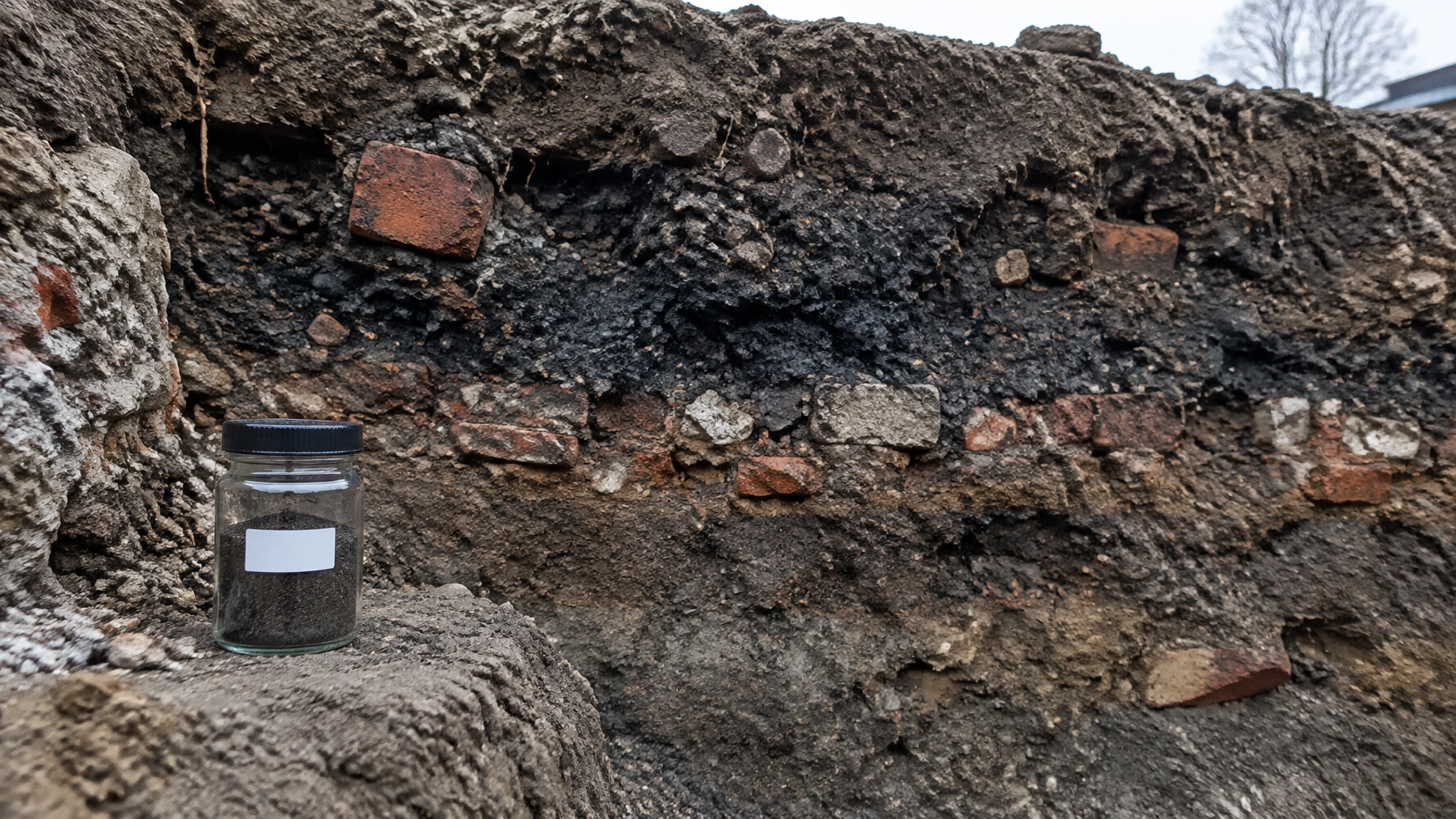
On a Monmouth County redevelopment site, a bucket of brick fragments and ash can change the soil-management plan. The key question isn’t just what the material looks like. It’s what it is, how it was placed, what contaminants it contains, and whether the proposed reuse is allowed at the receiving area.
NJDEP’s current Fill Material Guidance for CSRR Sites, Version 4.0 and Historic Fill Technical Guidance, Version 2.0 explain separate but related parts of the process. The June 24, 2026 notice provided for this article announces adopted remediation-standard amendments, including standards for PFNA, PFOS, PFOA and GenX chemicals. It is not a new historic-fill or soil-reuse guidance document.
That distinction matters when you’re planning excavation, a receiving site, and the paperwork that must travel with each load.
What NJDEP means by historic fill
Under NJDEP’s Technical Requirements, historic fill is non-indigenous material placed to raise a site’s elevation, contaminated before it was placed, and not connected to operations at the location where it was deposited. Examples can include construction or demolition debris, dredge spoils, incinerator residue, fly ash and certain non-hazardous solid waste.
The definition excludes, among other materials, substantially chromate chemical production waste, other chemical production waste, residues from metal or mineral ore processing, and municipal solid-waste landfill sites. See the definition in the Historic Fill Technical Guidance and N.J.A.C. 7:26E-1.8.
Brick, ash or slag in a boring log may suggest historic fill. It doesn’t prove the regulatory classification. Site history and subsurface investigation help establish whether the material fits the definition. Other areas of concern, such as a former tank or process area, still need separate evaluation.
Historic fill also isn’t a blanket label for “clean,” “hazardous,” or “approved for transport.” The material’s history, testing, waste classification and intended destination all matter.
Historic fill, alternative fill and clean fill are not interchangeable
These terms address different questions:
- Historic fill describes the material’s origin and placement history.
- Alternative fill is material used as part of a remedial action that exceeds applicable soil remediation standards or criteria, but does not contain free liquids. It may be soil or non-soil.
- Clean fill is material for remedial use that meets applicable standards and criteria, contains no extraneous debris or solid waste, and has no free liquids.
The Fill Material Guidance applies to the use of fill at sites within New Jersey’s Site Remediation Program. It does not, by itself, authorize excavation, export or acceptance at an ordinary construction site or disposal facility.
There is also an important paperwork distinction. NJDEP says there is no general clean-fill certification for remediation sites. Clean fill must be characterized under the guidance. A certified quarry or mine has a separate pathway, and alternative fill requires supporting data and approval for its proposed use. So a document titled “clean fill certificate” is not a substitute for checking the actual NJDEP requirements and destination’s acceptance criteria.

Can you reuse the soil on site?
Possibly. First determine whether the project is an SRP site, identify the donor and receiving areas of concern (AOCs), and confirm whether moving material supports the remedial action. Reusing soil within the same property doesn’t automatically make it acceptable.
For on-site movement, NJDEP’s guidance generally requires the donor and receiving AOCs to be delineated and the material’s physical and chemical properties to be considered. Movement may be allowed without NJDEP pre-approval when the contaminants in the donor AOC are also present above applicable standards in the receiving AOC, subject to the guidance’s other conditions. The guidance also prohibits moving alternative fill into a clean area.
Historic fill at a redevelopment site spanning multiple contiguous properties has a specific pathway. The donor and receiving areas must meet the applicable like-on-like requirements, groundwater impacts must be addressed, and placement must protect health, safety and the environment. NJDEP recommends a historic-fill sampling frequency of four samples per acre for this evaluation. Confirm the project-specific requirements with the site’s LSRP before excavation begins.
For off-site reuse as alternative fill, the receiving AOC must also meet the guidance’s conditions. In general:
- Like-on-like: Don’t introduce contaminants above applicable criteria that are not already present at the receiving AOC.
- 75th-percentile comparison: Donor concentrations must meet the guidance’s comparison with existing contamination at the receiving AOC.
- Groundwater and surface water: Evaluate whether the material could affect groundwater, surface water or a groundwater remedy.
- Written pre-approval: NJDEP pre-approval is required for specified departures, including failure to meet like-on-like or 75th-percentile requirements, or placement above pre-remediation grade.
These are technical determinations, not a truck-driver’s call at the site gate. A receiving facility may also apply its own acceptance requirements, which can differ from the SRP reuse pathway.
Sampling and records that support a reuse decision
Start with the excavation limits, soil history and intended destination. Then design sampling that represents the material that will actually move. NJDEP’s guidance calls for discrete samples and volume-based sampling frequencies for donor material. Existing investigation data may be used if it reliably represents the proposed material and meets applicable data-quality requirements.
Sampling plans should account for different soil layers, excavation depths and material variability. A single sample from the visible surface of a stockpile may not represent material inside it or at depth. Composite samples have limits and cannot simply replace required discrete samples.
In 2026, emerging contaminants need attention too. In its May 26, 2026 notice, NJDEP reminded responsible parties that donor evaluations may need to consider contaminants of emerging concern, including PFAS, when site history, operations or existing data indicate potential use or discharge. The notice says to evaluate donor material for relevant CECs before reuse. If donor material exceeds a soil standard or interim standard for a CEC, movement should wait until the receiving AOC has been fully investigated and delineated for that contaminant.

A defensible reuse file typically includes:
- Donor and receiving site identification, history and maps.
- A sampling plan, field logs, laboratory results and data-quality review.
- Waste classification and evaluation of applicable contaminants, including CECs where indicated.
- Like-on-like and 75th-percentile comparisons, when required.
- Groundwater, surface-water and engineering-control considerations.
- A Fill Use Plan (FUP) when required, including proposed volume and placement locations.
- Executed bills of lading or manifests that identify the approved source, plus load and placement records.
- Final documentation of fill volume, thickness, surveyed elevations and placement area.
The FUP is not a generic form to complete after trucks arrive. It connects the material’s source data to the receiving site’s remedial design. NJDEP’s guidance describes the FUP as part of the Remedial Action Work Plan process. Check the requirements with the LSRP and NJDEP before scheduling the first load.
What a rejected load can cost
A load rejected at the gate can trigger more than a disposal bill. Depending on the contract and destination, the project may face return hauling, rehandling, temporary stockpiling, new characterization, a replacement source and contractor downtime. If multiple loads move before a problem surfaces, the volume and disruption can multiply.
The costliest mistake is treating visual similarity or a generic certificate as proof that the material is acceptable. A receiving facility’s written acceptance criteria, the applicable regulatory pathway and the project’s sampling record need to line up before dispatch.
If the material leaves before that work is done, you may have fewer options and less control over schedule. Resolve the decision while the soil is still accessible.
Plan the soil decision before excavation
For brownfield redevelopment in NJ, material classification and reuse planning belong in the excavation schedule, not at the end of it. Envicon supports NJ soil disposal and clean-fill planning as part of remediation and brownfield services. We coordinate the site data, destination requirements, field documentation and regulatory path so you can make a decision before trucks are waiting.
That local coordination matters in Monmouth County, where coastal, industrial and redevelopment conditions can complicate project planning. Our regional work also includes Newark, NJ and Queens, NY. The regulatory framework differs by location, so each project needs its own review.
The takeaway
Historic fill is a regulatory definition, not an automatic approval to reuse or export soil. Confirm the material’s history, characterize the actual excavation, check the receiving area and destination requirements, and document the decision before the first load moves. Clear answers up front protect the schedule, budget and community around the project.
Get a clear soil-management path
If you’re planning excavation or evaluating a proposed soil destination, bring the site history, available analytical data and project schedule to the conversation. We’ll help identify the next decision and the records needed to support it.

Leave a Reply