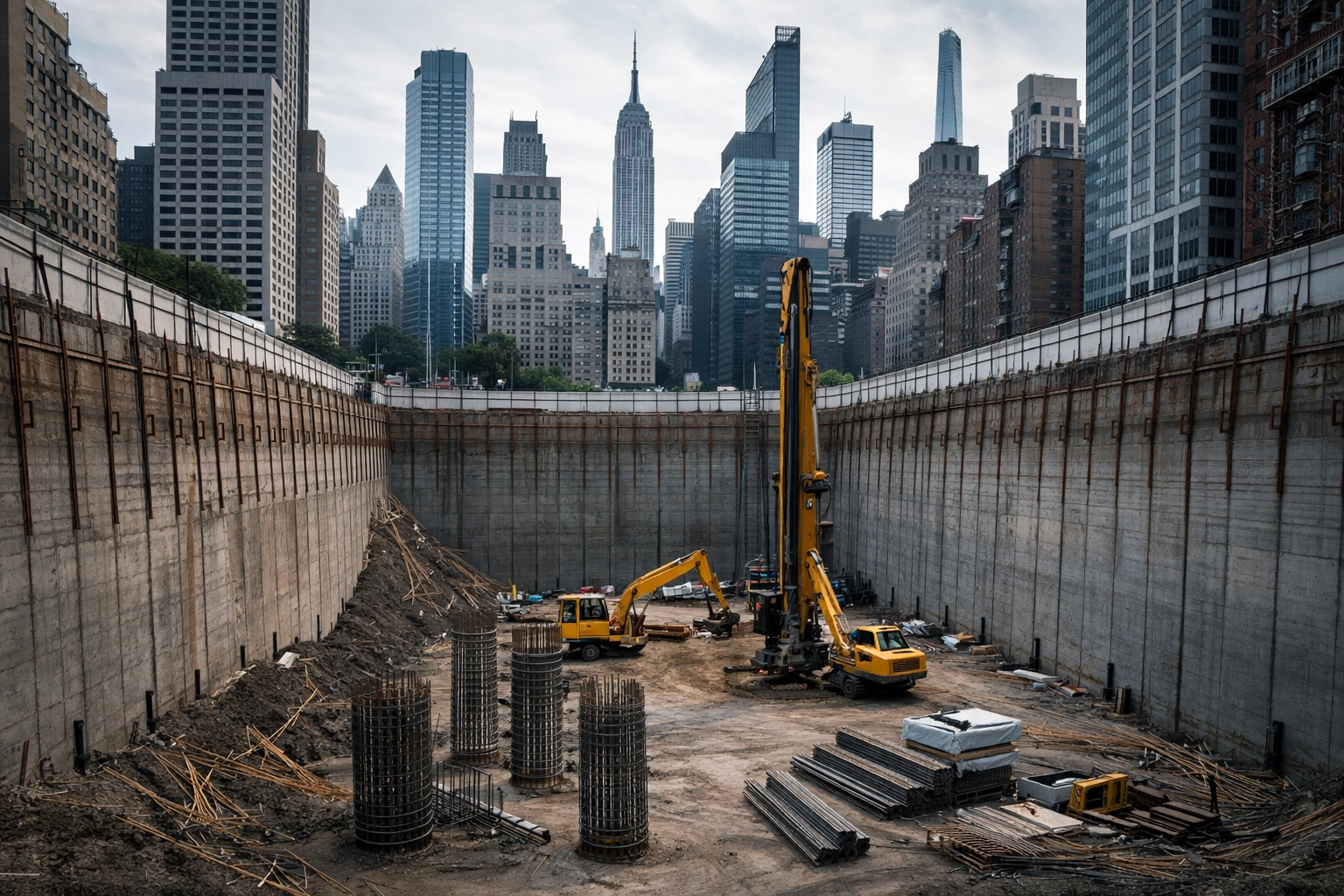
You've got the perfect infill site in Brooklyn. The zoning works. The deal pencils out. Your architect has a vision that'll turn heads. But here's the uncomfortable truth we tell developers every week: none of that matters if you don't understand what's happening ten, twenty, or fifty feet below grade.
In NYC's hyper-competitive real estate market, the building above ground gets all the attention. But it's the soil beneath your site that ultimately determines whether your project stays on budget, on schedule: or spirals into a costly nightmare of redesigns and change orders.
The Urban Infill Paradox
Urban infill development is the backbone of NYC's growth strategy. We're not building on virgin farmland here. Every site in Manhattan, Brooklyn, or Queens comes with a history: decades or centuries of previous uses, buried infrastructure, and subsurface conditions that rarely match what you'd find in a suburban greenfield project.
This creates what we call the urban infill paradox: the sites with the highest development potential often carry the greatest subsurface risk.
That former gas station in Williamsburg? The old manufacturing facility in Long Island City? The vacant lot in the South Bronx that's been sitting empty since the 1980s? Each one presents a unique puzzle of contaminated soil, varying geology, and proximity to existing structures that can make or break your pro forma.
What Actually Lies Beneath NYC
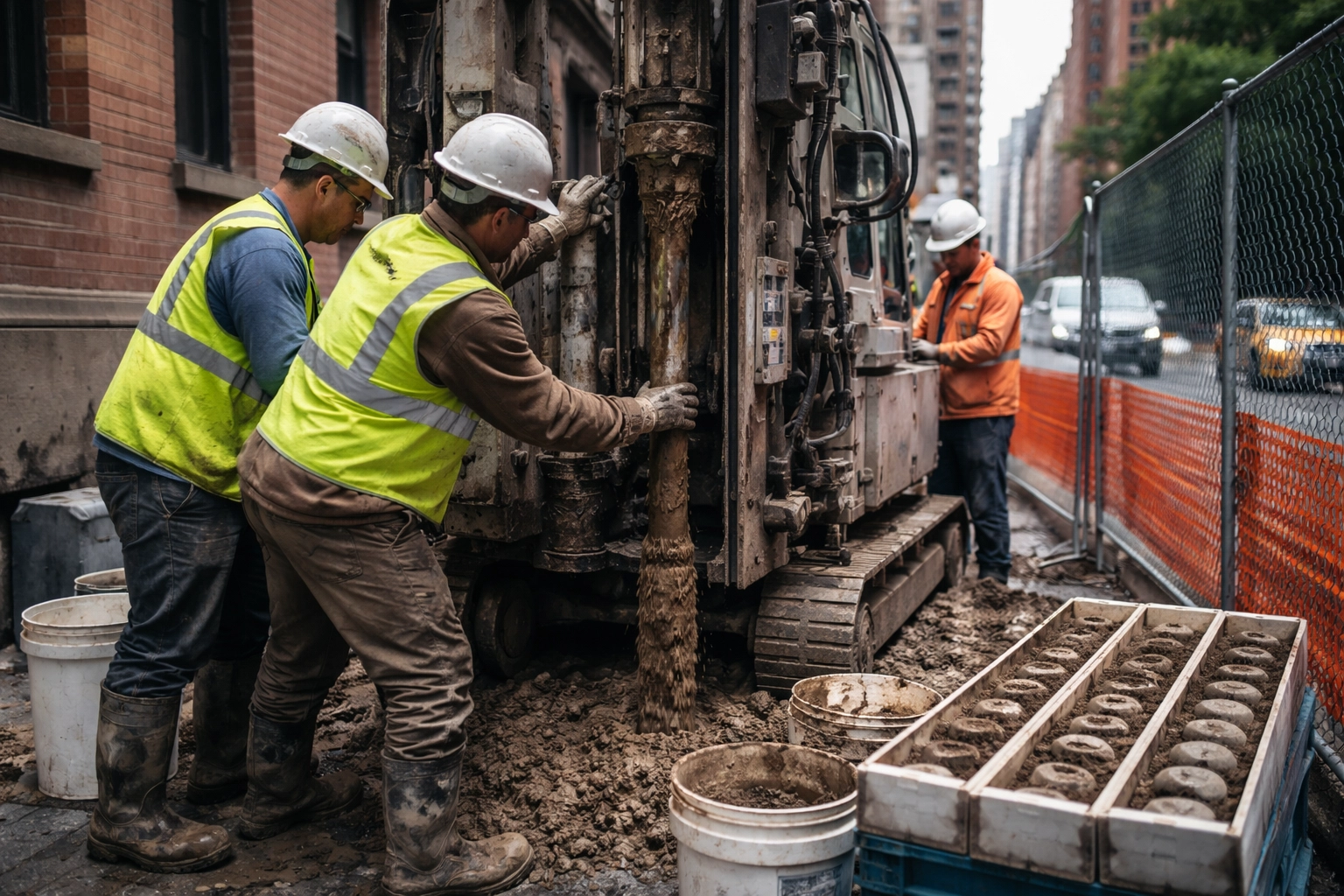
New York City's geology is anything but uniform. Within a single block, you might encounter:
- Bedrock at varying depths – Manhattan schist can appear at grade level in some areas and 100+ feet down in others
- Glacial till and outwash deposits – Loose, unpredictable soils left behind by retreating ice sheets
- Organic layers and peat – Especially problematic in former wetland areas of Brooklyn and Queens
- Fill material – Decades of debris, demolition waste, and who-knows-what from previous development cycles
- Contaminated groundwater – Legacy pollution from industrial operations that may have ceased generations ago
A thorough geotechnical investigation for redevelopment doesn't just tell you what's down there: it tells you what it means for your foundation design, your excavation costs, and your construction timeline.
"Soil composition, rock formations, and existing groundwater conditions fundamentally constrain what can be built and how much it will cost."
This isn't an abstract engineering concern. It's a budget line item that can swing by hundreds of thousands of dollars depending on what the borings reveal.
The Foundation Decision That Changes Everything
Here's where geotechnical engineering directly impacts your bottom line. Based on subsurface conditions, your structural engineer will need to specify one of several foundation approaches:
Shallow Foundations (Spread Footings)
- Work when competent bearing soils exist at reasonable depths
- Lower cost, faster installation
- Rarely viable for significant structures in NYC's variable geology
Deep Foundations (Piles and Piers)
- Required when load-bearing capacity isn't available near the surface
- Driven piles, drilled shafts, or micropiles depending on site constraints
- Significantly higher cost but necessary for most mid-rise and high-rise construction
Ground Improvement
- Techniques like soil mixing, grouting, or vibro-compaction to enhance weak soils
- Can sometimes avoid the need for deep foundations
- Requires precise geotechnical analysis to determine viability
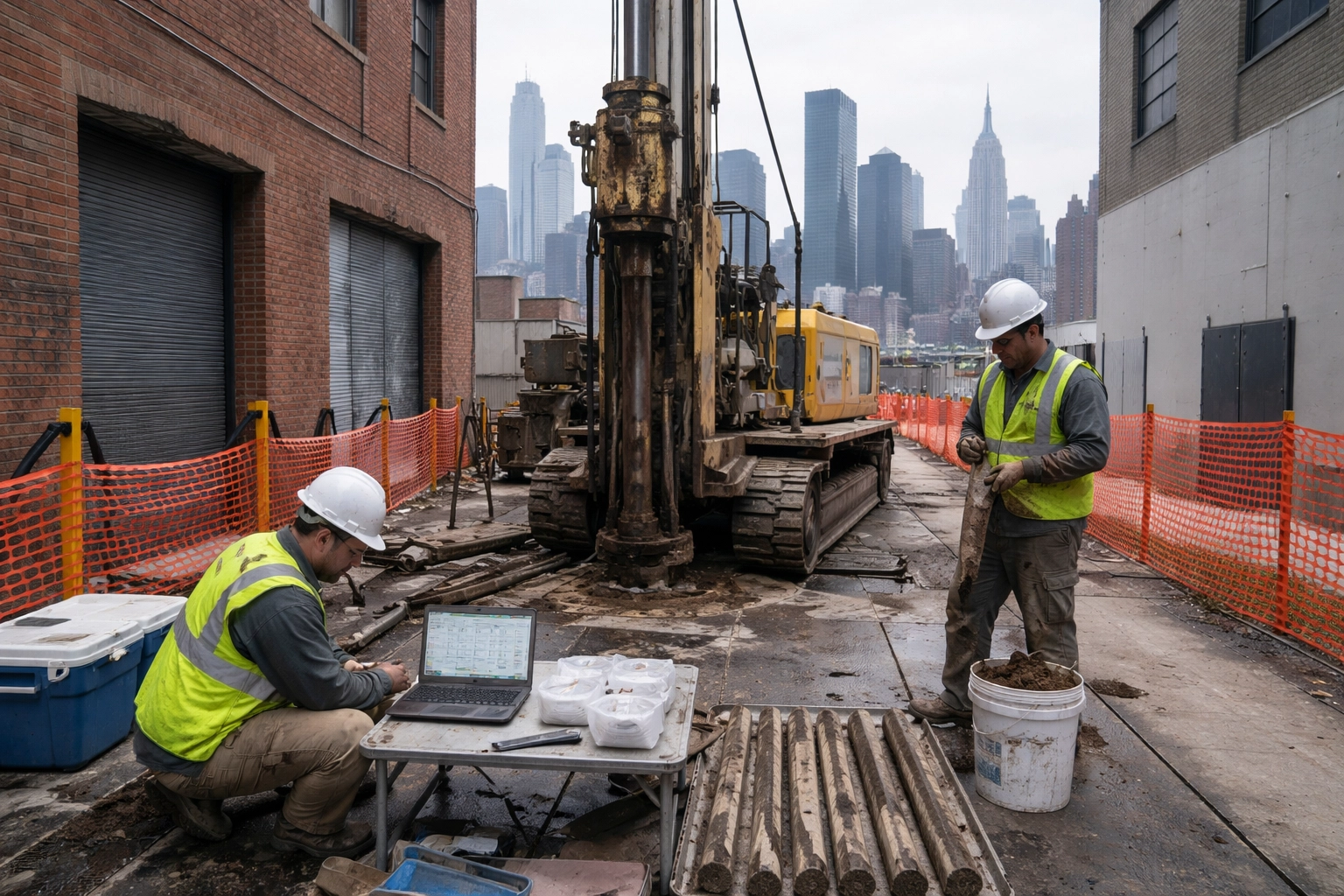
The difference between a spread footing foundation and a driven pile system can easily represent a seven-figure swing in your construction budget. And that's before we even discuss the excavation support systems you'll need in a dense urban environment where your neighbors' basements sit just feet from your property line.
The Brownfield Factor
In NYC, geotechnical engineering and environmental assessment are increasingly inseparable. Many urban infill sites carry environmental designations: whether through the NYSDEC Brownfield Cleanup Program or NYC OER's E-Designation system: that require remediation before or during construction.
Here's where an integrated approach pays dividends.
When your geotechnical borings and environmental sampling are coordinated from day one, you avoid:
- Redundant mobilization costs – One drill rig, multiple objectives
- Conflicting data interpretations – Single team, unified analysis
- Timeline delays – Parallel workstreams instead of sequential studies
- Regulatory surprises – Contamination discovered during foundation work
We've seen projects where the developer hired one firm for the Phase I ESA, another for the Phase II sampling, and a third for geotechnical investigation. The result? Three separate mobilizations, three different interpretations of subsurface conditions, and a six-month delay while everyone figured out how the pieces fit together.
What a Smart Geotechnical Program Looks Like
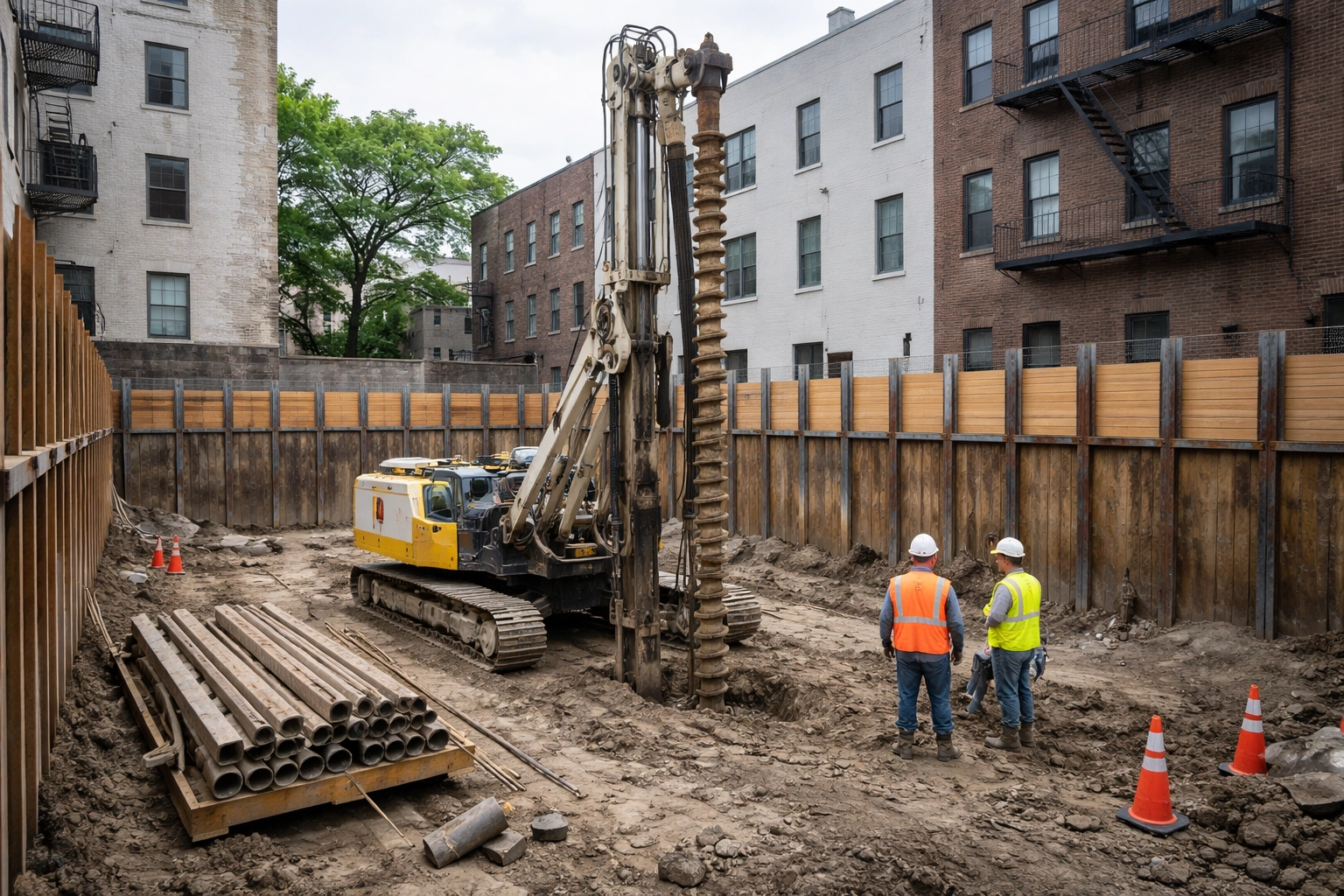
For NYC urban infill, we recommend a phased investigation that scales with your project's risk profile:
Phase 1: Desktop Study & Site Reconnaissance
- Review historical records, previous boring logs, and adjacent project data
- Walk the site to identify potential access constraints and drilling challenges
- Develop preliminary subsurface model and investigation scope
Phase 2: Subsurface Exploration
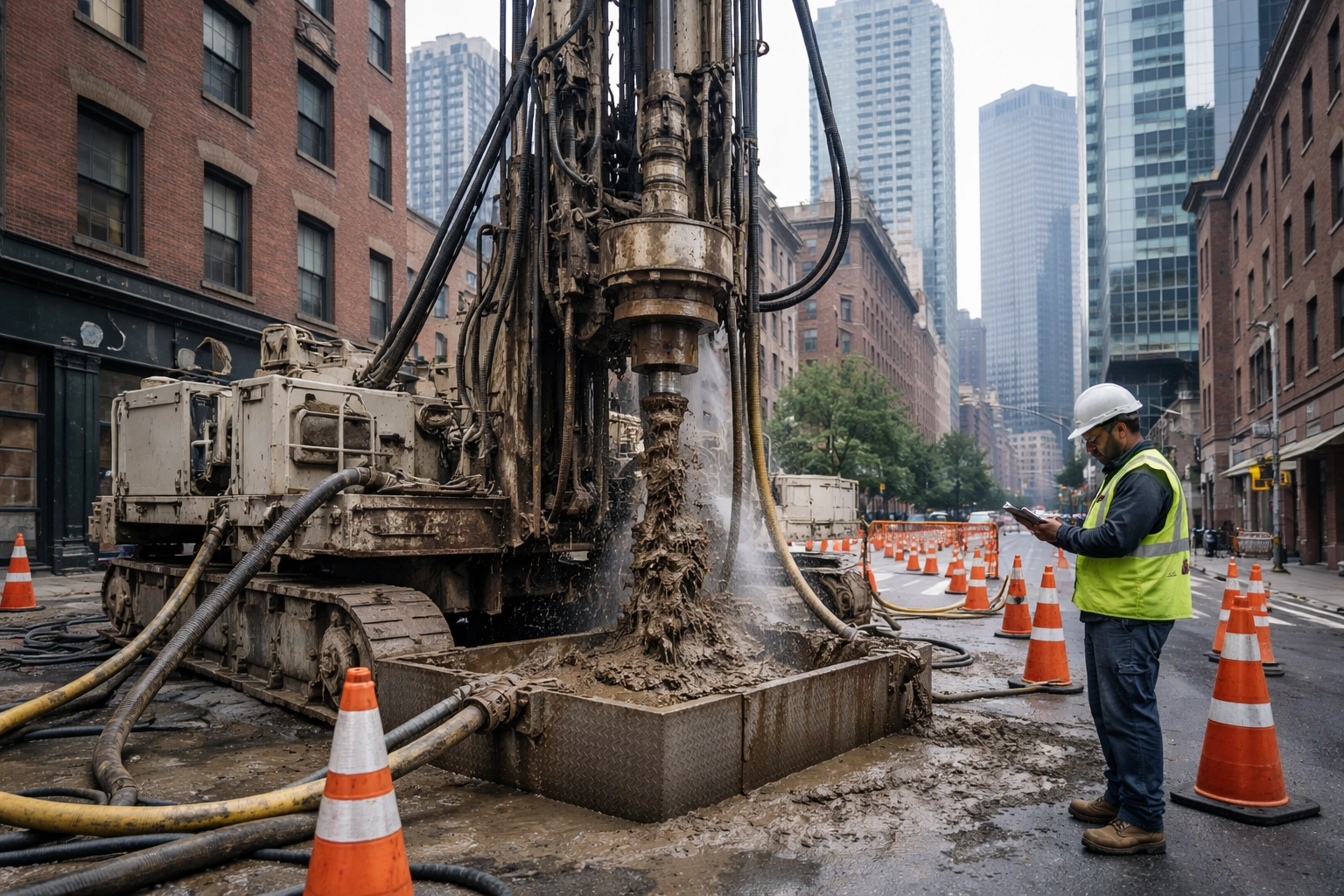
- Soil borings to bedrock or suitable bearing stratum
- Standard Penetration Tests (SPT) for soil strength characterization
- Rock coring where foundation bearing on bedrock is anticipated
- Groundwater monitoring and sampling
- Coordination with environmental sampling if contamination is suspected
Phase 3: Laboratory Testing & Analysis
- Grain size analysis, Atterberg limits, consolidation tests
- Unconfined compressive strength testing of rock cores
- Chemical analysis for disposal characterization
Phase 4: Engineering Recommendations
- Foundation design parameters and recommendations
- Excavation support requirements and construction considerations
- Dewatering needs and potential impacts to adjacent structures
- Settlement analysis and monitoring recommendations
The Adjacent Structure Problem
In Manhattan and the dense neighborhoods of Brooklyn and Queens, your foundation doesn't exist in isolation. That brownstone next door? The subway tunnel running beneath the street? The century-old water main at your property line? All of these factor into your geotechnical design.
Pre-construction surveys documenting existing conditions aren't optional: they're essential protection against claims that your excavation damaged neighboring properties. And your support of excavation design needs to account for:
- Lateral earth pressures from adjacent buildings and streets
- Surcharge loads from neighboring foundations
- Groundwater control that won't dewater your neighbor's basement
- Vibration limits to protect sensitive adjacent structures
This is where experience in the NYC market matters. An environmental engineering firm in NYC that understands local geology, regulatory requirements, and construction practices can anticipate problems before they become change orders.
The Bottom Line: Invest Early or Pay Later
Every dollar spent on thorough geotechnical investigation during due diligence saves multiples during construction. We've seen it play out dozens of times:
- The developer who skipped borings to save $15,000 and discovered unsuitable soils after excavation began: $400,000 in redesign and delays
- The investor who assumed "rock is rock" and hit fractured, weathered schist that couldn't support the planned foundation: three-month delay for redesign
- The builder who didn't coordinate environmental and geotech work and had to remobilize twice: $50,000 in unnecessary drilling costs
Proper geotechnical engineering isn't an expense. It's intelligence that protects your investment and keeps your project moving forward.
Key Takeaways for NYC Developers
- Assume nothing about NYC subsurface conditions: even adjacent sites can have dramatically different geology
- Coordinate geotechnical and environmental investigations from day one to avoid redundant costs and timeline delays
- Budget for the foundation system your site actually needs, not the one you hope it needs
- Document existing conditions before breaking ground to protect against neighbor claims
- Work with firms that understand NYC's unique challenges: local experience matters
The building above ground will get the magazine covers and the architecture awards. But it's the work we do below grade: understanding the soil, designing the foundation, managing the risks: that determines whether your project actually gets built.
Ready to understand what's beneath your next NYC infill site? Let's talk.
Leave a Reply