
Every contaminated site tells two stories. The first is about what went wrong: decades of industrial use, petroleum spills, heavy metals leaching into soil. The second story? That's the one you write. And in 2026, New Jersey is handing developers the pen, the funding, and the regulatory framework to turn brownfield liabilities into landmark projects.
The math has shifted. The risk profile has changed. The smart money isn't avoiding contaminated sites anymore: they're actively hunting for them. Here's why, and more importantly, how you position yourself to capitalize on what might be the most lucrative redevelopment window in a generation.
Why 2026 is Your Moment
New Jersey's brownfield incentive programs have been restructured, recapitalized, and turbocharged. Since 2023, the state has added 13 new Brownfield Development Areas across 10 communities: the first additions since 2009. That dormant decade is over. The NJDEP is approving, not just considering. Municipal partnerships are accelerating, not stalling.
Three factors converge right now:
Funding is substantial and available. The Brownfields Redevelopment Incentive Program (BRIP) allocates $50 million annually in transferable tax credits. The Hazardous Discharge Site Remediation Fund offers up to $5 million per municipality per year. The EPA's FY26 Multipurpose Grant Program adds another $20 million to the table. This isn't grant theater: this is real capital actively deployed to de-risk your projects.
Legislative momentum is behind you. The September 2024 rule changes increased BRIP coverage to 80% of remediation costs in Government-Restricted Municipalities and Qualified Incentive Tracts, with maximum awards climbing to $12 million. For solar projects on closed sanitary landfills in these areas, coverage hits 100%. The political will exists to see these sites transformed.
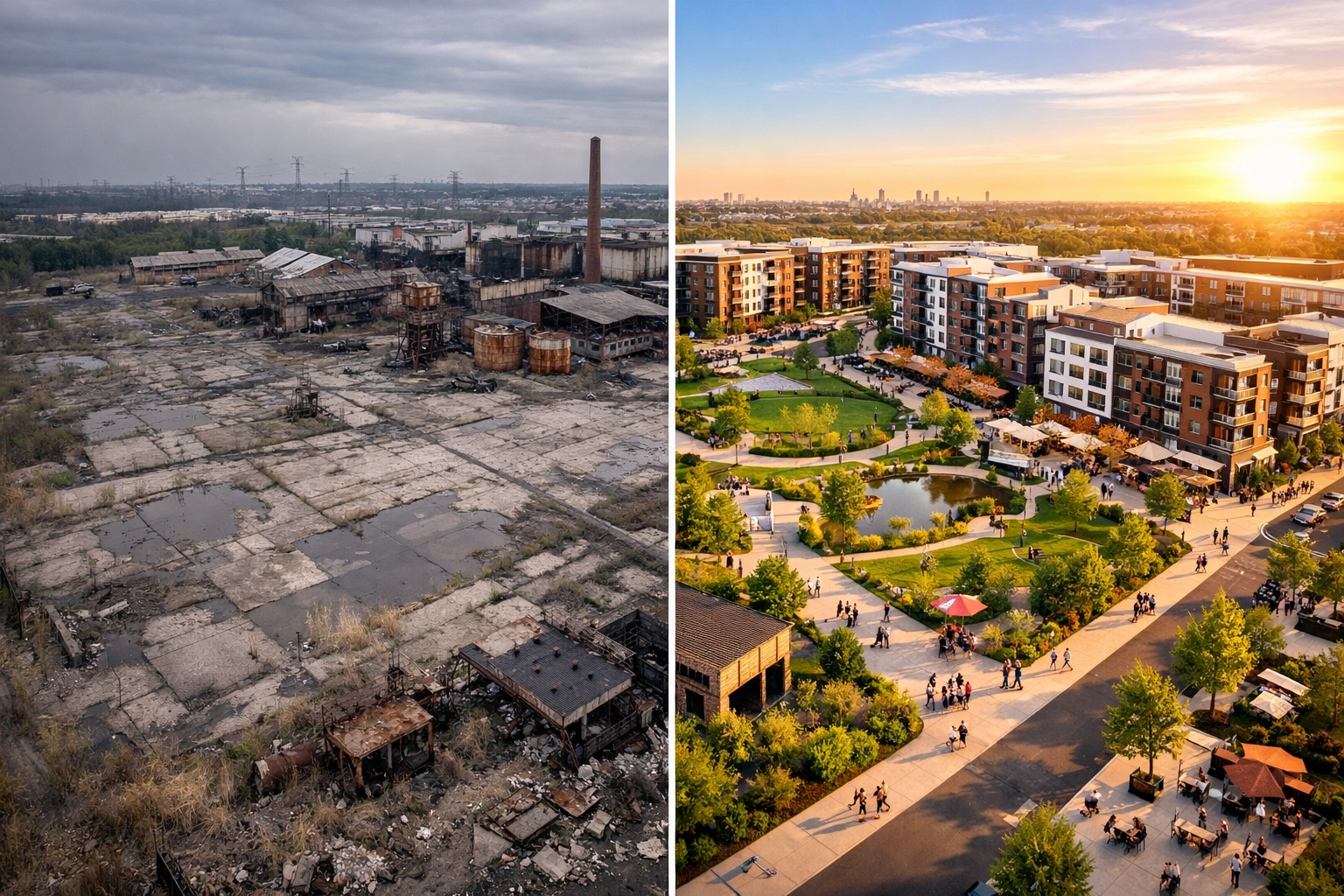
The market rewards vision over fear. Developers who understand environmental compliance as an integration strategy: not an obstacle: are closing deals their competitors won't touch. The Sayreville Waterfront BDA exemplifies this shift: a former National Lead site contaminated over decades is now a $2.5 billion mixed-use development with 1.3 million square feet of retail, 2 million square feet of commercial space, and 2,000 residential units including 300 affordable housing units.
The Money is Real (And Transferable)
Let's talk numbers, because this isn't theoretical. New Jersey's brownfield incentive architecture is designed to make your pro forma work.
Brownfield Development Area (BDA) Grants provide remedial action matching grants covering up to 75% of cleanup costs across all site end uses. These aren't loans. They're grants. The state has distributed nearly $200 million through this program since 2003, and the 2026 allocation is live.
BRIP Tax Credits are one-time, transferable credits covering environmental remediation, abatement, and demolition. Here's the strategic advantage: these credits can be sold for no less than 75% of face value for projects tied to Low Income Housing Tax Credits, or 85% for other projects. That transferability transforms an environmental liability into immediate liquidity.

Your equity requirement is manageable: 20% developer contribution standard, dropping to 10% in GRMs and Qualified Incentive Tracts. For larger projects exceeding $5 million outside Atlantic City, Paterson, or Trenton, you'll need to demonstrate a project financing gap: but that gap is precisely what these programs are designed to close.
Your Strategic Advantage: Integration
Here's where most developers leave money on the table: they treat environmental remediation as a separate, sequential phase. Site assessment happens. Remediation happens. Then civil and site design happen. Three contracts. Three schedules. Three sets of delays.
The integration play flips this model. When your environmental engineer and your civil engineer are coordinating from day one, you're not just saving time: you're fundamentally redesigning your risk profile and your budget.
Consider soil management. Every cubic yard of contaminated soil you export costs money: often significant money in the NY/NJ metro. But if your environmental team and civil team are coordinating grading plans, stormwater management, and remediation targets simultaneously, you're identifying reuse opportunities that standard sequential approaches miss. Soil that would have been classified for offsite disposal becomes engineered fill for your parking structure. Groundwater monitoring wells are positioned to serve dual purposes for permanent site utilities.

This isn't theoretical optimization. This is how you shave 15-20% off your site preparation costs and compress your schedule by months. The NJDEP values this approach too: integrated remediation and redevelopment plans move faster through regulatory review because they demonstrate comprehensive site understanding.
Making it Happen: Your Roadmap
The pathway from contaminated site to certificate of occupancy follows a clear sequence, but success depends on execution precision at each stage.
Secure BDA Designation: If your municipality hasn't already received Brownfield Development Area designation, this is step one. The designation unlocks both the HDSRF grants and establishes the NJDEP single point of contact who will shepherd your project through investigation, remediation, and redevelopment approvals. The Memorandum of Understanding between NJDEP, the municipality, and the BDA Steering Committee establishes this framework.
Establish Your Eligibility: BRIP requires you to maintain good standing with three state agencies: NJDEP, Department of Labor and Workforce Development, and Department of the Treasury. Verify this status before you're deep into site acquisition. Additionally, confirm your access rights are airtight: "appropriate site access" is a non-negotiable program requirement.
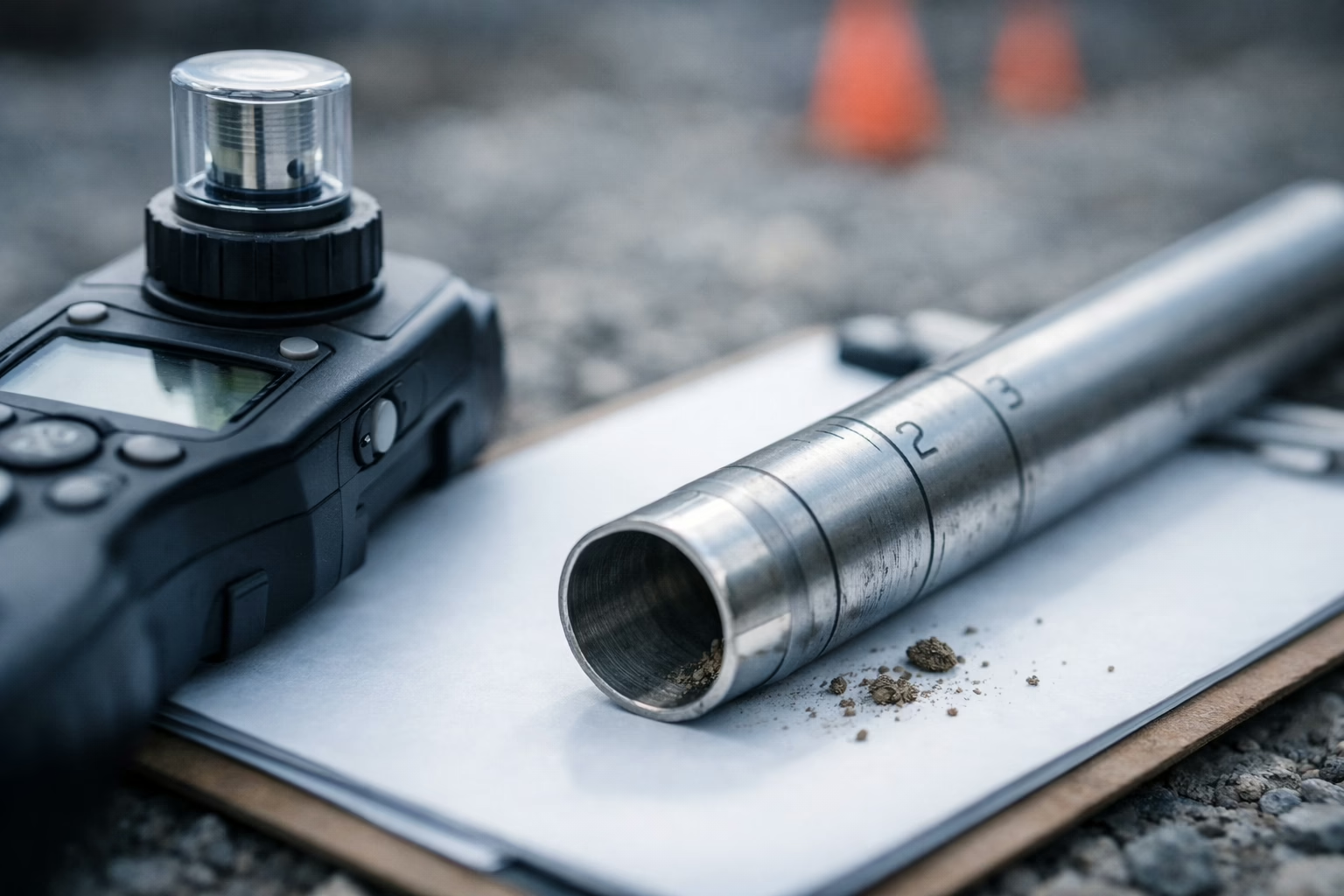
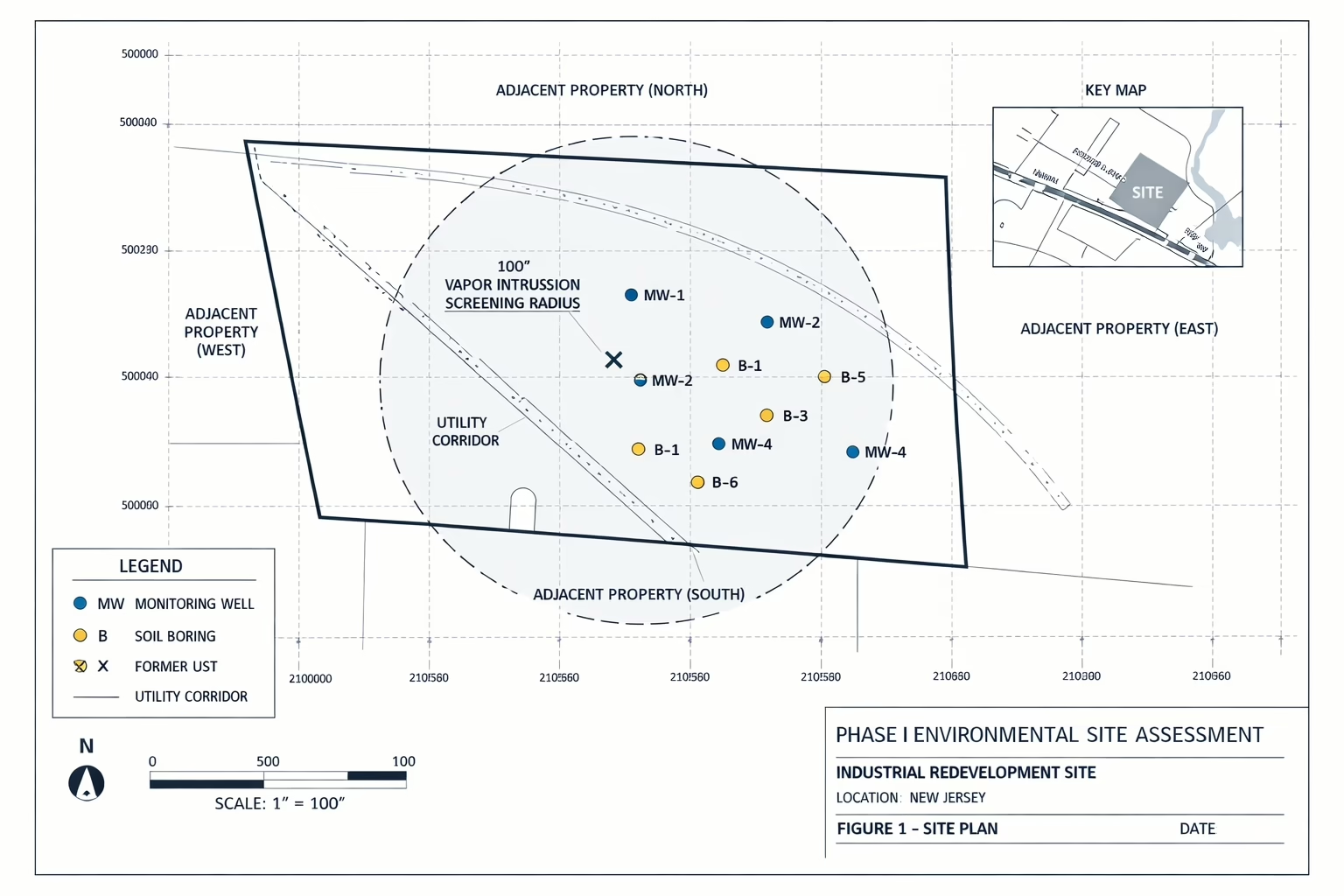
Demonstrate Reasonable Costs: Your remediation cost estimates need to withstand NJDEP scrutiny. This is where integrated engineering pays immediate dividends. When your Phase II ESA is designed with your civil engineer's grading and utility plans already in consideration, your remediation scope is defensible because it's tied directly to achievable redevelopment plans.
Meet Green Standards: Both Green Remediation and Green Building Standards are mandatory. This isn't paperwork: it's design philosophy. Solar, geothermal, sustainable materials, LEED certification considerations: these elements need to be woven into your project vision from concept stage.
Optimize Your Credits: For projects in GRMs or Qualified Incentive Tracts, you're accessing the enhanced 80% coverage tier. Make sure your site qualifies and your application emphasizes this status. For solar on closed landfills in these areas, the 100% coverage represents the single best risk-adjusted return in the brownfield universe right now.

The Vision Forward
The brownfield opportunity isn't just about cleaning up contamination: it's about rewriting the development economics of infill sites. Every former industrial property sitting vacant in Hudson County or Essex County or Camden County represents prime real estate in infrastructure-rich locations. The roads are there. The utilities are there. The transit access is there. The only thing missing is vision and the willingness to navigate environmental compliance strategically rather than defensively.
New Jersey's 2026 incentive landscape removes the financial barriers that historically made these projects pencil poorly. When you can access grants covering 75% of remediation costs, transferable tax credits worth 60-80% of your environmental spend, and compress your timeline through integrated engineering, the pro forma shifts dramatically.
The contaminated sites you're looking at today become the signature projects you're leasing or selling five years from now. The developer who sees liability is competing with the developer who sees luxury. The developer who treats environmental compliance as a cost center is competing with the developer who treats it as a strategic integration opportunity.
That contaminated acre in downtown Paterson or along the Passaic River waterfront or in the heart of Jersey City? That's not a problem property. That's a $2.5 billion Sayreville story waiting to be written. The question isn't whether New Jersey's brownfield sites will be redeveloped: the funding, the regulatory framework, and the market demand guarantee they will be. The question is whether you'll be the one writing that next success story.
The programs are live. The money is allocated. The regulatory pathway is established. What's your next move?
Ready to explore brownfield opportunities in your target market? The Envicon team integrates environmental site assessment, remediation strategy, and civil engineering to transform contaminated sites into fundable, approvable projects. Let's talk about what you're looking at and how we make it work.