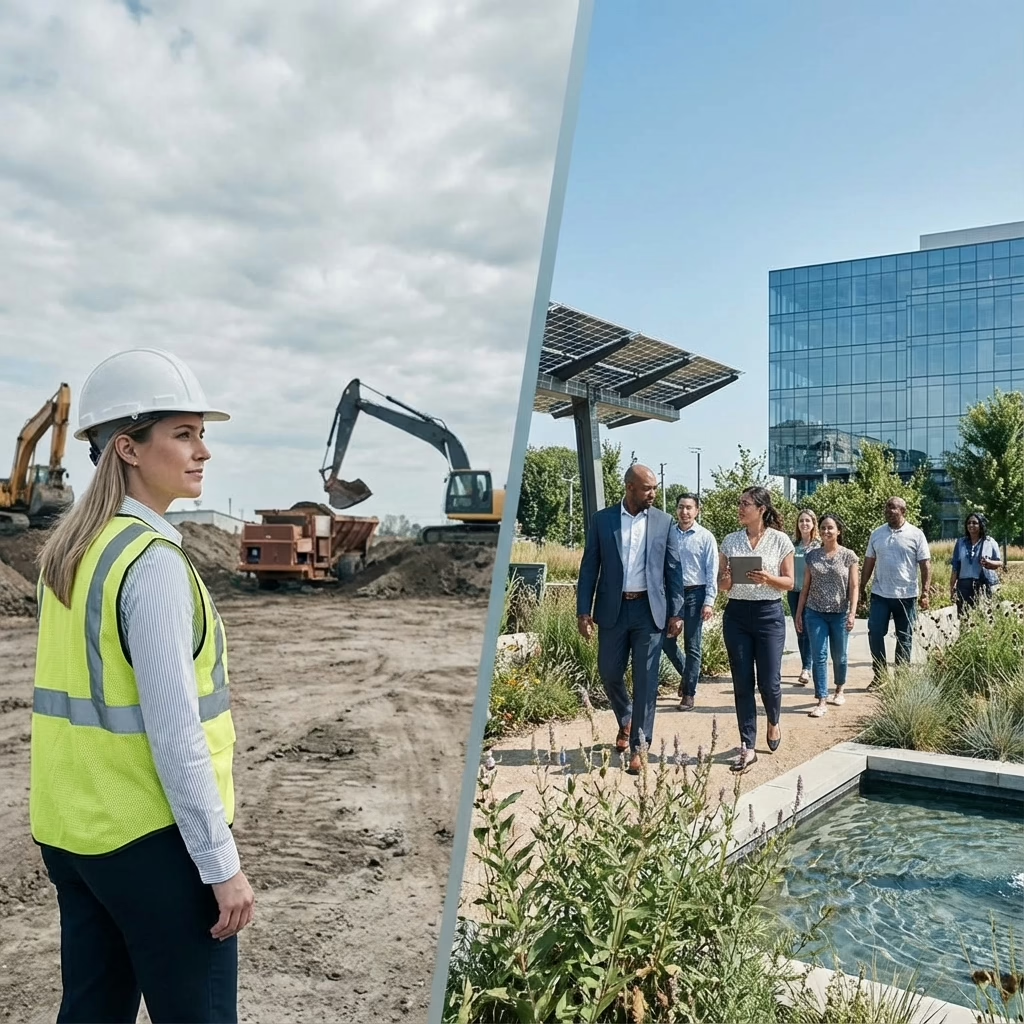
When you're staring down a brownfield redevelopment project, the cleanup approach you choose can make or break your budget. After analyzing dozens of remediation projects across the NY/NJ metro area, we've seen one thing consistently: green remediation approaches typically deliver 30-50% cost savings compared to traditional dig-and-haul methods.
The numbers don't lie. A recent brownfield project in Chicago demonstrated this financial advantage by applying green remediation best practices and reduced the originally estimated cleanup cost by nearly 50 percent through minimized soil excavation and disposal. But here's what most developers don't realize: the savings go far beyond just the upfront cleanup costs.
The True Cost Breakdown: Green vs. Traditional
Traditional Cleanup: The Hidden Expense Trap
Traditional remediation follows a predictable: and expensive: pattern. You excavate contaminated soil, haul it to permitted disposal facilities, backfill with clean material, and monitor the site. While straightforward, this "dig-and-haul" approach racks up costs in multiple areas:
- Heavy equipment operation: Excavators, dump trucks, and support machinery running for weeks or months
- Disposal fees: $50-200 per ton for contaminated soil disposal at permitted facilities
- Transportation costs: Fuel and trucking expenses that can exceed $30,000 for a single project
- Clean backfill: Purchasing and importing clean soil to replace excavated material
- Extended timelines: Equipment rental and labor costs compound over longer project durations
Green Remediation: The Smart Money Play
Green remediation flips this model by treating contamination in-place using natural processes. Bioremediation, one of the most cost-effective green approaches, requires less equipment, labor, and energy because natural organisms degrade contaminants on-site without needing excavation and transport.
Key cost advantages include:
- Minimal excavation: Treating soil and groundwater in-place eliminates most trucking and disposal costs
- Lower energy consumption: Natural treatment processes require significantly less fossil fuel input
- Reduced labor needs: Once treatment systems are installed, monitoring requirements are typically minimal
- Shorter equipment rental periods: Less heavy machinery needed for shorter durations
Other nature-based techniques like phytoremediation (using plants) and mycoremediation (using fungi) are explicitly less expensive and as effective as traditional methods while providing additional environmental benefits.
Real-World Green Remediation Strategies That Save Money
In-Situ Bioremediation
This approach introduces microorganisms or nutrients to stimulate existing bacteria that naturally break down contaminants. We've implemented bioremediation on projects where petroleum hydrocarbons were present, achieving cleanup standards while avoiding the excavation of thousands of cubic yards of soil.
The process typically involves:
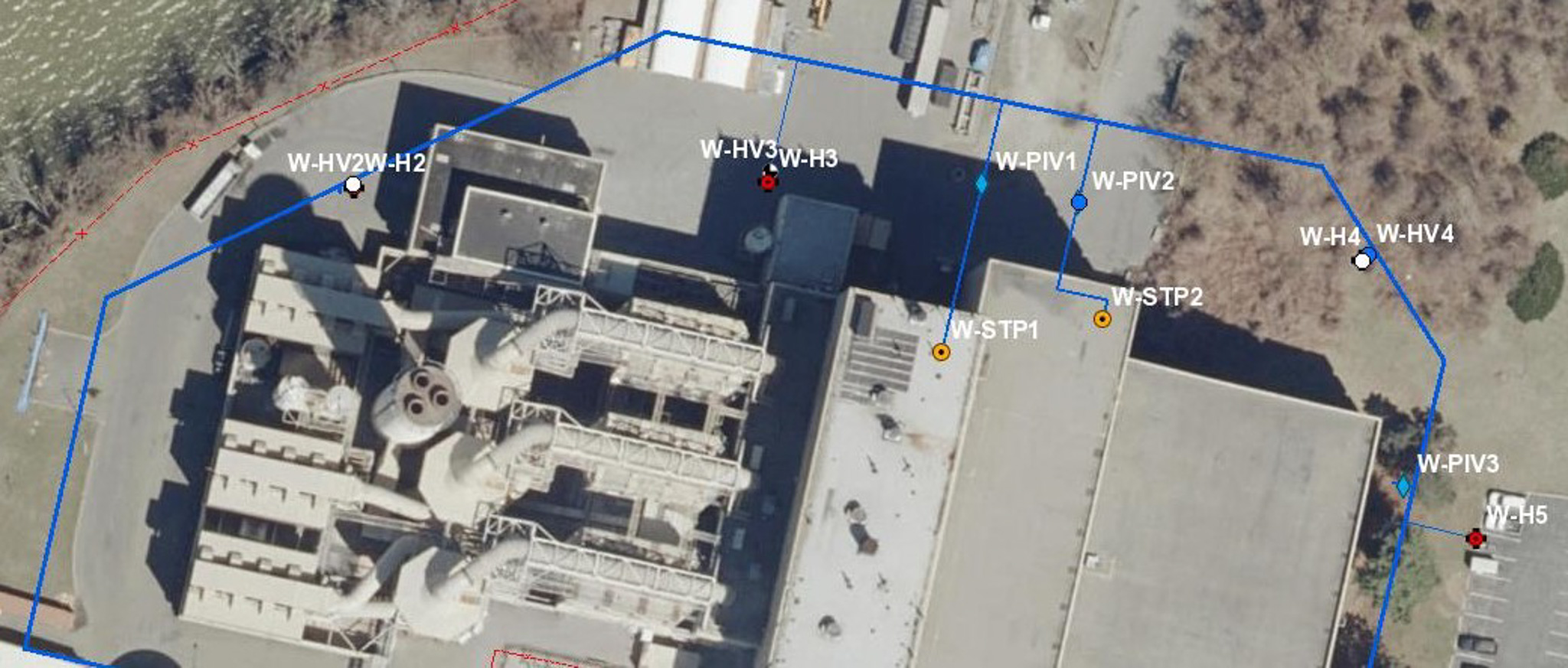
- Installing monitoring wells and injection points
- Introducing oxygen, nutrients, or specialized bacteria
- Regular monitoring to track contaminant reduction
- Natural attenuation over 6-18 months
Cost impact: 40-60% less than excavation and disposal for petroleum hydrocarbon sites.
Phytoremediation Systems
Native plants can extract, contain, or break down contaminants through their root systems. This approach works particularly well for sites with shallow groundwater contamination or surface soil issues.
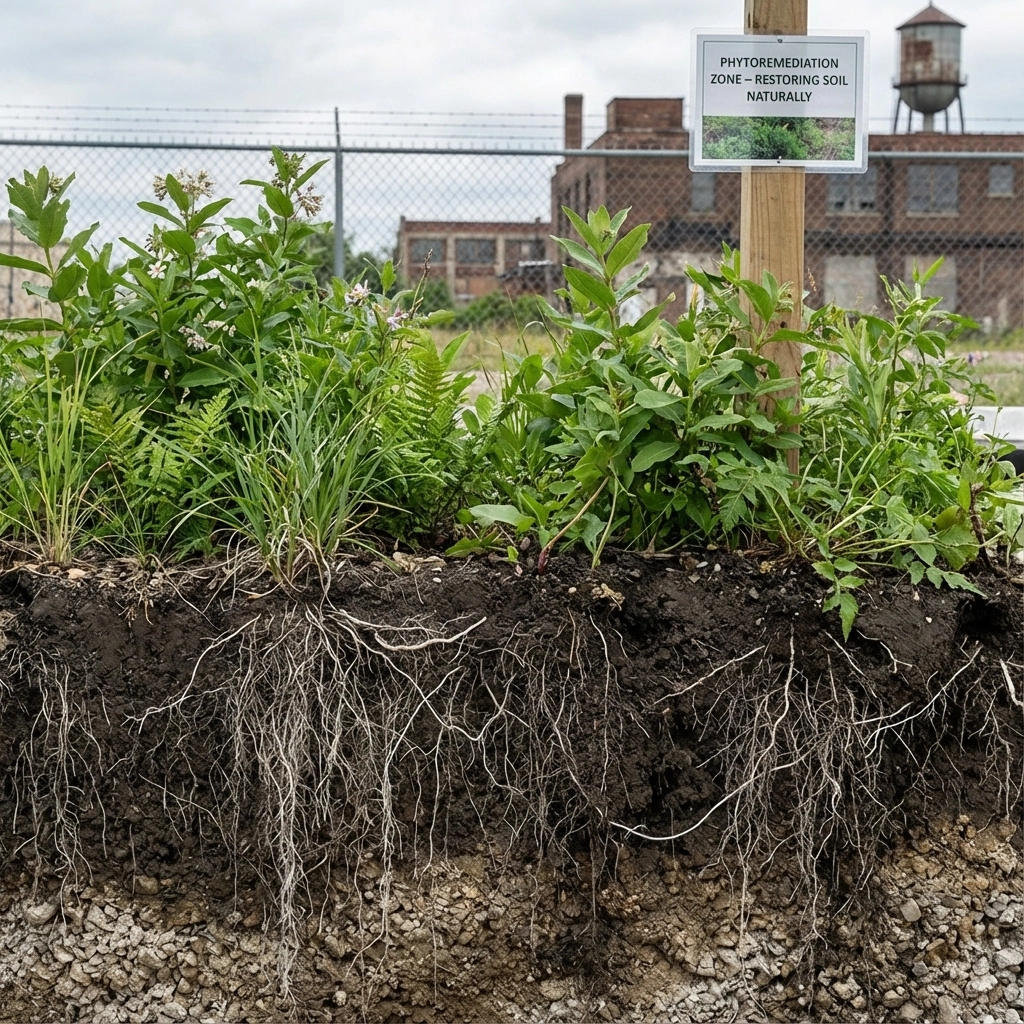
Cost impact: Installation costs are minimal compared to traditional approaches, and ongoing maintenance involves standard landscaping activities rather than expensive monitoring systems.
Environmental Capping with Green Infrastructure
When complete remediation isn't necessary, environmental caps combined with green infrastructure provide containment while delivering additional site benefits. These systems often include:
- Permeable surfaces that manage stormwater
- Native vegetation that requires minimal maintenance
- Monitoring systems integrated into the cap design
Environmental caps "will often save money up front" while reducing long-term environmental liability and providing immediate site utilization options.
When Traditional Cleanup Still Makes Sense
Green remediation isn't always the most cost-effective approach. Traditional excavation may be your best option when:
- Immediate site development is required: Green remediation typically requires 6-18 months for treatment
- Contamination exceeds treatability thresholds: Some contaminant types or concentrations aren't suitable for biological treatment
- Site conditions prevent in-situ treatment: Limited access or underground utilities may necessitate excavation
- Regulatory requirements mandate removal: Some regulatory frameworks still require excavation for specific contaminant types
The Total Cost of Ownership Calculation
Smart developers look beyond initial cleanup costs to evaluate total project economics. Green remediation often provides additional financial benefits:
Energy Cost Savings: Green approaches typically use 30-50% less energy than traditional methods, reducing both costs and carbon footprint.
Regulatory Compliance: Many green remediation approaches satisfy multiple regulatory requirements simultaneously, reducing permitting costs and timeline delays.
Site Reuse Flexibility: In-situ treatment preserves site infrastructure and doesn't disrupt existing utilities, reducing redevelopment preparation costs.
Long-term Monitoring: Biological treatment systems often require less intensive long-term monitoring than traditional approaches, reducing ongoing compliance costs.
Making the Right Choice for Your NY/NJ Project
The decision between green and traditional remediation should be based on a comprehensive site evaluation that considers:
- Contaminant type, concentration, and distribution
- Site geology and hydrogeology
- Regulatory framework and cleanup standards
- Development timeline requirements
- Total project budget and financing structure
Our experience across hundreds of NY/NJ brownfield projects shows that sites suitable for green remediation typically achieve 30-50% cost savings while meeting the same cleanup standards as traditional approaches. The key is conducting proper due diligence upfront to match the remediation approach to site conditions and project goals.
The Bottom Line
Green remediation isn't just an environmental feel-good strategy: it's smart financial planning. By leveraging natural processes to treat contamination in-place, you can significantly reduce cleanup costs while achieving regulatory compliance and preparing sites for redevelopment.
The projects that achieve the greatest cost savings combine green remediation approaches with strategic planning that considers the entire development timeline. When you're evaluating your next brownfield opportunity, remember that the cleanup approach you choose today will impact your project economics for years to come.
Ready to explore whether green remediation makes sense for your brownfield project? Contact our team for a comprehensive site evaluation that considers all remediation options and their financial implications.