Here's something we see all the time in New York and New Jersey: developers treating stormwater management like a box to check at the end of a project. They design the building, nail down the site layout, and then scramble to figure out where to put the detention basin or how to meet MS4 requirements.
That approach is backwards. And expensive.
The smartest developers we work with have figured out something important: green infrastructure isn't just a compliance tool. When you integrate it early and thoughtfully, it becomes an amenity that adds real value to your project. We're talking about features that attract tenants, boost property values, and differentiate your development in increasingly competitive urban markets.
Let's break down how to make that happen.
What Green Infrastructure Actually Means in 2026
Green infrastructure isn't just about planting trees (though that's part of it). It's a systems-based approach to managing stormwater, improving air quality, and creating resilient sites using natural processes instead of: or alongside: traditional "grey" infrastructure like pipes and catch basins.
In practical terms, we're talking about:
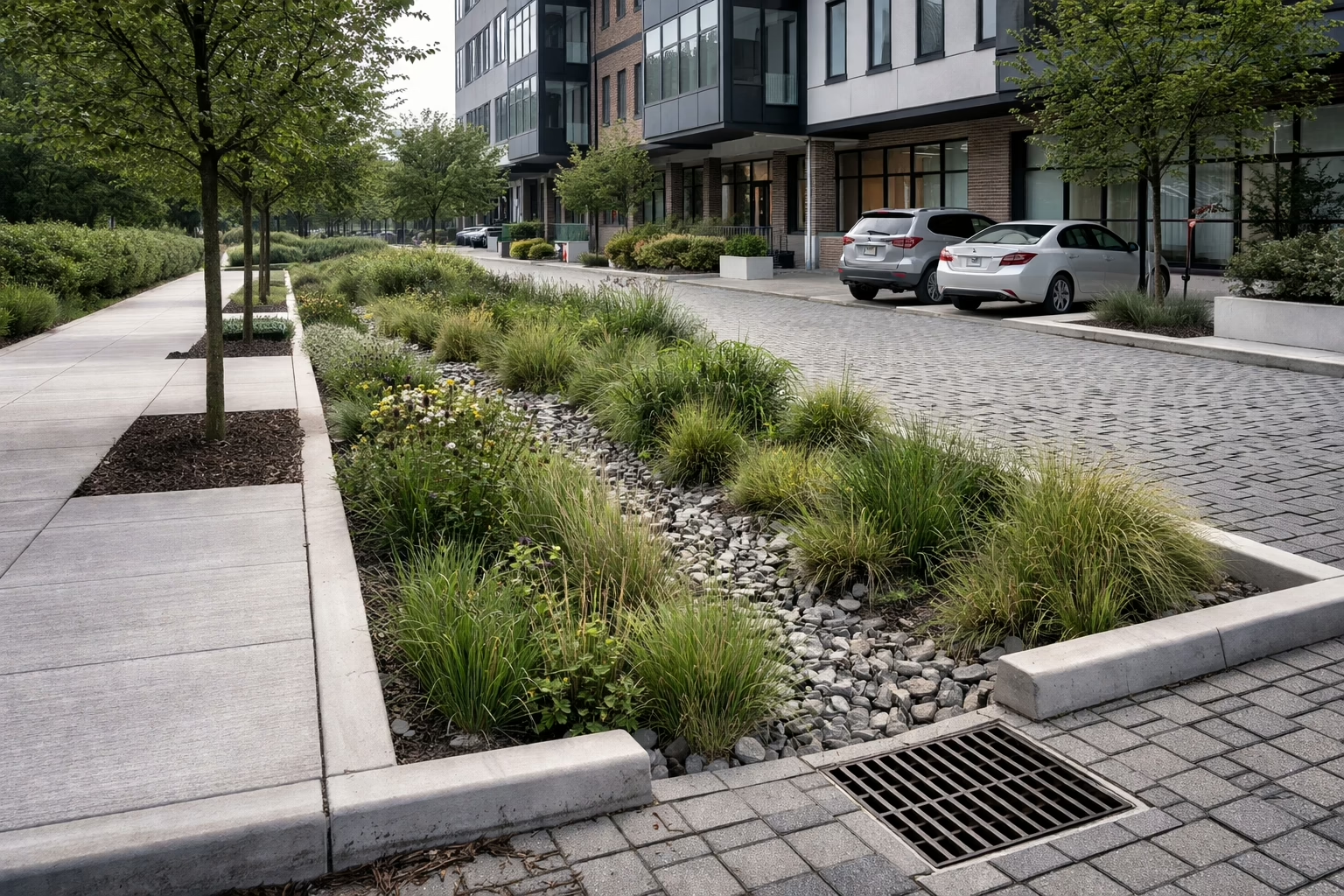
- Bioswales and rain gardens that filter and slow runoff
- Permeable pavement in parking areas and walkways
- Green roofs that reduce heat island effects and manage roof runoff
- Constructed wetlands for larger sites
- Native plantings and tree canopy that intercept rainfall
The key shift? These aren't isolated features. They're interconnected systems that work together: and work with your site's existing hydrology, soils, and infrastructure.
The NY/NJ Regulatory Reality
Let's talk about what's actually driving this conversation in our region.
In New York City, the DEP's stormwater management requirements have teeth. Any development disturbing more than 20,000 square feet in combined sewer areas: or adding more than 5,000 square feet of impervious surface: triggers stormwater retention requirements. The city wants you to retain the first inch of rainfall on-site, and green infrastructure is often the most practical way to do it.
In New Jersey, the updated Stormwater Management Rules (N.J.A.C. 7:8) now require major developments to demonstrate groundwater recharge, stormwater quantity control, and water quality treatment. NJDEP is explicitly encouraging green infrastructure as a compliance pathway, and municipalities across the state are following suit with their own overlay requirements.
Here's what this means for your project: you're going to spend money on stormwater management regardless. The question is whether that spend creates value or just checks a box.
From Compliance Burden to Competitive Advantage
"The best green infrastructure doesn't look like infrastructure at all: it looks like a park, a plaza, or a rooftop terrace that happens to manage a million gallons of stormwater a year."
This is the mindset shift that separates good projects from great ones.
Consider the difference between these two approaches to meeting the same 1-inch retention requirement:
Approach A: Install an underground detention system beneath your parking lot. Cost: $150,000. Tenant benefit: zero. You've met the requirement, but you've created no value beyond compliance.
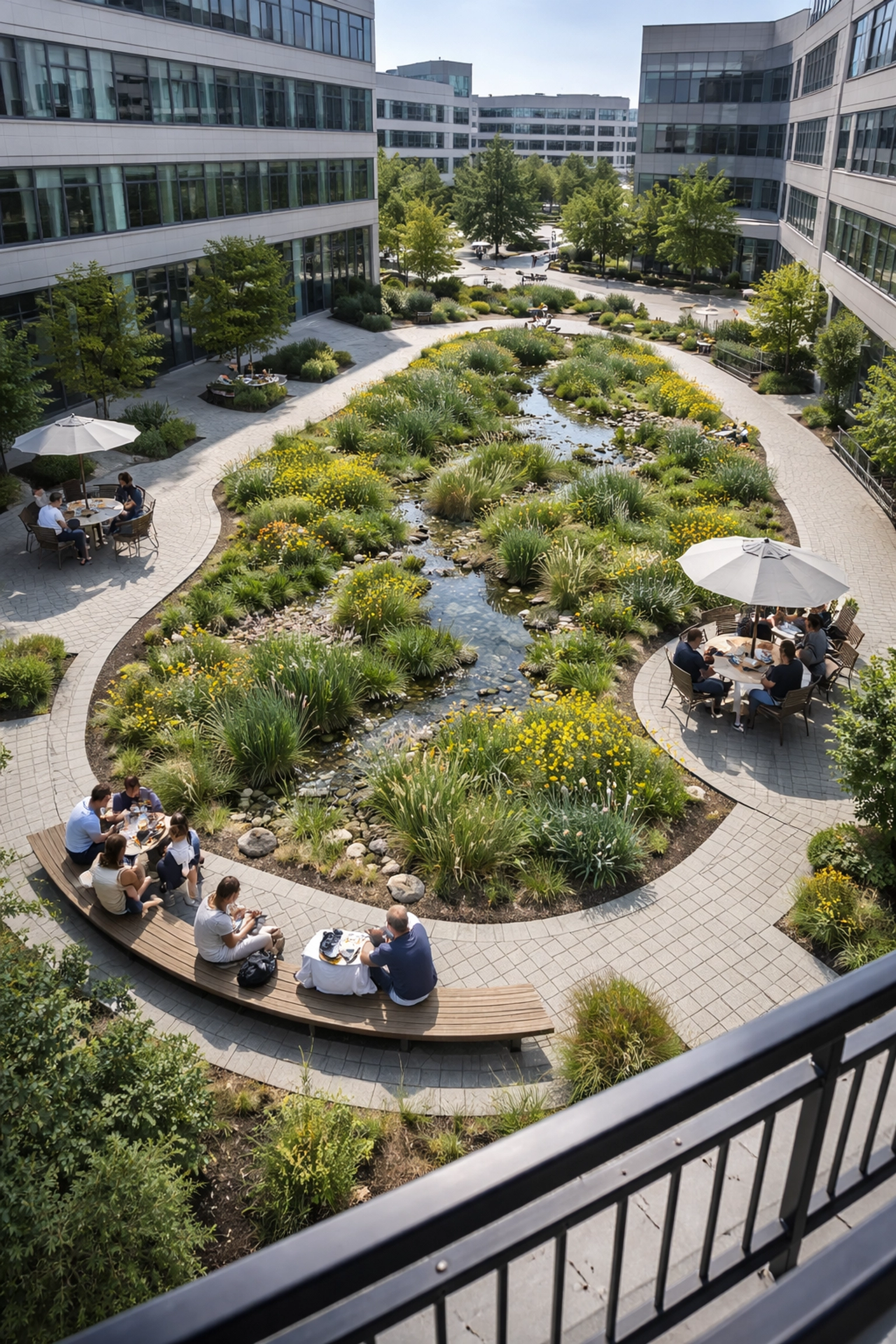
Approach B: Design a central courtyard with a bioretention planter, permeable pavers, and native landscaping that doubles as outdoor amenity space. Cost: $175,000. Tenant benefit: a marketable outdoor space that commands premium rents. You've met the requirement AND created a feature that differentiates your property.
The delta in cost is minimal. The delta in value is massive.
Five Strategies for Successful Integration
Based on our work across dozens of sites in Manhattan, Newark, Hoboken, and beyond, here's what actually works:
1. Start at Concept Design: Not Permit Submittal
This is non-negotiable. Green infrastructure needs to be baked into your site plan from day one, not retrofitted after you've locked in building footprints and parking layouts.
Why? Because effective green infrastructure depends on:
- Where water naturally flows across your site
- Soil infiltration capacity (which varies dramatically across even small sites)
- Sun exposure for plant survival
- Proximity to existing sewer infrastructure
Lock in your layout too early, and you'll find yourself trying to fit a bioswale into a 3-foot strip between your building and the property line. It doesn't work.
2. Map Your Site's Hydrology Before You Design
Before you draw a single line, understand how water moves across your site. Where does it collect? Where does it flow off-site? What's the infiltration rate of your soils?
This baseline assessment should include:
- Topographic survey with 1-foot contours minimum
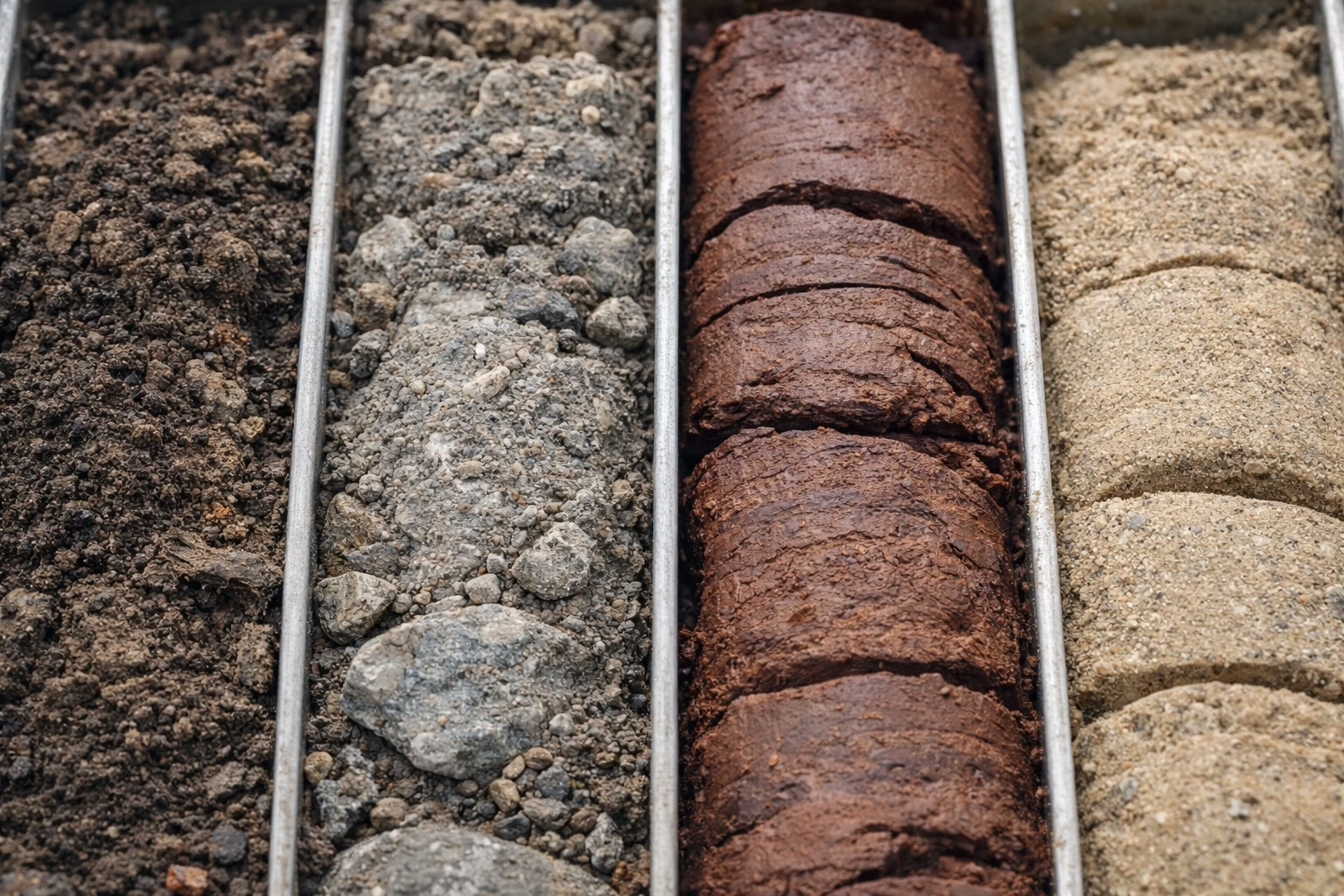
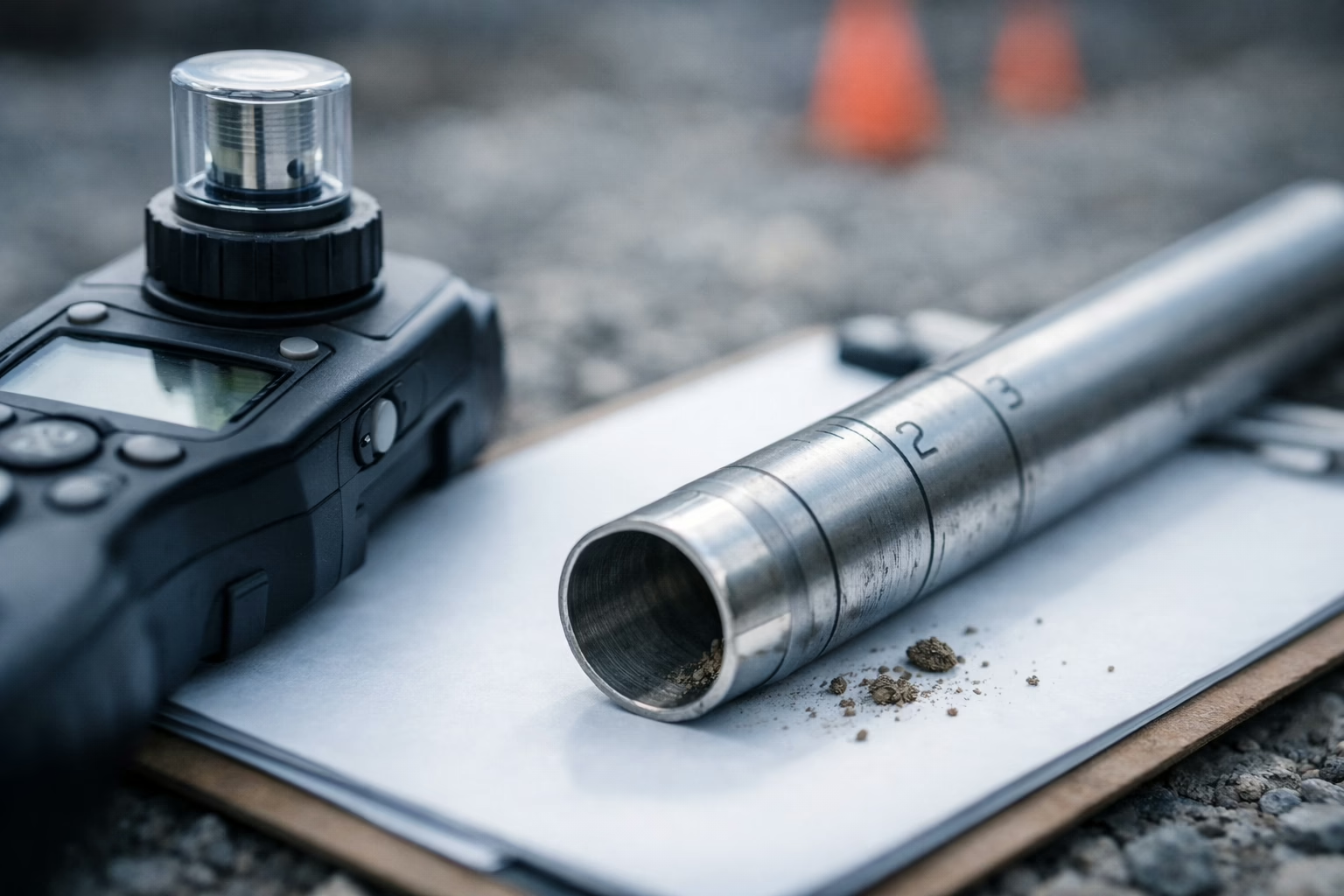
- Soil borings with percolation testing
- Existing drainage infrastructure mapping
- High groundwater table identification
This data shapes everything. A site with well-draining sandy soils opens up infiltration-based solutions. A site with tight clay soils or high groundwater may need different strategies: green roofs, surface bioretention with underdrains, or hybrid grey-green systems.
3. Design for Multi-Functionality
Every green infrastructure element should serve at least two purposes. A rain garden isn't just stormwater management: it's also:
- A visual amenity that softens your streetscape
- A habitat corridor for pollinators
- A heat island reduction measure
- A potential LEED or Envision credit
Green roofs can be accessible amenity decks. Permeable pavement can define outdoor dining areas. Bioswales can create natural separation between pedestrian and vehicular zones.
The more functions you stack, the more value you create: and the easier it becomes to justify the investment.
4. Coordinate Across Your Design Team Early
Green infrastructure sits at the intersection of civil engineering, landscape architecture, architecture, and MEP. If these disciplines are working in silos, you'll get conflicts and missed opportunities.
We've seen projects where the civil engineer designed a bioswale that the landscape architect then had to relocate because it conflicted with the architect's entrance canopy: which then triggered a redesign of the underground utilities.
The fix is simple: bring all disciplines together at the 30% design milestone specifically to discuss stormwater and green infrastructure integration. One coordination meeting can save months of redesign.
5. Plan for Maintenance from Day One
Here's an uncomfortable truth: green infrastructure requires more active maintenance than a pipe in the ground. Plants need to be tended. Sediment needs to be removed from bioretention areas. Permeable pavement needs periodic vacuuming.
If you don't plan for this: and budget for it: your beautiful rain garden becomes a weedy eyesore within two years.
Build maintenance requirements into your design documentation. Clarify ownership and responsibility (especially for common areas in multi-tenant properties). And design for maintainability: accessible forebays, removable grates, plants that don't require specialized care.
Making It Work on Constrained Urban Sites
"But my site is too small" is something we hear constantly. And it's rarely true.
Urban sites in the Bronx, Staten Island, and North Jersey present real constraints: tight lot lines, existing contamination, underground utilities everywhere. But they also present opportunities:
- Vertical green infrastructure: Green walls and facade plantings manage stormwater while using zero ground-level footprint
- Rooftop systems: In dense urban areas, your roof may be your largest available surface for stormwater management
- Right-of-way integration: Work with municipal DOTs to incorporate bioswales and tree trenches in the public right-of-way adjacent to your site
- Subsurface hybrid systems: Combine below-grade storage with surface-level green elements for sites where infiltration isn't feasible
The solutions exist. They just require creative thinking and early coordination with your environmental and civil engineering team.

The Bottom Line
Green infrastructure in NY and NJ isn't optional: the regulations make sure of that. But how you approach it is entirely within your control.
You can treat it as a compliance cost, spending money on underground systems that do nothing for your project's marketability. Or you can treat it as a design opportunity, creating amenities that attract tenants, command premium rents, and position your development as forward-thinking and sustainable.
The cost difference between these approaches is often marginal. The value difference is not.
At Envicon, we help developers and property owners navigate the intersection of environmental compliance and smart site design. If you're planning a project in New York or New Jersey and want to explore how green infrastructure can work harder for your bottom line, let's talk.
Compliance is mandatory. Creating value from it is a choice.