
If your project involves New Jersey site remediation, March 2026 isn't just another month on the calendar. It's the inflection point where regulatory goalposts could shift beneath your feet.
NJAC 7:26E: the Technical Requirements for Site Remediation: is entering its regulatory review window. For developers, LSRPs, and lenders navigating brownfield redevelopment, contaminated site cleanups, or deed-restricted properties, this means one thing: the rules you're playing by today might not be the rules in play six months from now.
We're not here to scare you. We're here to position you ahead of the curve.
What NJAC 7:26E Actually Controls
NJAC 7:26E is the backbone of every site remediation project in New Jersey. It dictates:
- Soil and groundwater sampling protocols
- Remedial investigation standards
- Remedial action work plan requirements
- Deed notice and classification exception area documentation
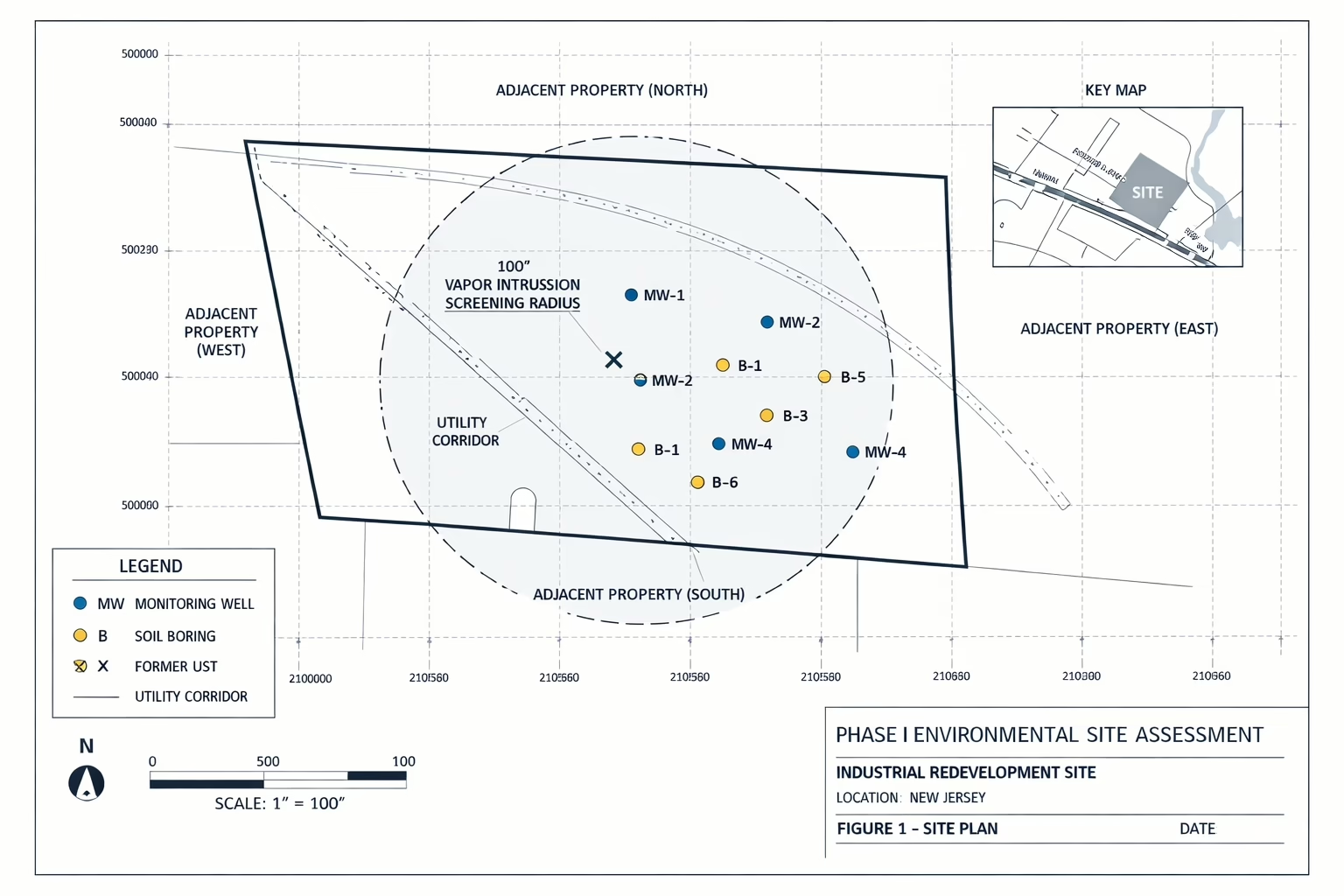
- Vapor intrusion screening thresholds
- Ecological receptor evaluations
In short, it's the technical playbook that Licensed Site Remediation Professionals (LSRPs) follow to get your site across the finish line. When these rules shift: even incrementally: project timelines extend, costs balloon, and compliance strategies need to be rewritten.

The Regulatory Review Cycle: Why March Matters
New Jersey administrative rules don't live forever. By statute, most regulations expire after seven years unless formally readopted by the NJDEP. When readoption happens, the Department often introduces substantive changes: updates that reflect new science, address emerging contaminants, or tighten compliance requirements.
NJAC 7:26E is approaching that readoption window. While the exact expiration date isn't publicly carved in stone yet, the March 2026 timeframe aligns with the Department's historical review schedule and recent notice patterns for other regulatory chapters.
Here's what typically happens during a readoption cycle:
- Public notice period: NJDEP publishes proposed changes 60–90 days before the deadline
- Comment window: Stakeholders (including developers, consultants, and industry groups) submit feedback
- Final rule adoption: The Department issues the updated rule, often with modifications based on comments
- Effective date: New requirements kick in, sometimes immediately
The problem? If your remedial investigation or remedial action workplan is still in draft form when new rules take effect, you're suddenly playing catch-up. Sampling plans need revision. Risk assessments get recalculated. Review timelines reset.
What Changes Are on the Horizon?
While we don't have a crystal ball, we do have decades of experience watching NJDEP regulatory evolution. Based on recent enforcement trends, guidance updates, and federal PFAS regulations trickling down to the state level, here's what we anticipate:
PFAS Integration
New Jersey has been ahead of the curve on PFAS regulation: establishing groundwater standards for PFOA and PFOS, issuing soil screening levels, and mandating testing in certain categories of sites. Expect the March 2026 update to formalize these requirements into the core technical rule, potentially expanding the list of regulated PFAS compounds and lowering action thresholds.
Vapor Intrusion Protocol Updates
The Department has been refining its vapor intrusion guidance for years. We expect tighter screening protocols, updated attenuation factors, and more rigorous documentation requirements: especially for redevelopment sites with residential or mixed-use components.
Ecological Receptor Evaluations
With more brownfield projects incorporating green infrastructure, wetland buffers, and restored habitats, ecological risk assessments are under greater scrutiny. Look for expanded receptor lists and enhanced data requirements for projects near protected areas or overburdened communities.
Enhanced Quality Assurance/Quality Control
Sampling and lab QA/QC requirements may get more prescriptive, particularly around chain-of-custody documentation, field duplicate frequency, and laboratory accreditation standards.
The Cost of Waiting: Why 'Submit Now' Beats 'Wait and See'
We've been through enough regulatory cycles to know how this plays out. Developers who wait to see what changes are coming end up paying a premium in three ways:
1. Resubmission Rework
If your Remedial Investigation Report or Remedial Action Workplan is under LSRP review when new rules drop, you'll likely face a "bring it into compliance" request. That means additional sampling, revised risk calculations, and supplemental documentation: none of which was in your original budget.
2. Extended Timeline Limbo
Regulatory uncertainty creates review paralysis. NJDEP staff and LSRPs become cautious approvers when rules are in flux, slowing down even straightforward submittals. Projects that could have closed in 90 days suddenly stretch to 180.
3. Financing Gaps
Lenders hate moving targets. If your remediation plan is based on standards that might change mid-project, you're introducing financial risk that underwriters will price accordingly: or walk away from entirely.
"The best time to lock in your remediation pathway is before the rulebook gets rewritten. We've seen projects stall for 12–18 months simply because teams waited for regulatory clarity that never came on their timeline." : Environmental compliance strategist
Your March 2026 Action Plan
If you have an active or anticipated remediation project in New Jersey, here's how to stay ahead:
For Projects in Progress:
- Accelerate draft document submissions to your LSRP by end of February 2026
- Confirm that all sampling and investigation work aligns with current NJAC 7:26E standards
- Schedule internal reviews now to identify gaps before formal submission
- Build contingency budget for potential supplemental work if rules change mid-review
For Projects in Planning:
- Kick off your Preliminary Assessment and Site Investigation immediately
- Engage an LSRP early to map out a submission timeline that beats the March window
- Pre-negotiate scope flexibility with your environmental consultant to accommodate potential rule shifts
- Communicate the urgency to lenders and equity partners: this isn't just a regulatory issue, it's a deal-timing issue
For Deals in Due Diligence:
- Conduct Phase II ESAs now and lock in your baseline risk assessment under current rules
- Build environmental contingency reserves that account for post-March compliance scenarios
- Include regulatory change provisions in purchase agreements to allocate risk appropriately

How Envicon Stays Ahead of the Curve
At Envicon Strategic Solutions, we don't just react to regulatory changes: we anticipate them. Our team tracks NJDEP rulemaking calendars, participates in stakeholder comment periods, and maintains direct relationships with DEP staff and LSRP leadership across the state.
When NJAC 7:26E updates drop, we're already positioned to guide our clients through the transition with minimal disruption. That means:
- Pre-update compliance audits to identify exposure points before rules change
- Fast-track submission strategies that leverage current regulatory windows
- Dual-path remediation planning that builds in flexibility for post-update scenarios
- LSRP coordination to ensure your project gets prioritized review attention
We've helped developers navigate major regulatory shifts before, from New York's Part 375 overhaul to New Jersey's PFAS rollout. We know how to protect your timeline and your budget when the rules change mid-game.

The Bottom Line
March 2026 is the dividing line between projects that move forward with clarity and projects that get caught in regulatory limbo. You can't control when NJDEP updates its technical requirements, but you can control your submission timeline.
The developers who win in this environment are the ones who treat regulatory deadlines like market opportunities: acting decisively while others wait for perfect information that never arrives.
If you have a New Jersey site in your pipeline, now is the time to pressure-test your remediation strategy, accelerate your LSRP engagement, and lock in compliance under the current rulebook. Because the worst place to be in March 2026 is halfway through a submittal under rules that no longer apply.
Ready to beat the deadline? Let's talk strategy. Our team is already mapping submission pathways for clients who want to stay ahead of the March window: and we can do the same for you.