
New Jersey's Brownfields Redevelopment Incentive Program isn't just another state subsidy: it's one of the most aggressive tax credit programs in the Northeast for developers willing to tackle contaminated sites. We're talking about awards covering up to 100% of your remediation costs, with maximum credits reaching $12 million per project.
But here's the catch: most developers leave significant money on the table because they don't understand how to position their projects strategically from day one.
At Envicon Strategic Solutions, we've guided dozens of brownfield projects through the NJDEP process. The difference between a good tax credit award and a great one often comes down to decisions made before the first Phase I ESA is even ordered. Here are five strategies to maximize your 2026 tax credit potential.
Strategy 1: Target Government-Restricted Municipalities and Qualified Incentive Tracts
Location isn't just about market fundamentals anymore: it's about incentive geography.
Projects located in Government-Restricted Municipalities (GRMs) like Atlantic City, Paterson, and Trenton, or within Qualified Incentive Tracts (QITs), receive dramatically better terms under the Brownfields Redevelopment Incentive Program:
- 80% of remediation costs covered (up to $12 million) vs. 60% (up to $8 million) elsewhere
- Only 10% developer equity contribution required vs. 20% in non-designated areas
- Simplified qualification for projects under $5 million
For developers evaluating multiple acquisition targets, this math should influence your site selection process. A $10 million remediation project in Paterson could yield $8 million in tax credits. That same project in a non-GRM location? You're looking at $6 million: a $2 million swing based purely on geography.
We've seen clients pivot their entire acquisition strategy once they understand these incentive zones. If you're targeting urban infill sites in northern or central New Jersey, cross-reference your target list against the current QIT designations before you commit capital.
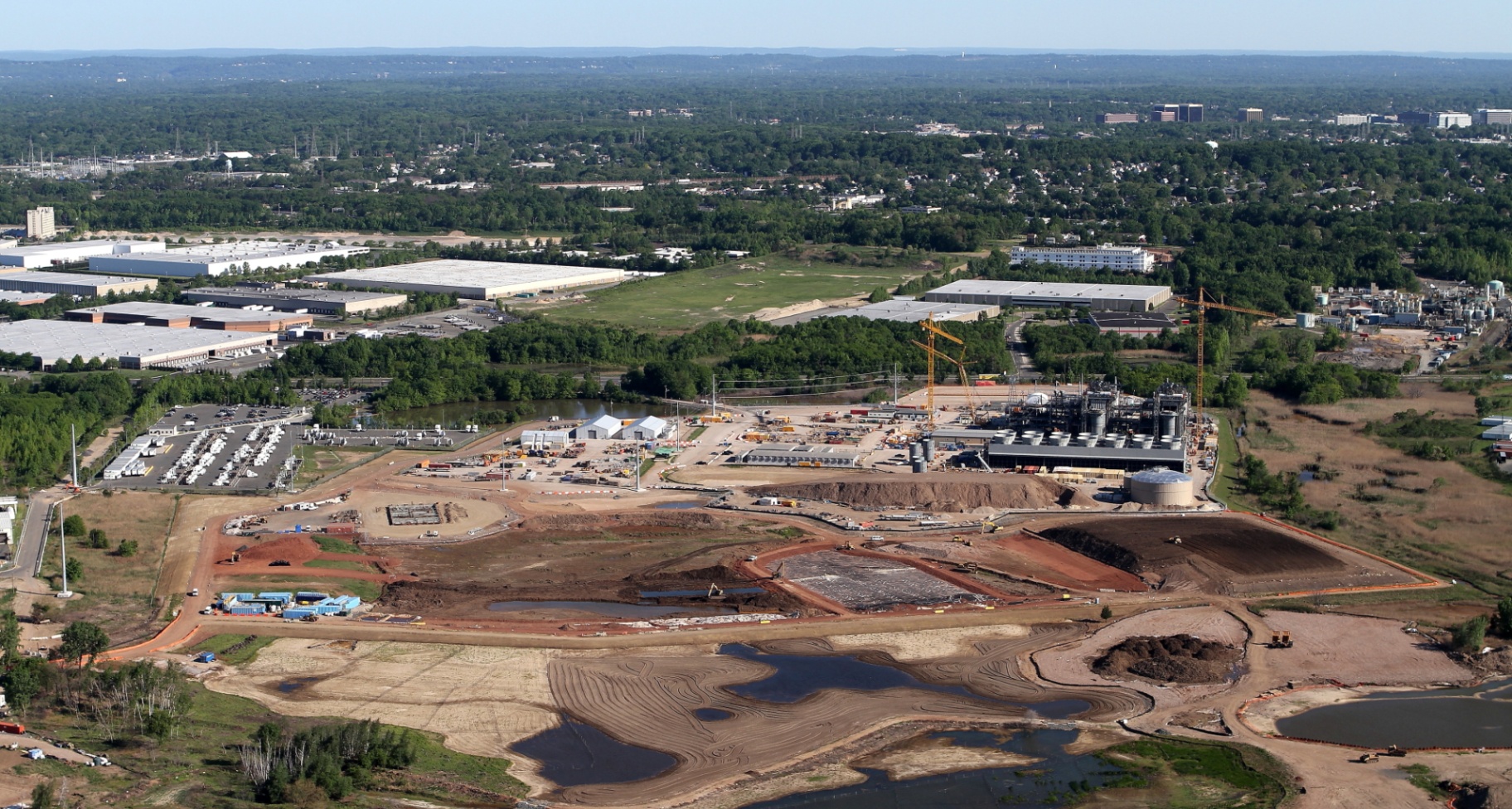
Strategy 2: Consider Solar Development on Closed Sanitary Landfills
This is the program's hidden gem, and surprisingly few developers are taking advantage of it.
If your brownfield site is a closed sanitary landfill and you incorporate a solar panel array into your redevelopment plan, you qualify for the program's maximum award: 100% of remediation costs covered.
- Projects in GRMs or QITs: up to $12 million
- Projects elsewhere in New Jersey: up to $8 million
Closed landfills are notoriously difficult to redevelop for traditional uses due to settlement issues, cap integrity requirements, and ongoing gas management. But they're often ideally suited for solar installations: large, flat, and typically located in areas with good grid access.
The economics work on multiple levels: you're monetizing an otherwise challenging asset, generating renewable energy revenue, and capturing the maximum possible tax credit. For municipalities or private landowners sitting on closed landfill liability, this combination can transform a balance sheet burden into a performing asset.
"The brownfield tax credit program rewards developers who align their projects with the state's broader economic and environmental goals. Solar on landfills checks every box."
Strategy 3: Establish Project Financing That Demonstrates Economic Infeasibility
Here's where many developers stumble: the "financing gap" requirement.
For projects exceeding $5 million in remediation costs located outside Atlantic City, Paterson, or Trenton, you must demonstrate that your project would not proceed without the tax credit. Projects under $5 million or in those targeted cities bypass this requirement entirely.
This isn't about appearing desperate: it's about presenting accurate pro forma financials that reflect the true cost burden of environmental remediation. The NJEDA wants to see that:
- Remediation costs create a legitimate gap between project costs and market-supportable returns
- The tax credit bridges that gap to make the project financially viable
- Your financing structure is competitive and realistic
Work with your environmental consultant and financial advisors to model scenarios early. We've helped clients restructure their capital stacks specifically to meet this threshold: not through manipulation, but by accurately capturing costs that might otherwise be buried in contingency line items.
Strategy 4: Leverage Transferable Tax Credits for Immediate Liquidity
Not every developer has sufficient New Jersey tax liability to use credits directly. The program anticipated this.
Tax credits awarded through the Brownfields Redevelopment Incentive Program are fully transferable. You can sell them to other taxpayers at:
- 75% minimum for projects with Low Income Housing Tax Credits (LIHTC)
- 85% minimum for all other projects
This creates immediate liquidity. If you're awarded $5 million in tax credits but have minimal NJ tax exposure, you can sell those credits for $4.25 million (at the 85% floor) and deploy that capital back into your project or your next acquisition.
The tax credit transfer market in New Jersey is active, with established buyers including banks, insurance companies, and corporations with significant state tax liability. Your financial advisor or a specialized tax credit broker can facilitate these transactions, typically closing within 60-90 days of credit certification.
For developers running multiple projects simultaneously, this transferability feature enables a velocity of capital that wouldn't otherwise be possible.
Strategy 5: Build Green Remediation Standards Into Your Project From Day One
Compliance with Green Remediation and Green Building Standards isn't optional: it's a mandatory eligibility requirement for the program.
But here's what separates sophisticated developers from everyone else: they don't treat green standards as a compliance checkbox. They integrate these requirements into project planning from the initial environmental assessment phase.
Key green remediation strategies include:
- Minimizing excavation volumes through in-situ treatment technologies
- Reducing transportation emissions by treating soil on-site rather than hauling to landfills
- Incorporating renewable energy into remediation operations
- Maximizing material reuse for clean fill and construction aggregates
When you retrofit green standards mid-project, you're often looking at costly modifications, schedule delays, and potential re-permitting. When you design for them from the start, they become cost-neutral or even cost-positive through reduced disposal fees and operational efficiencies.
Our integrated approach: combining environmental services with civil engineering: allows us to identify these optimization opportunities before construction begins, not after.
Application Timing and Fees
The Brownfields Redevelopment Incentive Program operates on a rolling application basis: there's no annual deadline or competitive scoring window. This gives you flexibility to apply when your project is properly positioned, not when an arbitrary calendar dictates.
Application fees are straightforward:
- $2,000 for projects with remediation costs of $5 million or less
- $7,000 for projects exceeding $5 million
These fees are non-refundable, so ensure your project genuinely qualifies before submitting. A thorough pre-application consultation with your environmental and financial team can prevent wasted fees and application cycles.
The Bottom Line
New Jersey's brownfield incentive structure rewards developers who think strategically about site selection, project design, and capital structure. The difference between capturing 60% of your remediation costs and 100% isn't luck: it's planning.
Here's your action checklist for 2026:
- Map your target sites against GRM and QIT designations before acquisition
- Evaluate solar potential on any closed landfill assets in your portfolio
- Model your pro forma to accurately reflect remediation cost burdens
- Plan your capital structure with tax credit transferability in mind
- Integrate green standards from day one of environmental assessment
At Envicon Strategic Solutions, we don't just conduct environmental assessments: we help you position your entire project for maximum incentive capture. Because in New Jersey brownfield development, the real value engineering happens before you break ground.
Ready to discuss your 2026 brownfield strategy? Reach out to our team to start the conversation.