For developers eyeing contaminated properties in New York, the NYSDEC Brownfield Cleanup Program (BCP) represents one of the most generous remediation incentive programs in the country. But here's the question that lands on our desk constantly: Are the tax credits actually worth the timeline and complexity?
The short answer? For the right projects, absolutely. But the BCP isn't a one-size-fits-all solution, and entering the program without understanding the financial mechanics can leave you waiting years for returns that may not justify your capital outlay.
Let's break down the numbers, the timelines, and the strategic calculus that separates a smart BCP play from a costly miscalculation.
What Is the NYSDEC Brownfield Cleanup Program?
The BCP is New York State's flagship program for incentivizing the cleanup and redevelopment of contaminated sites. Administered by the New York State Department of Environmental Conservation (NYSDEC), the program offers a combination of tax credits, liability protection, and regulatory oversight designed to transform underutilized brownfield properties into productive assets.
The program targets sites where contamination: whether from historical industrial use, petroleum storage, or other sources: has created barriers to redevelopment. By providing financial incentives and a clear regulatory pathway, the BCP aims to eliminate these barriers and unlock economic value that would otherwise remain dormant.
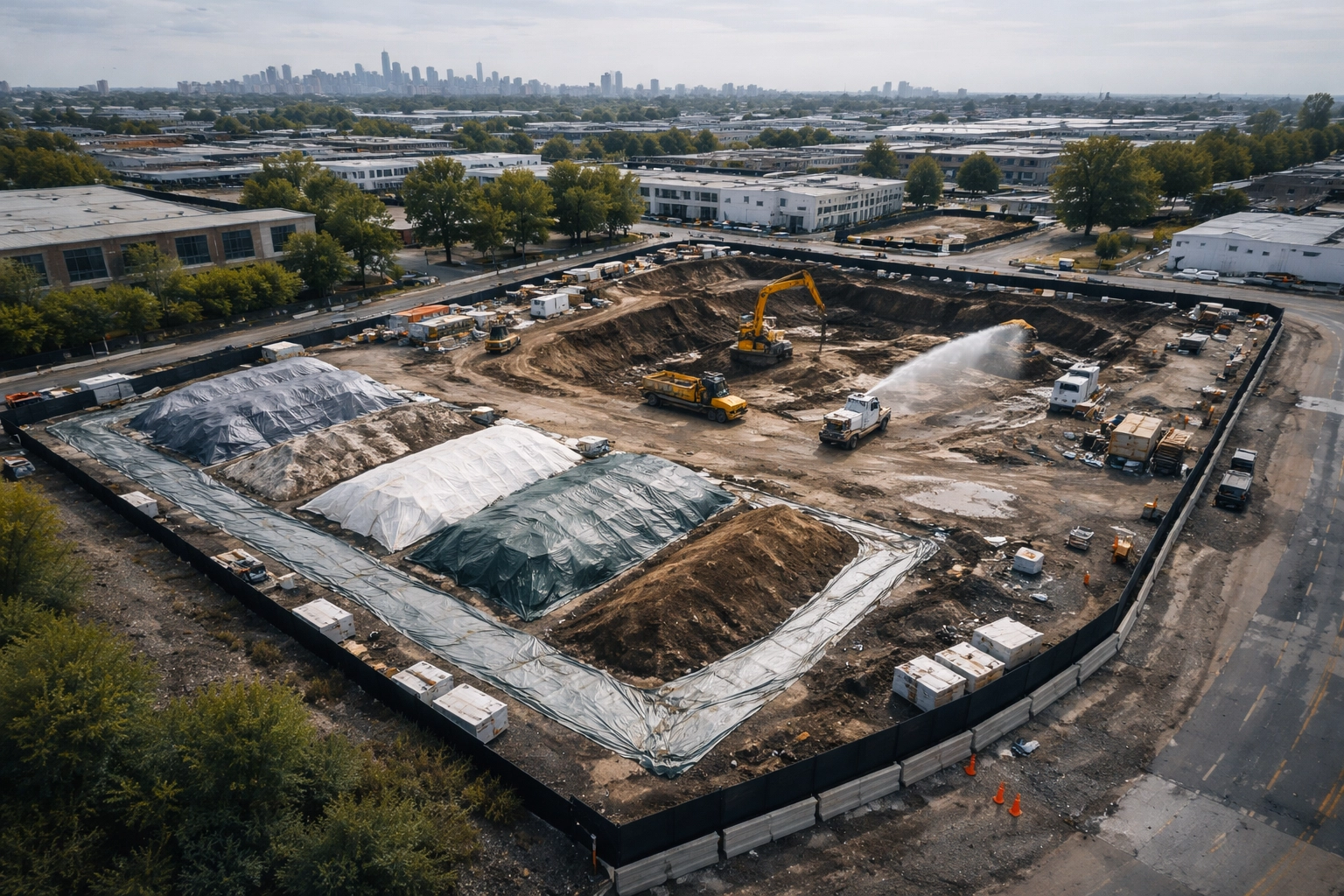
For NYC brownfield cleanup projects and contaminated site redevelopment across the state, the BCP has become the go-to framework. But the real question isn't whether the program exists: it's whether the math works for your specific deal.
The Financial Case: Understanding BCP Tax Credits
The BCP's tax credit structure is where the program distinguishes itself from other state remediation incentives. Credits range from 22% to 50% of eligible cleanup and redevelopment costs, depending on site characteristics, location, and project type.
Here's how the credit tiers break down:
- Site Preparation Credits: Cover costs related to demolition, site clearing, and infrastructure work necessary for redevelopment
- Tangible Property Credits: Apply to buildings and improvements constructed on remediated sites
- On-Site Groundwater Remediation Credits: Available for projects addressing groundwater contamination
- Brownfield Redevelopment Tax Credits: The primary credit mechanism, calculated based on cleanup costs and site location
The critical detail many developers miss: these credits are refundable. If your tax credit exceeds your New York State tax liability, you receive the difference as a cash payment. This isn't just an offset: it's direct capital back into your project.
"The BCP generates over $6.60 for every dollar of tax credit earned. When you're looking at contaminated site redevelopment, that kind of return fundamentally changes your pro forma."
The ROI Numbers That Matter
Let's talk actual returns. According to program data through July 2021, the BCP has leveraged approximately $2.7 billion in tax credit incentives to generate over $17.6 billion in total economic development. That's a multiplier effect that few other government programs can match.
For individual projects, the calculus depends on your remediation costs, development scope, and site eligibility. A brownfield redevelopment project with $2 million in cleanup costs and $10 million in eligible tangible property improvements could potentially capture credits exceeding $3-4 million: assuming the site qualifies for the higher credit tiers.
But here's where our clients consistently underestimate the BCP's value: liability protection. Upon receiving a Certificate of Completion, participants gain protection from future state enforcement actions related to the contamination addressed during cleanup. For properties with complex contamination histories, this liability shield can be worth as much as the tax credits themselves.
The Costs and Timeline: What You're Really Signing Up For
Now for the reality check. The BCP isn't free money: it's a structured program with real costs and extended timelines.
Application Fee: As of recent program changes, applicants face a $50,000 application fee payable upon entering into a cleanup agreement with NYSDEC. For large-scale brownfield redevelopment projects, this is a rounding error. For smaller deals, it's a meaningful threshold that needs to factor into your go/no-go decision.
Timeline Considerations: This is where most developers underestimate the BCP commitment. The program involves multiple phases:
- Application review and acceptance (3-6 months typical)
- Remedial Investigation work plan approval and execution
- Remedial Action Work Plan development and approval
- Actual remediation activities
- Final Engineering Report and Certificate of Completion
For sites with moderate to complex contamination, you're looking at 2-4 years minimum from application to Certificate of Completion. More complex sites can extend well beyond that.
Additionally, certain tax credits require sites to wait until December 31, 2036 to receive a Certificate of Completion: creating a timeline that demands patient capital and long-term project planning.
When the BCP Makes Sense (And When It Doesn't)
Based on our experience guiding clients through brownfield projects across the NY/NJ region, here's the strategic framework we use:
The BCP is likely worth it when:
- Remediation costs exceed $500,000, making the credit percentages financially meaningful
- You're planning substantial vertical development that qualifies for tangible property credits
- The property has environmental liability concerns that make the Certificate of Completion's liability protection valuable
- Your capital structure can accommodate the program timeline without killing deal economics
- The site is located in an Environmental Zone, qualifying for enhanced credit percentages
The BCP may not be the right fit when:
- Remediation costs are modest and the $50,000 application fee represents a significant percentage
- You need to close and begin construction within 12 months
- The contamination is straightforward enough that voluntary cleanup outside the BCP framework is faster and cheaper
- Your exit strategy requires a timeline incompatible with BCP processing
The Hidden Value: Positioning Your Site for Success
Beyond the direct tax credits, BCP participation signals something to lenders, investors, and future buyers: this site has been through a rigorous state-supervised cleanup process with documented liability protection.
For contaminated site redevelopment projects that will eventually trade or require refinancing, that NYSDEC Certificate of Completion becomes a marketability asset. We've seen BCP-enrolled sites command better terms and faster closings than comparable properties cleaned up through less formal processes.
The program also provides a structured framework that, while sometimes frustrating in its pace, ensures thorough characterization and remediation. For complex sites with PFAS concerns or multiple historical uses, that regulatory structure can actually accelerate decision-making by providing clear standards and endpoints.
How We Help Clients Navigate the BCP
At Envicon, we've guided brownfield redevelopment projects through the BCP from initial feasibility analysis through Certificate of Completion. Our approach focuses on three critical phases:
Pre-Application Due Diligence: Before you commit the $50,000 application fee, we evaluate whether the BCP is actually your best path. This includes preliminary site characterization, credit estimation modeling, and timeline projections against your deal structure.
Program Management: Once enrolled, we handle the technical submissions, NYSDEC coordination, and remediation oversight that keeps your project moving. Our familiarity with Part 375 requirements and NYSDEC expectations means fewer revision cycles and faster approvals.
Credit Optimization: The difference between a 22% credit and a 50% credit often comes down to how the project is structured and documented. We work with your tax advisors to ensure eligible costs are properly captured and categorized.
The Bottom Line
The NYSDEC Brownfield Cleanup Program remains one of the most powerful tools available for contaminated site redevelopment in New York. The tax credits are real, the liability protection is valuable, and the ROI data supports participation for appropriately scaled projects.
But the BCP is not a shortcut. It's a commitment to a multi-year regulatory process that demands upfront capital, patient timelines, and experienced guidance to navigate efficiently.
Key Takeaways:
- Tax credits range from 22-50% of eligible costs and are fully refundable
- The $50,000 application fee creates a minimum project threshold for economic viability
- Timeline from application to Certificate of Completion typically spans 2-4+ years
- Liability protection may be as valuable as the tax credits for complex sites
- Project structure and documentation directly impact credit percentages
If you're evaluating a brownfield opportunity and wondering whether the BCP fits your deal structure, reach out to our team. We'll give you a straight answer on whether the credits are worth the wait for your specific situation.