A $50 million infrastructure program doesn't fail all at once. It fails in increments: a delayed permit here, a miscommunication there, a contractor dispute that festers for weeks before anyone escalates it. By the time you realize your project is six months behind schedule, you've already burned through contingency budgets and stakeholder goodwill.
This is the reality facing public agencies and large-scale developers across the NY/NJ region every single day. The projects are bigger, the regulatory landscape is more complex, and the margin for error keeps shrinking. Yet the solution isn't necessarily more staff or bigger budgets. It's smarter oversight.
That's where owner's representative support changes the game.
The Hidden Cost of "Managing It Ourselves"
Here's what we see constantly: A public agency or developer kicks off a major infrastructure program with capable internal teams. They've got project managers, engineers, and procurement specialists. On paper, they have everything they need.
Six months in, the cracks start showing. The construction manager is making decisions without full context. Procurement timelines aren't syncing with engineering deliverables. Environmental compliance issues that should have been flagged early are now causing work stoppages.
The problem isn't incompetence: it's bandwidth. Your internal team is juggling day-to-day operations while trying to maintain strategic oversight of a complex, multi-phase program. Something has to give, and usually, it's the proactive coordination that prevents small issues from becoming project-killing delays.
"An owner's representative isn't a luxury: it's insurance against the compounding costs of reactive project management."
What an Owner's Representative Actually Does
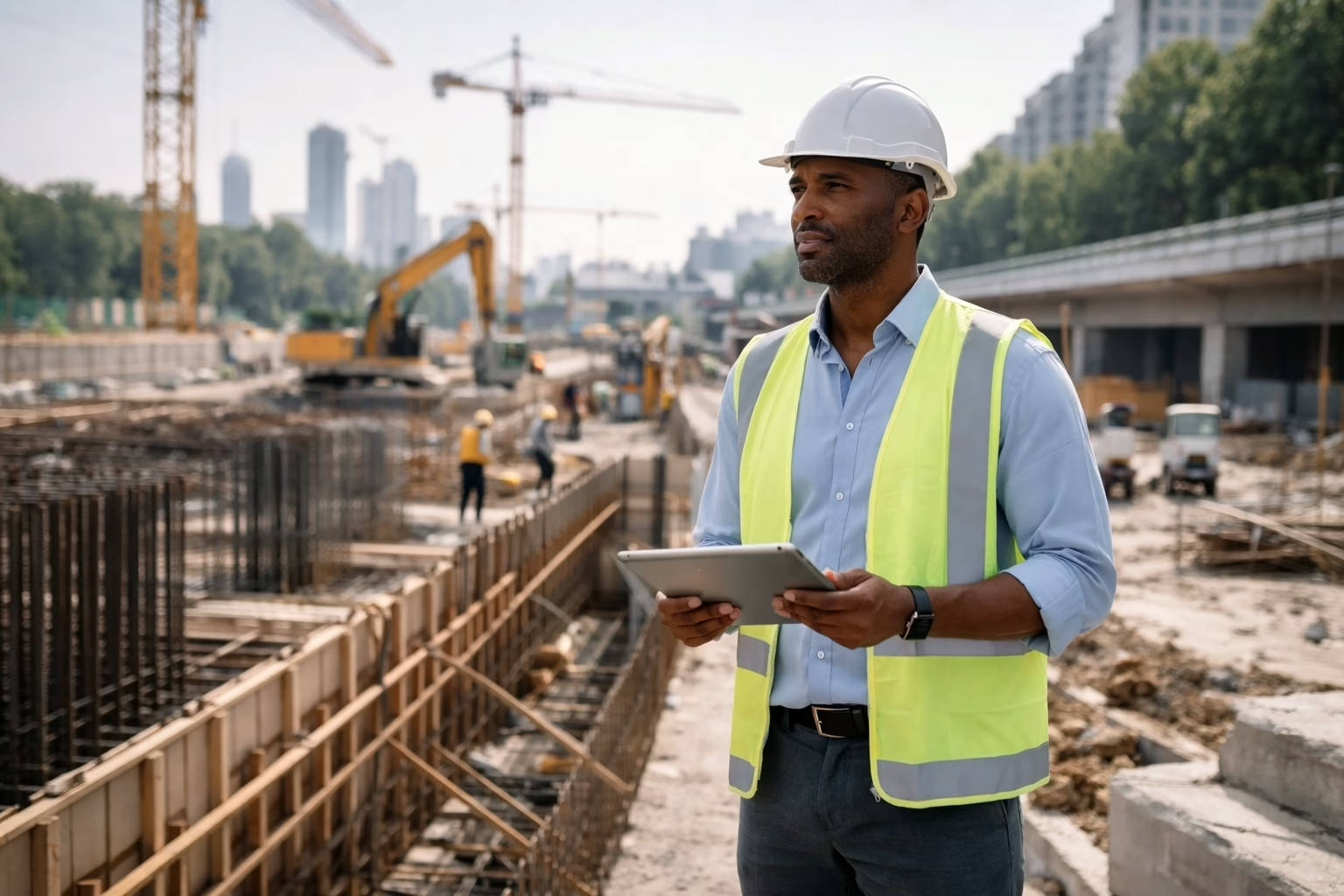
Let's cut through the jargon. An owner's representative is your dedicated advocate on a construction or infrastructure program. They work exclusively for you: not the contractor, not the construction manager, not anyone else with competing interests.
Their job is to protect your schedule, your budget, and your project objectives by maintaining continuous oversight and coordinating all the moving pieces that can derail a program if left unmanaged.
For multi-million dollar infrastructure programs, this means:
- Establishing realistic schedules before ground is broken: not optimistic timelines that look good in presentations but collapse under real-world conditions
- Identifying critical path activities that determine whether you hit your milestones or miss them by months
- Coordinating procurement, engineering, and construction so these parallel workstreams actually align instead of creating bottlenecks
- Proactively flagging risks before they become change orders or claims
- Serving as the single point of contact between you and every other stakeholder on the project
In short, they keep everyone honest and keep everything moving.
The Four Pillars of Schedule Protection
After decades of supporting infrastructure programs across New Jersey and the greater NYC metropolitan area, we've identified four non-negotiable elements that determine whether a program stays on schedule.
1. Upfront Schedule Development That's Actually Realistic
Most schedule problems don't start during construction: they start during planning. Overly optimistic timelines get baked into contracts, stakeholder expectations, and funding agreements. Then reality hits.
An effective owner's representative pushes back on unrealistic assumptions before they become contractual obligations. They work with your team to build schedules using the Critical Path Method, identifying which activities have zero float and which have room for adjustment.
This isn't pessimism. It's pragmatism. A realistic schedule with built-in contingencies will outperform an aggressive timeline that requires everything to go perfectly.
2. Continuous Monitoring and Stakeholder Coordination
Construction programs involve dozens of stakeholders with competing priorities. Contractors want to minimize costs. Subcontractors want to protect their margins. Regulatory agencies want compliance documentation. Your internal team wants to hit milestones.
Without someone actively coordinating these interests, misalignment is inevitable. Procurement delays cascade into construction delays. Design changes don't get communicated to the field. Environmental compliance gets treated as an afterthought until it triggers a work stoppage.
Owner's representatives maintain constant presence: on-site visits, regular progress meetings, and direct communication channels with every party involved. They catch problems when they're still small and solvable.
3. Proactive Risk Management
Every infrastructure program carries risk. Weather delays. Supply chain disruptions. Unforeseen site conditions. Contractor performance issues. The question isn't whether problems will arise: it's whether you'll be prepared when they do.
Owner's representatives conduct ongoing risk assessments throughout the program lifecycle. They identify potential schedule threats, develop contingency plans, and ensure your team isn't blindsided when conditions change.
For projects involving environmental assessment or regulatory compliance, this proactive approach is especially critical. A contamination issue discovered mid-construction without a response plan can add months to your timeline. The same issue discovered early, with mitigation strategies already in place, becomes a manageable challenge.
4. Centralized Communication and Decision-Making
Here's a scenario that plays out constantly on large programs: A contractor identifies an issue that requires an owner decision. They tell the construction manager. The construction manager emails your project manager. Your project manager schedules a meeting for next week. By the time a decision is made, two weeks have passed and the contractor has moved crews to other projects.
Owner's representatives short-circuit this dysfunction by centralizing communication and ensuring decisions happen when they need to happen. They understand your priorities, have the authority to escalate issues appropriately, and maintain the relationships necessary to resolve conflicts quickly.
"The single point of contact model isn't about creating bureaucracy: it's about eliminating the communication gaps that kill schedules."
When Owner's Rep Support Makes the Difference
Not every project requires dedicated owner's representative support. But certain program characteristics make it essential:
- Multi-phase programs spanning multiple years with overlapping construction activities
- Multiple prime contractors requiring coordination across separate scopes
- Complex regulatory environments involving federal, state, and local compliance requirements
- Public funding sources with strict reporting and milestone requirements
- Aggressive timelines with limited schedule float
- High-stakes outcomes where delays carry significant financial or political consequences
If your program checks more than two of these boxes, managing it without dedicated owner's representation is a gamble you probably can't afford.

What This Looks Like in Practice
Consider a major transportation infrastructure program: highway reconstruction, bridge rehabilitation, or transit system expansion. These projects typically involve:
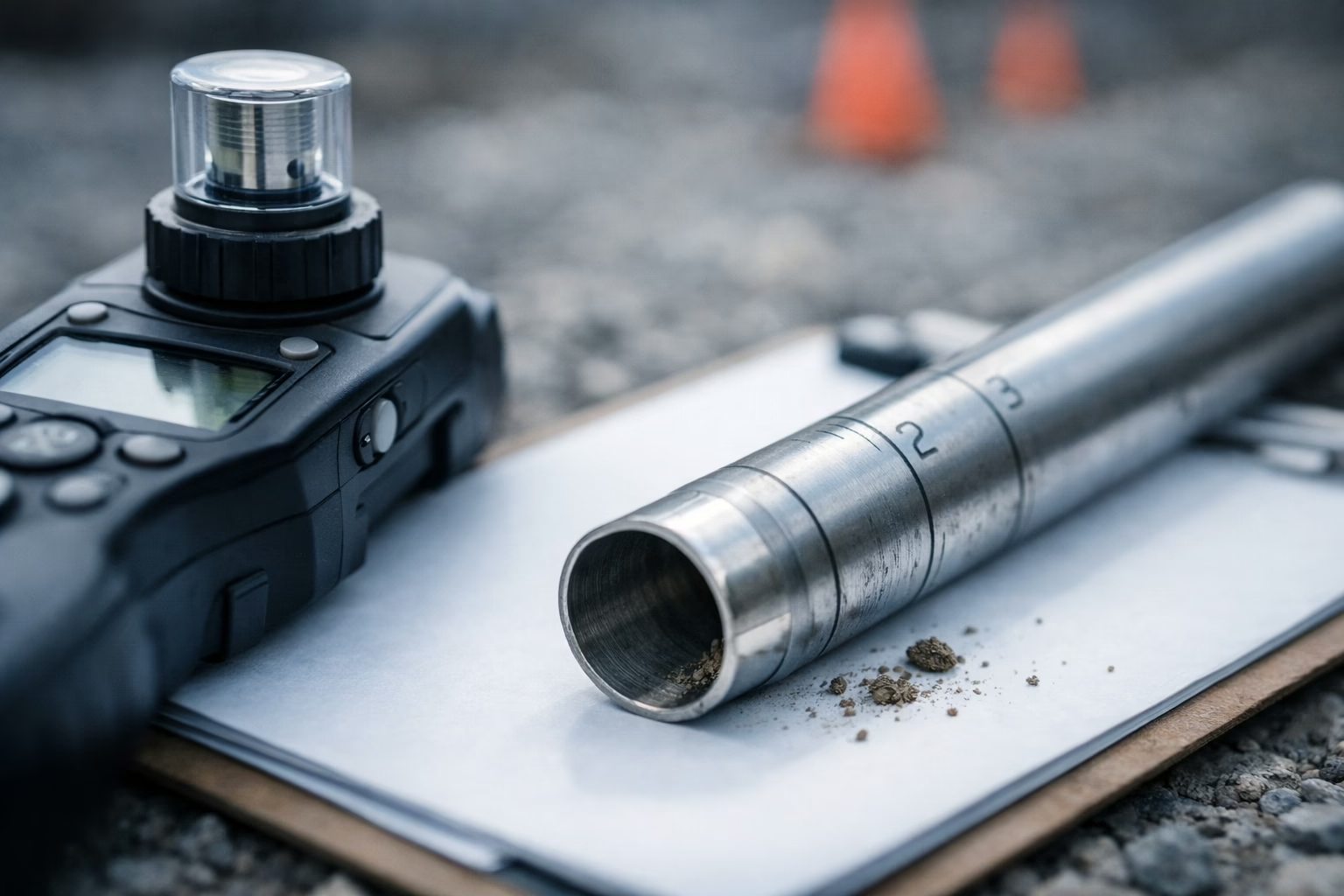
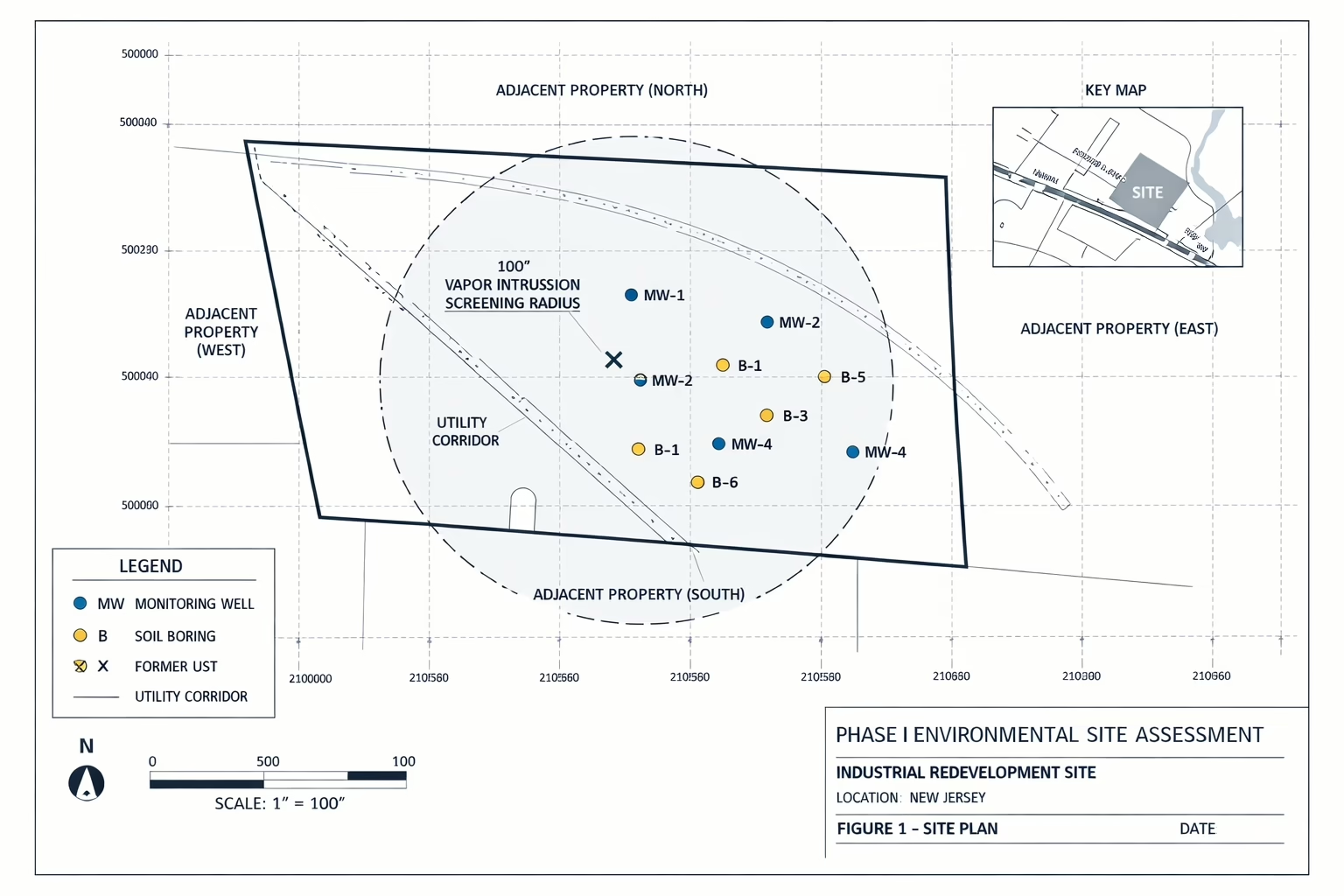
- Environmental site assessments and remediation coordination
- Compliance and permitting across multiple agencies
- Geotechnical investigations and foundation engineering
- Civil site design and stormwater management
- Construction oversight and quality assurance
- Ongoing regulatory reporting and documentation
Each of these workstreams has its own timeline, dependencies, and potential failure points. Without someone maintaining visibility across all of them: and actively managing the interfaces between them: schedule slippage is almost guaranteed.
Our work on major transportation corridors and critical infrastructure protection projects has reinforced this lesson repeatedly. The programs that stay on schedule are the ones with dedicated oversight from day one.
The Bottom Line
Multi-million dollar infrastructure programs fail for predictable reasons: unrealistic schedules, poor coordination, reactive risk management, and communication breakdowns. These aren't mysteries. They're management failures that compound over time until they become catastrophic.
Owner's representative support addresses all four failure modes simultaneously. It provides the dedicated oversight, proactive coordination, and centralized decision-making that complex programs require to stay on track.
The cost of this support is a fraction of what you'll spend on schedule delays, change orders, and stakeholder conflicts if you try to manage without it. For public agencies accountable to taxpayers and developers accountable to investors, that math is straightforward.
Your infrastructure program is too important: and too expensive: to leave to chance. Build the oversight structure it deserves from the start.
Envicon Strategic Solutions provides integrated owner's representative support for infrastructure programs throughout the NY/NJ metropolitan region. Explore our full range of services to see how we keep complex projects on schedule and on budget.