Blog

  • Geotechnical Engineering for Urban Infill: Why the Soil Below Your NYC Site Matters More Than the Building Above

    Geotechnical Engineering for Urban Infill: Why the Soil Below Your NYC Site Matters More Than the Building Above

    You've got the perfect infill site in Brooklyn. The zoning works. The deal pencils out. Your architect has a vision that'll turn heads. But here's the uncomfortable truth we tell developers every week: none of that matters if you don't understand what's happening ten, twenty, or fifty feet below grade.

    In NYC's hyper-competitive real estate market, the building above ground gets all the attention. But it's the soil beneath your site that ultimately determines whether your project stays on budget, on schedule: or spirals into a costly nightmare of redesigns and change orders.

    The Urban Infill Paradox

    Urban infill development is the backbone of NYC's growth strategy. We're not building on virgin farmland here. Every site in Manhattan, Brooklyn, or Queens comes with a history: decades or centuries of previous uses, buried infrastructure, and subsurface conditions that rarely match what you'd find in a suburban greenfield project.

    This creates what we call the urban infill paradox: the sites with the highest development potential often carry the greatest subsurface risk.

    That former gas station in Williamsburg? The old manufacturing facility in Long Island City? The vacant lot in the South Bronx that's been sitting empty since the 1980s? Each one presents a unique puzzle of contaminated soil, varying geology, and proximity to existing structures that can make or break your pro forma.
    Brownfield Urban Buildings Cluster

    What Actually Lies Beneath NYC

    New York City's geology is anything but uniform. Within a single block, you might encounter:

    • Bedrock at varying depths – Manhattan schist can appear at grade level in some areas and 100+ feet down in others
    • Glacial till and outwash deposits – Loose, unpredictable soils left behind by retreating ice sheets
    • Organic layers and peat – Especially problematic in former wetland areas of Brooklyn and Queens
    • Fill material – Decades of debris, demolition waste, and who-knows-what from previous development cycles
    • Contaminated groundwater – Legacy pollution from industrial operations that may have ceased generations ago

    A thorough geotechnical investigation for redevelopment doesn't just tell you what's down there: it tells you what it means for your foundation design, your excavation costs, and your construction timeline.

    "Soil composition, rock formations, and existing groundwater conditions fundamentally constrain what can be built and how much it will cost."

    This isn't an abstract engineering concern. It's a budget line item that can swing by hundreds of thousands of dollars depending on what the borings reveal.

    The Foundation Decision That Changes Everything

    Here's where geotechnical engineering directly impacts your bottom line. Based on subsurface conditions, your structural engineer will need to specify one of several foundation approaches:

    Shallow Foundations (Spread Footings)

    • Work when competent bearing soils exist at reasonable depths
    • Lower cost, faster installation
    • Rarely viable for significant structures in NYC's variable geology

    Deep Foundations (Piles and Piers)

    • Required when load-bearing capacity isn't available near the surface
    • Driven piles, drilled shafts, or micropiles depending on site constraints
    • Significantly higher cost but necessary for most mid-rise and high-rise construction

    Ground Improvement

    • Techniques like soil mixing, grouting, or vibro-compaction to enhance weak soils
    • Can sometimes avoid the need for deep foundations
    • Requires precise geotechnical analysis to determine viability
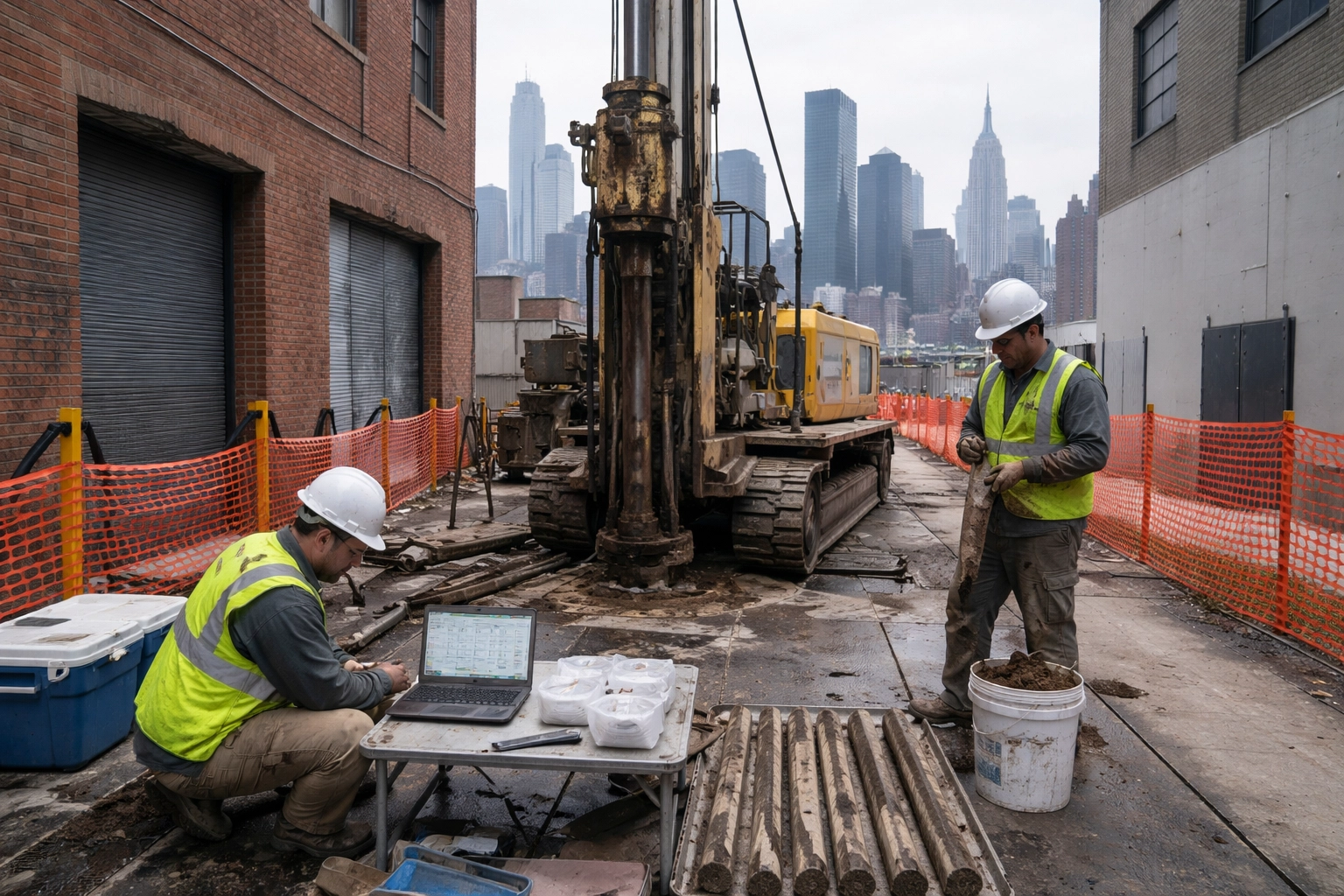
    Active construction site

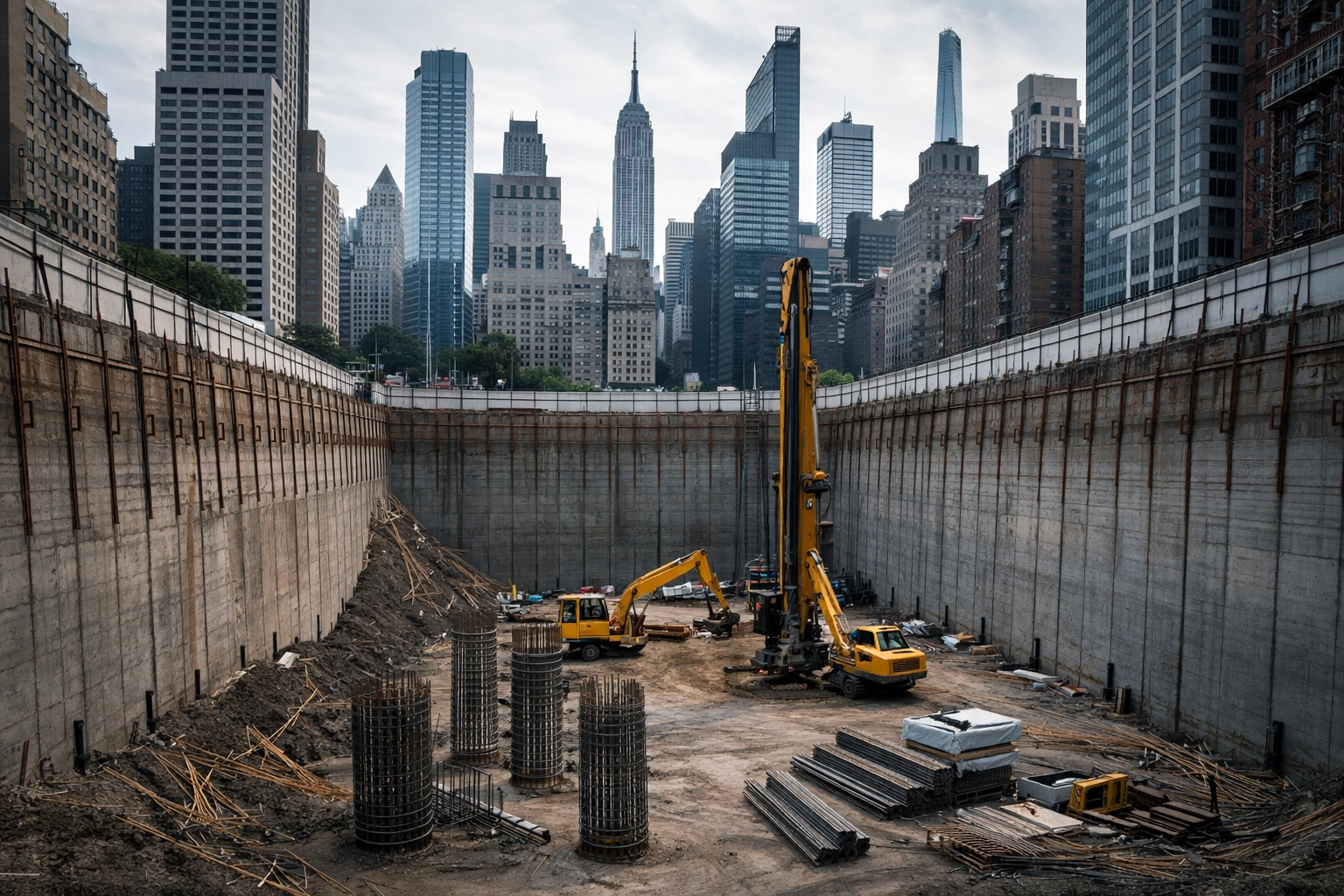
    The difference between a spread footing foundation and a driven pile system can easily represent a seven-figure swing in your construction budget. And that's before we even discuss the excavation support systems you'll need in a dense urban environment where your neighbors' basements sit just feet from your property line.

    The Brownfield Factor

    In NYC, geotechnical engineering and environmental assessment are increasingly inseparable. Many urban infill sites carry environmental designations: whether through the NYSDEC Brownfield Cleanup Program or NYC OER's E-Designation system: that require remediation before or during construction.

    Here's where an integrated approach pays dividends.

    When your geotechnical borings and environmental sampling are coordinated from day one, you avoid:

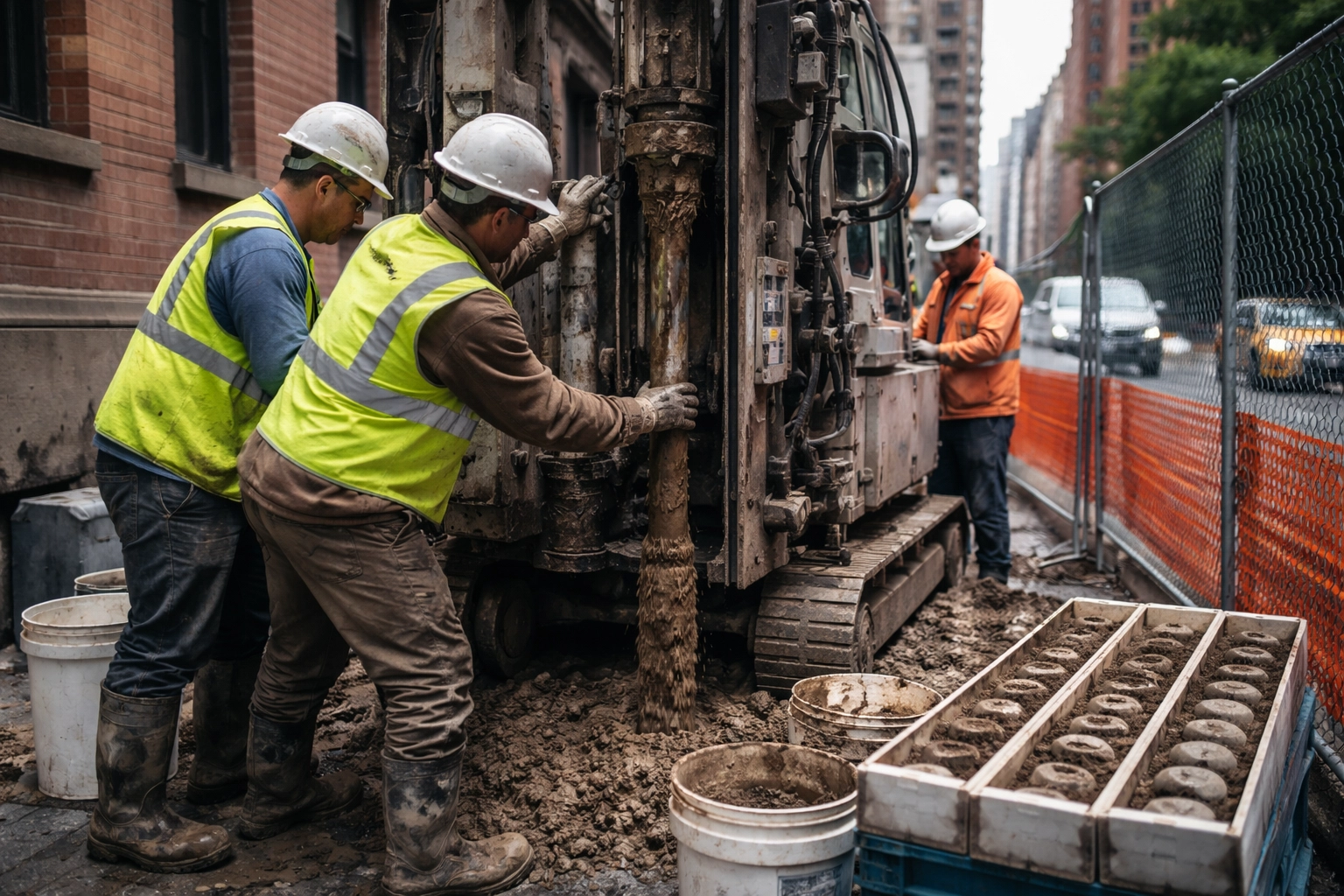
    • Redundant mobilization costs – One drill rig, multiple objectives
    • Conflicting data interpretations – Single team, unified analysis
    • Timeline delays – Parallel workstreams instead of sequential studies
    • Regulatory surprises – Contamination discovered during foundation work

    We've seen projects where the developer hired one firm for the Phase I ESA, another for the Phase II sampling, and a third for geotechnical investigation. The result? Three separate mobilizations, three different interpretations of subsurface conditions, and a six-month delay while everyone figured out how the pieces fit together.
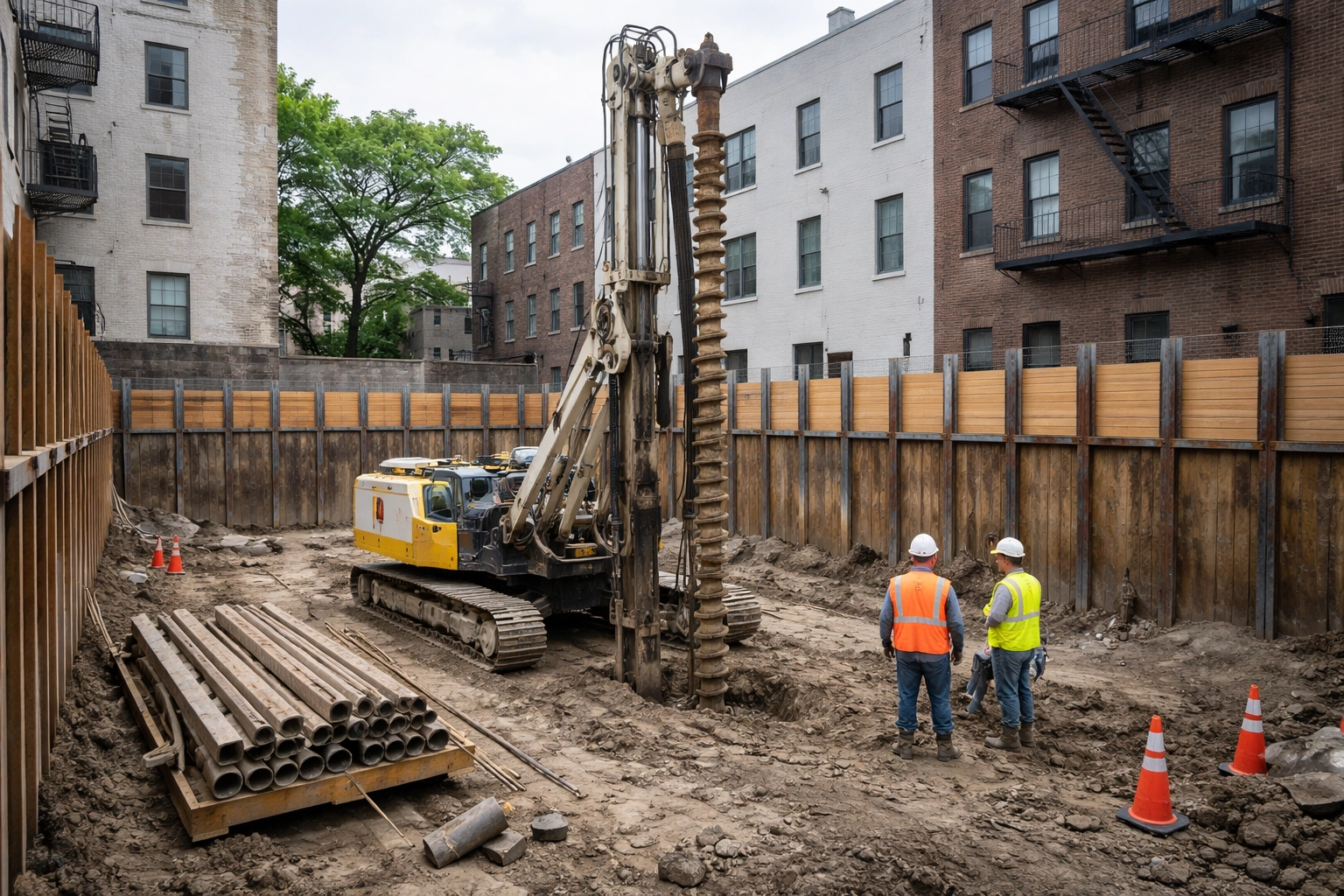
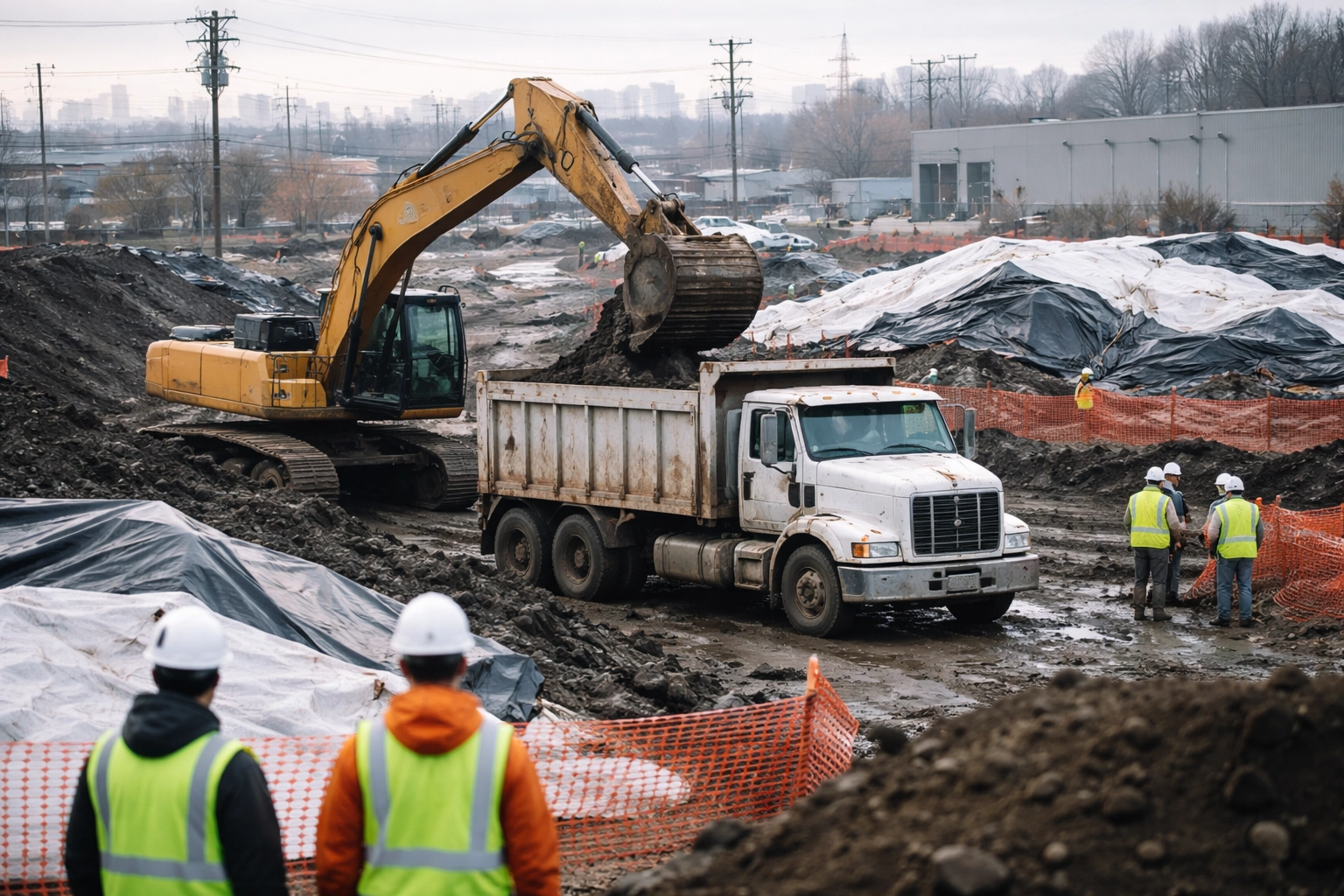
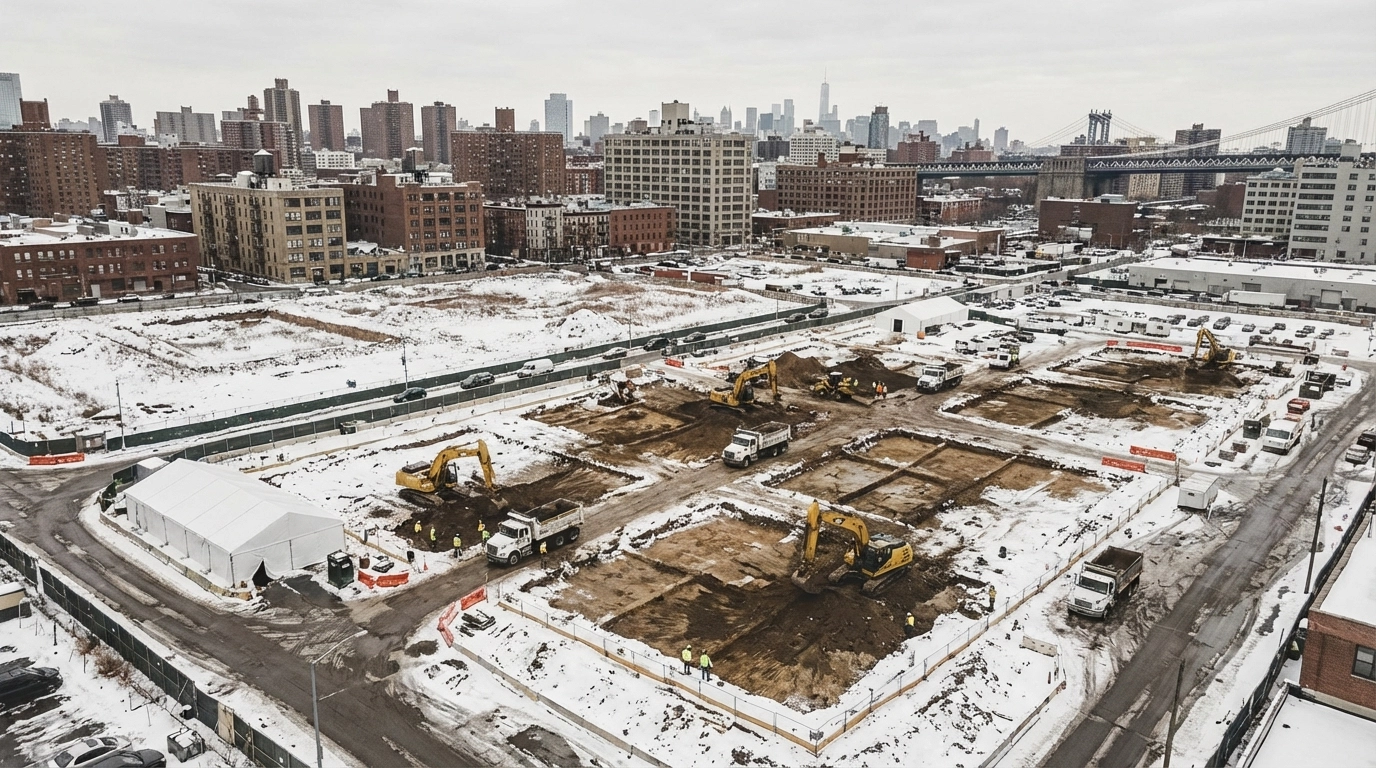
    Excavator and Crew at Urban Redevelopment Site

    What a Smart Geotechnical Program Looks Like

    For NYC urban infill, we recommend a phased investigation that scales with your project's risk profile:

    Phase 1: Desktop Study & Site Reconnaissance

    • Review historical records, previous boring logs, and adjacent project data
    • Walk the site to identify potential access constraints and drilling challenges
    • Develop preliminary subsurface model and investigation scope

    Phase 2: Subsurface Exploration

    • Soil borings to bedrock or suitable bearing stratum
    • Standard Penetration Tests (SPT) for soil strength characterization
    • Rock coring where foundation bearing on bedrock is anticipated
    • Groundwater monitoring and sampling
    • Coordination with environmental sampling if contamination is suspected

    Phase 3: Laboratory Testing & Analysis

    • Grain size analysis, Atterberg limits, consolidation tests
    • Unconfined compressive strength testing of rock cores
    • Chemical analysis for disposal characterization

    Phase 4: Engineering Recommendations

    • Foundation design parameters and recommendations
    • Excavation support requirements and construction considerations
    • Dewatering needs and potential impacts to adjacent structures
    • Settlement analysis and monitoring recommendations
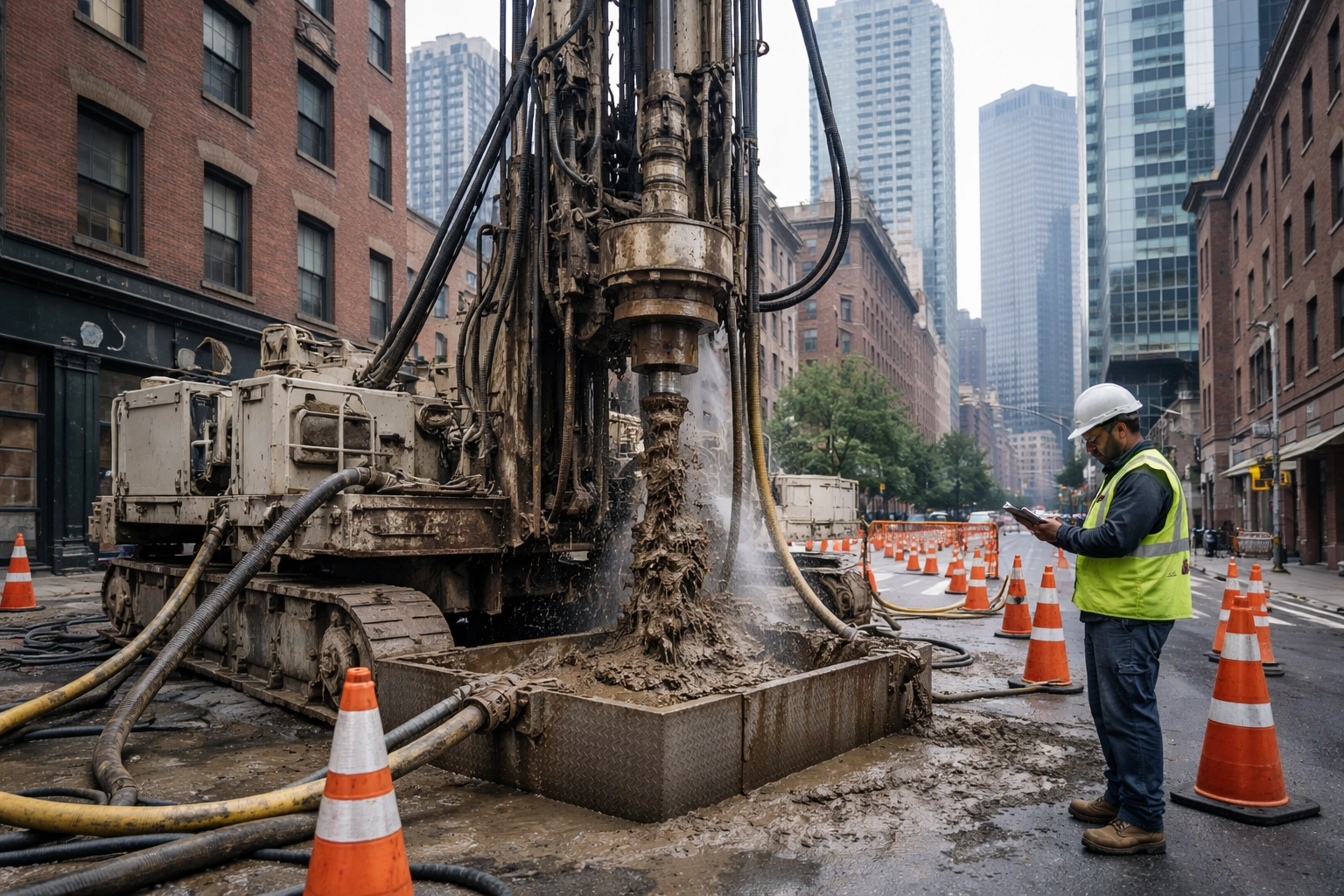
    Concrete Foundation Footing Construction Site

    The Adjacent Structure Problem

    In Manhattan and the dense neighborhoods of Brooklyn and Queens, your foundation doesn't exist in isolation. That brownstone next door? The subway tunnel running beneath the street? The century-old water main at your property line? All of these factor into your geotechnical design.

    Pre-construction surveys documenting existing conditions aren't optional: they're essential protection against claims that your excavation damaged neighboring properties. And your support of excavation design needs to account for:

    • Lateral earth pressures from adjacent buildings and streets
    • Surcharge loads from neighboring foundations
    • Groundwater control that won't dewater your neighbor's basement
    • Vibration limits to protect sensitive adjacent structures

    This is where experience in the NYC market matters. An environmental engineering firm in NYC that understands local geology, regulatory requirements, and construction practices can anticipate problems before they become change orders.

    The Bottom Line: Invest Early or Pay Later

    Every dollar spent on thorough geotechnical investigation during due diligence saves multiples during construction. We've seen it play out dozens of times:

    • The developer who skipped borings to save $15,000 and discovered unsuitable soils after excavation began: $400,000 in redesign and delays
    • The investor who assumed "rock is rock" and hit fractured, weathered schist that couldn't support the planned foundation: three-month delay for redesign
    • The builder who didn't coordinate environmental and geotech work and had to remobilize twice: $50,000 in unnecessary drilling costs

    Proper geotechnical engineering isn't an expense. It's intelligence that protects your investment and keeps your project moving forward.

    Key Takeaways for NYC Developers

    • Assume nothing about NYC subsurface conditions: even adjacent sites can have dramatically different geology
    • Coordinate geotechnical and environmental investigations from day one to avoid redundant costs and timeline delays
    • Budget for the foundation system your site actually needs, not the one you hope it needs
    • Document existing conditions before breaking ground to protect against neighbor claims
    • Work with firms that understand NYC's unique challenges: local experience matters

    The building above ground will get the magazine covers and the architecture awards. But it's the work we do below grade: understanding the soil, designing the foundation, managing the risks: that determines whether your project actually gets built.

    Ready to understand what's beneath your next NYC infill site? Let's talk.

  • Stop Wasting Time on Generic Environmental Consulting: 5 Quick Ways to De-Risk Your Property Acquisition

    Property acquisitions in New York and New Jersey are moving faster than ever, but environmental due diligence is still stuck in the stone age. While you're racing to close deals in 30-45 days, generic environmental consultants are delivering cookie-cutter Phase I reports that tell you nothing actionable about your actual risk exposure.

    The problem isn't just delays: it's that most environmental consulting approaches treat every property like a potential Superfund site, leading to over-investigation, blown budgets, and missed opportunities. Smart investors and developers are rethinking their entire approach to environmental due diligence, focusing on targeted, transaction-aligned strategies that actually move deals forward.

    Here's how to stop wasting time and money on generic environmental consulting and start de-risking your acquisitions like a pro.

    1. Start Environmental Review at the LOI Stage, Not Due Diligence

    Most buyers make the critical mistake of treating environmental assessment as a due diligence checkbox rather than a strategic acquisition tool. By the time you're 20 days into your due diligence period, you're already behind the curve.

    Active Urban Construction Site

    The smarter approach: Engage qualified environmental consultants during the letter of intent (LOI) stage. This gives you preliminary insights that inform your initial pricing strategy and purchase agreement terms from day one. You're not conducting a full Phase I ESA yet, but you're gathering enough historical information to identify obvious red flags that could derail the transaction.

    When our team reviews a property at the LOI stage, we're looking at:

    • Historical Sanborn maps and aerial photographs
    • NYSDEC and NJDEP database records
    • Municipal violation records
    • Neighboring property uses and known contamination

    This early intelligence allows you to structure your offer with realistic environmental contingencies and negotiate appropriate risk allocation before you're locked into rigid due diligence timelines.

    2. Demand a Phase I ESA with Integrated Compliance Review

    Generic environmental consultants will hand you a standard Phase I Environmental Site Assessment that meets ASTM E1527-21 requirements and call it a day. That's not enough for today's regulatory environment in New York and New Jersey.

    What you actually need: A focused Phase I ESA that combines contamination risk assessment with a limited compliance review of current operations. This dual approach eliminates the need for separate compliance audits while delivering comprehensive insight in a single engagement.

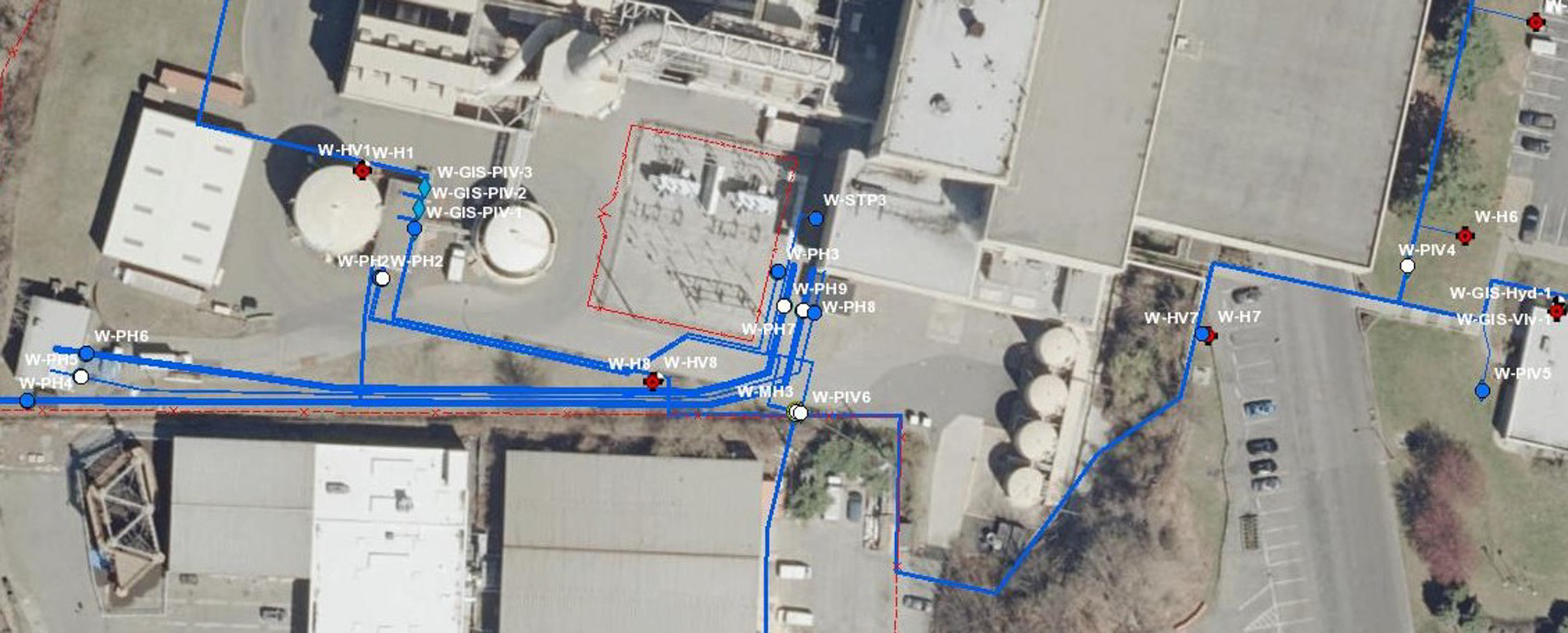
    image_1

    Your Phase I should include:

    • Traditional historical site-use research and recognized environmental conditions (RECs)
    • Active permit review (air emissions, waste management, stormwater)
    • Recent inspection records from NYSDEC, NJDEP, EPA, or local agencies
    • Current material storage and handling practices
    • Identification of material environmental non-compliance issues

    This integrated approach reveals not just past contamination risks, but ongoing regulatory liabilities that could impact your operational plans post-closing. A property might have clean soil and groundwater but face $50,000 in pending air quality violations that generic consultants miss entirely.

    3. Use Targeted Phase II Investigations, Not Blanket Sampling

    Here's where most environmental consulting goes completely off the rails: the recommendation for comprehensive Phase II Environmental Site Assessments based on minor historical concerns. Generic consultants love to recommend extensive soil and groundwater sampling programs because it covers their liability and maximizes their fees.

    The reality: Targeted Phase II investigations deliver better risk intelligence in half the time. Commission sampling and laboratory analysis only when Phase I findings indicate specific, actionable concerns like documented spills, underground storage tanks, or industrial operations with known contamination potential.

    Excavator at Remediation Site

    When Phase II is warranted, focus your investigation on:

    • Areas with highest contamination probability based on Phase I findings
    • Contamination types most relevant to your intended use
    • Sampling locations that provide maximum decision-making value
    • Laboratory analysis parameters that align with regulatory screening levels

    A focused Phase II might involve 6-8 strategically placed soil borings rather than the 15-20 boring "grid pattern" that generic consultants often recommend. You get actionable contamination data and realistic remediation cost estimates without the 4-6 week laboratory delays that kill transaction momentum.

    4. Implement Structured Documentation Management from Day One

    Environmental due diligence generates massive amounts of documentation: historical reports, permit files, inspection records, laboratory data, remediation correspondence, and compliance documentation. Generic consultants often treat document management as an afterthought, leading to information gaps that trigger supplemental investigations or post-closing disputes.

    The systematic approach: Use secure data rooms from the outset to centralize and track all environmental documentation. This creates an audit trail, accelerates stakeholder review, and prevents the "missing document" surprises that derail closings.

    Your documentation system should organize:

    • Historical environmental reports and remediation records
    • Current permits and regulatory correspondence
    • Laboratory analytical data and quality assurance records
    • Site characterization and monitoring data
    • Insurance claims and liability documentation

    When environmental information is properly organized and accessible, lenders complete their environmental review faster, lawyers can draft appropriate contract language, and you can make informed decisions about risk allocation and pricing adjustments without scrambling to locate critical documents.

    5. Translate Environmental Findings into Actionable Contract Terms

    The biggest failure of generic environmental consulting is the disconnect between technical findings and business implications. You'll receive a 40-page Phase I report that identifies "potential environmental concerns" but provides zero guidance on how those findings should impact your purchase agreement, pricing strategy, or risk management approach.

    The business-focused approach: Work with consultants who understand how to translate environmental findings directly into contractual terms and risk allocation strategies. Environmental due diligence should inform specific representations, warranties, indemnity clauses, and escrow provisions in your purchase agreement.

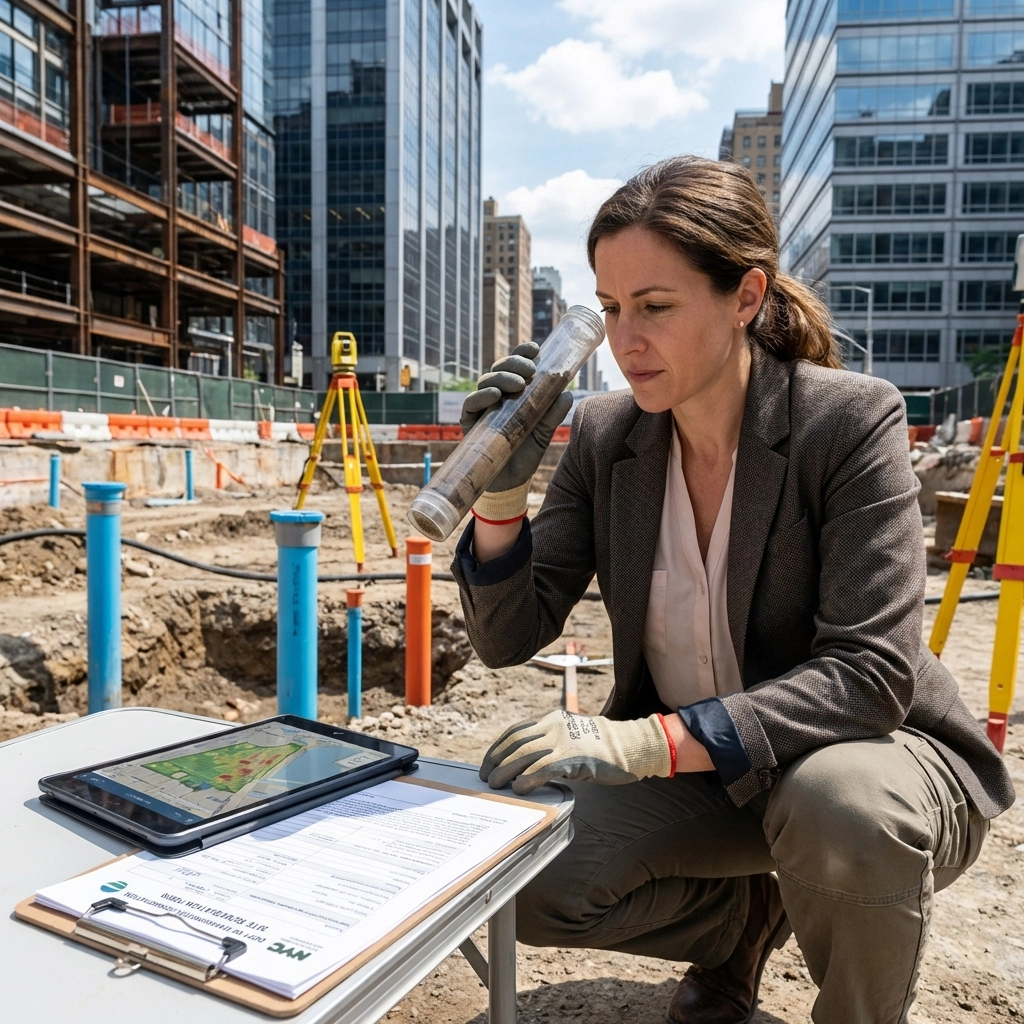
    image_2

    Key contract elements driven by environmental findings:

    • Seller representations about known contamination and compliance status
    • Buyer due diligence rights and investigation scope limitations
    • Risk allocation for newly discovered contamination post-closing
    • Escrow holdbacks or price adjustments tied to remediation costs
    • Indemnity provisions for specific environmental liabilities

    When environmental consultants understand transaction mechanics, they can provide risk assessments that directly support your negotiation strategy. Instead of generic "further investigation recommended" conclusions, you get clear guidance on whether environmental conditions warrant price reductions, additional due diligence time, or specific protective contract language.

    The Bottom Line: Environmental Due Diligence as Strategic Advantage

    Environmental consulting shouldn't be a necessary evil that slows down your acquisitions: it should be a competitive advantage that helps you identify opportunities other buyers miss. Properties with minor environmental issues often trade at significant discounts, creating value opportunities for buyers who understand how to properly assess and manage environmental risk.

    The key is working with environmental consultants who understand that their job isn't just identifying potential problems: it's helping you make informed business decisions that move transactions forward. Generic environmental consulting treats every property like a potential disaster. Strategic environmental consulting treats environmental conditions as manageable business risks that can be quantified, allocated, and mitigated through proper due diligence and contract structuring.

    When you stop wasting time on generic approaches and start implementing targeted, transaction-aligned environmental due diligence, you'll close deals faster, negotiate better terms, and avoid the costly surprises that derail so many property acquisitions in today's competitive market.

    Your next acquisition is waiting. The question is whether you'll approach environmental due diligence as a roadblock or as the strategic advantage it should be.

  • How to Integrate Green Infrastructure With Your Site Development Plan

    How to Integrate Green Infrastructure With Your Site Development Plan

    Here's something we see all the time in New York and New Jersey: developers treating stormwater management like a box to check at the end of a project. They design the building, nail down the site layout, and then scramble to figure out where to put the detention basin or how to meet MS4 requirements.

    That approach is backwards. And expensive.

    The smartest developers we work with have figured out something important: green infrastructure isn't just a compliance tool. When you integrate it early and thoughtfully, it becomes an amenity that adds real value to your project. We're talking about features that attract tenants, boost property values, and differentiate your development in increasingly competitive urban markets.

    Let's break down how to make that happen.

    What Green Infrastructure Actually Means in 2026

    Green infrastructure isn't just about planting trees (though that's part of it). It's a systems-based approach to managing stormwater, improving air quality, and creating resilient sites using natural processes instead of: or alongside: traditional "grey" infrastructure like pipes and catch basins.

    In practical terms, we're talking about:

    • Bioswales and rain gardens that filter and slow runoff
    • Permeable pavement in parking areas and walkways
    • Green roofs that reduce heat island effects and manage roof runoff
    • Constructed wetlands for larger sites
    • Native plantings and tree canopy that intercept rainfall

    The key shift? These aren't isolated features. They're interconnected systems that work together: and work with your site's existing hydrology, soils, and infrastructure.

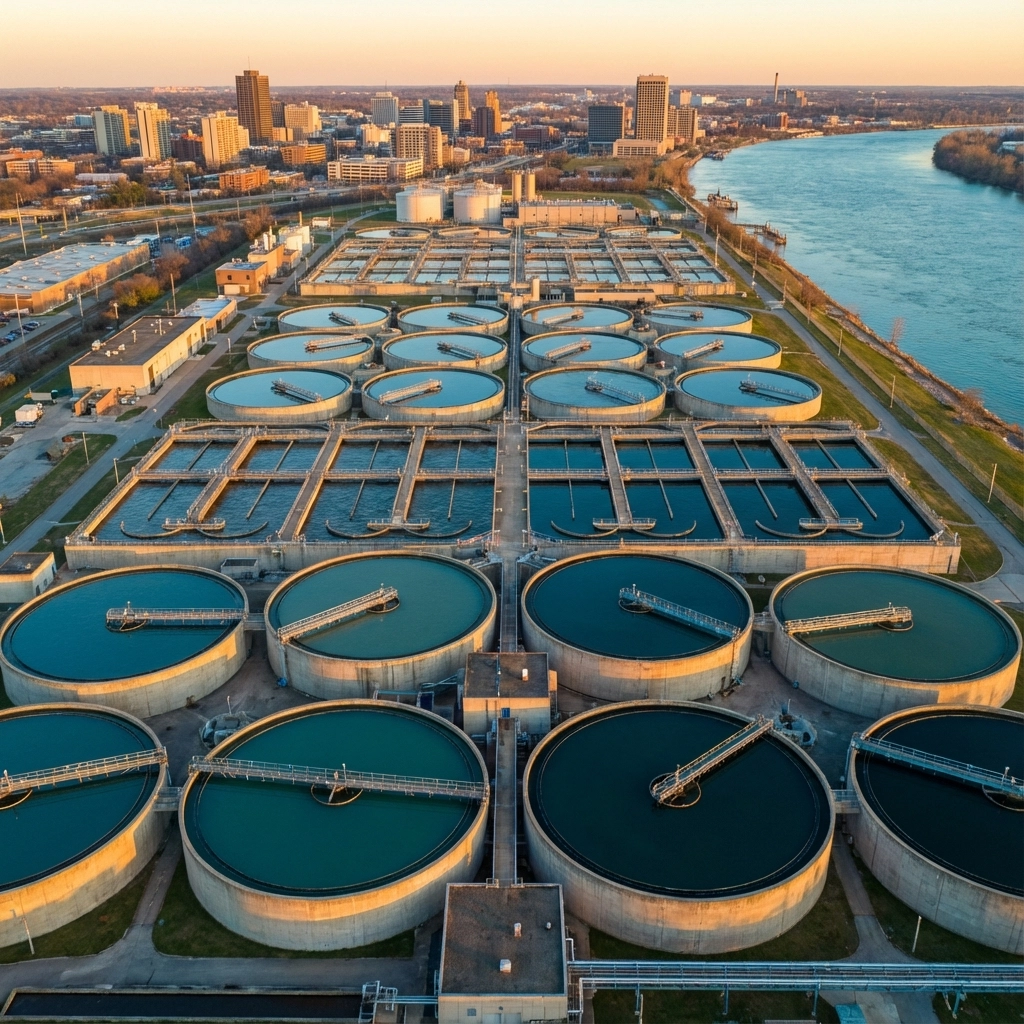
    Urban Waterfront District at Sunset

    The NY/NJ Regulatory Reality

    Let's talk about what's actually driving this conversation in our region.

    In New York City, the DEP's stormwater management requirements have teeth. Any development disturbing more than 20,000 square feet in combined sewer areas: or adding more than 5,000 square feet of impervious surface: triggers stormwater retention requirements. The city wants you to retain the first inch of rainfall on-site, and green infrastructure is often the most practical way to do it.

    In New Jersey, the updated Stormwater Management Rules (N.J.A.C. 7:8) now require major developments to demonstrate groundwater recharge, stormwater quantity control, and water quality treatment. NJDEP is explicitly encouraging green infrastructure as a compliance pathway, and municipalities across the state are following suit with their own overlay requirements.

    Here's what this means for your project: you're going to spend money on stormwater management regardless. The question is whether that spend creates value or just checks a box.

    From Compliance Burden to Competitive Advantage

    "The best green infrastructure doesn't look like infrastructure at all: it looks like a park, a plaza, or a rooftop terrace that happens to manage a million gallons of stormwater a year."

    This is the mindset shift that separates good projects from great ones.

    Consider the difference between these two approaches to meeting the same 1-inch retention requirement:

    Approach A: Install an underground detention system beneath your parking lot. Cost: $150,000. Tenant benefit: zero. You've met the requirement, but you've created no value beyond compliance.

    Approach B: Design a central courtyard with a bioretention planter, permeable pavers, and native landscaping that doubles as outdoor amenity space. Cost: $175,000. Tenant benefit: a marketable outdoor space that commands premium rents. You've met the requirement AND created a feature that differentiates your property.

    The delta in cost is minimal. The delta in value is massive.

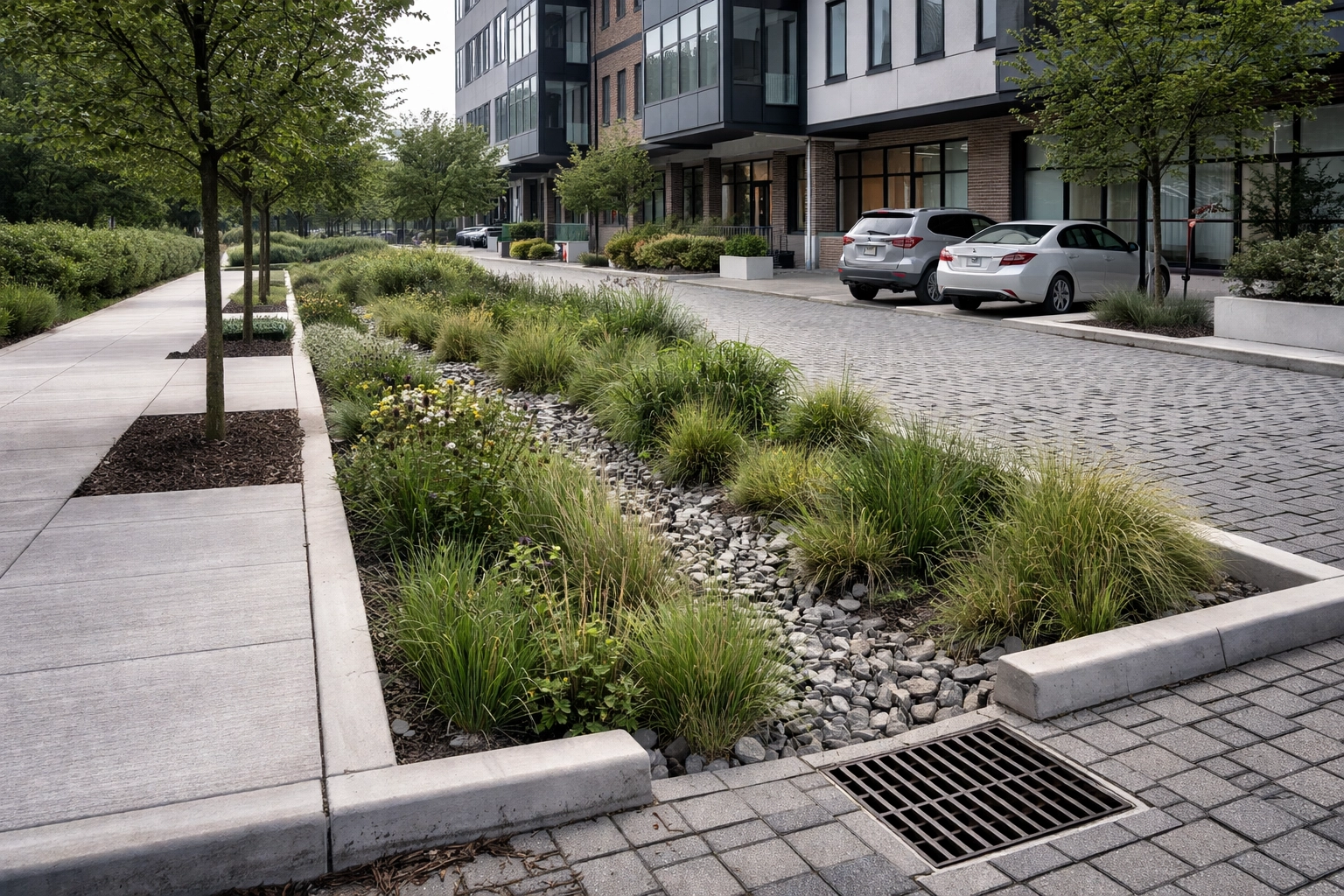
    Aerial view of an urban courtyard with green infrastructure, showing a bioretention garden and permeable walkways used as amenity space.

    Five Strategies for Successful Integration

    Based on our work across dozens of sites in Manhattan, Newark, Hoboken, and beyond, here's what actually works:

    1. Start at Concept Design: Not Permit Submittal

    This is non-negotiable. Green infrastructure needs to be baked into your site plan from day one, not retrofitted after you've locked in building footprints and parking layouts.

    Why? Because effective green infrastructure depends on:

    • Where water naturally flows across your site
    • Soil infiltration capacity (which varies dramatically across even small sites)
    • Sun exposure for plant survival
    • Proximity to existing sewer infrastructure

    Lock in your layout too early, and you'll find yourself trying to fit a bioswale into a 3-foot strip between your building and the property line. It doesn't work.

    2. Map Your Site's Hydrology Before You Design

    Before you draw a single line, understand how water moves across your site. Where does it collect? Where does it flow off-site? What's the infiltration rate of your soils?

    This baseline assessment should include:

    • Topographic survey with 1-foot contours minimum
    • Soil borings with percolation testing
    • Existing drainage infrastructure mapping
    • High groundwater table identification

    This data shapes everything. A site with well-draining sandy soils opens up infiltration-based solutions. A site with tight clay soils or high groundwater may need different strategies: green roofs, surface bioretention with underdrains, or hybrid grey-green systems.

    3. Design for Multi-Functionality

    Every green infrastructure element should serve at least two purposes. A rain garden isn't just stormwater management: it's also:

    • A visual amenity that softens your streetscape
    • A habitat corridor for pollinators
    • A heat island reduction measure
    • A potential LEED or Envision credit

    Green roofs can be accessible amenity decks. Permeable pavement can define outdoor dining areas. Bioswales can create natural separation between pedestrian and vehicular zones.

    The more functions you stack, the more value you create: and the easier it becomes to justify the investment.

    Modern Multi-Family Residential Development - Brownfield Redevelopment

    4. Coordinate Across Your Design Team Early

    Green infrastructure sits at the intersection of civil engineering, landscape architecture, architecture, and MEP. If these disciplines are working in silos, you'll get conflicts and missed opportunities.

    We've seen projects where the civil engineer designed a bioswale that the landscape architect then had to relocate because it conflicted with the architect's entrance canopy: which then triggered a redesign of the underground utilities.

    The fix is simple: bring all disciplines together at the 30% design milestone specifically to discuss stormwater and green infrastructure integration. One coordination meeting can save months of redesign.

    5. Plan for Maintenance from Day One

    Here's an uncomfortable truth: green infrastructure requires more active maintenance than a pipe in the ground. Plants need to be tended. Sediment needs to be removed from bioretention areas. Permeable pavement needs periodic vacuuming.

    If you don't plan for this: and budget for it: your beautiful rain garden becomes a weedy eyesore within two years.

    Build maintenance requirements into your design documentation. Clarify ownership and responsibility (especially for common areas in multi-tenant properties). And design for maintainability: accessible forebays, removable grates, plants that don't require specialized care.

    Making It Work on Constrained Urban Sites

    "But my site is too small" is something we hear constantly. And it's rarely true.

    Urban sites in the Bronx, Staten Island, and North Jersey present real constraints: tight lot lines, existing contamination, underground utilities everywhere. But they also present opportunities:

    • Vertical green infrastructure: Green walls and facade plantings manage stormwater while using zero ground-level footprint
    • Rooftop systems: In dense urban areas, your roof may be your largest available surface for stormwater management
    • Right-of-way integration: Work with municipal DOTs to incorporate bioswales and tree trenches in the public right-of-way adjacent to your site
    • Subsurface hybrid systems: Combine below-grade storage with surface-level green elements for sites where infiltration isn't feasible

    The solutions exist. They just require creative thinking and early coordination with your environmental and civil engineering team.

    Urban Corridor Site Assessment

    The Bottom Line

    Green infrastructure in NY and NJ isn't optional: the regulations make sure of that. But how you approach it is entirely within your control.

    You can treat it as a compliance cost, spending money on underground systems that do nothing for your project's marketability. Or you can treat it as a design opportunity, creating amenities that attract tenants, command premium rents, and position your development as forward-thinking and sustainable.

    The cost difference between these approaches is often marginal. The value difference is not.

    At Envicon, we help developers and property owners navigate the intersection of environmental compliance and smart site design. If you're planning a project in New York or New Jersey and want to explore how green infrastructure can work harder for your bottom line, let's talk.

    Compliance is mandatory. Creating value from it is a choice.

  • NYSDEC Brownfield Cleanup Program (BCP): Are the Tax Credits Worth the Wait?

    NYSDEC Brownfield Cleanup Program (BCP): Are the Tax Credits Worth the Wait?

    For developers eyeing contaminated properties in New York, the NYSDEC Brownfield Cleanup Program (BCP) represents one of the most generous remediation incentive programs in the country. But here's the question that lands on our desk constantly: Are the tax credits actually worth the timeline and complexity?

    The short answer? For the right projects, absolutely. But the BCP isn't a one-size-fits-all solution, and entering the program without understanding the financial mechanics can leave you waiting years for returns that may not justify your capital outlay.

    Let's break down the numbers, the timelines, and the strategic calculus that separates a smart BCP play from a costly miscalculation.

    What Is the NYSDEC Brownfield Cleanup Program?

    The BCP is New York State's flagship program for incentivizing the cleanup and redevelopment of contaminated sites. Administered by the New York State Department of Environmental Conservation (NYSDEC), the program offers a combination of tax credits, liability protection, and regulatory oversight designed to transform underutilized brownfield properties into productive assets.

    The program targets sites where contamination: whether from historical industrial use, petroleum storage, or other sources: has created barriers to redevelopment. By providing financial incentives and a clear regulatory pathway, the BCP aims to eliminate these barriers and unlock economic value that would otherwise remain dormant.

    Aerial View of Coastal Urban Development

    For NYC brownfield cleanup projects and contaminated site redevelopment across the state, the BCP has become the go-to framework. But the real question isn't whether the program exists: it's whether the math works for your specific deal.

    The Financial Case: Understanding BCP Tax Credits

    The BCP's tax credit structure is where the program distinguishes itself from other state remediation incentives. Credits range from 22% to 50% of eligible cleanup and redevelopment costs, depending on site characteristics, location, and project type.

    Here's how the credit tiers break down:

    • Site Preparation Credits: Cover costs related to demolition, site clearing, and infrastructure work necessary for redevelopment
    • Tangible Property Credits: Apply to buildings and improvements constructed on remediated sites
    • On-Site Groundwater Remediation Credits: Available for projects addressing groundwater contamination
    • Brownfield Redevelopment Tax Credits: The primary credit mechanism, calculated based on cleanup costs and site location

    The critical detail many developers miss: these credits are refundable. If your tax credit exceeds your New York State tax liability, you receive the difference as a cash payment. This isn't just an offset: it's direct capital back into your project.

    "The BCP generates over $6.60 for every dollar of tax credit earned. When you're looking at contaminated site redevelopment, that kind of return fundamentally changes your pro forma."

    The ROI Numbers That Matter

    Let's talk actual returns. According to program data through July 2021, the BCP has leveraged approximately $2.7 billion in tax credit incentives to generate over $17.6 billion in total economic development. That's a multiplier effect that few other government programs can match.

    For individual projects, the calculus depends on your remediation costs, development scope, and site eligibility. A brownfield redevelopment project with $2 million in cleanup costs and $10 million in eligible tangible property improvements could potentially capture credits exceeding $3-4 million: assuming the site qualifies for the higher credit tiers.

    Active Urban Construction Site

    But here's where our clients consistently underestimate the BCP's value: liability protection. Upon receiving a Certificate of Completion, participants gain protection from future state enforcement actions related to the contamination addressed during cleanup. For properties with complex contamination histories, this liability shield can be worth as much as the tax credits themselves.

    The Costs and Timeline: What You're Really Signing Up For

    Now for the reality check. The BCP isn't free money: it's a structured program with real costs and extended timelines.

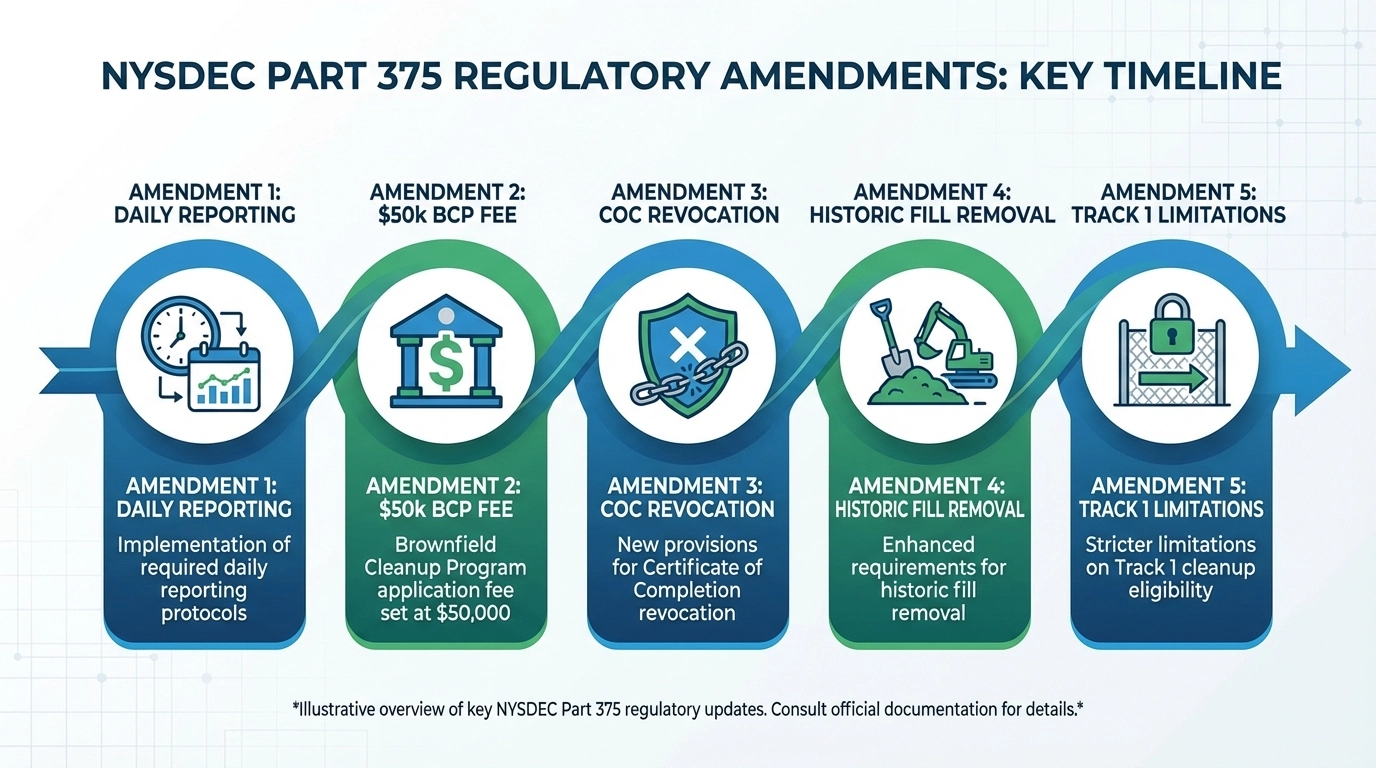
    Application Fee: As of recent program changes, applicants face a $50,000 application fee payable upon entering into a cleanup agreement with NYSDEC. For large-scale brownfield redevelopment projects, this is a rounding error. For smaller deals, it's a meaningful threshold that needs to factor into your go/no-go decision.

    Timeline Considerations: This is where most developers underestimate the BCP commitment. The program involves multiple phases:

    • Application review and acceptance (3-6 months typical)
    • Remedial Investigation work plan approval and execution
    • Remedial Action Work Plan development and approval
    • Actual remediation activities
    • Final Engineering Report and Certificate of Completion

    For sites with moderate to complex contamination, you're looking at 2-4 years minimum from application to Certificate of Completion. More complex sites can extend well beyond that.

    Additionally, certain tax credits require sites to wait until December 31, 2036 to receive a Certificate of Completion: creating a timeline that demands patient capital and long-term project planning.

    When the BCP Makes Sense (And When It Doesn't)

    Based on our experience guiding clients through brownfield projects across the NY/NJ region, here's the strategic framework we use:

    The BCP is likely worth it when:

    • Remediation costs exceed $500,000, making the credit percentages financially meaningful
    • You're planning substantial vertical development that qualifies for tangible property credits
    • The property has environmental liability concerns that make the Certificate of Completion's liability protection valuable
    • Your capital structure can accommodate the program timeline without killing deal economics
    • The site is located in an Environmental Zone, qualifying for enhanced credit percentages

    The BCP may not be the right fit when:

    • Remediation costs are modest and the $50,000 application fee represents a significant percentage
    • You need to close and begin construction within 12 months
    • The contamination is straightforward enough that voluntary cleanup outside the BCP framework is faster and cheaper
    • Your exit strategy requires a timeline incompatible with BCP processing

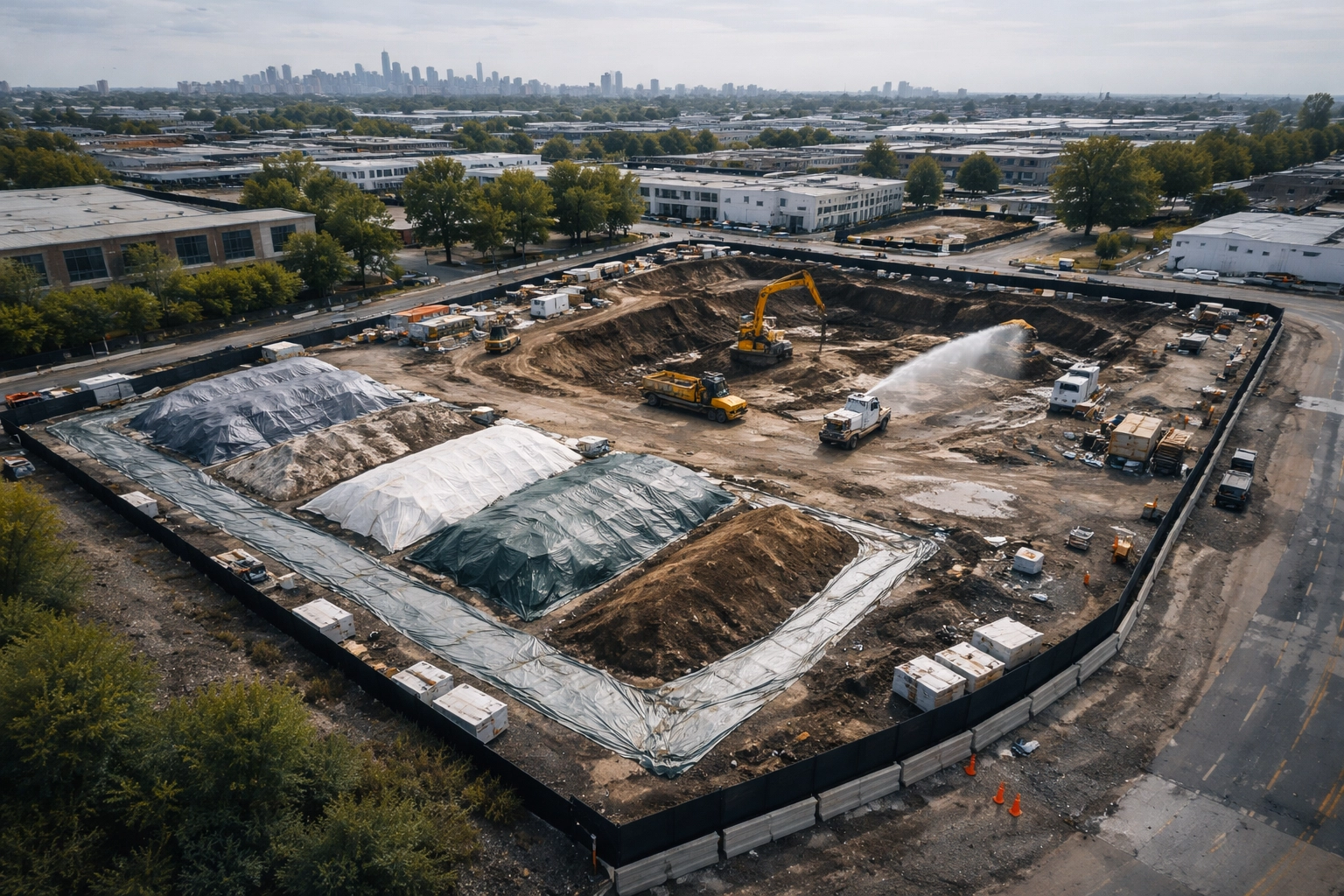
    Aerial site map with sampling and monitoring locations

    The Hidden Value: Positioning Your Site for Success

    Beyond the direct tax credits, BCP participation signals something to lenders, investors, and future buyers: this site has been through a rigorous state-supervised cleanup process with documented liability protection.

    For contaminated site redevelopment projects that will eventually trade or require refinancing, that NYSDEC Certificate of Completion becomes a marketability asset. We've seen BCP-enrolled sites command better terms and faster closings than comparable properties cleaned up through less formal processes.

    The program also provides a structured framework that, while sometimes frustrating in its pace, ensures thorough characterization and remediation. For complex sites with PFAS concerns or multiple historical uses, that regulatory structure can actually accelerate decision-making by providing clear standards and endpoints.

    How We Help Clients Navigate the BCP

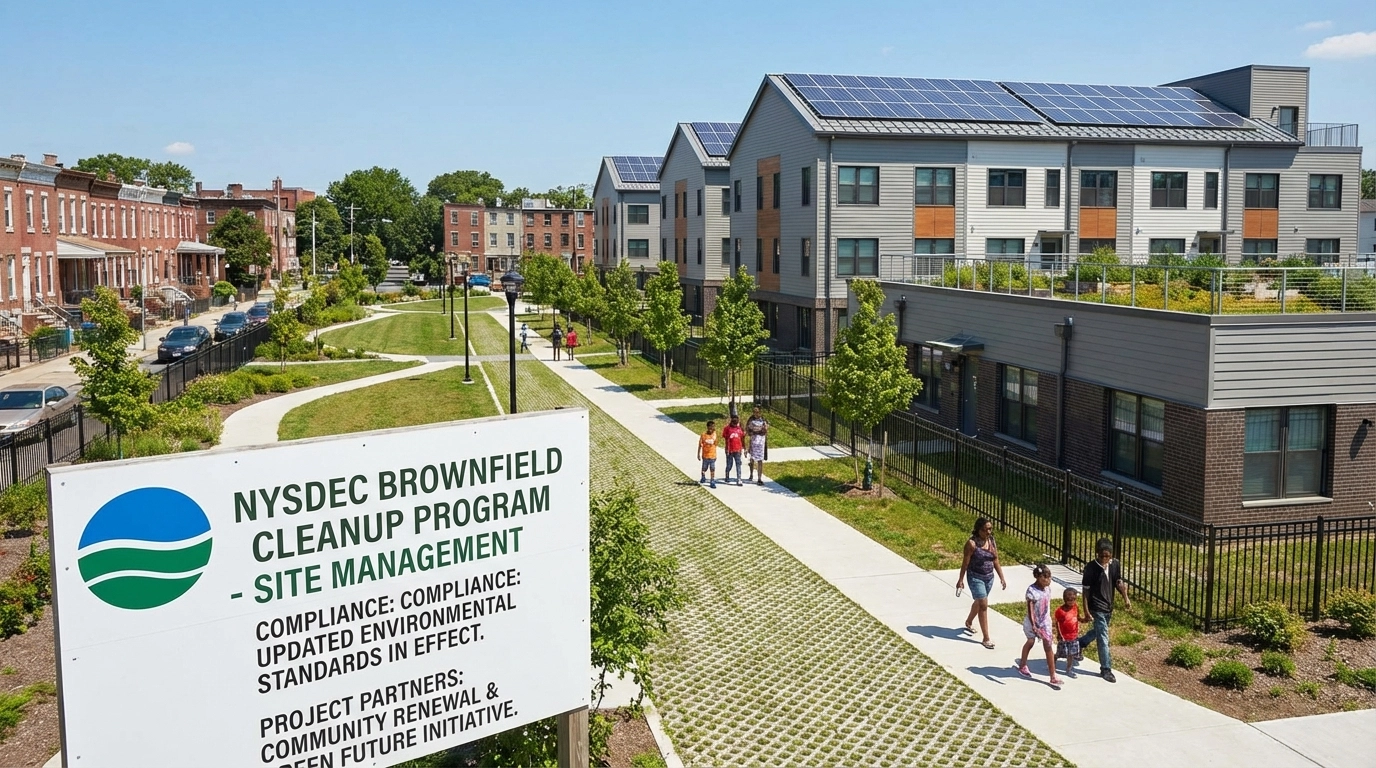
    At Envicon, we've guided brownfield redevelopment projects through the BCP from initial feasibility analysis through Certificate of Completion. Our approach focuses on three critical phases:

    Pre-Application Due Diligence: Before you commit the $50,000 application fee, we evaluate whether the BCP is actually your best path. This includes preliminary site characterization, credit estimation modeling, and timeline projections against your deal structure.

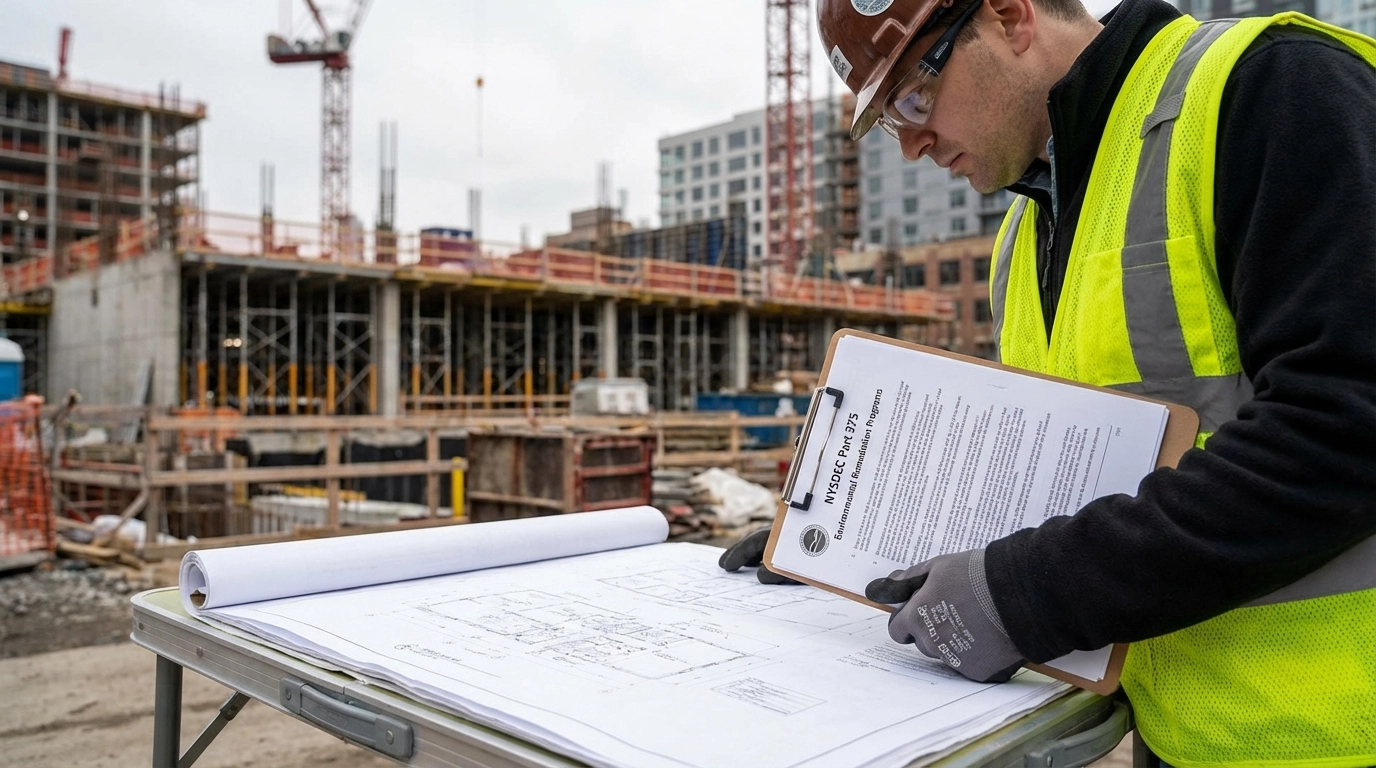
    Program Management: Once enrolled, we handle the technical submissions, NYSDEC coordination, and remediation oversight that keeps your project moving. Our familiarity with Part 375 requirements and NYSDEC expectations means fewer revision cycles and faster approvals.

    Credit Optimization: The difference between a 22% credit and a 50% credit often comes down to how the project is structured and documented. We work with your tax advisors to ensure eligible costs are properly captured and categorized.

    The Bottom Line

    The NYSDEC Brownfield Cleanup Program remains one of the most powerful tools available for contaminated site redevelopment in New York. The tax credits are real, the liability protection is valuable, and the ROI data supports participation for appropriately scaled projects.

    But the BCP is not a shortcut. It's a commitment to a multi-year regulatory process that demands upfront capital, patient timelines, and experienced guidance to navigate efficiently.

    Key Takeaways:

    • Tax credits range from 22-50% of eligible costs and are fully refundable
    • The $50,000 application fee creates a minimum project threshold for economic viability
    • Timeline from application to Certificate of Completion typically spans 2-4+ years
    • Liability protection may be as valuable as the tax credits for complex sites
    • Project structure and documentation directly impact credit percentages

    If you're evaluating a brownfield opportunity and wondering whether the BCP fits your deal structure, reach out to our team. We'll give you a straight answer on whether the credits are worth the wait for your specific situation.

  • How Much Does a Phase I ESA Actually Cost? The Honest Breakdown for NY/NJ Property Deals

    How Much Does a Phase I ESA Actually Cost? The Honest Breakdown for NY/NJ Property Deals

    You've got a property under contract. The lender needs a Phase I Environmental Site Assessment before they'll release funds. Your closing date is in three weeks.

    So you Google "Phase 1 ESA cost" and find quotes ranging from $1,500 to $7,000. What gives?

    Here's the truth: that price range isn't random. It reflects real differences in scope, quality, and: most importantly: whether that report will actually protect you when it matters. In the NY/NJ market, where every property has layers of industrial history baked into the soil, understanding what drives Phase I ESA costs isn't just smart due diligence. It's the difference between closing your deal and watching it collapse.

    Let's break it down.

    The Real Numbers: What Phase I ESAs Cost in NY/NJ

    In the New York and New Jersey markets, Phase I ESA costs typically range from $1,500 to $6,000, with most standard assessments landing between $2,100 and $4,000.

    Here's how it shakes out by property size:

    • Small urban sites (commercial lots, storefronts): $1,900 to $3,200
    • Medium sites (multi-acre properties, strip malls): $2,200 to $3,000
    • Large or complex sites (industrial facilities, former manufacturing): $4,500 to $7,000+

    Need it fast? Expedited turnarounds typically add around $1,000 to the base cost. For deals moving at NY speed: which is most of them: that's often money well spent.

    Aerial View with Monitoring Locations

    What Actually Drives the Price?

    When you're comparing quotes, you're not comparing apples to apples. Here's what separates a $1,800 report from a $4,500 one:

    Property History and Complexity

    A former dry cleaner in Newark requires a fundamentally different level of investigation than a suburban medical office. Properties with extensive environmental histories: think gas stations, auto shops, manufacturing facilities: demand more time digging through historical records, Sanborn maps, and regulatory databases.

    We've seen Phase I ESAs on former car dealerships that required days of hazardous waste documentation review. Meanwhile, a straightforward retail building might take a fraction of that time.

    Site Inspection Requirements

    The physical walk-through matters. A 50,000-square-foot industrial building with multiple outbuildings, storage tanks, and loading docks takes longer to inspect than a vacant lot. Labor hours directly impact your cost.

    Regulatory Environment

    Here's where NY/NJ gets interesting. Our regulatory landscape is more complex than most states. Between NYSDEC requirements, NJDEP oversight, and the ever-evolving Part 375 standards, your environmental consultant needs to understand the specific compliance pathways that apply to your deal.

    Special Property Types

    Schools, hospitals, and government facilities often require additional reporting elements beyond the standard ASTM assessment. These add-ons increase costs but are non-negotiable for certain transactions.

    The Hidden Cost of "Cheap" Phase I ESAs

    Here's where we need to have an honest conversation.

    That $1,500 quote looks attractive. We get it. But in environmental consulting, you genuinely get what you pay for: and the consequences of cutting corners can be catastrophic.

    "The minimum cost to perform a valid, ASTM-compliant Phase I with proper due diligence is approximately $2,100 to $4,000."

    We've seen it happen too many times. A buyer goes with the lowest bidder. The report comes back "clean." Everyone celebrates. Then, six months post-closing, construction crews hit a buried underground storage tank that the cut-rate assessment missed entirely.

    A real example from the NY market: A low-cost Phase I ESA failed to identify a former gas station with an underground storage tank buried on-site. The buyer unknowingly purchased the property with significant environmental liabilities and lost their CERCLA Innocent Landowner Liability Protection: the very legal shield that a proper Phase I is supposed to provide.

    That "savings" of $1,500 turned into a seven-figure remediation liability.

    Excavator and Crew at Urban Redevelopment Site

    What Makes a Phase I ESA "Lender-Ready"?

    Your lender doesn't just want a Phase I ESA. They want a defensible Phase I ESA: one that meets ASTM E1527-21 standards, addresses their specific risk concerns, and won't get kicked back for revisions.

    Here's what separates a lender-ready report from one that creates headaches:

    • Complete historical chain of title review going back to first developed use
    • Thorough regulatory database search covering federal, state, and local records
    • Proper site reconnaissance with photographic documentation
    • Clear findings and professional recommendations that don't leave questions unanswered
    • ASTM E1527-21 compliance with all required components

    When a Phase I gets rejected by a lender, it's usually for the same reasons: insufficient historical research, vague conclusions, or failure to address obvious recognized environmental conditions (RECs). Every rejection costs you time: and in this market, time is money.

    The PFAS Factor: A New Cost Driver

    If you're acquiring property in 2026, you need to understand that PFAS liability has fundamentally changed the Phase I landscape.

    These "forever chemicals" are showing up in soil and groundwater across NY and NJ, and regulators are tightening standards. A thorough Phase I ESA now needs to evaluate potential PFAS exposure pathways: especially for properties near airports, fire training facilities, or industrial operations that used firefighting foam.

    This adds complexity to the assessment, but it's complexity you want addressed upfront rather than discovering it post-acquisition.

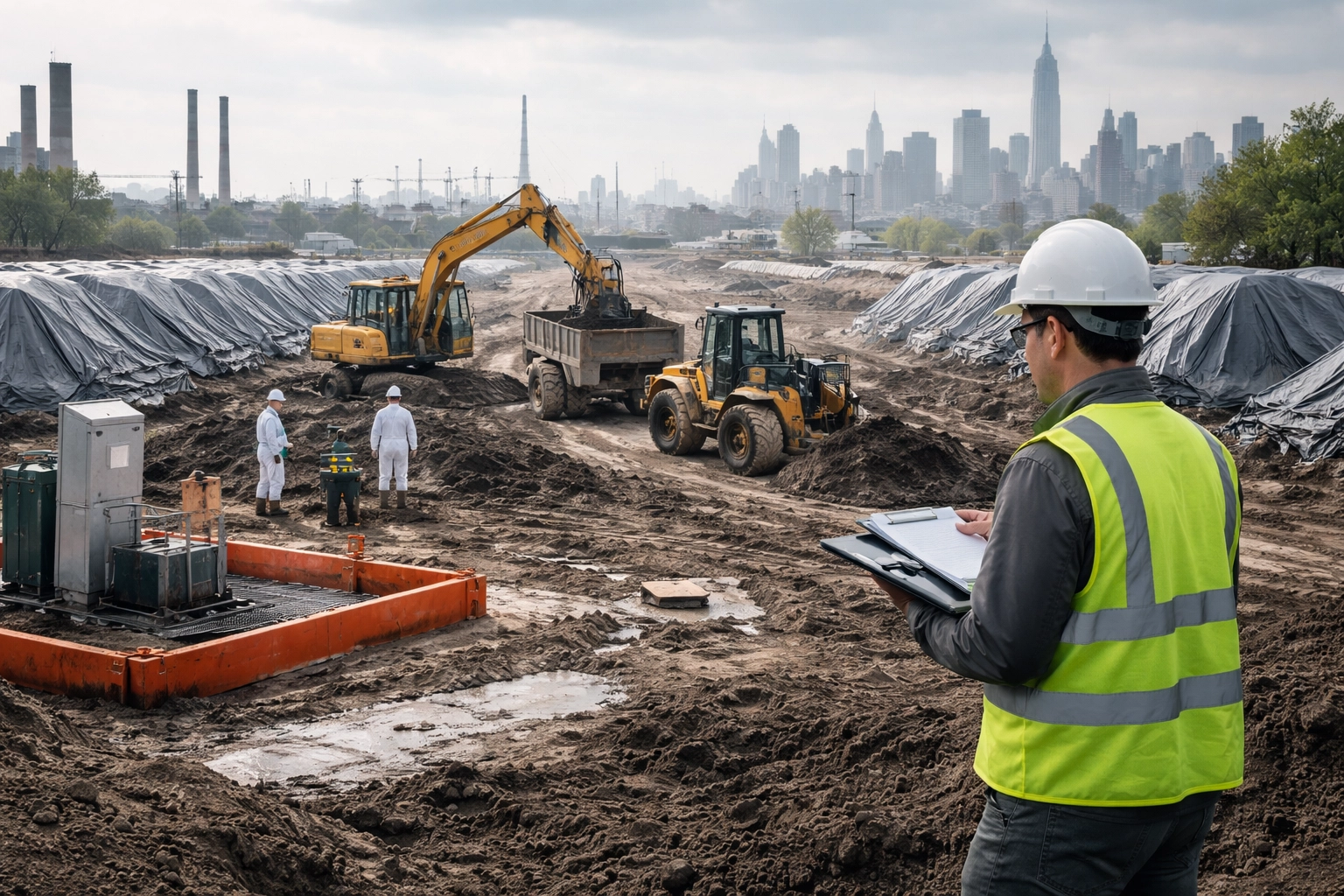
    Site Assessment and Environmental Inspection

    Speed vs. Quality: You Can Have Both

    One of the biggest misconceptions in NY/NJ due diligence is that you have to choose between fast turnarounds and thorough work.

    You don't.

    The difference comes down to your environmental consultant's systems, local expertise, and capacity. Firms with deep NY/NJ experience already know where to find historical records, which regulatory databases to prioritize, and how to structure findings for local lender requirements.

    At Envicon, we've built our practice around delivering lender-ready Phase I ESAs on aggressive timelines because we understand that property deals don't wait. When your closing is in two weeks and the lender is asking questions, you need a partner who can move.

    What to Ask Before You Hire

    Before you sign with any environmental consultant, ask these questions:

    1. What's your turnaround time? If they can't commit to a timeline, that's a red flag.
    2. Do you have experience with my lender's requirements? Different banks have different standards.
    3. What happens if you find something? A good consultant will explain the Phase II pathway clearly.
    4. Are you familiar with NY/NJ regulatory requirements? Local expertise matters enormously in our market.
    5. What's included in your fee? Watch for hidden costs for database searches or rush fees.

    The Bottom Line

    A Phase I ESA in the NY/NJ market should cost between $2,100 and $4,000 for most standard properties. Complex sites may run higher. Expedited timelines add to the cost.

    But here's the real calculus: the right Phase I ESA isn't an expense: it's insurance against liabilities that could dwarf the purchase price of your property.

    When you're evaluating Phase 1 ESA cost, you're really evaluating risk. The question isn't "how cheap can I get this?" It's "how confident do I need to be that this property won't blow up my deal: or my balance sheet?"

    We work with developers, investors, and lenders across NY and NJ who understand this equation. If you've got a transaction moving and need a Phase I ESA that will actually protect you, let's talk.
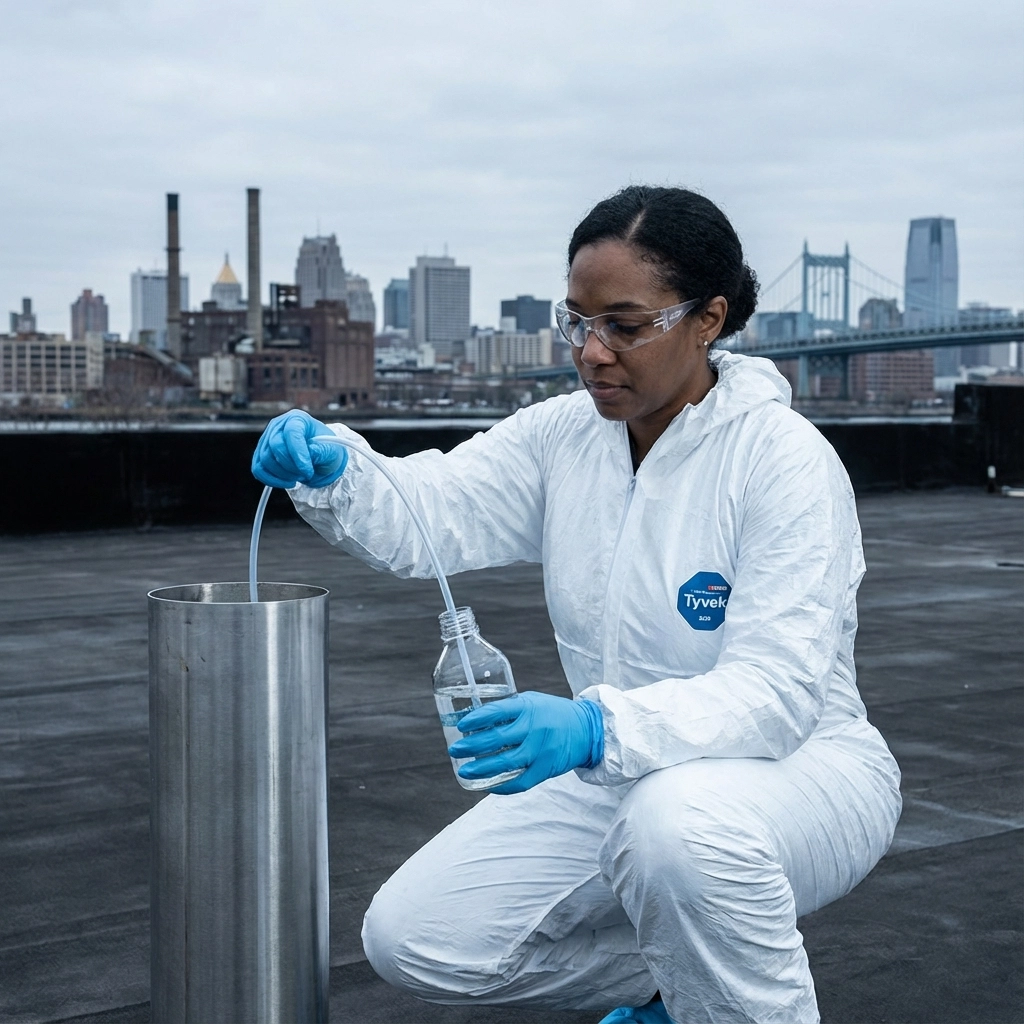
    Your deal deserves better than a bargain-basement report. And frankly, so do you.

  • Phase I vs. Phase II ESA: When Do You Actually Need to Sample Soil?

    Phase I vs. Phase II ESA: When Do You Actually Need to Sample Soil?

    If you're acquiring commercial property in New York or New Jersey, you've probably heard the terms "Phase I" and "Phase II" thrown around like everyone should know the difference. Here's the reality: most developers, lenders, and even some attorneys conflate these two very different assessments. And that confusion can cost you time, money, and deal certainty.

    So let's break it down. When do you actually need to put a drill rig on your site and sample soil? And when is a desktop review enough to satisfy your lender and close your deal?

    The short answer: you only sample soil in a Phase II ESA, and you only need a Phase II when your Phase I identifies something called a Recognized Environmental Condition (REC). But there's a lot more nuance to this, so let's dig in.

    Phase I ESA: The Detective Work (No Digging Required)

    A Phase I Environmental Site Assessment is essentially an investigation. Think of it as environmental due diligence detective work. Your consultant reviews historical records, regulatory databases, aerial photographs, Sanborn fire insurance maps, and interviews current and past owners: all to answer one fundamental question:
    "Is there a reasonable likelihood that contamination exists on this property?"

    Here's what a Phase I includes:

    • Site reconnaissance: Walking the property to look for red flags like stained soil, abandoned drums, or suspicious fill material
    • Historical use review: Tracing the property's history back to first developed use
    • Regulatory database search: Checking federal, state, and local environmental databases for spills, violations, or cleanup sites
    • Interviews: Talking to current owners, occupants, and local officials who might have knowledge of past uses

    What a Phase I does not include: any physical testing. No soil borings. No groundwater wells. No laboratory analysis. Your consultant isn't collecting samples: they're collecting information.

    Site Assessment and Environmental Inspection

    The Phase I follows the ASTM E1527-21 standard, which is what lenders require for "All Appropriate Inquiries" under CERCLA. In plain English: it's the baseline assessment that protects you from inheriting someone else's contamination liability.

    Phase II ESA: When You Actually Sample Soil

    A Phase II Environmental Site Assessment is where the rubber meets the road: or more accurately, where the drill rig meets the subsurface. This is the hands-on investigation that determines whether contamination is actually present and, if so, how bad it is.

    During a Phase II, we collect and analyze:

    • Soil samples from targeted locations based on Phase I findings
    • Groundwater samples from temporary or permanent monitoring wells
    • Soil gas or vapor samples if volatile compounds are a concern
    • Surface water samples if applicable to the site conditions

    The key word here is targeted. We're not randomly poking holes in your property. Every boring location is selected based on where the Phase I indicated a release is most likely: former tank locations, chemical storage areas, hydraulic lifts, dry cleaners, you name it.

    "The Phase I tells us where to look. The Phase II tells us what's actually there."

    Once samples hit the laboratory, we compare results against applicable regulatory standards: in New York, that's the NYSDEC Part 375 Soil Cleanup Objectives; in New Jersey, it's the NJDEP Remediation Standards. If concentrations exceed those thresholds, you've got a confirmed contamination issue that needs to be addressed before (or as part of) your redevelopment.

    Excavator and Crew at Urban Redevelopment Site

    The Trigger: What's a REC and Why Does It Matter?

    Here's where most people get tripped up. The decision to move from Phase I to Phase II isn't arbitrary: it's driven by whether the Phase I identifies Recognized Environmental Conditions (RECs).

    Under ASTM E1527-21, a REC is defined as:

    "The presence or likely presence of any hazardous substances or petroleum products in, on, or at a property due to a release to the environment, under conditions indicative of a release to the environment, or under conditions that pose a material threat of a future release to the environment."

    Translation: something happened (or is happening) on this property that could have caused contamination.

    Common RECs we encounter in the NY/NJ market include:

    • Former gas stations or auto repair shops with underground storage tanks
    • Dry cleaning operations that used chlorinated solvents
    • Manufacturing facilities with chemical use or storage
    • Properties with documented spills in regulatory databases
    • Adjacent sites with contamination that could have migrated onto the subject property
    • Fill material of unknown origin (extremely common in urban infill sites)

    If your Phase I identifies one or more RECs, the standard recommendation is to proceed with a Phase II to characterize the actual subsurface conditions. This isn't us being overly cautious: it's what your lender will require, and it's what protects your investment.

    When You Don't Need a Phase II

    Good news: not every Phase I leads to a Phase II. If your environmental consultant reviews the property history, walks the site, checks the databases, and finds no RECs, the assessment process typically ends there.

    Properties with clean histories: think newer construction on previously undeveloped land, or office buildings with no industrial neighbors: often sail through the Phase I process without triggering additional investigation.

    That said, "no RECs" doesn't mean "no concerns." Your Phase I might identify de minimis conditions (minor issues unlikely to rise to the level of a REC) or business environmental risks (issues outside the ASTM scope but still relevant to your transaction). A good consultant will flag these clearly so you can make informed decisions.

    Field engineer at brownfield site

    When You Absolutely Need a Phase II

    Let's be direct about the scenarios where a Phase II is non-negotiable:

    1. Your Phase I identified RECs. This is the textbook trigger. Lenders won't close, and you shouldn't close, without understanding what's in the ground.

    2. You're pursuing NYSDEC BCP or NJDEP LSRP remediation. If you're entering a regulatory cleanup program to access tax credits or liability protections, a Phase II (at minimum) is required to characterize site conditions. For more on the Brownfield Cleanup Program and whether those tax credits are worth the timeline, check out our insights on Part 375 changes.

    3. Your lender or investor requires it regardless of Phase I findings. Some institutional lenders have blanket policies requiring Phase II for certain property types (industrial, gas stations, dry cleaners) even if the Phase I is technically "clean."

    4. You're planning ground disturbance and want to avoid surprises. Even without RECs, some developers opt for a limited Phase II as a proactive measure before excavation. Finding contamination mid-construction is exponentially more expensive than finding it during due diligence.

    The Timeline and Cost Reality

    Here's the practical breakdown for NY/NJ transactions:

    Assessment Typical Timeline Cost Range
    Phase I ESA 2-3 weeks $2,500 – $4,500
    Phase II ESA 3-6 weeks $8,000 – $25,000+

    Phase II costs vary significantly based on the number of borings, depth of investigation, laboratory analysis required, and whether groundwater sampling is needed. A straightforward investigation of a former gas station looks very different from characterizing a multi-acre industrial facility with decades of varied chemical use.

    The key takeaway: budget for the possibility of a Phase II in any acquisition involving older properties, urban sites, or industrial history. It's far better to have contingency funds available than to scramble when your Phase I comes back with RECs three weeks before closing.

    Aerial Site Map with Utilities

    The Bottom Line

    The Phase I vs. Phase II decision isn't complicated once you understand the framework:

    • Phase I is a records-and-reconnaissance investigation that identifies whether potential contamination concerns exist
    • Phase II is a subsurface sampling investigation that confirms whether contamination is actually present
    • RECs are the trigger: if your Phase I identifies Recognized Environmental Conditions, a Phase II is the logical and often required next step

    At Envicon, we've guided hundreds of developers, investors, and property owners through this exact decision point across the NY/NJ market. Our approach is straightforward: give you the information you need to make smart decisions, on a timeline that keeps your deal moving.

    Got a property under contract and need to figure out your environmental due diligence path? Reach out to our team: we'll tell you exactly what you need and, just as importantly, what you don't.

  • Are You Making These Common E-Designation Mistakes? 10 Reasons Your NYC Project Isn't Moving

    Are You Making These Common E-Designation Mistakes? 10 Reasons Your NYC Project Isn't Moving

    Your NYC development project has been sitting in regulatory limbo for months. The permits are stalled, the financing is getting nervous, and you're burning money on carrying costs while competitors move ahead. If your property has an E-Designation, there's a good chance you're making one of these critical mistakes that's grinding your project to a halt.

    E-Designations aren't just bureaucratic paperwork: they're zoning map notations that can make or break your development timeline. These environmental requirements for hazardous materials, air quality, or noise must be addressed before you can obtain building permits or certificates of occupancy. Miss a step, and you're looking at months of delays.

    We've seen too many developers stumble through this process, learning expensive lessons the hard way. Here are the 10 most common E-Designation mistakes that are keeping your project stuck: and how to avoid them.

    1. Starting Construction Before Getting Your Notice to Proceed

    The biggest mistake we see? Developers who assume they can begin work while their E-Designation paperwork is "in process." The NYC Department of Buildings cannot issue a building permit until the Office of Environmental Remediation (OER) provides either a Notice to Proceed (NTP) or Notice of No Objection (NNO).

    "I've seen projects get red-tagged mid-construction because they jumped the gun," says one seasoned environmental consultant. "The restart costs are brutal: not just the fines, but the mobilization expenses and schedule disruption."

    image_1

    2. Submitting an Incomplete Remedial Action Plan

    Your Remedial Action Plan (RAP) isn't just a formality: it's the roadmap OER uses to evaluate whether your project can move forward safely. Missing technical specifications, incomplete site characterization data, or inadequate monitoring protocols will send your RAP back for revisions, adding 4-8 weeks to your timeline.

    The plan must be developed and certified by licensed New York State registered architects or professional engineers. Don't cut corners here.

    3. Ignoring Adjacent Property Impacts

    E-Designations don't exist in a vacuum. Your remediation work, construction noise, or air quality measures can affect neighboring properties. Failing to coordinate with adjacent landowners or properly assess off-site impacts often triggers additional regulatory requirements that weren't in your original scope.

    4. Misunderstanding the Difference Between (H), (A), and (N) Designations

    Not all E-Designations are created equal:

    • (H) Designations require hazardous materials investigation and potential remediation
    • (A) Designations mandate air quality assessments and controls
    • (N) Designations focus on noise mitigation measures

    Each has different procedural requirements, timelines, and compliance thresholds. Treating them as interchangeable is a recipe for delays and additional costs.

    5. Failing to Budget for Unexpected Contamination

    Here's the reality: E-Designated sites often reveal surprises during investigation. That preliminary assessment might have missed the underground storage tank or the extent of soil contamination. Smart developers budget 15-20% contingency for additional remediation work beyond the initial scope.

    Aerial Utility Infrastructure Site Map

    6. Not Coordinating with Your Design Team Early

    Environmental requirements directly impact your building design. Vapor barriers, specialized HVAC systems, or structural modifications to accommodate remediation can't be afterthoughts. Loop in your architects and engineers during the RAP development, not after OER approval.

    7. Overlooking Construction Period Monitoring Requirements

    Getting your NTP doesn't mean you're done with environmental oversight. Most E-Designation projects require ongoing air monitoring, soil management protocols, and regular reporting during construction. Missing these requirements can trigger stop-work orders just when you're hitting your stride.

    8. Inadequate Documentation for the Final Notice of Satisfaction

    The finish line for E-Designations is the Notice of Satisfaction (NOS) from OER, which you need before obtaining your Certificate of Occupancy. This requires comprehensive documentation proving compliance with all approved measures. Poor record-keeping throughout the project creates major headaches at the end.

    9. Using Inexperienced Environmental Consultants

    E-Designation work isn't general environmental consulting: it requires specific expertise in NYC regulations, OER procedures, and CEQR requirements. The consultant who handled your suburban Phase I ESA might not be the right choice for navigating OER's complex approval process.

    image_2

    10. Not Planning for Seasonal Restrictions

    Certain remediation activities face seasonal limitations due to weather conditions, groundwater levels, or regulatory windows. Starting your E-Designation process in late fall without accounting for winter construction restrictions can push your project completion well into the following year.

    Getting Back on Track

    If your project is stalled by E-Designation issues, the path forward depends on where you are in the process. Projects caught in the RAP review cycle often benefit from direct dialogue with OER to clarify technical requirements. For projects facing unexpected contamination, rapid response investigation can help quantify additional scope and costs.

    The key is having environmental and engineering teams that understand both the technical requirements and the business urgency. In our experience, projects that integrate environmental planning with overall project management from day one move through the E-Designation process 30-40% faster than those that treat it as an isolated regulatory hurdle.

    Moving Forward Strategically

    E-Designations don't have to derail your development timeline, but they demand respect and proper planning. The developers who succeed in NYC's complex regulatory environment are those who treat environmental compliance as a core project discipline, not an afterthought.

    Your project's success depends on getting these fundamentals right from the start. Whether you're dealing with a stalled approval or planning your next acquisition, understanding the E-Designation process can make the difference between profit and prolonged delay.

    Ready to get your NYC project moving? Contact our team for a strategic assessment of your E-Designation requirements and a roadmap to regulatory approval.

  • SWPPP Inspections: Why a 'Check-the-Box' Approach is a Recipe for Costly Fines

    SWPPP Inspections: Why a 'Check-the-Box' Approach is a Recipe for Costly Fines

    Here's a truth that keeps catching developers off guard: environmental compliance is boring, until it's expensive. And nowhere is this more evident than in Stormwater Pollution Prevention Plan (SWPPP) inspections across New York and New Jersey.

    We've seen it happen too many times. A contractor walks the site, checks a few boxes on a form, snaps a couple of photos, and calls it a day. Three months later, a NYSDEC or NJDEP inspector shows up unannounced. Suddenly, that "routine" inspection turns into a Notice of Violation with fines that can reach tens of thousands of dollars per day.

    The irony? Most of these penalties are completely avoidable. But only if you understand that SWPPP inspections aren't about checking boxes, they're about proving genuine compliance.

    What Is a SWPPP, and Why Should You Care?

    A Stormwater Pollution Prevention Plan is your site's blueprint for managing stormwater runoff during construction. It's required under the Clean Water Act for any construction activity disturbing one acre or more of land. In New York, the NYSDEC administers the SPDES General Permit for Stormwater Discharges. In New Jersey, the NJDEP oversees similar requirements through its Construction Activity Stormwater General Permit.

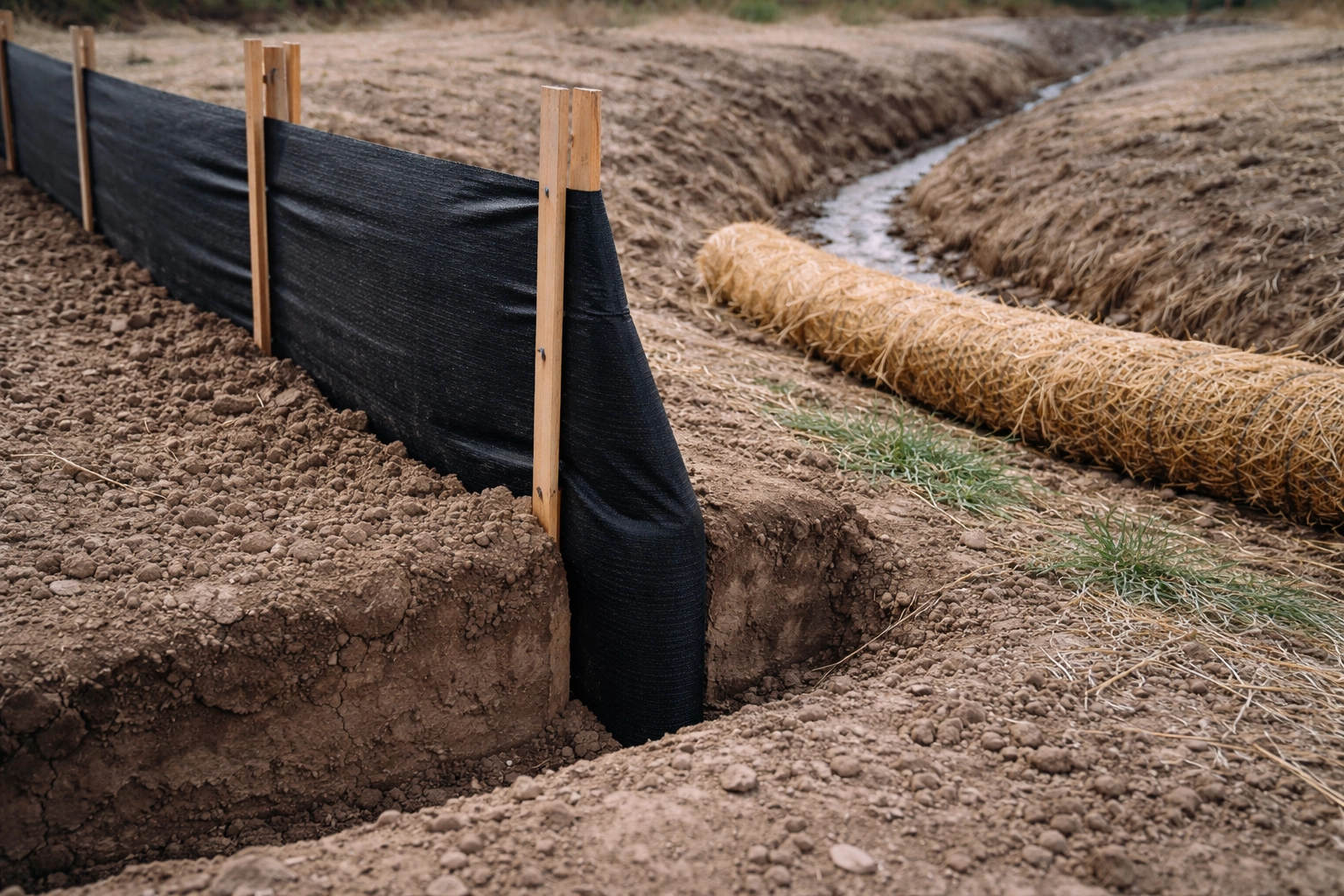
    The plan itself outlines Best Management Practices (BMPs), things like silt fences, sediment basins, inlet protection, and stabilization measures, designed to prevent pollutants from leaving your site and entering local waterways.

    Sounds straightforward enough. The problem is what happens after the plan gets written.

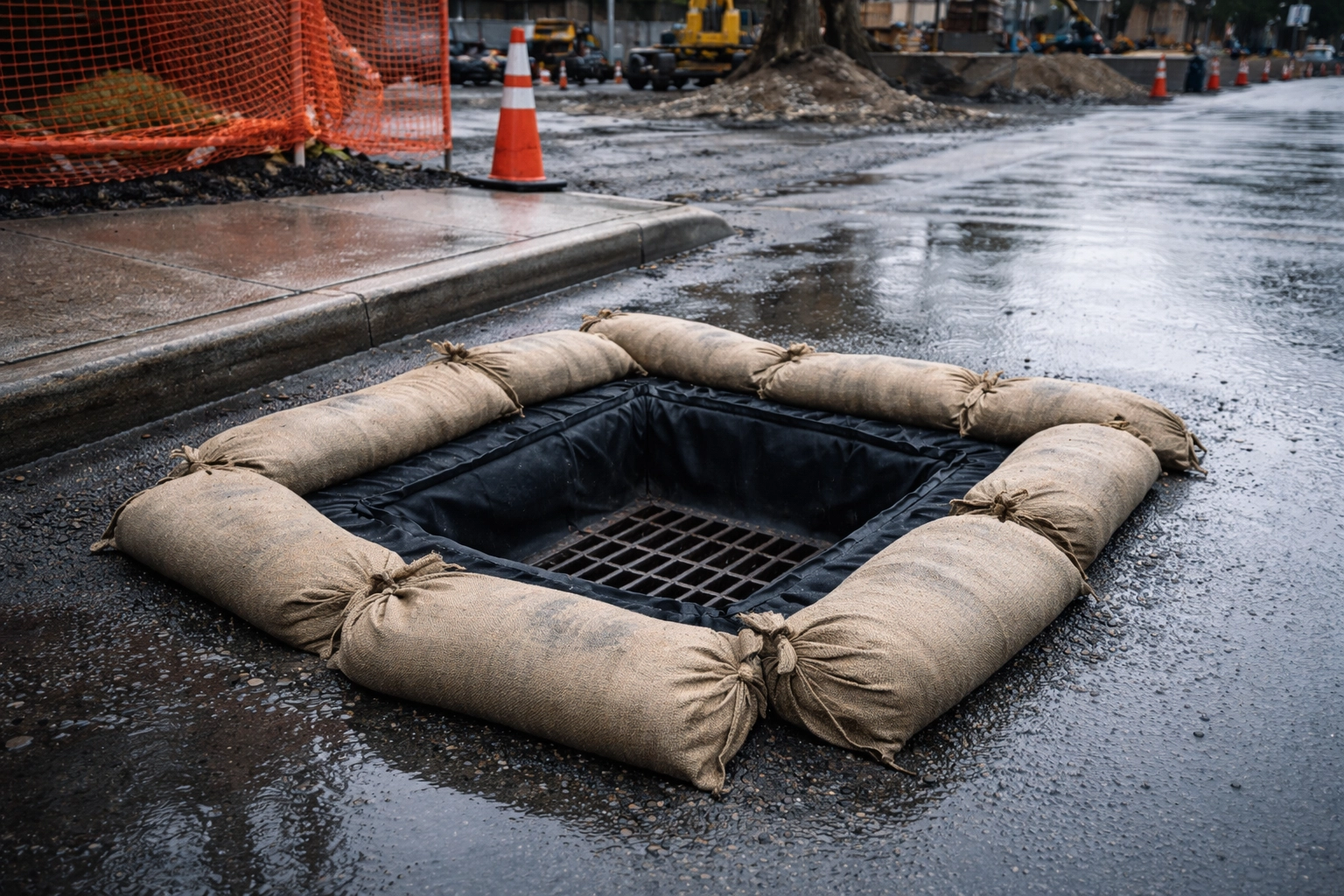
    Storm drain inlet protection filter installed at curb

    The "Check-the-Box" Trap

    Here's where things go sideways. Your SWPPP requires regular inspections, typically weekly and after significant storm events. These inspections must document whether your BMPs are in place, functioning properly, and actually preventing pollution.

    But on a busy construction site with tight deadlines and tighter budgets, SWPPP inspections often become an afterthought. Someone walks the perimeter, notes "all BMPs in place," and files the report. No photos. No corrective actions documented. No follow-up.

    This is the check-the-box approach, and it's a ticking time bomb.

    Here's why it fails:

    • Documentation gaps are treated as non-compliance. Missing inspection logs or incomplete SWPPP updates cannot be distinguished from never conducting inspections at all during an audit. To regulators, if it isn't documented, it didn't happen.

    • Identifying problems without fixing them violates your permit. When a visual assessment reveals issues, a torn silt fence, a clogged inlet, sediment tracking onto the road, your permit requires follow-up inspections to confirm corrective measures were implemented. Simply noting a problem and moving on leaves you non-compliant.

    • Superficial inspections miss escalating risks. That small breach in your perimeter controls today becomes a sediment plume in the neighboring stream tomorrow. And once contaminated runoff reaches a waterway, you're not just facing fines, you're facing potential cleanup costs and project shutdowns.

    The Real Cost of Non-Compliance in NY/NJ

    Let's talk numbers, because this is where "boring" becomes very expensive very quickly.

    Under the NYSDEC SPDES General Permit, violations can result in penalties up to $37,500 per day for each violation. The NJDEP operates under similar enforcement authority, with penalties that can stack up based on the nature and duration of violations.

    But fines are just the beginning. Consider the cascade of consequences:

    • Project delays: A stop-work order from NYSDEC or NJDEP doesn't just pause your timeline, it freezes your financing, frustrates your investors, and potentially triggers breach clauses in your construction contracts.

    • Increased regulatory scrutiny: Once you're on the radar, expect more frequent inspections and closer oversight on future projects. Your reputation with regulators follows you.

    • Legal liability: If your stormwater runoff causes documented harm to a waterway or neighboring property, you're exposed to civil litigation on top of regulatory penalties.

    • Permit complications: Good luck getting your next SPDES permit approved quickly when your compliance history shows a pattern of violations.

    We recently worked with a client in Hudson County who inherited a project mid-construction. The previous contractor's SWPPP documentation was a disaster, incomplete inspection logs, undated photos, and zero evidence of corrective actions. It took weeks of intensive remediation work just to get the site back into compliance before the NJDEP conducted their scheduled review.

    That's time and money that could have been saved with proper inspections from day one.

    Inspector checking erosion and sediment controls with clipboard

    What Genuine Compliance Actually Looks Like

    So what separates a legitimate SWPPP inspection from a check-the-box exercise? It comes down to three things: thoroughness, documentation, and follow-through.

    Thoroughness

    A proper inspection covers every BMP identified in your SWPPP. Not just the ones visible from the site trailer: all of them. Inspectors should be evaluating:

    • Are BMPs adequately designed for current site conditions?
    • Have they been properly installed and maintained?
    • Are they actually effective at controlling sediment and preventing pollution?
    • Do any BMPs need repair, replacement, or modification?

    This isn't a five-minute walk-around. It's a systematic review that often takes an hour or more on active construction sites.

    Documentation

    Every inspection needs detailed records. That means:

    • Date, time, and weather conditions
    • Name and qualifications of the inspector
    • Specific observations for each BMP location
    • Photographs documenting conditions (dated and labeled)
    • Any deficiencies identified and their locations
    • Corrective actions required and deadlines for completion

    As one EPA guidance document puts it: "Recordkeeping is not optional; it is regulatory proof of compliance." Your inspection logs are your defense if regulators come knocking.

    Follow-Through

    This is where most check-the-box approaches fall apart. Identifying a problem is only half the job. Your permit requires you to:

    • Implement corrective actions within a specified timeframe (often 24-72 hours for significant issues)
    • Conduct follow-up inspections to verify corrections were made
    • Document the completed corrective actions with photos and notes
    • Update your SWPPP if site conditions have changed

    Skipping any of these steps leaves you exposed.

    Properly trenched silt fence detail and sediment control in drainage swale

    How Envicon Approaches SWPPP Differently

    At Envicon Strategic Solutions, we treat SWPPP inspections as what they actually are: a critical risk management function, not a paperwork exercise.

    Our environmental consultants don't just walk your site: they assess it with the same rigor a NYSDEC or NJDEP inspector would bring. We're looking for the gaps before regulators find them. We're documenting conditions thoroughly enough to withstand audit scrutiny. And we're flagging corrective actions with clear timelines so nothing slips through the cracks.

    What this means for your project:

    • Inspection reports that hold up. Our documentation is audit-ready, with dated photographs, GPS-tagged observations, and detailed corrective action tracking.

    • Proactive problem identification. We catch issues when they're small and fixable, not after they've triggered a violation.

    • Regulatory relationships that work in your favor. When you demonstrate genuine compliance, regulators become partners rather than adversaries. We've seen projects sail through inspections because the documentation told a clear story of ongoing diligence.

    • Integration with your broader environmental strategy. SWPPP compliance doesn't exist in a vacuum. Our team coordinates stormwater management with Phase I/II ESA findings, remediation activities, and civil engineering design to keep your entire project moving forward.

    The Bottom Line

    SWPPP inspections aren't glamorous. They won't make the highlight reel of your project ribbon-cutting. But they're one of the clearest examples of a simple truth in development: the cost of doing it right is always less than the cost of doing it wrong.

    A check-the-box approach might save you an hour this week. But when that NJDEP inspector shows up: and they will show up: you'll wish you'd invested in inspections that actually protect your project.

    Ready to get your SWPPP program on solid ground? Contact Envicon Strategic Solutions to discuss how our environmental compliance team can keep your NY/NJ construction project out of the penalty box.

    Because compliance isn't just about avoiding fines. It's about building projects that stand up to scrutiny: from the first shovel in the ground to the final certificate of occupancy.

  • PFAS Regulation Just Got Real: 7 Things NY/NJ Developers Need to Know Before Your Next Phase I ESA

    PFAS Regulation Just Got Real: 7 Things NY/NJ Developers Need to Know Before Your Next Phase I ESA

    The PFAS regulatory landscape just shifted dramatically across New York and New Jersey, and if you’re a developer planning your next project, ignoring these changes could cost you big time. What started as a “nice to have” environmental consideration has become mandatory compliance with strict testing requirements, new groundwater standards, and enforcement actions that can derail projects overnight.

    Gone are the days when PFAS was an afterthought in Phase I Environmental Site Assessments. Recent regulatory updates from both NYSDEC and NJDEP have fundamentally changed the game, requiring developers to integrate PFAS considerations into their due diligence from day one. Here’s what you absolutely need to know before breaking ground on your next project.

    1. PFAS Testing Is Now Mandatory for NJ Remediation Sites

    New Jersey dropped a regulatory bombshell in March 2025 with proposed rules requiring PFAS sampling at remediation sites “when contaminants are unknown or not well documented.” This isn’t a suggestion: it’s becoming law.

    The new requirements specifically mandate testing for GenX, PFOA, PFNA, and PFOS at sites where contamination history is unclear or incomplete. For developers, this means your Phase I ESA scope just expanded significantly. What used to be optional PFAS screening is now a regulatory requirement that can’t be skipped or deferred until Phase II investigations.

    image_1

    Cost Impact: Budget an additional $300-$500 per sample for certified PFAS analysis, with special handling and chain-of-custody requirements that can extend turnaround times by 1-2 weeks. For larger sites requiring multiple sampling points, you’re looking at thousands of dollars in additional assessment costs.

    2. New Jersey’s Groundwater Standards Just Got Stricter

    NJDEP established a groundwater quality criterion of 0.02 μg/L for GenX with a practical quantitation level (PQL) of 0.0075 μg/L. To put this in perspective, these are detection limits so low they’re measured in parts per quadrillion: making previous contamination standards look practically generous.

    This isn’t just an academic exercise. These new standards directly impact:

    • Remediation trigger levels for contaminated sites
    • Long-term monitoring requirements
    • Treatment technology specifications
    • Project timeline and cost projections

    Developers need to factor these ultra-low thresholds into their due diligence calculations. A site that previously appeared clean under older standards might now require extensive remediation under the new PFAS criteria.

    3. New York’s Apparel Manufacturing Restrictions Are Already in Effect

    Since January 1, 2025, New York prohibits manufacturing, distributing, or selling new textile articles containing intentionally added PFAS. This might seem like it only affects clothing manufacturers, but the implications run deeper for mixed-use developments, industrial redevelopment projects, and any property with historical textile manufacturing operations.

    The current regulations allow PFAS concentrations up to 50 ppm, but this drops to even stricter limits starting January 1, 2027. For developers working on brownfield sites with historical textile operations, this creates a complex compliance web where legacy contamination intersects with current manufacturing restrictions.

    If your development includes any textile-related operations or sits on former apparel manufacturing sites, you need to verify PFAS-free compliance documentation and understand how historical contamination might impact future land use restrictions.

    4. Wastewater Treatment Requirements Just Got More Complex

    NYSDEC’s December 11, 2025 final guidance for wastewater treatment plants represents a significant shift in how municipalities handle PFAS in their treatment systems. The guidance specifically targets protection of drinking water sources and surface waters, creating new coordination requirements for developers.

    image_2

    What This Means for Your Project:

    • New developments with significant wastewater discharge must coordinate with municipal treatment facilities on PFAS removal capabilities
    • Industrial developments may face discharge permit modifications or pretreatment requirements
    • Stormwater management systems need evaluation for potential PFAS pathways
    • Municipal utility connections might require additional PFAS monitoring and reporting

    The guidance recognizes that conventional wastewater treatment doesn’t effectively remove PFAS compounds, meaning developers need to consider alternative treatment technologies or discharge management strategies for projects with potential PFAS sources.

    5. Biosolids and Land Application Create New Compliance Headaches

    NYSDEC’s new policies requiring PFAS sampling in soil products made from biosolids have created unexpected compliance challenges for developers. If your project involves land application of treated biosolids, soil amendments from municipal treatment facilities, or purchasing fill material from questionable sources, you’re now responsible for verifying PFAS levels.

    This is particularly problematic for large-scale developments requiring significant soil imports or agricultural land conversions where biosolids have been historically applied. The testing requirements add another layer of material sourcing verification that can impact project timelines and costs.

    Red Flags to Watch For:

    • Fill material sourced from agricultural areas with biosolids history
    • Soil amendments from municipal wastewater treatment facilities
    • Compost products containing municipal biosolids
    • Any land with historical septage or sludge application

    6. Laboratory Testing Complexity Is Driving Up Costs and Timelines

    PFAS analysis isn’t your typical environmental testing. It requires specialized laboratory capabilities, unique preservation methods, and contamination-free sampling protocols that most contractors aren’t equipped to handle properly.

    Certified laboratory analysis costs $300-$500 per sample with 2-3 week turnaround times under normal conditions. During peak demand periods, you might face 4-6 week delays. The specialized handling requirements mean field teams need additional training and equipment, adding 15-20% to typical sampling costs.

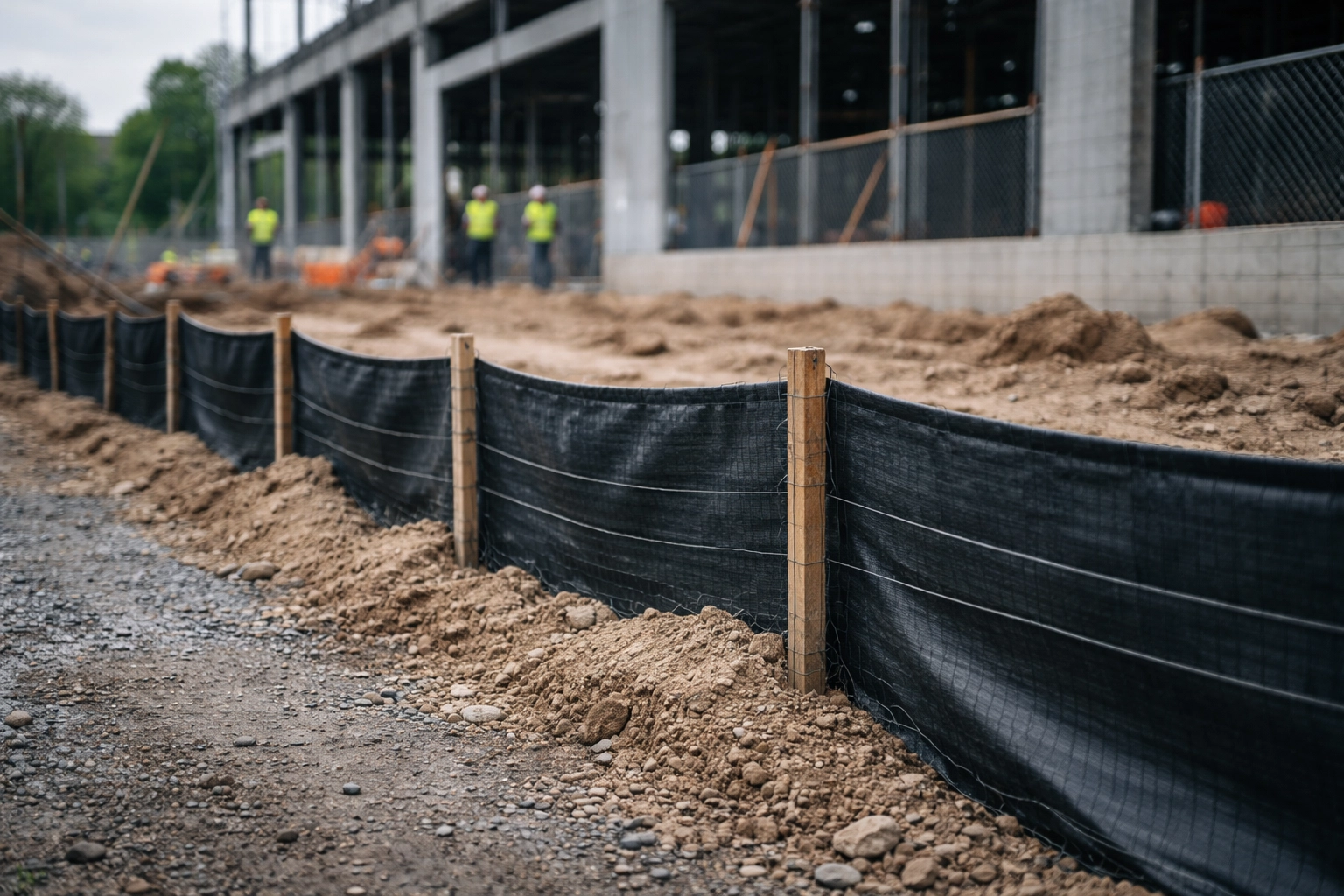
    image_3

    Sample Management Challenges:

    • Teflon-free sampling equipment requirements
    • Specialized preservation and shipping containers
    • Chain-of-custody protocols for PFAS-specific analysis
    • Temperature and holding time restrictions
    • Laboratory certification requirements for reliable results

    For developers used to fast-track environmental assessments, these extended timelines can significantly impact project scheduling and financing deadlines.

    7. State-Specific Enforcement Approaches Require Local Expertise

    The biggest mistake we’re seeing developers make is assuming PFAS compliance strategies that work in one state will satisfy requirements in neighboring states. New York and New Jersey have taken notably different regulatory approaches, and what passes muster with NYSDEC might fall short of NJDEP expectations.

    New Jersey maintains stricter groundwater standards and more comprehensive sampling requirements, while New York focuses heavily on specific industry sectors like textiles and emphasizes wastewater treatment facility coordination. Connecticut and Pennsylvania add their own regulatory wrinkles, creating a patchwork of compliance requirements across the tri-state region.

    Why This Matters:

    • Multi-state developers can’t use standardized PFAS protocols
    • Local environmental consultants understand state-specific enforcement patterns
    • Regulatory interpretation varies between state agencies
    • Appeal processes and variance requests follow different procedures in each state

    Working with environmental consultants who understand these regional differences isn’t just recommended: it’s essential for avoiding costly compliance mistakes and project delays.

    Taking Action on PFAS Compliance

    The PFAS regulatory landscape continues evolving rapidly, but waiting for “final” rules isn’t a viable strategy. Developers need to integrate PFAS considerations into their project planning immediately, not as an afterthought during remediation or construction.

    Immediate Action Items:

    • Amend your standard Phase I ESA scopes to include PFAS sampling protocols
    • Establish baseline PFAS levels in soil and groundwater before development begins
    • Identify potential PFAS sources in your project area (industrial discharges, firefighting foam use, historical textile operations)
    • Budget additional testing costs and extended assessment timelines
    • Review municipal wastewater treatment capabilities for your target locations

    The developers who proactively address PFAS compliance will have significant competitive advantages over those still treating it as optional. Environmental due diligence that includes comprehensive PFAS assessment protects your investment, satisfies increasingly demanding lender requirements, and positions your projects for long-term regulatory compliance.

    At Envicon Strategic Solutions, we’re helping developers navigate these complex PFAS requirements while keeping projects on track and within budget. The regulatory environment will only get more demanding( the time to act is now.)

  • NYSDEC Finalizes Major Changes to Part 375: What NY/NJ Brownfield Developers Need to Know in 2026

    NYSDEC Finalizes Major Changes to Part 375: What NY/NJ Brownfield Developers Need to Know in 2026

    The New York State Department of Environmental Conservation (NYSDEC) has officially adopted final amendments to 6 NYCRR Part 375, Environmental Remediation Programs, effective December 31, 2025. This represents the most significant overhaul of New York’s environmental remediation framework in years: and if you’re involved in brownfield development, real estate transactions, or environmental compliance in the NY/NJ region, these changes demand your immediate attention.

    The final rule comprehensively updates procedural and substantive requirements for the State Superfund, Brownfield Cleanup Program (BCP), and Environmental Restoration Programs. NYSDEC has consolidated long-standing practices into regulation while clarifying compliance, reporting, and certification obligations that will affect every active and pipeline project in the state.

    Here’s what you need to know: and more importantly, what you need to do about it.

    What’s Changing: The Big Picture

    These amendments apply to orders, agreements, work plans, reports, certificates, and related remedial documents approved or issued on or after December 31, 2025. That means if your project is currently in the queue or you’re closing on a brownfield deal this quarter, these rules apply to you now.

    The changes touch nearly every phase of the remediation lifecycle: from field supervision and daily reporting to certificate-of-completion (COC) modifications and program fees. Let’s break down the key provisions.

    Key Changes Every Developer and Attorney Should Understand

    Infographic timeline of Part 375 implementation milestones
    Timeline overview: when NYSDEC Part 375 changes hit your project schedule and compliance checkpoints in NYC/NJ.

    1. Strengthened Field Supervision and Daily Reporting

    NYSDEC has codified requirements that a qualified environmental professional (QEP): or a trained representative under their supervision: must oversee all field activities conducted under an approved work plan.

    The kicker: next-day daily reports must now be submitted to the NYSDEC Project Manager. These reports must include:

    • Progress updates on remedial activities
    • Site maps showing where work occurred
    • Material import/export quantities
    • Complaint logs
    • Community Air Monitoring Program (CAMP) findings
    • Notable conditions encountered
    • Any deviations from the approved work plan

    This is a significant operational change. Projects that previously submitted weekly summaries or periodic updates will need to restructure their field documentation protocols immediately.

    Professional engineer reviewing plans and Part 375 documents
    Field oversight meets certification: daily reporting and PE-stamped FERs now set the compliance pace under Part 375.

    2. Professional Engineer Certification for Final Engineering Reports

    Final Engineering Reports (FERs) must now be prepared by: and include specified certifications from: a New York-licensed Professional Engineer. The PE must confirm conformance with approved remedial designs, work plans, site management obligations, and any required financial assurance.

    This isn’t just a formality. NYSDEC is tightening accountability, and FERs that lack proper PE certification will face rejection or delays.

    3. Termination-for-Cause Provisions and Cure Opportunities

    NYSDEC has expanded the grounds for terminating orders, agreements, and State assistance contracts “for cause.” Triggers now include failure to substantially comply with schedules or failure to pay State costs.

    The good news: in the BCP, NYSDEC must provide notice and at least 30 days to cure the deficiency: or allow dispute resolution: before termination becomes effective. This gives developers a window to address compliance gaps before losing program benefits.

    4. Expanded COC Modification and Revocation Standards

    Certificate-of-completion protections are no longer bulletproof. NYSDEC may now modify or revoke a COC for specified causes, including:

    • Misrepresentation of material facts
    • Failure to manage institutional or engineering controls
    • Willful easement violations

    Certified-mail notice and an opportunity for relief are required. BCP-specific reopener procedures include a 30-day cure or dispute window before protections are deemed modified or vacated.

    This is a significant shift for developers relying on COC liability protections in transaction planning.

    5. Habitat Reconstruction Requirements

    Where remedial activities disturb habitat regulated under Parts 182, 608, 661, or 663: or important ecological components under Part 375-6.6: the remedial program must now include a habitat reconstruction plan. Requirements include:

    • In-kind habitat replacement
    • Timely implementation
    • Monitoring and maintenance for five years (or as otherwise determined by NYSDEC)

    Projects in sensitive environmental areas should factor this into remedial design timelines and budgets.

    6. Elimination of “Historic Fill Material” as a Regulatory Definition

    The final rule removes the term “historic fill” from Part 375 entirely. This reflects NYSDEC’s longstanding practice of evaluating any fill exceeding soil cleanup objectives as contamination: period.

    However, NYSDEC retains discretion to consider site-specific background conditions in remedy development. The practical impact: don’t assume that widespread urban fill gives you a free pass. Each site will be evaluated on its own contamination profile.

    7. BCP Program Fee: $50,000 and Targeted Waivers

    BCP applicants must now submit a non-refundable $50,000 program fee with the executed BCP agreement. This is a substantial new cost that must be factored into project proformas.

    Targeted waivers are available for:

    • 100% affordable housing commitments
    • Tangible property credit waivers
    • Specified tax-exempt entities
    • Projects where more than half the site is in a disadvantaged community (with third-party attestation that the project would not be financially viable but for the waiver)

    If you’re pursuing affordable housing development or working in environmental justice areas, early assessment of waiver eligibility is critical.

    Affordable housing redevelopment in NYC
    BCP fee waivers: unlocking affordable projects while meeting NYSDEC Part 375 compliance requirements.

    8. Limitations on “Conditional Track 1” Cleanups

    NYSDEC had signaled it would eliminate “Conditional Track 1” cleanups in the BCP: and the final rule delivers. Here’s how it works now:

    If bulk reduction of groundwater contamination to asymptotic levels (or soil vapor objectives) has not been demonstrated at COC issuance, the volunteer receives a Track 2 COC. The volunteer may petition NYSDEC within five years to modify to Track 1 upon demonstrating the requisite bulk reduction and attainment of remedial objectives for soil vapor.

    The catch: “asymptotic” is not defined in the rule, and it’s unclear how a party would receive additional tax credits for a Track 1 cleanup after a Track 2 COC has already been issued.

    Critically, this rule is effective now: even for applicants who entered the BCP expecting a conditional Track 1 COC.

    Industrial Port Facility Near NY/NJ Metro Area

    9. Clarified Change-of-Use Notifications

    At least 60 days before a change of use, the proponent must notify NYSDEC and include or identify an approved work plan covering the activity. Exceptions apply when the site management plan already addresses the activity post-COC.

    Transfer-related notices and certifications to purchasers are also now required: a detail that transaction attorneys should build into due diligence checklists.

    What This Means for Your Projects

    The NYC Brownfield Partnership put it plainly in their January 12, 2026 regulatory alert: “Members with active Brownfield projects should be aware of field supervision and reporting requirements to avoid schedule impacts and to maintain compliance with NYSDEC oversight expectations.”

    For developers and attorneys navigating brownfield transactions in 2026, the implications are clear:

    • Budget accordingly. The $50,000 BCP fee is now a fixed cost. Assess waiver eligibility early: especially for affordable housing projects or sites in disadvantaged communities.
    • Restructure field operations. Daily reporting requirements will require enhanced coordination between your environmental consultant, field teams, and NYSDEC Project Managers.
    • Plan your Track 1 strategy carefully. If you’re pursuing a Track 1 outcome, structure groundwater and soil vapor strategies with clear milestones for demonstrating bulk reduction within the five-year petition window.
    • Review COC protections. Understand the new modification and revocation triggers: and ensure your institutional and engineering controls are properly managed post-closure.

    Looking Ahead: Expect More Guidance

    We anticipate significant industry discussion about the application of these new rules in the coming months. Key questions remain unanswered: particularly around the definition of “asymptotic” levels and the mechanics of Track 1 tax credit modifications after Track 2 COC issuance.

    At Envicon, we’re committed to providing our clients with timely updates as regulatory clarity emerges. We’ll continue monitoring NYSDEC guidance, participating in industry forums, and translating complex regulatory changes into actionable project strategies.

    How Envicon Can Help

    Navigating the new Part 375 landscape requires a partner who understands both the technical requirements and the business realities of brownfield development. Our team provides comprehensive environmental consulting services tailored to the NY/NJ market: from Phase I and Phase II ESAs to remedial design, BCP application support, and ongoing compliance management.

    If you have questions about how these amendments affect your current projects or deal pipeline, contact us to schedule a consultation. We’re here to help you stay compliant, control costs, and keep your projects moving forward.

    The rules have changed. Your strategy should too.