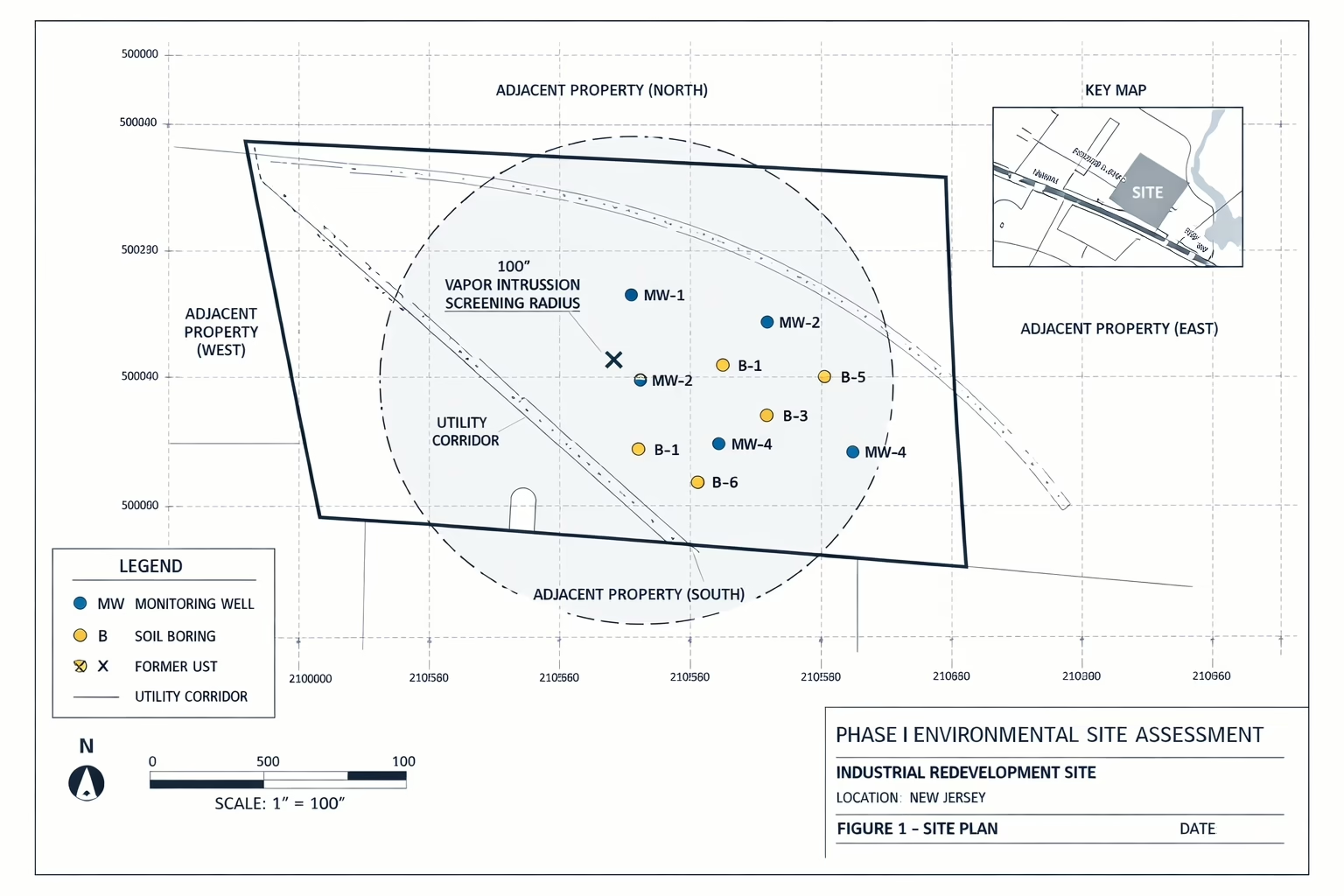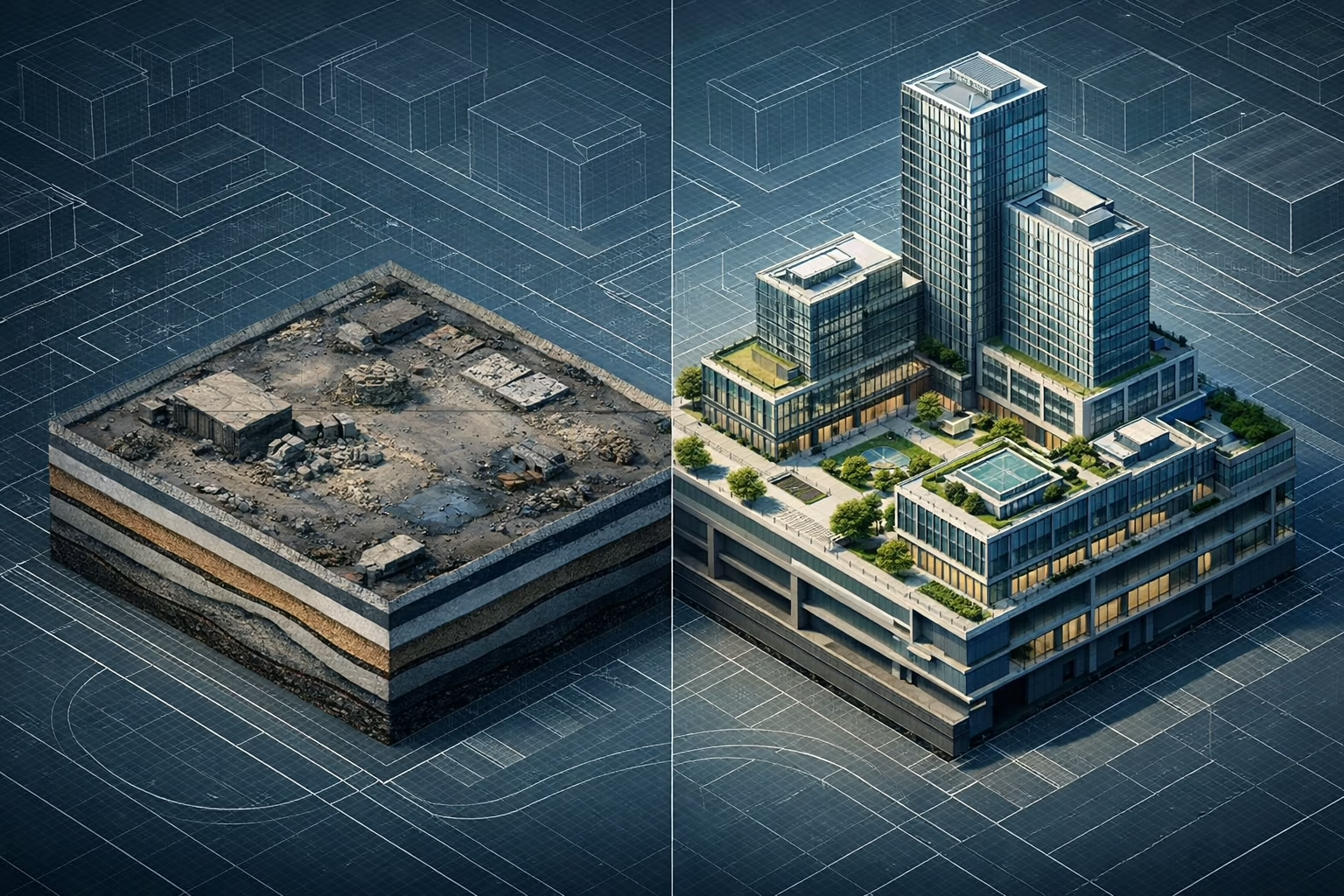
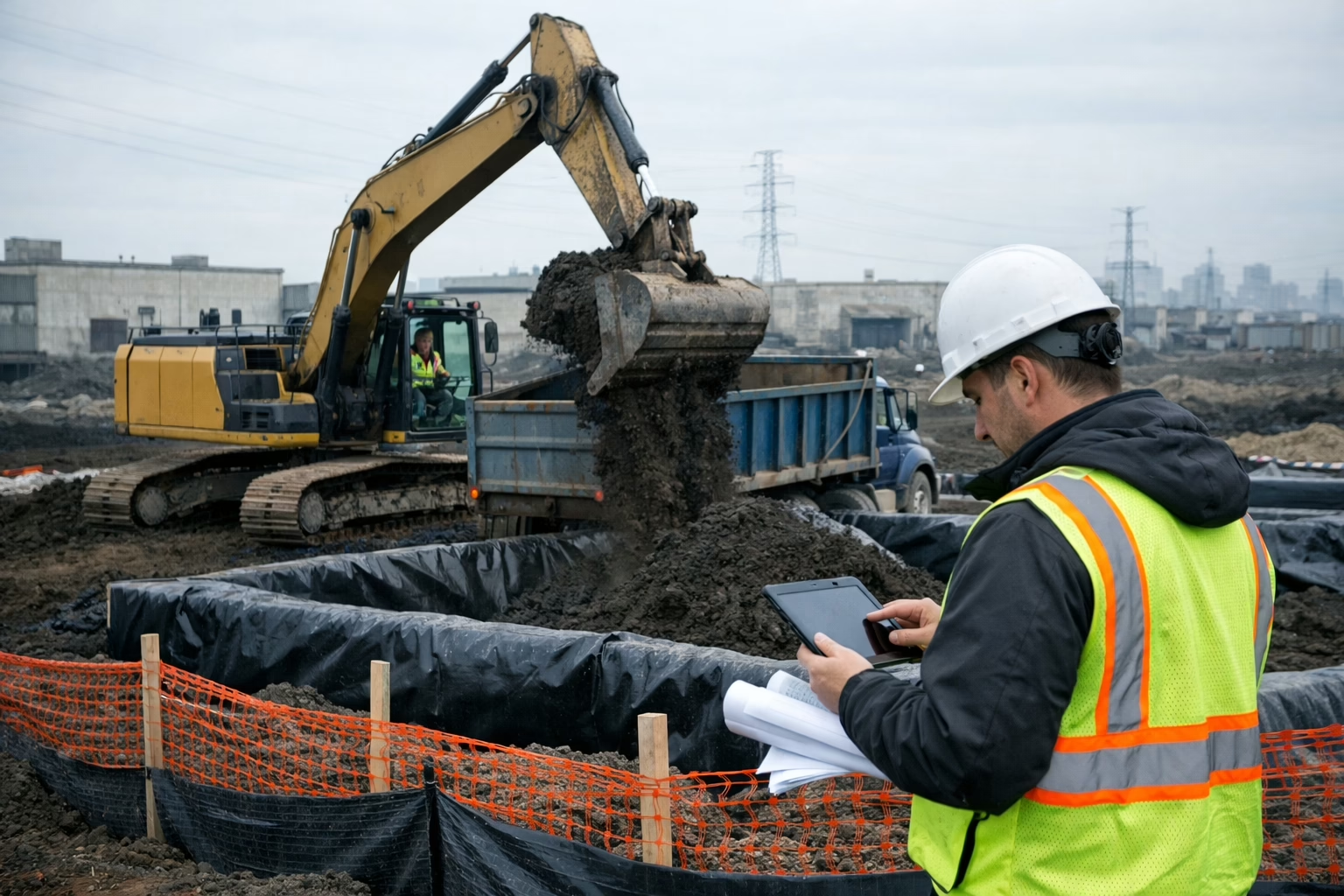
Here's a question that keeps me up at night: Why are we still treating soil remediation like it's a standalone problem?
You're eight weeks into a brownfield redevelopment. The Phase II came back hot: petroleum hydrocarbons, maybe some metals. Your environmental consultant hands you a remedial action plan that reads like a medical prescription: excavate, treat, dispose, backfill. Clean the soil, close the case, move on to construction.
Except that's not how real projects work. And it's costing you a fortune.
The Old Way is Burning Your Budget
Traditional remediation operates in a vacuum. Environmental engineers show up, test the soil, write a cleanup plan, and hand it off. Then your civil engineers arrive to design the actual building. Then your architect realizes the foundation needs to shift. Then someone notices the stormwater detention basin is sitting exactly where you just spent $200,000 cleaning soil to residential standards.
This assembly-line mentality made sense in 1995 when brownfield redevelopment was new and regulatory guidance was thin. In 2026, it's just lazy project management disguised as "best practice."
The problem isn't the remediation itself: it's the sequencing. We're making permanent, expensive decisions about soil treatment before we've finalized what we're actually building. It's like buying furniture before you know the dimensions of your apartment.
What Design-First Remediation Actually Means
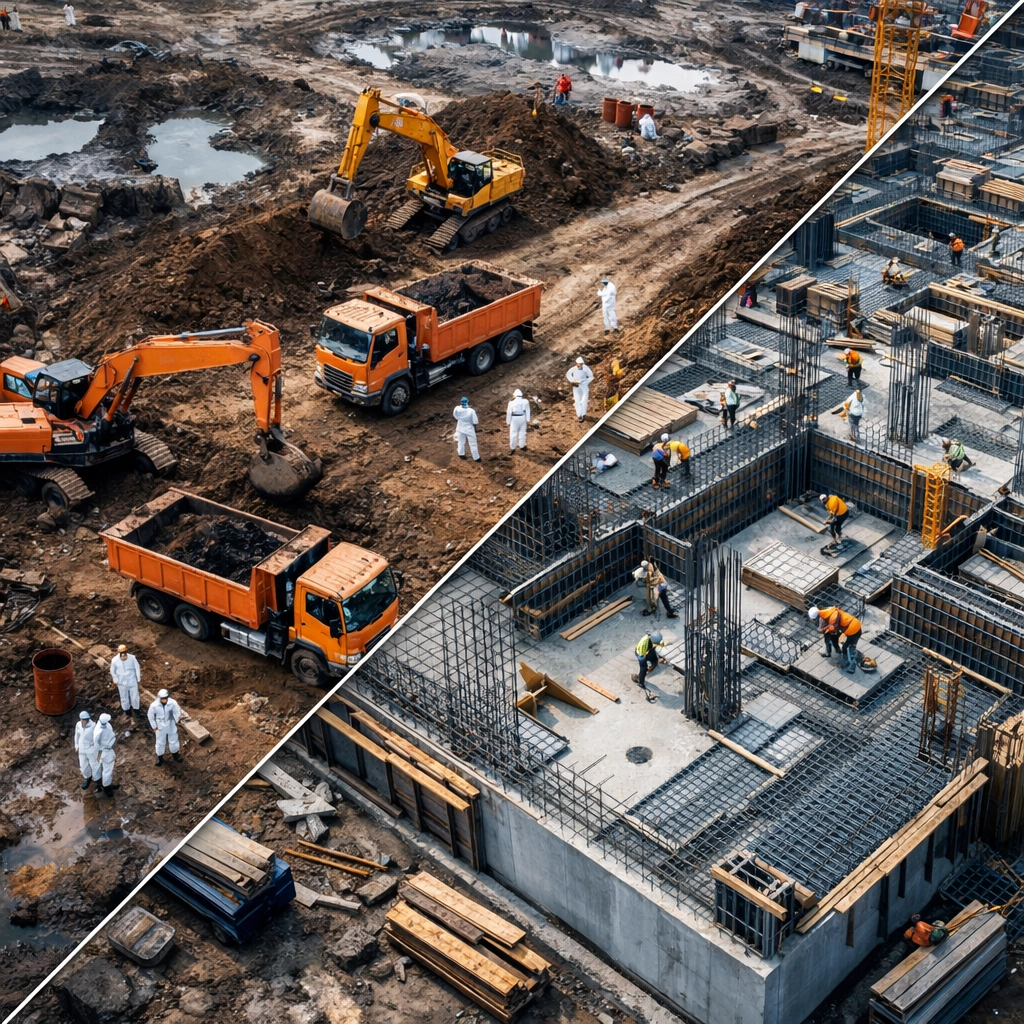
Design-first remediation flips the script. Instead of treating environmental engineering as the opening act, you integrate it with civil design from day one. You're not asking "how do we clean this site?" You're asking "what's the smartest way to build this project given the conditions we have?"
This isn't about cutting corners or gaming the system. It's about value engineering at the strategic level. When your environmental team and your civil engineers are sitting in the same room from the jump, magic happens:
You stop over-remediating. That parking lot doesn't need residential cleanup standards. Those areas under the slab cap can stay in place with institutional controls. The stormwater basin can double as a soil consolidation area. Suddenly your $2 million remediation budget drops to $800,000 because you're only fixing what actually needs fixing for your specific use.
You identify reuse opportunities early. Clean soil on the western edge of the site can be stockpiled and used as backfill on the eastern edge. That contaminated clay layer at 8 feet? It's stable, low-permeability material perfect for grading: no reason to export it if you're capping anyway.
You compress your schedule. When remediation and site development are designed together, they can happen simultaneously. Excavation for your foundation becomes excavation for contaminated soil removal. Your environmental compliance monitoring happens during construction oversight, not as a separate phase with separate mobilization costs.
The Numbers Don't Lie
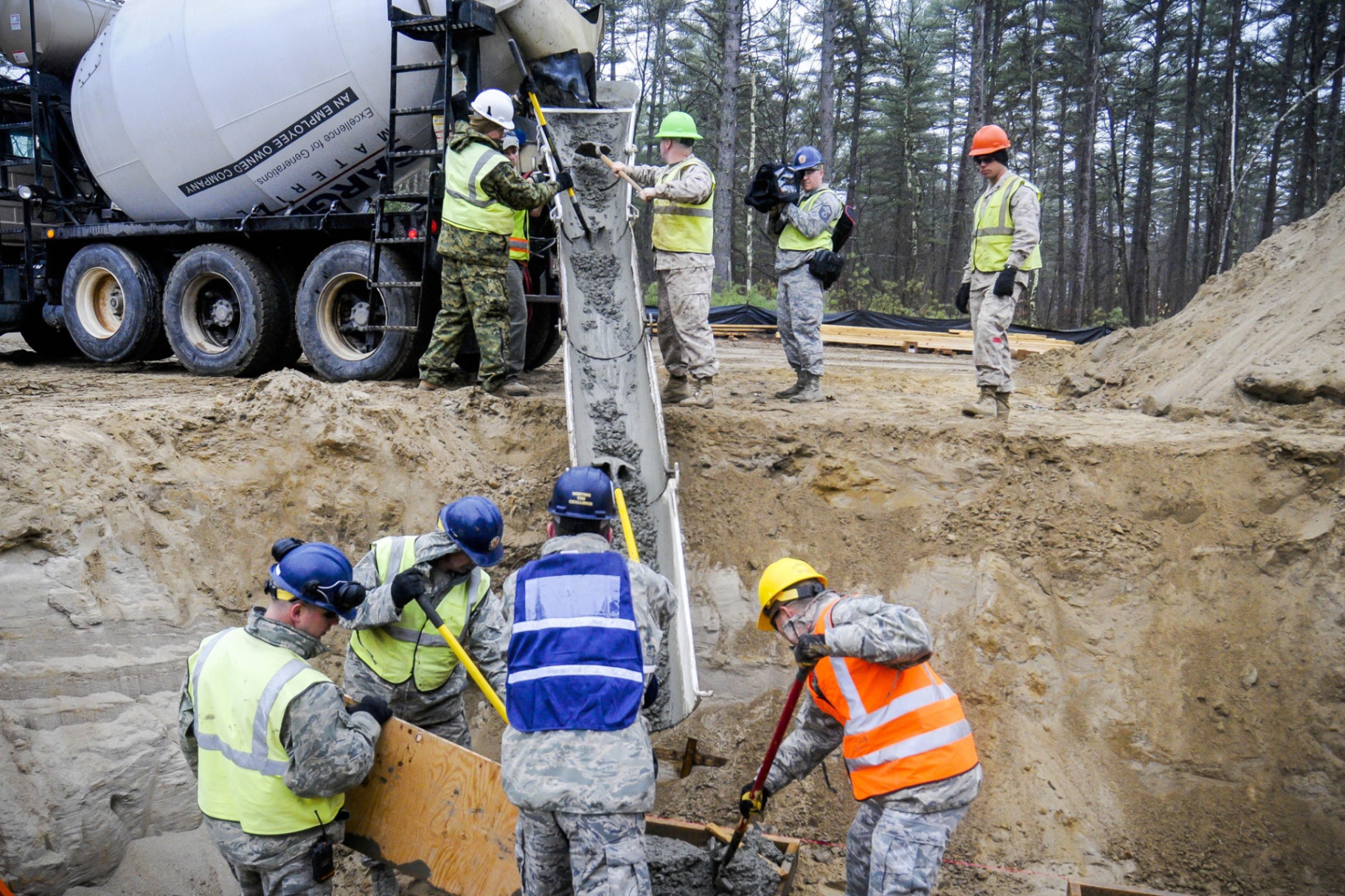
We worked with a multifamily developer in Hudson County last year on a former industrial site: 3.2 acres, petroleum impacts throughout the upper soils, some lead and PAHs near the old building footprints. The initial remedial action plan called for removing 8,500 tons of soil, thermal treatment, clean backfill. Budget: $1.9 million. Timeline: 16 weeks before civil work could start.
We brought the civil team in early. Ran the engineering alongside the remediation planning. Here's what changed:
- 40% of the "contaminated" soil stayed on-site as engineered fill under hardscape and the parking structure
- Foundation excavation doubled as remedial excavation: one mobilization instead of two
- Stormwater detention design incorporated a soil consolidation area that eliminated off-site disposal of 2,200 tons of marginally impacted material
- NJDEP approved an Engineering Control/Institutional Control remedy that met deed restriction requirements without the thermal treatment
Final cost: $740,000. Final timeline: 11 weeks, running concurrent with early civil work. The developer broke ground four months earlier than the original schedule, which in a rising interest rate environment saved another $180,000 in carry costs.
That's not an outlier. That's what happens when you stop treating remediation as a box to check and start treating it as part of your development strategy.
Why This Isn't Standard Practice Yet
You'd think this would be obvious by now, but most firms still operate in silos. Environmental consultants do environmental work. Civil engineers do civil work. Nobody wants to step on toes or blur the lines of professional responsibility.
And let's be honest: it's a business model issue. If your environmental consultant gets paid by the ton of soil removed and your civil engineer doesn't show up until after the cleanup, where's the incentive to integrate?
Large national firms have the same problem in reverse. They have environmental divisions and civil divisions, but those divisions are separate P&Ls with separate project managers who rarely talk until the kickoff meeting. The org chart becomes the project plan, and integration dies in the org chart.
The other barrier is regulatory literacy. Effective design-first remediation requires someone who understands both NJDEP's LSRP process and foundation engineering. Someone who can read a Phase II ESA and a geotechnical report with equal fluency. Someone who knows when NYC OER will accept a restrictive declaration versus when you actually need to dig.
That's not a common skillset. Most environmental engineers don't do structural calculations. Most civil engineers don't read vapor intrusion assessments. So projects default to the old sequential model because it's easier to manage, even if it's more expensive to execute.
How to Actually Implement This
If you're a developer or project owner looking to adopt design-first remediation on your next site, here's the practical playbook:
Start with integrated procurement. Don't hire an environmental consultant and then hire a civil engineer. Hire a team: or better yet, hire a firm that does both with real integration, not just two departments in the same building. Your RFP should explicitly require coordination between disciplines.
Demand a joint kickoff. Environmental and civil teams should review the Phase II and geotechnical data together before anyone writes a work plan. The conversation should start with "what are we building?" not "what's contaminated?"
Challenge the default assumptions. If your consultant's first instinct is to excavate and haul, ask why. Ask about on-site reuse. Ask about engineering controls. Ask if that cleanup standard is driven by regulation or just habit. A good consultant will welcome these questions. A lazy one will get defensive.
Align your closeout requirements with your end use. If you're building a warehouse with a slab-on-grade and no groundwater use, you don't need residential standards. Make sure your remediation plan reflects the actual regulatory closure requirements for your Certificate of Completion or No Further Action letter.
Think like an owner's rep, even if you are the owner. The best projects we've seen have someone internal: an experienced developer, a sharp project manager, a former engineer: who can ask the right questions and hold consultants accountable for real integration, not just coordination calls that go nowhere.
The Competitive Edge
Here's the uncomfortable truth: your competition is already doing this. The developers consistently winning bids on competitive brownfield sites aren't the ones with the most capital: they're the ones with the most efficient execution. They're underwriting remediation costs 30-40% lower than yours because they understand value engineering at the site planning level.
When you integrate environmental engineering with civil design, you're not just saving money. You're compressing timelines, reducing risk, and increasing the flexibility to adapt when conditions change (because they always change). You're turning environmental compliance from a cost center into a strategic advantage.
That's the difference between treating remediation as a problem and treating it as part of the solution.
The Path Forward
The future of brownfield redevelopment isn't cleaner technology or better regulations: it's smarter project delivery. It's recognizing that the line between "environmental work" and "civil work" is artificial and counterproductive. It's demanding that your consultants think like owners, not just technicians following a checklist.
Design-first remediation isn't a new service offering or a consulting buzzword. It's a mindset shift. It's what happens when you stop asking "how do we fix the soil?" and start asking "how do we build this project in the smartest possible way?"
If you're tired of watching remediation budgets balloon and schedules slip, the answer isn't finding a cheaper lab or negotiating harder with your hauler. The answer is fixing the plan before you start fixing the soil.
At Envicon Strategic Solutions, we've built our practice around exactly this kind of integrated thinking: because we've seen what happens when environmental engineering and civil design actually work together instead of just coexisting. If you're planning a redevelopment project and want to explore what design-first remediation could look like for your site, let's talk.
The soil doesn't care what order you do things in. But your budget and timeline definitely do.
![[FOOTER] Envicon Strategic Solutions](https://cdn.marblism.com/iL_cQAc3jVV.webp)