
Property acquisitions in New York and New Jersey are moving faster than ever, but environmental due diligence is still stuck in the stone age. While you're racing to close deals in 30-45 days, generic environmental consultants are delivering cookie-cutter Phase I reports that tell you nothing actionable about your actual risk exposure.
The problem isn't just delays: it's that most environmental consulting approaches treat every property like a potential Superfund site, leading to over-investigation, blown budgets, and missed opportunities. Smart investors and developers are rethinking their entire approach to environmental due diligence, focusing on targeted, transaction-aligned strategies that actually move deals forward.
Here's how to stop wasting time and money on generic environmental consulting and start de-risking your acquisitions like a pro.
1. Start Environmental Review at the LOI Stage, Not Due Diligence
Most buyers make the critical mistake of treating environmental assessment as a due diligence checkbox rather than a strategic acquisition tool. By the time you're 20 days into your due diligence period, you're already behind the curve.

The smarter approach: Engage qualified environmental consultants during the letter of intent (LOI) stage. This gives you preliminary insights that inform your initial pricing strategy and purchase agreement terms from day one. You're not conducting a full Phase I ESA yet, but you're gathering enough historical information to identify obvious red flags that could derail the transaction.
When our team reviews a property at the LOI stage, we're looking at:
- Historical Sanborn maps and aerial photographs
- NYSDEC and NJDEP database records
- Municipal violation records
- Neighboring property uses and known contamination
This early intelligence allows you to structure your offer with realistic environmental contingencies and negotiate appropriate risk allocation before you're locked into rigid due diligence timelines.
2. Demand a Phase I ESA with Integrated Compliance Review
Generic environmental consultants will hand you a standard Phase I Environmental Site Assessment that meets ASTM E1527-21 requirements and call it a day. That's not enough for today's regulatory environment in New York and New Jersey.
What you actually need: A focused Phase I ESA that combines contamination risk assessment with a limited compliance review of current operations. This dual approach eliminates the need for separate compliance audits while delivering comprehensive insight in a single engagement.

Your Phase I should include:
- Traditional historical site-use research and recognized environmental conditions (RECs)
- Active permit review (air emissions, waste management, stormwater)
- Recent inspection records from NYSDEC, NJDEP, EPA, or local agencies
- Current material storage and handling practices
- Identification of material environmental non-compliance issues
This integrated approach reveals not just past contamination risks, but ongoing regulatory liabilities that could impact your operational plans post-closing. A property might have clean soil and groundwater but face $50,000 in pending air quality violations that generic consultants miss entirely.
3. Use Targeted Phase II Investigations, Not Blanket Sampling
Here's where most environmental consulting goes completely off the rails: the recommendation for comprehensive Phase II Environmental Site Assessments based on minor historical concerns. Generic consultants love to recommend extensive soil and groundwater sampling programs because it covers their liability and maximizes their fees.
The reality: Targeted Phase II investigations deliver better risk intelligence in half the time. Commission sampling and laboratory analysis only when Phase I findings indicate specific, actionable concerns like documented spills, underground storage tanks, or industrial operations with known contamination potential.
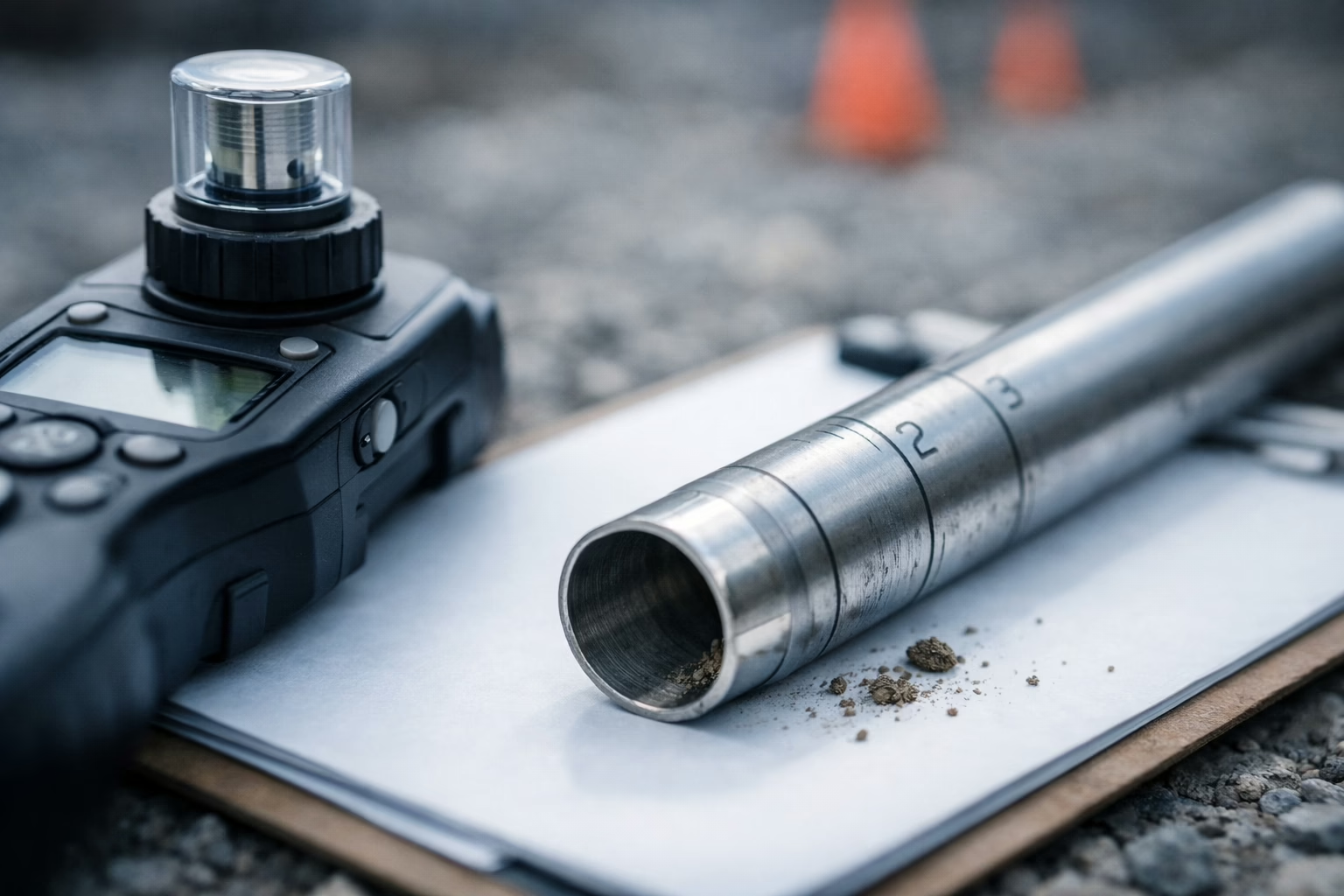
When Phase II is warranted, focus your investigation on:
- Areas with highest contamination probability based on Phase I findings
- Contamination types most relevant to your intended use
- Sampling locations that provide maximum decision-making value
- Laboratory analysis parameters that align with regulatory screening levels
A focused Phase II might involve 6-8 strategically placed soil borings rather than the 15-20 boring "grid pattern" that generic consultants often recommend. You get actionable contamination data and realistic remediation cost estimates without the 4-6 week laboratory delays that kill transaction momentum.
4. Implement Structured Documentation Management from Day One
Environmental due diligence generates massive amounts of documentation: historical reports, permit files, inspection records, laboratory data, remediation correspondence, and compliance documentation. Generic consultants often treat document management as an afterthought, leading to information gaps that trigger supplemental investigations or post-closing disputes.
The systematic approach: Use secure data rooms from the outset to centralize and track all environmental documentation. This creates an audit trail, accelerates stakeholder review, and prevents the "missing document" surprises that derail closings.
Your documentation system should organize:
- Historical environmental reports and remediation records
- Current permits and regulatory correspondence
- Laboratory analytical data and quality assurance records
- Site characterization and monitoring data
- Insurance claims and liability documentation
When environmental information is properly organized and accessible, lenders complete their environmental review faster, lawyers can draft appropriate contract language, and you can make informed decisions about risk allocation and pricing adjustments without scrambling to locate critical documents.
5. Translate Environmental Findings into Actionable Contract Terms
The biggest failure of generic environmental consulting is the disconnect between technical findings and business implications. You'll receive a 40-page Phase I report that identifies "potential environmental concerns" but provides zero guidance on how those findings should impact your purchase agreement, pricing strategy, or risk management approach.
The business-focused approach: Work with consultants who understand how to translate environmental findings directly into contractual terms and risk allocation strategies. Environmental due diligence should inform specific representations, warranties, indemnity clauses, and escrow provisions in your purchase agreement.

Key contract elements driven by environmental findings:
- Seller representations about known contamination and compliance status
- Buyer due diligence rights and investigation scope limitations
- Risk allocation for newly discovered contamination post-closing
- Escrow holdbacks or price adjustments tied to remediation costs
- Indemnity provisions for specific environmental liabilities
When environmental consultants understand transaction mechanics, they can provide risk assessments that directly support your negotiation strategy. Instead of generic "further investigation recommended" conclusions, you get clear guidance on whether environmental conditions warrant price reductions, additional due diligence time, or specific protective contract language.
The Bottom Line: Environmental Due Diligence as Strategic Advantage
Environmental consulting shouldn't be a necessary evil that slows down your acquisitions: it should be a competitive advantage that helps you identify opportunities other buyers miss. Properties with minor environmental issues often trade at significant discounts, creating value opportunities for buyers who understand how to properly assess and manage environmental risk.
The key is working with environmental consultants who understand that their job isn't just identifying potential problems: it's helping you make informed business decisions that move transactions forward. Generic environmental consulting treats every property like a potential disaster. Strategic environmental consulting treats environmental conditions as manageable business risks that can be quantified, allocated, and mitigated through proper due diligence and contract structuring.
When you stop wasting time on generic approaches and start implementing targeted, transaction-aligned environmental due diligence, you'll close deals faster, negotiate better terms, and avoid the costly surprises that derail so many property acquisitions in today's competitive market.
Your next acquisition is waiting. The question is whether you'll approach environmental due diligence as a roadblock or as the strategic advantage it should be.