
You're standing in front of a property that looks like a slam-dunk investment. The numbers work, the location is solid, and your acquisition team is ready to move. But here's the thing: you haven't spent 30 minutes asking yourself the one question that could save you six figures in remediation costs: What environmental surprises are hiding in plain sight?
Most investors wait until they're deep into due diligence before bringing in environmental engineers. By then, they've already burned time and legal fees on a deal that might have massive subsurface contamination issues. The smarter play? Learn to spot the red flags yourself during your initial walkthrough.
This isn't about replacing professional Phase I Environmental Site Assessments: those are non-negotiable for any commercial property transaction. This is about arming yourself with the knowledge to walk away early from bad deals or negotiate aggressively when you see warning signs. Think of it as your environmental triage checklist before you bring in the specialists.
The Exterior Walk: What Your Eyes Should Catch
Start outside. Seriously. Some of the biggest environmental liabilities announce themselves before you ever unlock the front door.
Stained Concrete and Soil Discoloration
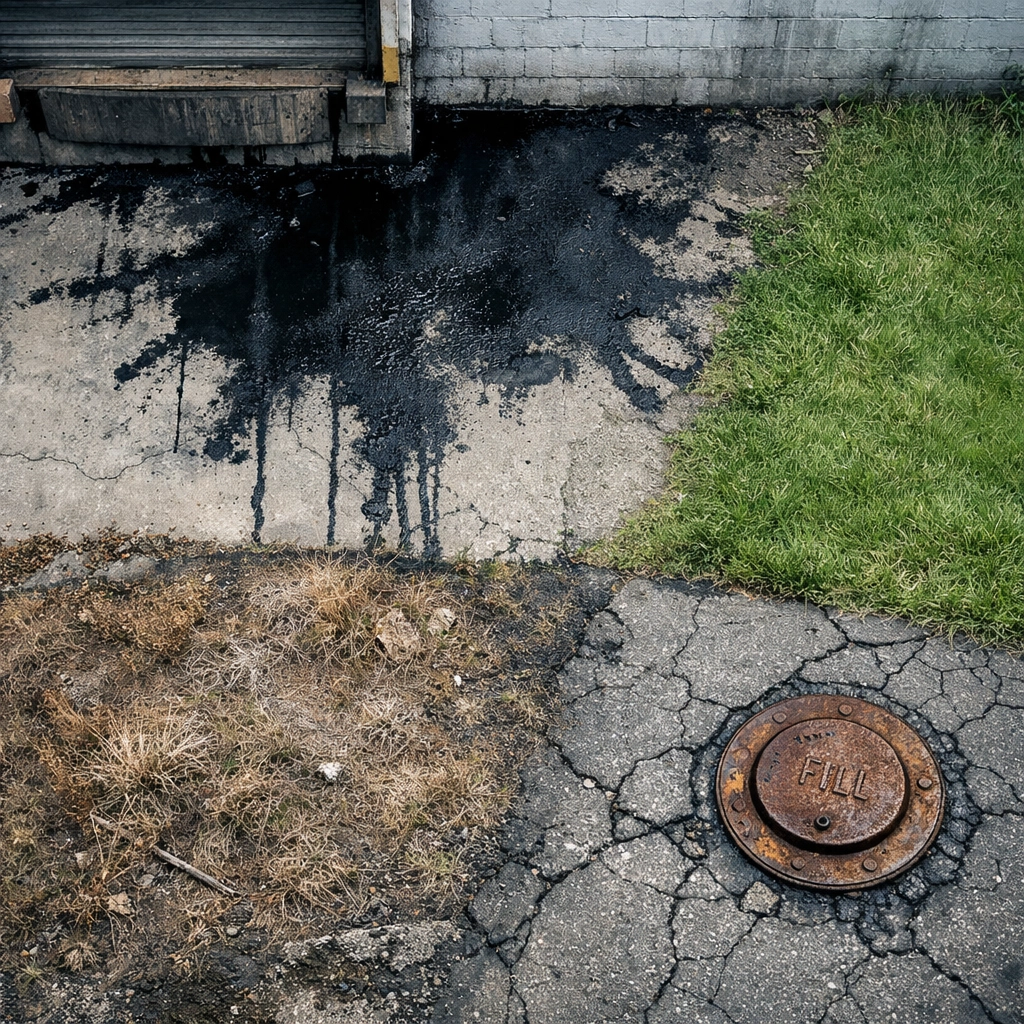
If you see black staining on concrete pads, loading docks, or parking areas, stop and take note. That's not just weathering: it could be decades of oil, solvents, or other petroleum products seeping into the ground. Same goes for odd patches where vegetation won't grow or soil that looks darker or oily compared to surrounding areas. These are textbook indicators of potential soil contamination that'll show up on a Phase II investigation.
Underground Storage Tanks (USTs) or Fill Ports
Look for circular metal caps embedded in concrete, especially near older buildings. Those are fill ports for underground storage tanks. Even if the tank was "properly removed," you'll want documentation proving closure was done to current standards. We've seen too many deals where a "closed" UST from the 1980s still has residual contamination requiring costly remediation.
Vent Pipes and Strange Protrusions
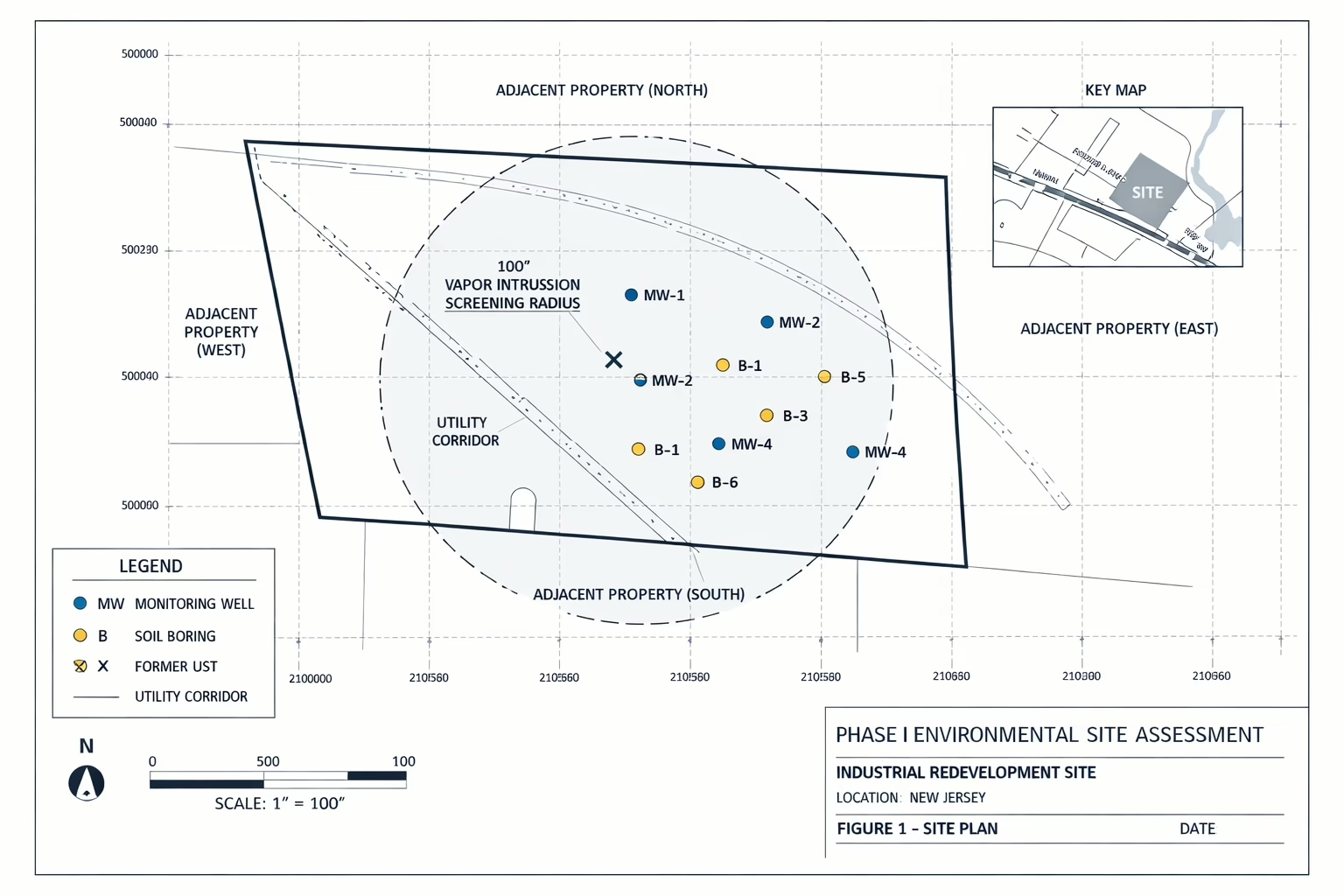
See random pipes sticking out of the ground? They could be monitoring wells from previous environmental investigations, vapor mitigation systems, or vents from underground tanks. Each one tells a story: and not always a good one. Take photos and GPS coordinates. Your environmental consultant will want to know about every single one.
Drainage Patterns and Stormwater Management
Watch where water flows. Are there catch basins that look rusty or stained? Does runoff seem to collect in certain areas? Properties with poor stormwater management often have sediment accumulation contaminated with heavy metals, PAHs, or other nasties that wash off buildings and parking lots over decades.
The Historical Deep Dive (From Your Laptop)
Before you ever schedule that site visit, spend 20 minutes doing digital reconnaissance. Here's what savvy investors check:
Sanborn Fire Insurance Maps
These historical maps from the late 1800s through the 1960s show exactly what industrial operations existed on your property and neighboring parcels. Was your potential office building once a dry cleaner? A gas station? A machine shop? Each of those uses carries specific contamination risks. You can access these through local libraries, historical societies, or online databases.
NJDEP Site Remediation Program & Known Contaminated Sites List
In New Jersey, the NJDEP maintains a database of known contaminated sites and properties enrolled in remediation programs. A five-minute search can tell you if your property: or the one next door: has a documented contamination case. Properties near contaminated sites can face vapor intrusion issues even if they were never the source.
Aerial Photography Timeline
Google Earth's historical imagery tool is your friend. Scroll back through decades of aerial photos. You're looking for changes in land use, demolished structures, former drum storage areas, or evidence of dumping. We once had a client discover through aerial photos that their "clean" industrial site had been used for outdoor chemical storage in the 1970s: something the seller conveniently forgot to mention.
Indoor Red Flags: The Walkthrough Essentials
Once you're inside, your environmental radar should stay on high alert. Here's what to look for:
Floor Drains and Sumps
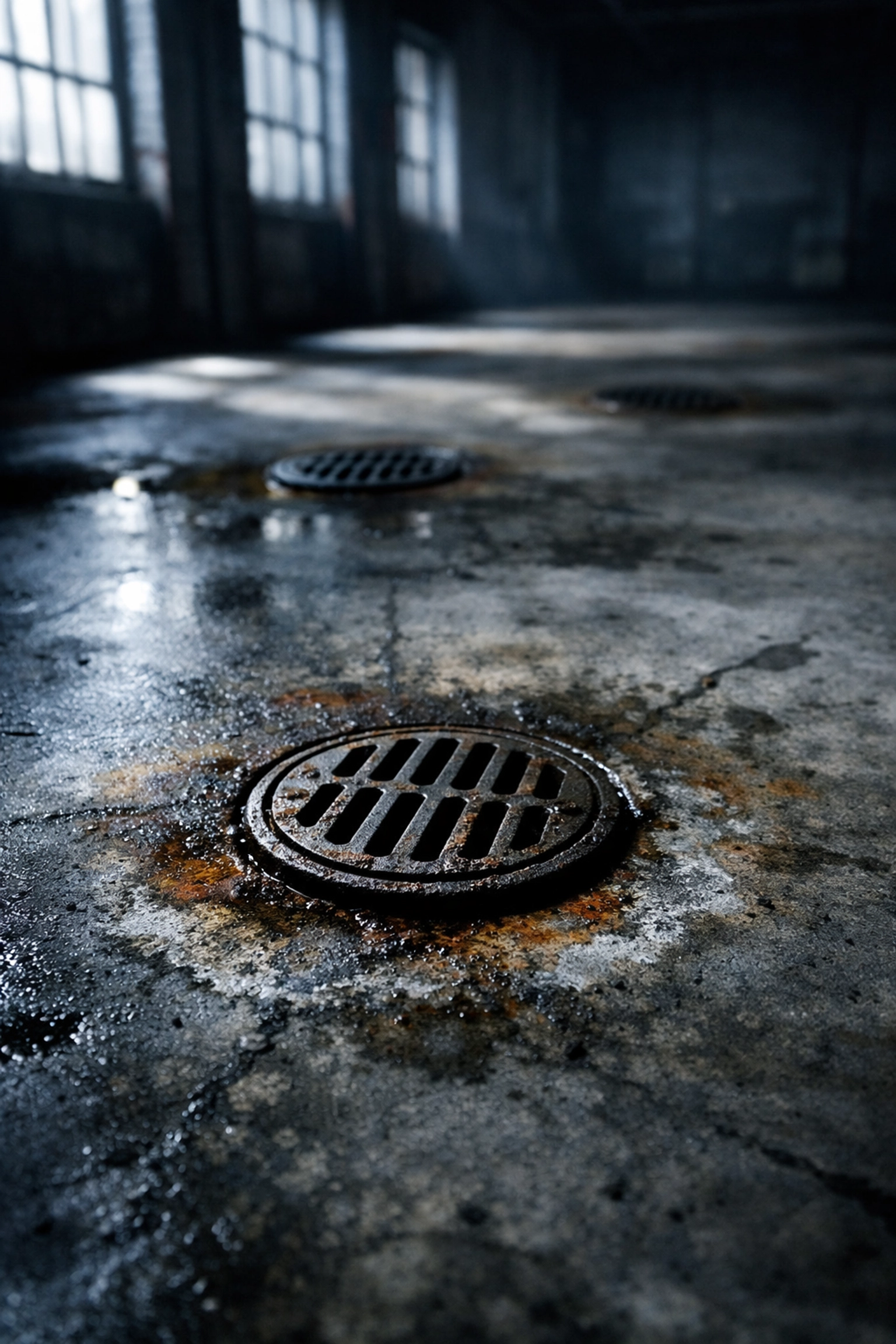
Every floor drain is a potential pathway to groundwater contamination. In older industrial facilities, these drains often connected directly to soil without any treatment or separation. Look for staining around drains, unusual odors, or evidence that chemicals were regularly washed down. If you see a sump pump, ask where it discharges: if it's pumping contaminated water to the surface, you've got a problem.
Stained Walls and Ceilings
Water stains aren't just a structural issue: they can indicate roof leaks that have been leaching contaminants from roofing materials or HVAC systems. In facilities that handled chemicals, wall staining below old piping or near former storage areas often signals absorption of contaminants into porous materials like concrete block.
Abandoned Equipment and Chemical Residue
Old drum storage areas, abandoned process equipment, or chemical staining on floors are massive red flags. Even if the operations ceased years ago, residual contamination in building materials often requires costly abatement during renovation. We've seen developers discover that their "quick flip" warehouse renovation required $200K in concrete removal and disposal due to decades-old chemical spills.
Asbestos and Lead Paint Indicators
Any building constructed before 1980 likely contains asbestos in floor tiles, pipe insulation, or ceiling materials. Pre-1978 buildings almost certainly have lead paint. While these are regulated building materials rather than soil contamination, they add significant cost and complexity to demolition or renovation. Budget $15-40 per square foot for proper abatement depending on severity.
The Neighborhood Context Matters
Your property doesn't exist in isolation. Understanding the surrounding area's environmental history is crucial for assessing vapor intrusion risks and potential off-site contamination migration.
Dry Cleaners Within 500 Feet
Dry cleaning operations historically used perchloroethylene (PCE), a dense solvent that sinks through soil and spreads through groundwater. If there's been a dry cleaner within 500 feet of your property: current or historical: you need to evaluate vapor intrusion risk. PCE vapors can migrate significant distances and accumulate in building basements, creating indoor air quality issues requiring expensive mitigation systems.
Gas Stations and Auto Repair Shops
Similarly, gas stations and auto repair facilities are notorious for leaking underground storage tanks and soil contamination from petroleum products, antifreeze, and solvents. Check for these operations upgradient of your property (following the natural groundwater flow direction, typically toward lower elevations or nearby water bodies).
Former Industrial Corridors
Many of today's hot redevelopment areas were yesterday's industrial zones. Railroad corridors, warehouse districts, and waterfront properties often have a legacy of manufacturing, coal storage, and waste disposal. These areas might look trendy now, but they often carry significant environmental baggage requiring Brownfield remediation or participation in state voluntary cleanup programs.
When to Call in the Engineers
Here's the truth: this 30-minute check isn't a substitute for professional environmental due diligence. What it does is help you make smarter decisions about which properties deserve that investment of time and money.
If you spot multiple red flags, don't walk away immediately: but do factor in realistic remediation costs before you submit your offer. More importantly, engage environmental professionals early in your due diligence period, not at the end when you've already spent money on surveys, legal work, and preliminary architectural plans.
At Envicon Strategic Solutions, we've guided hundreds of developers and investors through this process. Our integrated civil and environmental engineering approach means we're not just identifying problems: we're designing practical, cost-effective solutions that keep your project moving forward. Because in the New York and New Jersey markets, every property has a story. The question is whether you'll pay to hear it before or after you own it.
The Bottom Line
Smart investors don't fear environmental issues: they price them correctly. A 30-minute red flag check gives you the situational awareness to negotiate from a position of knowledge rather than ignorance. You'll know when to bring in the engineers for a Phase I ESA, when to demand environmental reps and warranties from sellers, and when to simply walk away from a deal that's more liability than opportunity.
The properties that scare off amateur investors often become the best deals for those who understand how to de-risk them. But that starts with knowing what to look for: before you even pick up the phone to call an engineer.