
Let's cut to the chase: NYC construction oversight costs are eating into your margins, and you're not alone in feeling the squeeze. Between DOB inspections, environmental compliance requirements, and the alphabet soup of permits and certifications, it's tempting to either overspend on consultants or cut corners that come back to bite you.
Here's the thing: neither approach works. Overspending kills your ROI, and shortcuts lead to stop-work orders, fines, and project delays that cost exponentially more than doing it right the first time.
The developers who consistently deliver projects on time and under budget aren't lucky. They're strategic. They understand that construction oversight isn't just a line item to minimize: it's a lever to optimize.
We've worked with enough NYC developers to know exactly where the money goes (and where it doesn't have to). This guide breaks down the proven strategies for reducing your oversight costs while keeping every regulator happy.
The Real Cost of "Saving Money" on Oversight
Before we talk about cutting costs, let's talk about what happens when you do it wrong.
A single compliance violation in NYC can trigger:
- Stop-work orders that freeze your entire project
- Fines ranging from thousands to hundreds of thousands of dollars
- Extended timelines that blow through your carrying costs
- Lender concerns that jeopardize your financing
The irony? Most developers who try to save money on oversight end up spending 2-3x more when problems surface mid-construction. The goal isn't to spend less: it's to spend smarter.
Front-Load Your Planning (It's Where the Real Savings Live)
The most expensive construction oversight problems are the ones you discover after breaking ground. By that point, your options are limited and every solution comes with a premium price tag.
Smart developers invest heavily in early project scoping. This means bringing in your environmental and engineering consultants before your budget is locked, not after. According to NYC's Department of Design and Construction, front-loaded planning allows teams to analyze cost reduction options before construction begins: preventing the budget variance, schedule delays, and change orders that escalate oversight complexity during actual construction.
What does early scoping look like in practice?
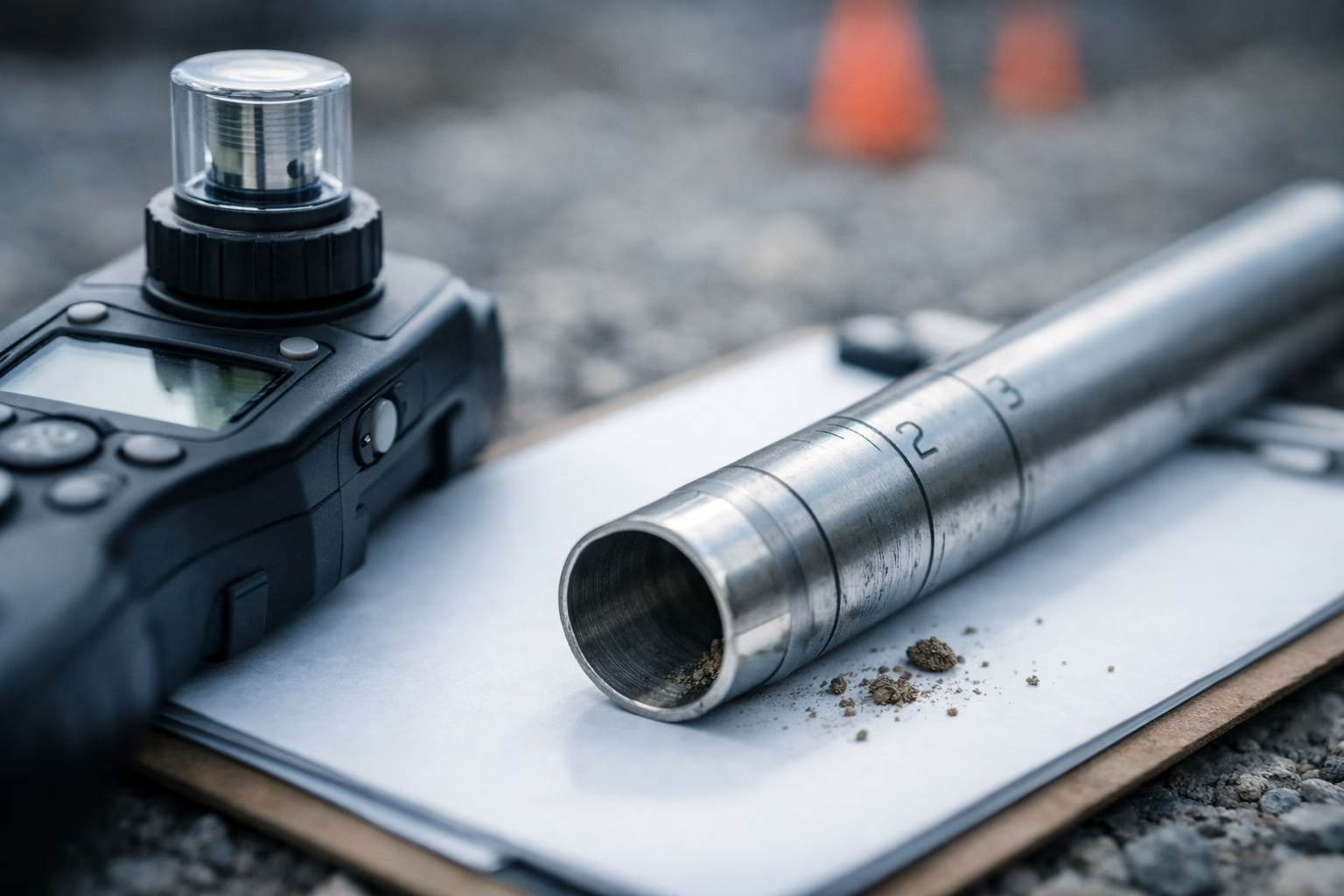
- Phase I and Phase II ESAs completed before acquisition closes, not after
- Geotechnical investigations that inform foundation design decisions early
- Regulatory pathway analysis that identifies which permits you'll need and how long they'll take
- Site-specific compliance calendars that map inspection requirements to your construction schedule
This isn't about spending more on consultants. It's about spending on the right consultants at the right time. A thorough environmental assessment during due diligence costs a fraction of what remediation or redesign costs mid-project.
Optimize Your Procurement Strategy
Here's a stat that should get your attention: joint bidding on capital projects and utility work has reduced utility-related delays from 28 months to just 7 months in NYC: saving an average of $4.3 million per project.
That's not a typo. Four point three million dollars.
When the city bids construction and utility work simultaneously, developers avoid the extended negotiations that stall projects and inflate costs. The utilities share overhead and construction management costs under these arrangements, generating additional savings across the board.
For your projects, this means:
- Coordinating with utility providers early rather than waiting for conflicts to emerge
- Bundling related scopes of work to reduce overhead on multiple contracts
- Aligning inspection schedules so you're not paying for multiple mobilizations
"The developers who consistently deliver projects on time and under budget aren't lucky. They're strategic."
The principle extends beyond utilities. Every time you can consolidate oversight functions under a single qualified provider: environmental compliance, civil engineering, construction monitoring: you eliminate redundant costs and communication gaps.

Implement Real-Time Cost Tracking
If you're still tracking construction costs in spreadsheets updated weekly, you're flying blind. By the time you see a problem, it's already baked into your budget.
Modern construction management requires instant visibility into spending. That means:
- Daily cost tracking against baseline budgets
- Automated alerts when line items exceed thresholds
- Change order documentation that captures full scope and cost impact in real-time
- Monthly forecasting that projects final costs based on current burn rates
The technology exists. The question is whether you're using it.
A disciplined change order process is particularly critical for NYC construction. Every scope change needs proper documentation and review before work proceeds: not after. We've seen projects hemorrhage money because change orders were approved verbally and reconciled months later at inflated rates.
Regular audits keep your cost data accurate and allow project managers to respond before issues escalate into budget emergencies.
Streamline Without Sacrificing Compliance
There's a difference between cutting red tape and cutting corners. The developers who get this wrong end up in enforcement actions; the ones who get it right move faster than their competition while staying bulletproof on compliance.
NYC has actually made this easier in recent years. The VENDEX threshold increase to $250,000 reduced paperwork for smaller contractors. Procurement reforms have removed some duplicative oversight steps. The DDC Authority model streamlines certain processes without compromising regulatory requirements.
Your job is to stay current on which requirements are actually mandatory versus which are legacy processes that no one's challenged. A consultant who knows the regulatory landscape: and has relationships with the relevant agencies: can identify legitimate shortcuts that save time and money.
This is especially true for compliance and permitting on complex sites. The difference between a 6-month permit timeline and a 14-month timeline often comes down to knowing which documents the reviewer actually needs and in what format.
The Integrated Approach: Why Siloed Consultants Cost You More
Here's what we see constantly: a developer hires one firm for environmental, another for geotech, a third for civil engineering, and a fourth for construction oversight. Each firm does competent work in their lane. And the project still goes sideways.
Why? Because nobody owns the interfaces.
The environmental consultant doesn't know about the foundation design changes. The geotech doesn't flag the soil conditions that affect remediation. The civil engineer designs drainage without understanding the contamination pathways. And the construction monitor is left trying to reconcile conflicting requirements on the fly.
Every handoff is a potential failure point. Every gap in communication is a potential cost overrun.
The alternative is an integrated approach where environmental, civil, and geotechnical expertise lives under one roof. When your engineering and environmental services come from a single team, information flows freely. Problems get caught early. Solutions account for all the constraints, not just the ones in one consultant's scope.
We've seen this approach cut oversight costs by 15-25% on complex NYC projects: not by reducing the work, but by eliminating the redundancy and rework that fragmented teams create.
"Every handoff is a potential failure point. Every gap in communication is a potential cost overrun."
Your Action Plan
Slashing NYC construction oversight costs without risking compliance isn't about finding magic tricks or gaming the system. It's about disciplined execution of proven strategies:
- Invest in early scoping before budgets are locked
- Coordinate procurement to bundle work and align schedules
- Track costs in real-time with robust change order processes
- Stay current on regulatory streamlining opportunities
- Integrate your consulting team to eliminate handoff failures
The developers who execute on these principles consistently outperform their competition: finishing faster, spending less, and avoiding the compliance nightmares that derail projects.
At Envicon, we've built our practice around this integrated, strategic approach to NYC construction. We understand that our job isn't just to check boxes: it's to help you deliver successful projects. If you're planning a development and want to talk through how to optimize your oversight strategy, reach out to our team.
Because in NYC construction, the smartest money is always spent before the first shovel hits the ground.