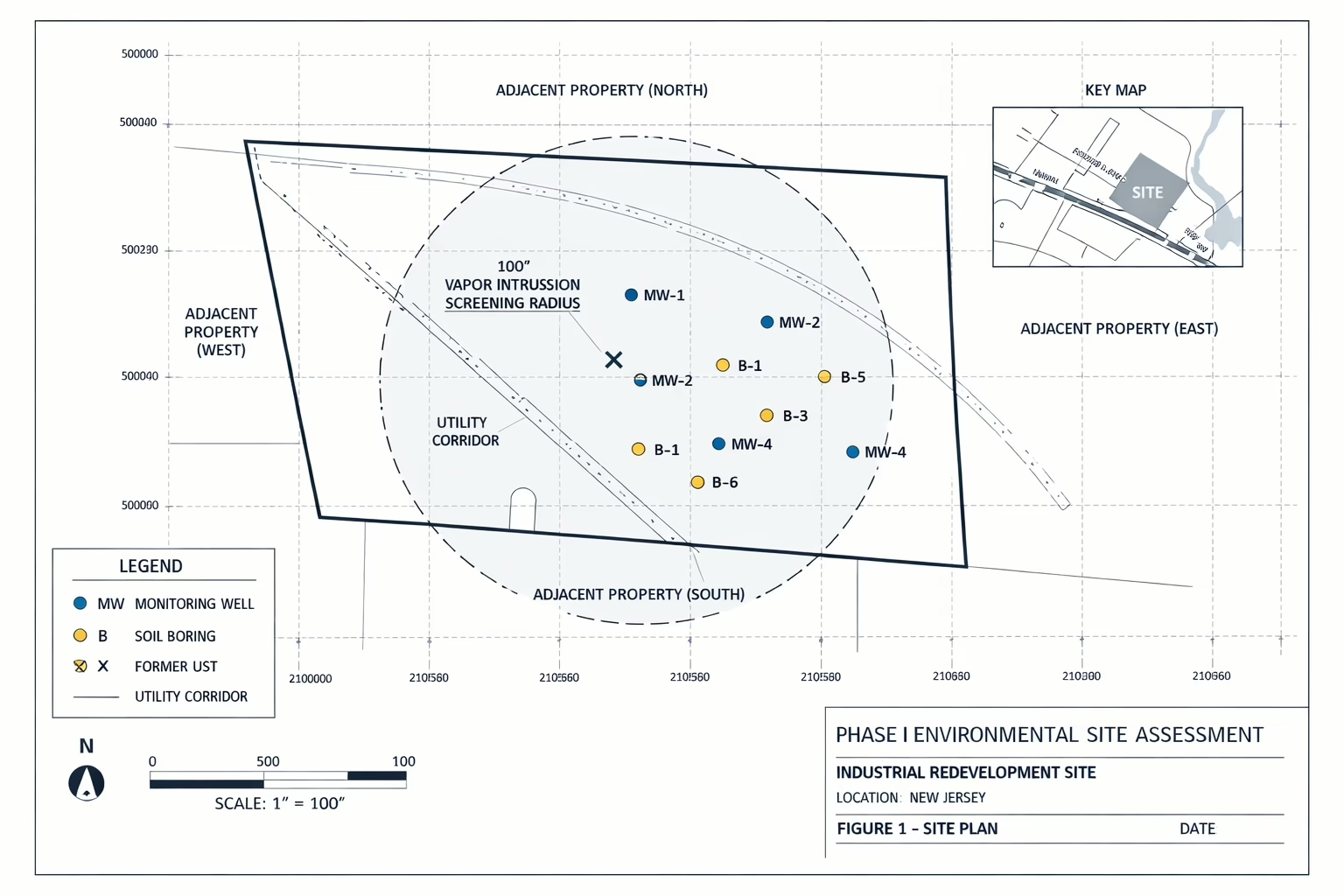

Here's the truth: Your Phase I ESA might be technically compliant and still get your deal killed in committee.
We've seen it happen dozens of times. A developer spends weeks negotiating terms, assembles a solid proforma, and submits what looks like a perfectly acceptable environmental report. Two weeks later? The lender's environmental consultant kicks it back with a list of "clarifications needed." By the time you're on revision three, your rate lock has expired and the seller is fielding backup offers.
The problem isn't usually bad science. It's that most environmental reports are written for regulators, not lenders. And those are two completely different audiences with completely different concerns.
What Lenders Actually Care About (And Why Your Consultant Might Not)
Lenders don't read your Phase I ESA looking for ASTM compliance. They're reading it to answer one question: "Can this property secure our loan without becoming a liability?"
That means they're looking for:
- Clear, defensible conclusions about recognized environmental conditions (RECs)
- Quantifiable risk assessment that connects findings to financial exposure
- A roadmap for resolution if issues exist
- Documentation that holds up under their own consultant's review
- Alignment with the budget you've already submitted

Most Phase I ESAs check the regulatory boxes but fail the business logic test. They'll note that a property was a "commercial garage from 1965-1982" but won't connect the dots on what that means for subsurface impacts, remediation costs, or timeline delays. The lender's committee sees a gap. Their consultant sees an opportunity to recommend a Phase II. Your closing date just moved three months to the right.
The "Lender-Proof" Framework: Building Reports That Survive Committee
Over the years, we've developed what we internally call our "lender-proof" review process. It's not about cutting corners, it's about anticipating questions before they're asked and presenting findings in a format that creates confidence, not concern.
1. Front-Load the Executive Summary with Business Intelligence
Your executive summary shouldn't just summarize, it should tell a story that aligns with the lender's risk framework. We structure ours to answer the big questions immediately:
- What is the current environmental status?
- Are there any material RECs?
- What's the financial exposure range if RECs exist?
- What's the timeline to resolution?
- Are there any "showstopper" issues?
If the answer to question five is "no," we say that explicitly. In bold. Lenders appreciate clarity.
2. Connect Historical Use to Financial Risk
Here's where most reports fall short. They'll document that a site was an "automotive repair facility" but won't extrapolate what that means for your project budget. We do the math for them.
For example: "Historical automotive use suggests potential subsurface impacts from hydraulic fluids, petroleum products, and chlorinated solvents. Based on comparable remediation projects in Hudson County, resolution costs typically range from $75,000 to $150,000 for properties of this size, with a 60-90 day timeline from NFA issuance."
That's the kind of specificity that moves deals forward. The lender can plug those numbers into their model. Their committee can see you've done your homework. The environmental consultant reviewing your report has less ammunition to recommend "further investigation."

3. Include Regulatory Context (Not Just Regulatory Compliance)
A lender-ready Phase I ESA doesn't just cite regulations, it explains what they mean for this specific transaction.
If your property falls under New Jersey's LSRP program, we'll include a brief explanation of what that means for timeline and responsibility. If there's an existing Deed Notice, we'll detail exactly what restrictions apply and whether they're compatible with the proposed use. If PFAS is a potential concern (and in 2026, it often is), we'll explain the current regulatory landscape and whether testing is advisable pre-closing or post-acquisition.
This contextual framing does two things: it demonstrates expertise, and it preemptively answers the questions the lender's consultant will ask anyway.
4. Reconcile Findings with the Construction Budget
This is the "hard stop" our research flagged, and it's where most consultants drop the ball.
If your Phase I identifies potential soil impacts and your construction budget doesn't include a line item for environmental oversight or contingency soil management, that's a red flag. We call it out and recommend specific budget allocations based on project scope.
For developers working on urban redevelopment projects, this integrated approach is table stakes. Your lender is going to reconcile your environmental findings with your draw schedule. If those don't align, you're headed for a revision cycle.
5. Deliver Backup Documentation That Answers the Next Question
Every lender-proof report we deliver includes comprehensive appendices with the documents their consultant will request anyway:
- Historical aerials with annotations
- Regulatory database reports with our interpretation
- Interviews with site personnel or neighbors (documented)
- Photographic logs with context
- Correspondence with regulatory agencies if applicable
We also include a brief "Consultant's Note" section that addresses common questions we anticipate based on the property type, location, or historical use. It's a small addition that dramatically reduces back-and-forth.

When a Phase II ESA is Actually Needed (And How to Position It)
Sometimes a Phase II ESA is unavoidable. A recognized environmental condition exists, and the lender needs quantifiable data before committing capital. Fair enough.
But even here, the way you present the Phase II recommendation matters. We never just write "Phase II ESA recommended" and leave it hanging. Instead, we provide:
- Specific scope recommendations (how many borings, what depths, what analyses)
- Timeline estimates (typically 2-3 weeks for fieldwork, 2 weeks for lab turnaround, 1 week for reporting)
- Cost ranges based on comparable projects
- Rationale tied to lender requirements (not just regulatory curiosity)
This level of detail accomplishes two goals: it shows the lender you're not just punting the problem down the road, and it gives you clear marching orders for the next phase. No ambiguity. No surprises.
For developers acquiring properties with known contamination, this integrated approach to Phase I and Phase II ESAs is what separates deals that close from deals that die in committee.
The Envicon Difference: Engineering Thinking Applied to Environmental Reports
Here's what sets our approach apart: we're not just environmental scientists writing reports in a vacuum. We're integrated engineers who've spent years working alongside developers, lenders, and construction teams. We understand that a Phase I ESA isn't an academic exercise, it's a business document that needs to support a transaction.
That means we think about:
- How findings impact project timelines (not just compliance)
- What questions underwriters will ask (not just what ASTM requires)
- How to structure recommendations that align with draw schedules and construction phasing
- When to engage regulatory agencies early to avoid surprises mid-project
We've closed enough deals to know what "lender-proof" actually looks like. And we've revised enough other consultants' reports to know exactly where they fall short.
The Bottom Line
Getting your project past the lender's committee on the first try isn't about luck, it's about strategy. It's about understanding that a technically sound Phase I ESA and a lender-ready Phase I ESA aren't always the same thing.
The best environmental reports do three things simultaneously: satisfy regulatory requirements, answer business questions, and create confidence in the transaction. If your current consultant is only checking one of those boxes, you're leaving money and time on the table.
At Envicon, we don't just write reports that pass, we write reports that sell. Reports that give lenders the clarity they need to say "yes" quickly. Reports that keep your deal moving forward instead of sideways.
Because in real estate development, timing isn't everything: it's the only thing. And a "lender-proof" report is how you protect it.
Ready to stop revising and start closing? Let's talk about your next project and how we can help you get past committee on the first try.
![[FOOTER] Envicon Strategic Solutions logo on professional blue footer](https://cdn.marblism.com/pyjh-aiJmQ_.webp)