
Here's the thing about New Jersey environmental compliance: it doesn't wait for you to be ready.
We're 24 days into Governor Sherrill's 90-day regulatory freeze, and if you're a property owner still waiting to see how things shake out before taking action on that contaminated site, you've already lost time you can't get back.
The Regulatory Freeze Nobody's Talking About
On January 23, 2026, Executive Order No. 7 hit the brakes on all regulatory proposals and adoptions across New Jersey state agencies. For 90 days, no new rules, no adoptions, no exceptions. Sounds like a breather, right?
Wrong.
What it actually created is a bottleneck where NJDEP can't clarify guidance, LSRPs can't get official rulings on edge cases, and property owners can't get the regulatory certainty they need to move forward: yet all your existing compliance deadlines are still marching forward like nothing changed.
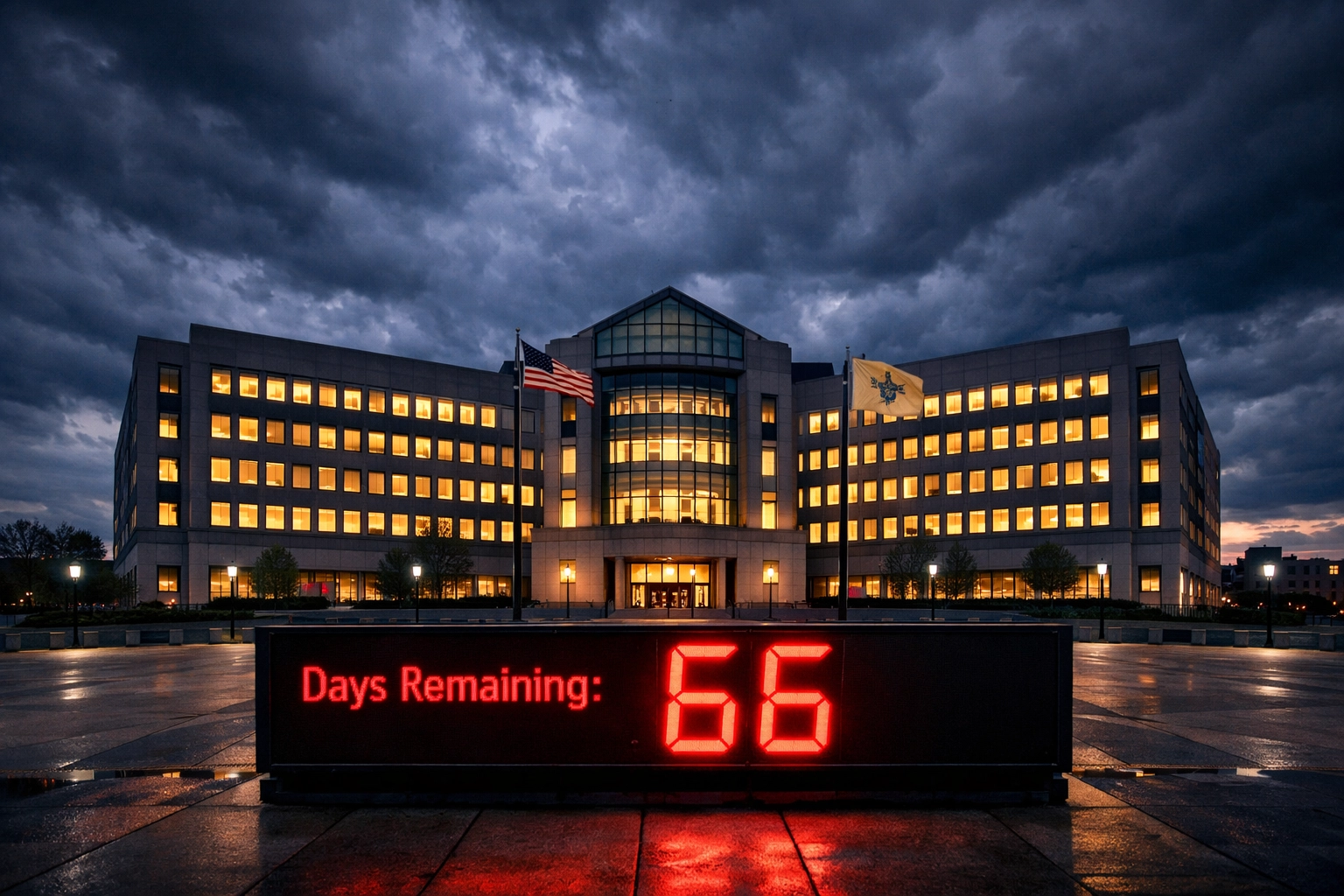
By February 2 (two weeks ago), agencies were supposed to flag rules whose non-adoption would threaten public health or essential operations. That window closed. If your specific environmental compliance issue didn't make that cut, you're operating in a regulatory fog until late April: while the clock on your remediation obligations, your lender's due diligence timeline, and your buyer's environmental contingencies keeps ticking.
Why "Wait and See" is Actually "Wait and Lose"
The traditional New Jersey property owner playbook has always included some version of "let's see what NJDEP does" or "we'll wait until the LSRP guidance gets clearer." In a normal regulatory environment, that's cautious. In the current freeze? It's self-sabotage.
Here's what we're seeing in real time:
The Pre-Transaction Panic: You're under contract, 60-day due diligence clock running. Your Phase II ESA flags soil contamination that needs NJDEP classification interpretation. Normally, your LSRP could seek informal guidance. Not now. You're making judgment calls with no regulatory backup and your buyer's attorney is already circling.
The Remediation Standstill: Your Remedial Action Workplan needed a Technical Rule waiver. You filed in January. It's sitting in limbo because NJDEP can't issue new approvals during the freeze. Your contractor's schedule is booked into Q3. Do you mobilize on an unapproved plan or lose your place in line?
The Financing Freeze-Out: Your lender wants a No Further Action letter before closing. Your LSRP can complete the remediation, but certain NJDEP sign-offs that would normally take 45 days are now question marks. Your construction loan rate lock expires in 60 days.
The math is brutal: 90-day freeze + normal NJDEP processing times = projects that could be 4-6 months behind schedule, even if you act today.
The LSRP Paradox
New Jersey's Licensed Site Remediation Professional program was supposed to streamline this exact situation. LSRPs have authority to make technical determinations without NJDEP approval for most cases. That's true: when the regulations are crystal clear.
But here's what the freeze exposed: a shocking number of property remediation decisions still rely on interpretive guidance, policy memos, and informal NJDEP consultations that aren't happening right now.
Your LSRP can still work. They can still file documents, conduct investigations, and oversee remediation. What they can't do is get real-time regulatory clarification when your site hits one of the dozens of gray areas in New Jersey's environmental compliance maze.

And if you're waiting to hire an LSRP until "things clear up"? You're compounding the problem. By the time the freeze lifts in late April, every property owner who delayed will be flooding the market with RFPs. Good luck getting a qualified LSRP to prioritize your project when they're already booked through summer.
What April 23 Won't Solve
Let's say you make it to April 23 when the regulatory freeze theoretically ends. You breathe a sigh of relief. NJDEP can process things again. Clarity returns.
Except it doesn't work that way.
State agencies don't flip a switch and return to normal operations. There's the backlog of everything that got frozen. There are all the clarifications and rulings that piled up during the pause. There's the avalanche of submissions from everyone who waited.
We're looking at May, June, maybe July before NJDEP processing times return to "normal" (which, let's be honest, was never fast to begin with). For property owners operating on transaction timelines measured in weeks, not quarters, that's the difference between a deal that closes and one that dies in due diligence.
The Strategic Response: Act in the Dark
Here's the counterintuitive move: this is actually the time to accelerate, not pause.
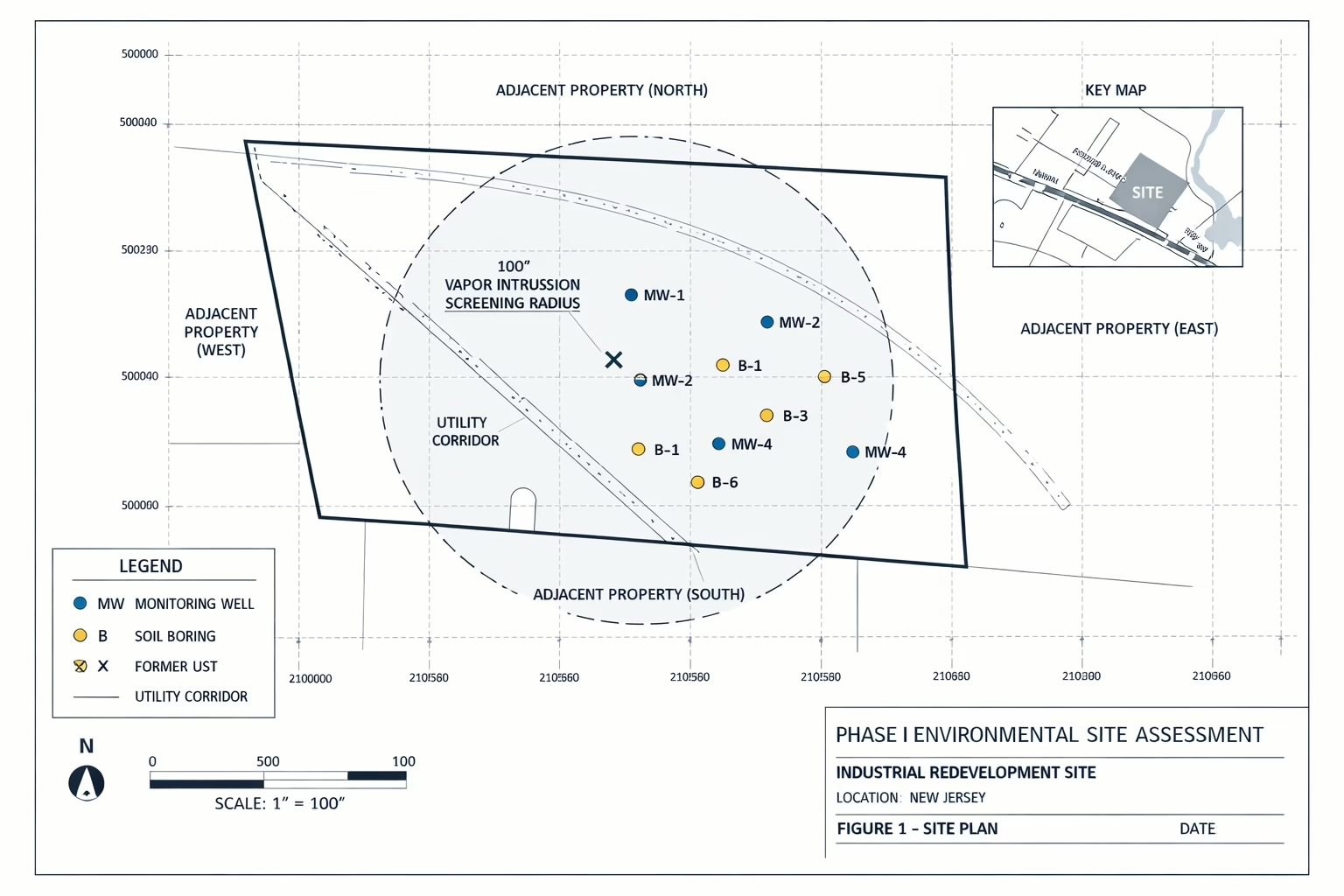
Get your Phase I and Phase II done now. Even if NJDEP guidance is frozen, environmental conditions aren't. Contamination doesn't pause for government moratoriums. The sooner you know what you're dealing with, the sooner you can plan around it.
Lock in your LSRP relationship immediately. The good ones are taking new clients right now because smart property owners already retained them. By May, you'll be competing with everyone who waited.
Develop parallel compliance paths. Can't get a Technical Rule waiver approval? Have your LSRP prepare a compliant alternative approach that doesn't require one. Can't get NJDEP to weigh in on a soil classification question? Use the most conservative interpretation and price that risk into your deal structure.
Document everything obsessively. When regulatory clarity is limited, your paper trail becomes your insurance policy. Detailed Phase I ESAs, comprehensive Phase II workplans, thorough remediation documentation: these become your evidence that you acted reasonably when formal guidance wasn't available.
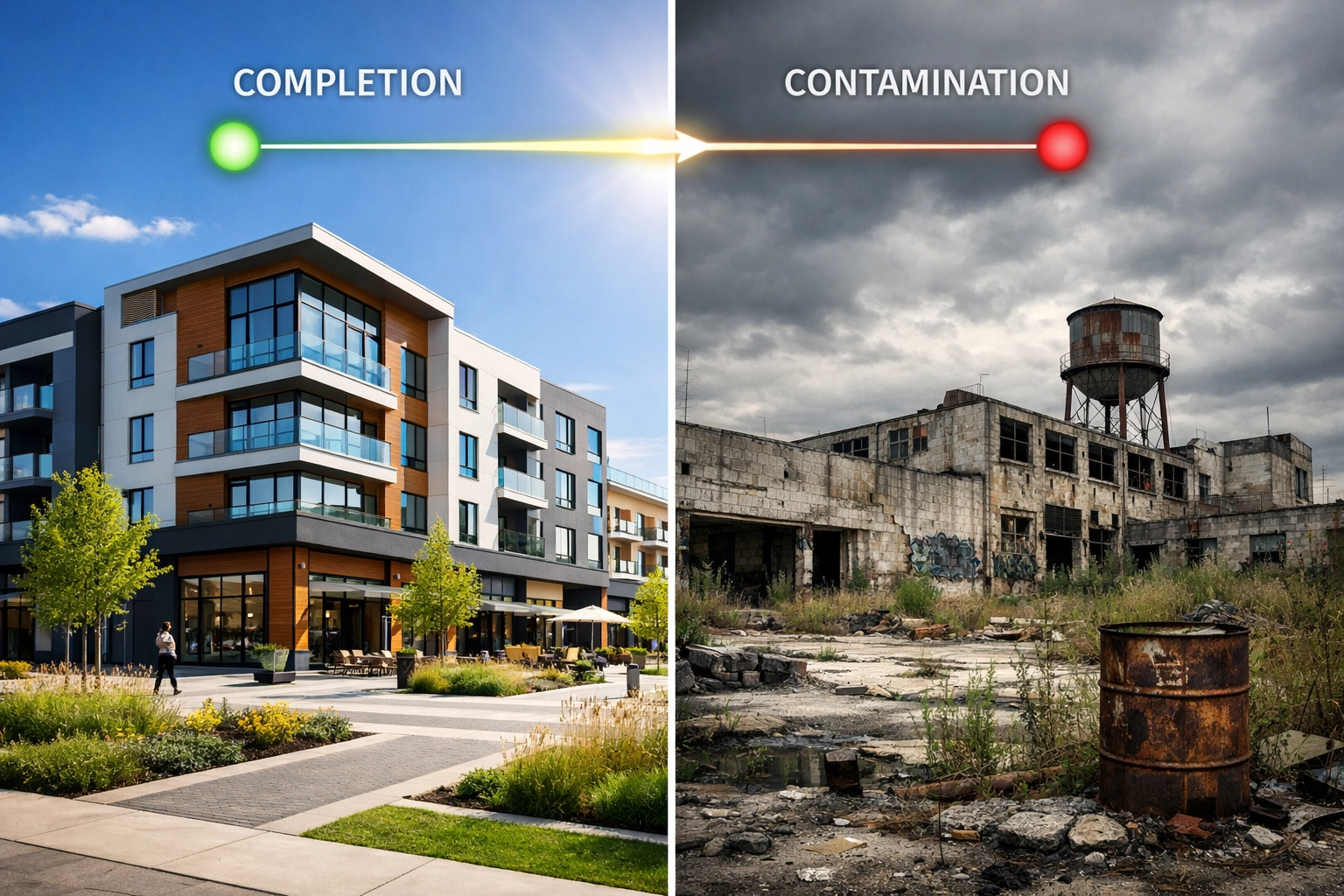
The property owners who are winning right now aren't the ones with regulatory certainty. They're the ones who built enough redundancy and documentation into their process that they can move forward without it.
The Hidden Opportunity
Here's what nobody's saying out loud: regulatory freezes create opportunity for sophisticated players.
While your competition sits on the sidelines waiting for clarity, you're locking in contractor pricing (before the spring rush), you're securing LSRP availability (before the May stampede), and you're getting ahead on due diligence (while sellers are still motivated).
Properties with environmental complications are actually trading at a discount right now because sellers know buyers are skittish about compliance uncertainty. If you've got the expertise and relationships to navigate environmental compliance in the dark, you're buying assets below market with problems you know how to solve.
We're working with clients right now who are using this exact window to acquire contaminated properties they couldn't have won in a competitive bidding process six months ago. The environmental issues haven't changed. The regulatory framework hasn't changed. What changed is everyone else's willingness to move forward without perfect information.
The April Reckoning
By mid-April, we'll see who played this right.
The property owners who waited will be scrambling: trying to find available LSRPs, dealing with contractors who are now booked solid, explaining to lenders why their environmental due diligence is 90 days behind schedule.
The ones who moved forward will be closing transactions, breaking ground on remediated sites, and positioning their next acquisitions while the market is still adjusting.
The Bottom Line
New Jersey environmental compliance has never rewarded hesitation, but the current regulatory freeze has made "wait and see" an actively destructive strategy.
Your site conditions won't improve while you wait for regulatory clarity. Your transaction timelines won't pause for NJDEP to catch up. Your competitors who are willing to operate with less-than-perfect information are already moving.
The regulatory cliff isn't something that happens in the future. It's happening right now. Every day you wait for conditions to improve is a day you're falling further behind the property owners who decided to act anyway.
Want to talk about how to navigate NJDEP compliance during regulatory uncertainty? That's literally what we do. Reach out and let's map out a strategy that doesn't require you to wait for the government to get its act together.
Because in New Jersey, if you're waiting for perfect regulatory conditions to take action, you're not being cautious( you're being reckless.)
Comprehensive site-civil, geotechnical, and environmental engineering & consulting in NY/NJ
www.envicongroup.com