You’re three weeks out from closing. Your equity is lined up, your site plans are drafted, and the excavator is on standby. Then, a memo from the lender’s environmental risk desk hits your inbox.
The bank isn't satisfied with your Phase I Environmental Site Assessment (ESA).
Your consultant told you it was "ASTM-compliant." They checked the boxes. They looked at the historical maps. They used the right font. But for the bank, "compliant" is the floor: and their risk officers are looking at the ceiling. Suddenly, your "compliant" report is a deal-killer, and you’re staring at a thirty-day delay and a five-figure re-sampling bill you didn't budget for.
At Envicon Group, we’ve spent 20 years ensuring our clients never have that conversation. We maintain a 100% lender approval rate. That isn't a marketing stat; it’s the result of writing reports that are bank-proof, not just technically accurate. We don't just deliver a document; we deliver a cleared path to the closing table.
The "ASTM-Compliant" Trap
Most environmental consultants work for the report. They follow the ASTM E1527-21 standard like a recipe book. If the standard says "identify Recognized Environmental Conditions (RECs)," they list them and walk away.
The problem? Banks don't lend money on a list of problems. They lend money on a list of solutions.
When a "Big Box" national firm hands you a defensive, 400-page report filled with boilerplate liability disclaimers, they are protecting themselves, not you. If that report identifies a REC but fails to quantify the risk or provide a clear remediation path, the lender sees an open-ended liability. To a bank, "unknown contamination" equals "unlimited cost."
An ASTM-compliant report tells the bank there might be a fire. A bank-proof report tells them where the extinguishers are, how much they cost, and that we’ve already talked to the fire marshal.

What Makes a Report "Bank-Proof"?
Lenders operate under strict FDIC and OCC guidelines. They aren't just looking at the dirt; they are looking at their collateral value. If a report is vague, the lender’s risk desk will default to the most conservative (and expensive) interpretation.
A bank-proof report requires three things that standard ESA providers often skip:
- Reliance and Liability Language: Lenders need to know they can legally rely on the report. If your consultant’s "Standard Terms" cap their liability at the cost of the report ($2,500), no bank in New York or New Jersey is going to accept that for a $10M construction loan.
- Quantified Risk: If we find a REC, we don't just flag it. We use our engineering background to explain the actual impact. We provide site plans that show exactly where the issues are and: more importantly: where they aren't.
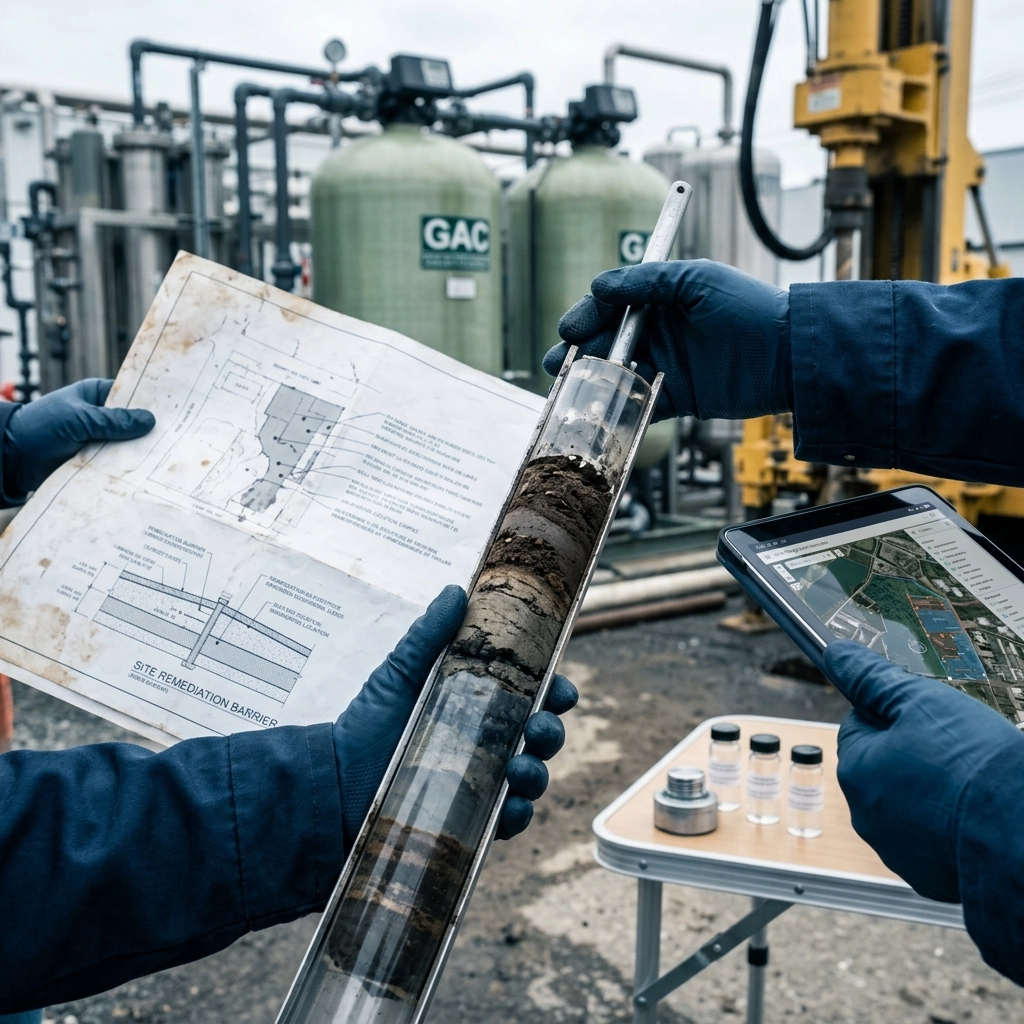
- A Path to Closure: We include specific engineering visuals, such as utility infrastructure maps or remediation barrier plans, that show the lender exactly how the site will be made buildable.

Caption: A bank-proof report includes detailed engineering site plans that overlay utility infrastructure with proposed remediation barriers, giving lenders a visual roadmap to project completion.
We Sit at the Table with the Regulators
One reason Envicon has a 100% approval rate is that we don't guess what a regulator will say. We already know.
Whether it’s the NYC OER (Office of Environmental Remediation), the NYSDEC, or the NJDEP, we sit at the table with the people who review your submittals. When we submit a Phase II investigation or a Remedial Action Plan (RAP), it’s built on twenty years of local relationships.
Lenders trust us because they know that if Envicon says a site can be cleared, we have the regulatory fluency to make it happen. We don't hide behind a queue or a portal. We pick up the phone. For a developer in Hudson County or Brooklyn, that speed is the difference between hitting a construction window and paying carry costs through a North New York winter.
Engineering vs. Observation: The Envicon Edge
Most firms that perform Phase I ESAs are "observation-based." They hire junior staff to walk the site, take photos, and plug data into a template.
Envicon is "engineering-led." We look at a site through the lens of civil and geotechnical reality. When we’re on-site at 7:00 AM, we aren't just looking for staining on the concrete; we’re looking at the grading, the drainage, and how the soil management plan will integrate with your foundation pour.

If your environmental consultant doesn't understand how a SWPPP (Stormwater Pollution Prevention Plan) impacts your remediation timeline, you’re going to have a bad time at the bank. We integrate these services because they are inseparable in the real world. By providing a unified engineering and environmental front, we eliminate the gaps that lender risk officers love to exploit.
Why Your "Big Box" Consultant is Costing You Money
The national firms have a pitch: "We have offices in 50 states."
That’s great if you’re buying a strip mall in Nebraska. It’s a liability if you’re redeveloping a brownfield in Long Island City or a former industrial site in Jersey City. Those firms treat regulatory coordination like a black box. You don't know who is talking to your reviewer, and you’re often paying for a "Principal" who hasn't stepped foot on a job site in a decade.
The Envicon Difference:
- Direct Access: You talk to the PE leading your project, not an account manager.
- Zero Scope Creep: We don't low-ball the Phase I just to hit you with five change orders during the Phase II. We price for the outcome, not the activity.
- Field-First Mentality: We use our own sampling equipment and technology. We don't wait for subcontractors to show up; we drive the schedule.

Caption: Precision in the field: Our teams use advanced soil sampling equipment and real-time data tracking to ensure that every bank-proof report is backed by defensible, high-resolution data.
Selling Trust, Not Reports
At the end of the day, a bank approves a loan because they trust the developer and the consultants standing behind them. They want to know that if things get complicated: and on NJ/NYC redevelopment sites, they always do: the team in place has the integrity and the technical chops to fix it.
We don’t just sell reports. We sell cleared paths. We sell the peace of mind that comes from knowing your environmental due diligence is a bridge to your project, not a wall. When we put our seal on a document, we are telling the lender that this site is a viable, buildable, and compliant asset.
The Takeaway
An ASTM-compliant report is a commodity. A bank-proof report is a strategic asset. If you are tired of defensive writing, slow turnarounds, and "surprises" at the closing table, it’s time to change how you handle environmental risk.
The Envicon Formula for 100% Approval:
- Quantify the unknown: Don't just list RECs; provide the engineering solution.
- Own the regulatory relationship: Know the reviewer by name, not just by agency.
- Integrate the disciplines: Ensure your environmental findings align with your civil and site engineering reality.
Stop letting "standard" reports stall your projects. Let's build a bank-proof strategy for your next acquisition.
Contact Envicon Group Today to review your current portfolio or discuss an upcoming project. We don't just find the problems( we engineer the way out.)
Leave a Reply