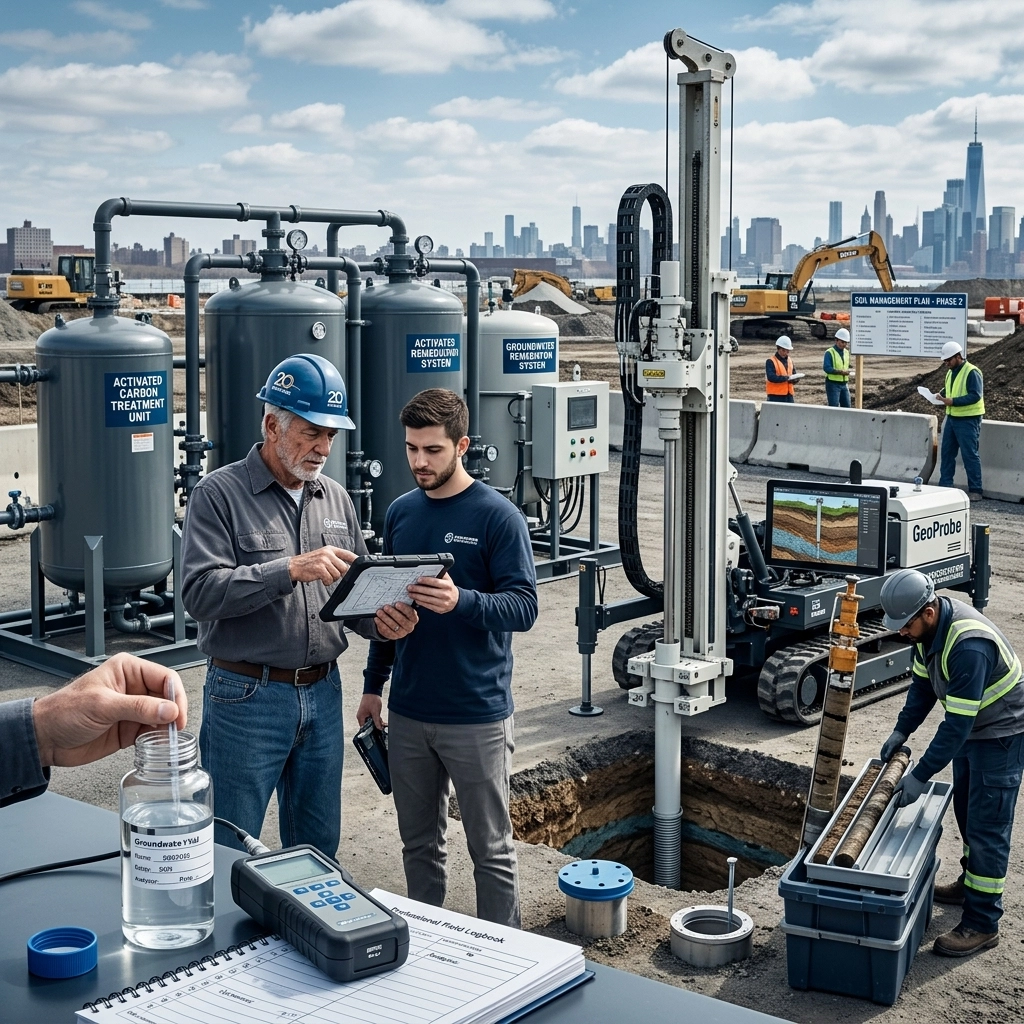
If you’ve spent any time on a brownfield redevelopment site in North Jersey or the five boroughs, you know that the moment an excavator bucket hits the dirt, the clock starts ticking: and so does the meter. Soil and groundwater management isn't just a regulatory hurdle; it’s often the single largest variable in your construction budget.
At Envicon Group, we see it all the time: a developer gets a Phase II report, sees some elevated lead or petroleum hydrocarbons, and panics. They assume every cubic yard of dirt has to go to a high-priced landfill. But here’s the truth: with a precise Soil and Groundwater Management Plan (SGMP), you aren't just checking a box for the NYSDEC or NJDEP: you’re protecting your bottom line.
Why the "Handling Plan" is Your Most Important Document
A Soil Management Plan (SMP) is your playbook. It tells your site super, your excavation sub, and your environmental oversight team exactly what to do when they find something unexpected. Without one, a project can grind to a halt the moment a "pocket" of impacted soil is discovered.
We don't write 300-page reports that sit in a trailer gathering dust. We create actionable handling plans that focus on:
- Material Characterization: Segmenting the site into zones based on existing data. Not all dirt is created equal. If 70% of your site meets "Residential" or "Non-Refusal" standards, why pay to dispose of it as "Hazardous"?
- Field Screening Protocols: Using PIDs (Photoionization Detectors) and visual/olfactory cues to make real-time decisions.
- Stockpile Management: Procedures for staging material on liners, covering it to prevent runoff, and keeping it separate from clean fill.
Groundwater: More Than Just "Pumping It Out"
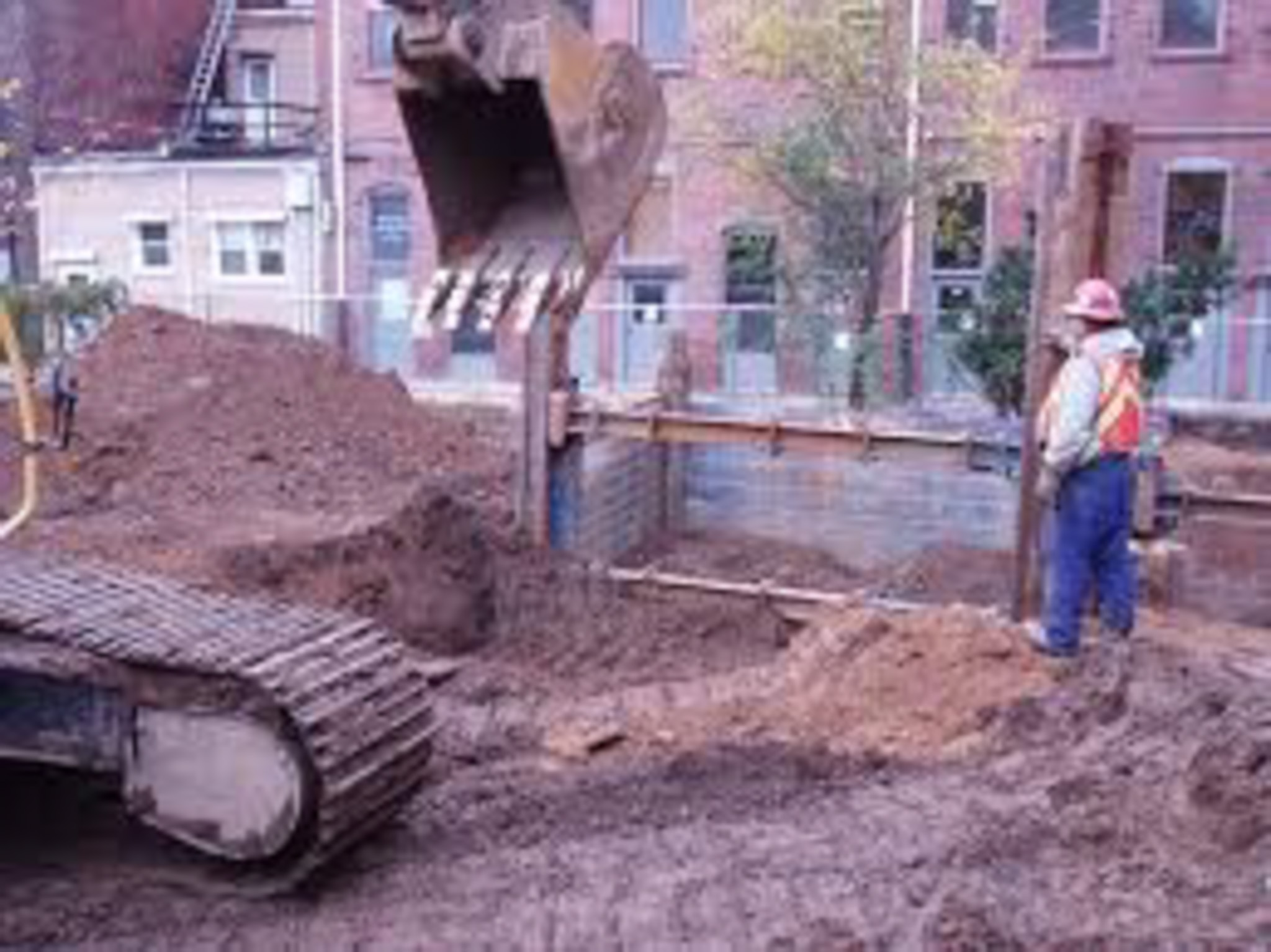
If you’re digging deep enough for a foundation or a utility trench in Jersey City or Long Island City, you’re going to hit water. Groundwater sampling and management are where many projects run into trouble with local authorities.
You can’t just pump groundwater into the nearest storm drain. Whether you are dealing with NYSDEC or NJDEP jurisdictions, the discharge of construction dewatering fluids requires a permit: often a temporary discharge permit from the local utility (like NYC DEP) or a state-level SPDES/NJPDES permit.
Treatment Strategies for Dewatering
When groundwater is contaminated, you need an on-site treatment train. This usually involves:
- Sediment Tanks (Frac Tanks): Letting the heavy solids settle out.
- Bag Filters: Removing finer particulates.
- Activated Carbon (GAC): Scrubbing out dissolved organic contaminants.
We focus on right-sizing these systems. Over-engineering a treatment system is a waste of money; under-engineering it leads to permit violations and work stoppages. We find the middle ground that keeps you compliant and moving.
Disposal vs. Beneficial Reuse: The Cost-Saving Pivot
The most expensive way to handle soil is to truck it straight to a landfill. At Envicon, we look for every opportunity for Beneficial Reuse.
In New York, under 6 NYCRR Part 360, there are specific pathways to reuse soil as fill, provided it meets certain chemical and physical criteria. Similarly, New Jersey’s "Linear Construction" and "Fill Material" guidance documents provide avenues for keeping soil out of the waste stream.
Waste Profiling
To get a facility to accept your soil, you need a waste profile. This requires specific laboratory analysis: often dictated by the receiving facility, not just the state. We handle the coordination between the lab, the site, and the disposal facility to ensure that when the trucks show up, they have the paperwork they need to dump and return.
Navigating the NYSDEC and NJDEP Minefield
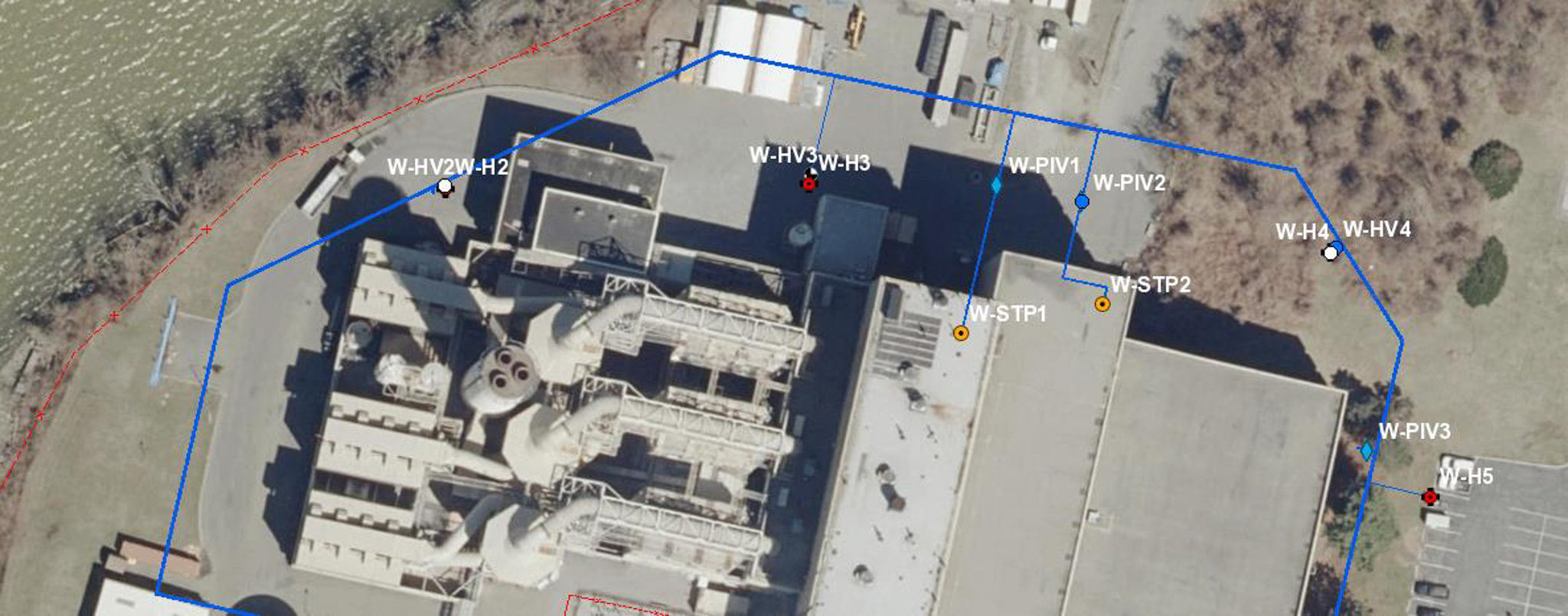
Regulatory agencies don't want to be your enemy, but they do want total transparency. In brownfield redevelopment, the "Discovery of Unanticipated Conditions" is a common clause. If your team finds an underground storage tank (UST) that wasn't on the maps, or a plume of chlorinated solvents, how you react in the first four hours determines the next four months of your project.
We believe in "Regulator-Facing" consulting. That means we don't hide behind emails. We know the reviewers. We understand what the NJDEP is looking for in a Remedial Action Report (RAR). By delivering clean, technically sound documentation the first time, we avoid the endless "Request for Information" (RFI) loops that plague bigger, slower firms.
"A project is only as fast as its slowest permit. In the world of soil and water, that's usually the management plan." : Jason Pancoast, CEO, Envicon Group

The Envicon Advantage: Why We’re Different
When you hire a national "Big Box" environmental firm, you’re often paying for a massive overhead structure. You get a senior partner for the pitch, and then a junior staffer: who might be on their first job: actually managing your site oversight.
At Envicon Group, we take a different approach:
- Direct Leadership: You have access to senior experts who have spent 20 years in the dirt. We make decisions in the field, not three days later from a corporate office.
- Precision over Volume: We don't sell 500-page reports designed to protect us (the "CYA" approach). We sell cleared paths. Our documentation is concise, accurate, and designed to move your project to the next milestone.
- Local Fluency: We live and work in the NYC/NJ area. We understand the specific soil types of the Meadowlands, the bedrock of Manhattan, and the regulatory quirks of the OER and NYC Parks.
Practical Steps for Your Next Project
If you are preparing for excavation, keep these three action items in mind:
- Review Your Data Early: Don't wait until the excavators are mobilized to look at your soil boring results. A proactive waste characterization can save weeks of delays.
- Define Your Reuse Goals: Ask your consultant, "Is this soil eligible for beneficial reuse?" If they don't have a clear answer, they haven't looked at the regs closely enough.
- Coordinate the Trades: Your civil engineer, environmental consultant, and site contractor must be in sync. The grading and drainage plan needs to match the Soil Management Plan.
Summary: Turning Liabilities into Assets
Managing soil and groundwater is about risk mitigation. A contaminated site is a liability until the moment it’s managed, treated, or disposed of correctly: then, it becomes a buildable asset.
Envicon Group specializes in that transformation. We provide the technical precision of a high-end engineering firm with the urgency and "get it done" attitude of a site contractor. We aren't just here to tell you what's in the ground; we're here to help you get it out of the way so you can build.
Ready to clear the path for your next project?
Contact the Envicon Group team today to discuss your soil and groundwater management strategy. We don't just deliver reports: we deliver outcomes.
Key Takeaways:
- SMPs are essential: They prevent work stoppages and provide a clear roadmap for site personnel.
- Groundwater requires permits: Don't overlook the complexity of dewatering and discharge.
- Reuse saves money: Waste profiling and beneficial reuse strategies can significantly reduce disposal costs.
- Local expertise matters: NYSDEC and NJDEP regulations require a nuanced, relationship-based approach.
About Envicon Group:
We are a New York and New Jersey-based professional services firm specializing in environmental consulting, civil engineering, and construction oversight. For 20 years, we have helped developers, architects, and industrial clients navigate the complexities of remediation and redevelopment.
Leave a Reply