It’s 7:00 AM on a Tuesday. You’re on-site, the concrete trucks are scheduled for next week, and your lender just called. They’ve been reviewing the latest round of indoor air data, and suddenly, your "clean" site isn’t so clean. They’re seeing hits of Trichloroethylene (TCE) or Tetrachloroethylene (PCE) that weren't there in the initial Phase II.
Just like that, your schedule is shot.
This is the reality of Vapor Intrusion (VI). In the NY/NJ development world, VI is the ultimate silent project killer. It doesn’t look like much: usually just invisible gases migrating from contaminated groundwater or soil into your building’s envelope: but it has the power to stall a closing, trigger mandatory public notifications, and add six figures in unbudgeted mitigation costs before you’ve even finished the foundation.
At Envicon Group, we don’t just write reports about these risks; we clear the paths to resolve them. If you’re dealing with a project in 2026, the rules of the game have changed, and the "wait and see" approach is a one-way ticket to a stalled site.
Why Vapor Intrusion Stalls Projects in 2026
Vapor intrusion isn't a new concept, but the regulatory scrutiny on it has reached a fever pitch. In 2026, the threshold for what constitutes a "safe" level of indoor air has dropped, while the requirements for long-term monitoring have skyrocketed.
When you hire a big national firm, they often treat VI as a checkbox. They’ll run a few soil vapor samples, compare them to a table, and tell you that you might have a problem. They leave the "what next" up to you. Meanwhile, your carrying costs are ticking up every week the project sits in a regulatory queue.
The business impact is immediate:
- Financing Hurdles: Lenders are increasingly wary of "open" VI cases. Without a clear path to a Response Action Outcome (RAO) or a Certificate of Completion (COC), the money stops flowing.
- Construction Delays: You can’t pour a slab if the NYSDEC or NJDEP hasn't signed off on your mitigation design.
- Market Timing: If you miss your window because of a rejected submittal, you’re not just paying for a new report: you’re losing market position.

The New NJDEP Reality: RAP, IANA, and Public Scrutiny
If you’re developing in New Jersey, the regulatory landscape shifted significantly in early 2026. Vapor intrusion is no longer just a "media" concern; it is now a formal part of the Remedial Action Permit (RAP) process.
The NJDEP now treats indoor air as its own media component, alongside soil and groundwater. This means that if your site has VI issues, you aren't just managing a one-time cleanup. You are managing a perpetual permit that requires financial assurance, biennial certifications, and: most critically: the newly implemented Indoor Air Notification Area (IANA).
What is an IANA?
Think of an IANA as a Classification Exception Area (CEA) for air. If indoor air standards are exceeded and you need an engineering control (like a sub-slab depressurization system), your site will be mapped on a public GIS layer. You are now required to notify the municipality, the health department, and nearby property owners that your building requires ongoing mitigation to be safe for occupants.
This is where the "silent killer" gets loud. Without proactive management and a technically sharp LSRP who knows how to coordinate directly with the department, an IANA can become a PR nightmare and a massive liability for your exit strategy.

The NYC OER E-Designation Trap
Across the river in NYC, the Office of Environmental Remediation (OER) and the NYSDEC have their own set of teeth. If your site has an E-Designation for hazardous materials, vapor intrusion is almost certainly on the menu.
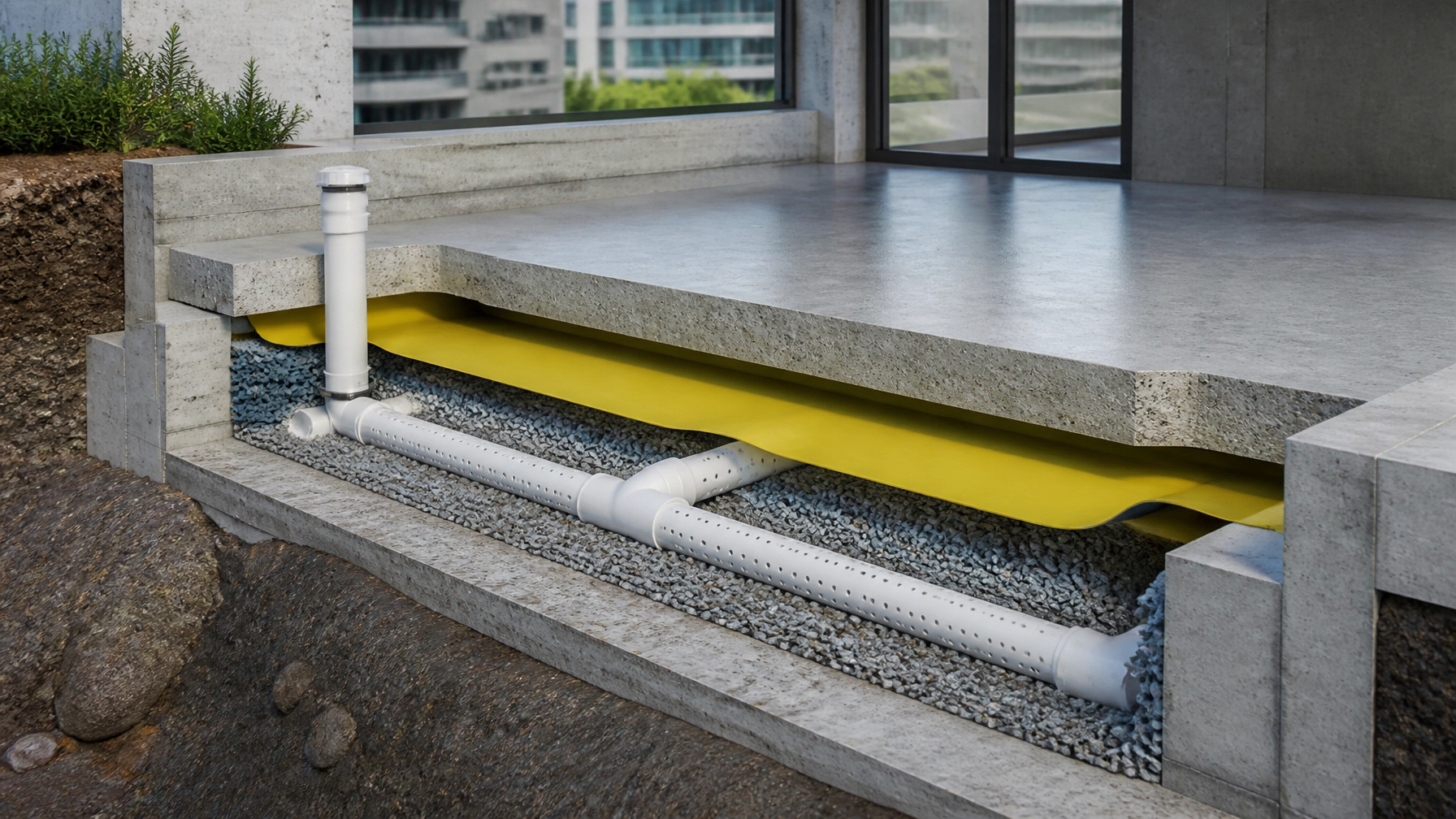
The trap many developers fall into is thinking that a standard vapor barrier is enough. In 2026, OER is looking for more than just a sheet of plastic. They want engineered Sub-Slab Depressurization Systems (SSDS) with active telemetry, pressure field extension testing, and specific performance criteria that must be met before they issue a Notice of Satisfaction.
At national firms, regulatory coordination is a black box. You don’t know who is talking to your reviewer or why your submittal is sitting in a pile. At Envicon, we sit at the table with OER and NYSDEC. We know the reviewers by name because alignment is the only way projects actually get done in the five boroughs.
Proactive Management: Design It Right the First Time
The most expensive mistake you can make is treating vapor mitigation as a retrofit. Designing an SSDS after the foundation is in place is like trying to fix the plumbing after you’ve tiled the bathroom.
Our approach is field-first and data-driven. We use high-resolution site characterization to map the plume before the first excavator hits the dirt.
- Pre-emptive Testing: We don’t just follow the "minimum requirements." We sample where it matters: near sumps, elevator pits, and utility penetrations.
- Integrated Design: Our civil and environmental teams work together. We don’t just give you a "report"; we give you a remedial design that integrates with your architectural plans, ensuring the mitigation system doesn't interfere with your usable space or your budget.
- Real-Time Visibility: While big firms send you a monthly PDF that’s already outdated, Envicon provides real-time project reporting dashboards. You see exactly where we are with the regulators, the lab results, and the field activity as it happens.

The Envicon Difference: Solving, Not Reporting
Most consultants sell you a document. We sell a cleared path.
When you hire a large national firm, you get a cookie-cutter playbook. They’ll apply a strategy designed for a warehouse in Ohio to your high-rise in Long Island City. It doesn't work. The NYC and NJ markets are too complex, the regulators are too specific, and the stakes are too high.
At Envicon, you get:
- Hands-on Leadership: The person who pitched you the project is the person answering your 7:00 AM call. No junior staff hand-offs.
- Technical Precision: We don’t write defensive, bloated reports. We produce documentation that holds up under scrutiny and moves the project to the next milestone.
- Agency Fluency: We bring 20 years of direct relationships with OER, NYSDEC, and NJDEP. We don’t wait in the queue; we drive the conversation.
Summary and Takeaways
Vapor intrusion is a manageable risk, but only if you stop treating it as an afterthought. To keep your project moving in 2026:
- Acknowledge the 2026 Rules: NJ’s new IANA and RAP requirements mean VI is now a permanent part of your site’s legal and financial profile.
- Avoid the "Wait and See": Early characterization and proactive design are significantly cheaper than retrofitting a failed system.
- Demand Transparency: If your consultant can’t tell you who your regulator's reviewer is or give you real-time data, you’re at risk.
Don't let invisible gases kill your deal. If you're looking at a site with potential vapor issues, or if your current consultant is spinning their wheels with the NJDEP or OER, give us a call. We’ll get on-site, get the data, and give you the truth: no fluff, just a path to building.
Ready to clear the path for your next project? Contact Envicon Group today.
Leave a Reply