The regulatory landscape for New York developers just shifted. If you’re operating in the five boroughs or across the state, the "check-the-box" approach to Environmental Justice (EJ) is officially dead.
With the full implementation of the 2024 EJ Siting Law (S8830/A2103), environmental justice is no longer a peripheral consideration or a paragraph in a report, it is a gatekeeper for your project’s survival. The New York State Department of Environmental Conservation (NYSDEC) has updated its Environmental Assessment Forms (EAFs) to include aggressive proximity probes that can trigger mandatory burden reports and, in some cases, lead to outright permit denial.
At Envicon, we don’t just deliver reports; we clear paths. This guide breaks down what you need to know about the new "Disadvantaged Community" (DAC) definitions and how to navigate the EAF proximity questions without stalling your schedule.
The 2024 Regulatory Shift: From Disclosure to Denial
For years, EJ was largely about public participation, ensuring the community was "informed." The 2024 law, which amends the Environmental Conservation Law (ECL) § 70-0118, changes the game.
Now, for any project that is not classified as "minor," the NYSDEC is required to evaluate whether a proposed action will cause or increase a disproportionate pollution burden on a Disadvantaged Community.
"No permit may be approved or renewed if it would cause or contribute, directly or indirectly, more than a de minimis amount of pollution to a disproportionate or inequitable burden on a DAC."
This isn't just about air emissions or hazardous waste. It covers noise, odor, wastewater, and even traffic-related pollution. If your project is in or near a DAC, the burden of proof has shifted to you, the applicant.
Defining the "Disadvantaged Community" (DAC)
The state doesn't leave the definition of a DAC up for debate. Under the Climate Leadership and Community Protection Act (CLCPA), the Climate Justice Working Group has established specific criteria based on 45 environmental, health, and socioeconomic indicators.
These include:
- Environmental Burdens: Proximity to contaminated sites, wastewater treatment plants, and high-traffic corridors.
- Public Health: Rates of asthma, heart disease, and low birth weight.
- Socioeconomics: Household income levels, unemployment rates, and educational attainment.
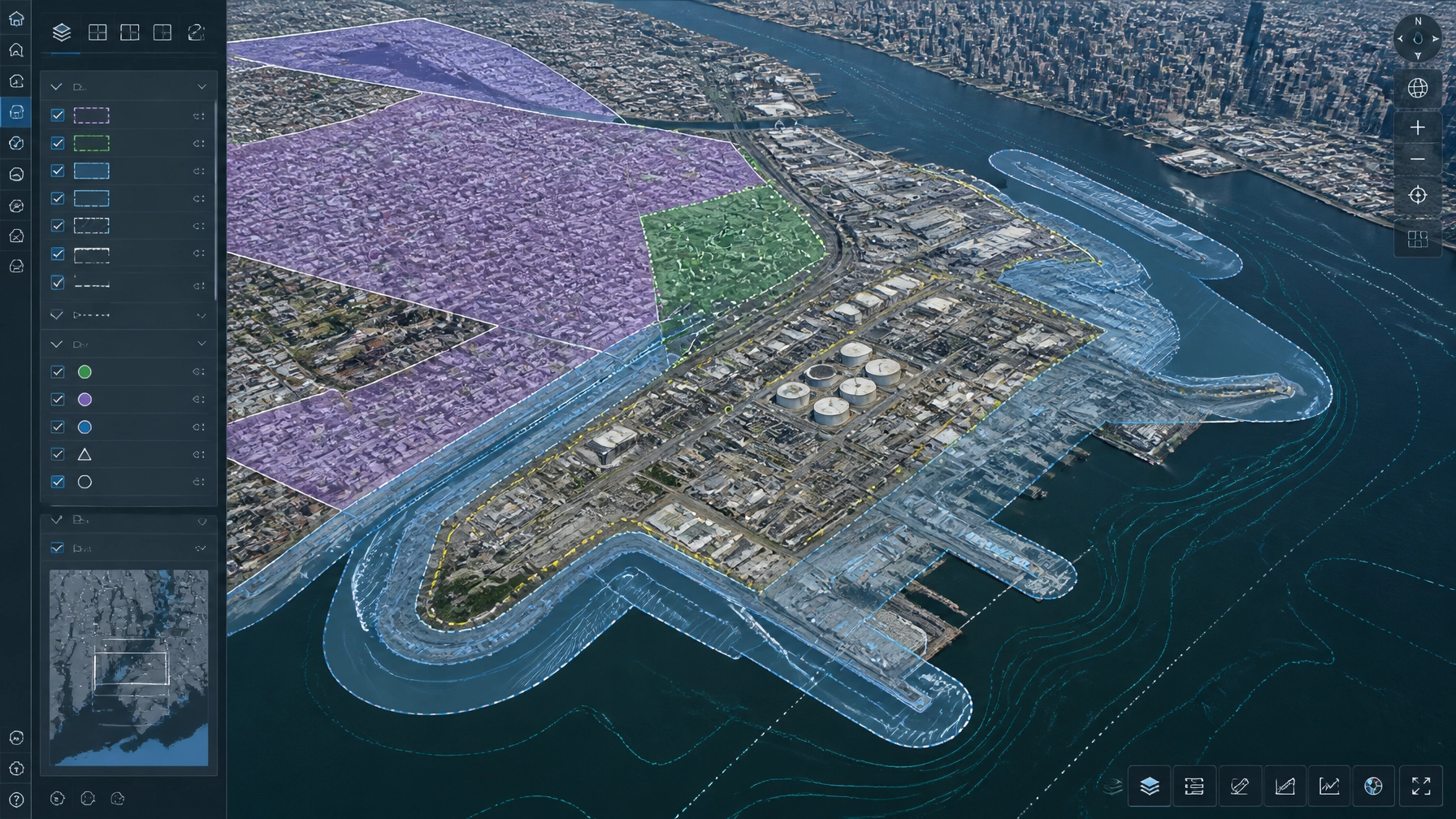
The result is a highly specific DAC Map that covers significant portions of NYC and industrial corridors in New Jersey-adjacent regions. If your site falls within these shaded zones, or even near them, your SEQR process just got more complex.

The EAF Proximity Probe: The Half-Mile Rule
The NYSDEC has integrated this law directly into the State Environmental Quality Review (SEQR) process. The updated Environmental Assessment Forms now include a "proximity probe" that every developer needs to answer accurately:
- Is this project located within, or within a half-mile of, a disadvantaged community?
- If "No," could impacts from the project affect a disadvantaged community?
A "Yes" to either of these triggers a requirement to identify every potential pollution impact: from soil management during construction to long-term operational emissions. Unlike a national firm that might rely on automated software to flag these, Envicon’s team uses a field-first approach. We know the regulators at the NYSDEC and NYC OER by name, and we understand how they interpret "de minimis" impacts in specific neighborhoods.
Why Your Current Consultant Might Be a Liability
Large national firms often apply a cookie-cutter playbook to NYC and NJ projects. They deliver bloated reports designed to protect the consultant, not to move your project forward. In the context of the EJ Siting Law, this defensive writing can be fatal.
If your consultant is simply "checking the box" on the EAF without a deep understanding of the Existing Burden Report requirements, you risk:
- Permit Denial: If the DEC determines the pollution increase is more than de minimis, they have the legal authority to deny your permit.
- Schedule Creep: Re-sampling and re-modeling to address EJ concerns after a submittal has been rejected can add months to your timeline.
- Lender Friction: Banks are increasingly sensitive to EJ risks. A flagged report can halt financing until a clear path to compliance is demonstrated.
At Envicon, we provide strategic compliance and permitting that anticipates these hurdles. We don’t wait for the regulator to flag an issue; we identify the burden risks during due diligence and design mitigation strategies into the project from day one.

Managing the Impact: A Practical Action Plan
If your project triggers the DAC proximity probe, you need a technical partner who can speak the language of both the developer and the regulator. Here is how we manage EJ impacts:
1. GIS-Led Site Characterization
We use advanced GIS mapping to overlay your project footprint with the latest CLCPA DAC boundaries and existing pollution sources. This allows us to see what the regulator sees before the EAF is even filed.
2. Tailored Mitigation Strategies
If a project shows potential for disproportionate impact, we design targeted remedial strategies or civil engineering solutions: like advanced stormwater management or electrified construction equipment: to keep pollution increases below the de minimis threshold.
3. Direct Agency Coordination
Alignment is how projects get done. We work directly with architects, attorneys, and agency reviewers to ensure the EJ narrative in your EIS or EAF is technically sound and regulator-ready.
4. Real-Time Transparency
Through our digital project management infrastructure, you have full visibility into the status of your EJ assessments and regulatory submittals. You’re never in the dark about where your project stands.

Summary & Key Takeaways
The 2024 EJ Siting Law is a major shift for development in New York. Success now requires more than technical engineering; it requires an "insider" understanding of how environmental justice criteria are applied in the field.
- The Half-Mile Rule: Any project within 0.5 miles of a DAC triggers heightened scrutiny.
- De Minimis is the Standard: Permits can be denied if the project adds any non-negligible pollution to an already burdened community.
- Field-First Knowledge Wins: You need a firm that knows the NYC/NJ regulatory landscape daily, not a regional satellite office.
Every week of delay is a week of carrying costs. Don't let your project sit in a queue while a junior staffer at a big-box firm figures out the new EAF questions.
Envicon Group specializes in turning complex, environmentally challenged sites into clean, buildable assets. We bring 20 years of direct agency relationships and a technology-first approach to ensure your project stays on schedule and under budget.
Ready to clear the path for your next project? Contact Envicon Group today for a direct consultation with our licensed professionals.

Call to Action
- Check your property risk: https://envicongroup.com/risk-screener?utm_source=website&utm_medium=nav_megamenu&utm_campaign=resources&utm_content=risk-screener
- Visit our website: https://envicongroup.com
- Call now: (917) 764-2171
Leave a Reply