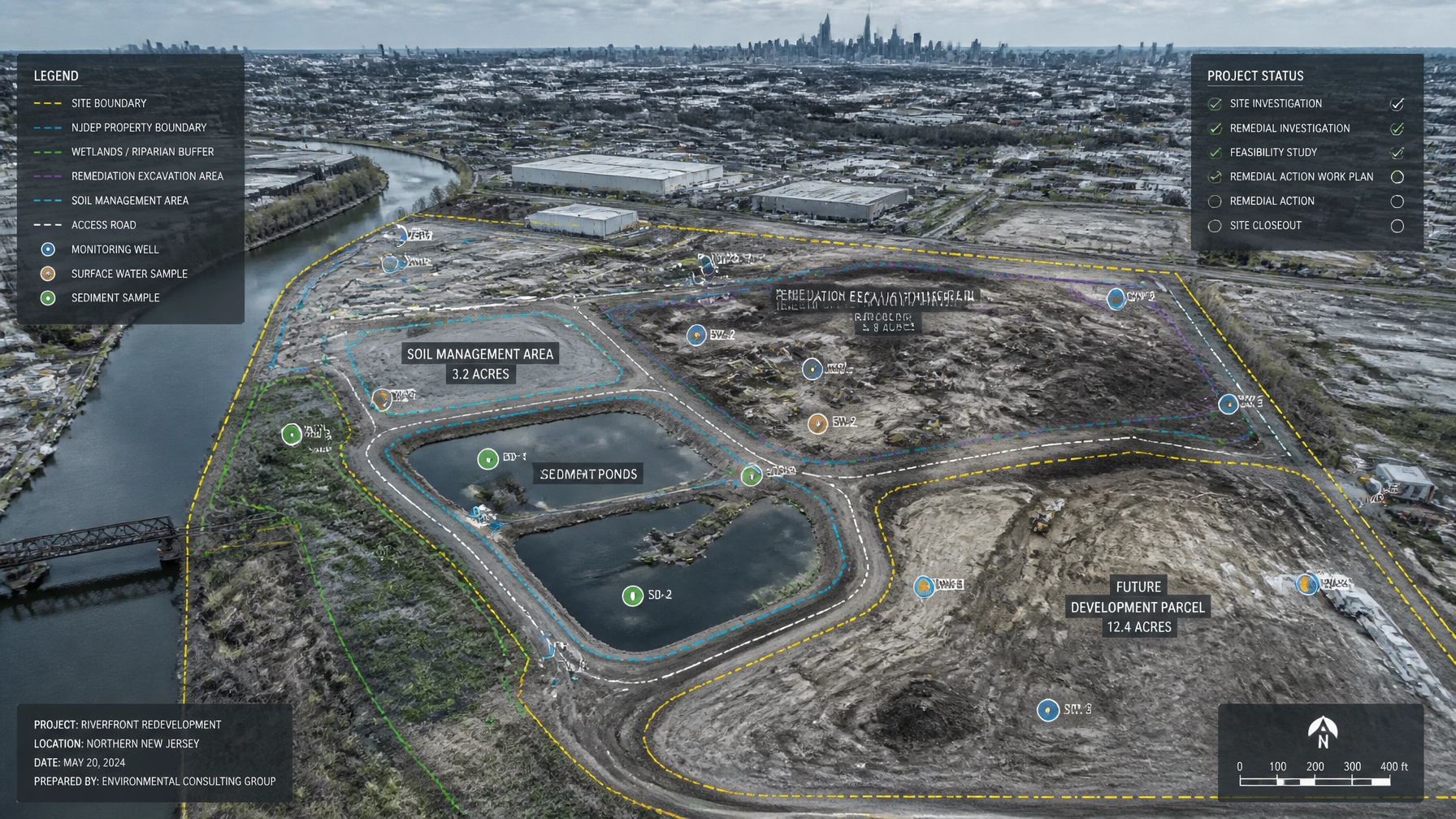
If you are developing property in New Jersey, you already know that the regulatory landscape doesn't just change: it shifts beneath your feet. The latest seismic shift is the NJ DEP’s Resilient Environments and Landscapes (REAL) rule.
The clock is ticking. On June 1, 2026, the NJ DEP proposed an extension of the "legacy" transition period to July 20, 2027. While that extra year might feel like a breather, it is actually a high-stakes window. If your permit application isn’t submitted and deemed "technically complete" by that date, your project will be forced to comply with the new REAL standards.
In the world of NJ development, "compliance" with REAL means higher elevations, restricted buildable areas, and significantly increased construction costs. At Envicon Group, we don’t just sell reports; we sell cleared paths. This guide breaks down why that July 2027 date is the most important deadline on your calendar.
What is the NJ REAL Rule?
The REAL rule is the NJ DEP’s comprehensive response to climate change, specifically targeting sea-level rise, storm surge, and increased precipitation. It isn’t just a minor update; it’s a fundamental rewriting of how New Jersey handles land use, flood hazard areas, and coastal zones.
The rule introduces several critical changes:
- Sea-Level Rise Projections: Adjusting flood hazard areas based on a projected 5-foot rise in sea level by 2100.
- Inundation Risk Zones (IRZ): Creating new zones where specific development will be restricted or require enhanced permitting.
- Increased Flood Elevations: Requiring certain coastal constructions to be elevated an additional 4 feet above current standards.
- Expanded Flood Maps: Bringing more inland properties into regulated flood hazard areas that were previously considered "dry."
You can view the full scope of these changes on the NJ DEP REAL official page.

The July 20, 2027 "Legacy" Window
The "Legacy" provision is your golden ticket. It allows qualifying projects to be reviewed under the rules that were in effect before January 20, 2026. This is massive. It means you can potentially avoid the 4-foot elevation increase and the restrictive IRZ requirements that could otherwise make your project financially unfeasible.
However, locking in this legacy status isn't as simple as dropping an envelope in the mail. To qualify, your application must meet three strict criteria before the July 20, 2027 deadline:
- Submission: The application must be physically or digitally received by the DEP.
- Completeness: The application must be deemed both administratively and technically complete.
- Fees: All required fees must be paid in full.
If your application is missing a single soil boring or a required signature, the DEP can deem it incomplete. If that happens and the clock strikes midnight on July 20, 2027, your legacy status evaporates. You are then back to square one, redesigning your entire site to meet the new, more expensive REAL standards.
The High Cost of Missing the Deadline
Why is everyone in a rush? Because the "New Reality" post-July 2027 is expensive. We aren't talking about a few extra hours of paperwork; we are talking about structural changes to your project’s ROI.
1. Elevation and Construction Costs
Under the REAL rules, many coastal projects will need to be elevated significantly higher than current FEMA maps require. An extra 4 feet of elevation doesn't just mean more stairs; it means more fill, more concrete, more specialized foundation work, and potentially losing a floor of buildable space due to local height restrictions.
2. The Inundation Risk Zone (IRZ)
The IRZ is a new regulatory layer. If your site falls within this zone, you may face stricter limits on the type of development allowed. Some residential or high-occupancy uses may be restricted, forcing you to pivot to less profitable site uses.
3. Redesign and Carrying Costs
If you miss the legacy window, your existing site plans: the ones you’ve spent months and thousands of dollars on: become obsolete. You’ll be paying your architects and engineers to do the work twice. Meanwhile, your land carrying costs continue to stack up as your project sits in a redesign loop.

Why "Submission" is Not the Finish Line
At Envicon, we see this mistake often: a developer hires a large national firm that submits a "placeholder" application just to beat a deadline. This is a dangerous gamble.
The NJ DEP is under no obligation to help you fix a sloppy application after the deadline has passed. If your submittal is rejected for technical reasons, you lose your legacy status. This is why having a firm that understands the NJDEP LSRP Guide and the intricacies of the Compliance Permit Matrix is critical.
Large firms often deliver bloated, defensive reports designed to protect the consultant’s liability rather than move your project forward. They hand you a report and leave you to figure out what it means. At Envicon, we provide the technical heavy lifting: soil borings, groundwater analysis, and vapor mitigation: to ensure your application is "bulletproof" the first time it hits the reviewer's desk.
The Envicon Difference: Speed and Precision
When you’re working against a hard regulatory deadline like July 2027, you don't need a "partner" who you only see during the pitch. You need an engineer who picks up the phone at 7:00 AM.
- We Know the Reviewers: We don't just send applications into a black box. We have 20 years of direct relationships with NJ DEP, NYC OER, and NYSDEC. We know who is reviewing your file and what they are looking for.
- Field-First Approach: Our leadership is on-site. We don't rely on junior staff to interpret field data. We make real-time decisions that keep your project moving.
- Proprietary Tech: We use real-time project dashboards so you can see exactly where your permit status stands. No more waiting for a monthly PDF that is already outdated.
Whether you need a Stormwater Management Guide update or a full Site Development Playbook, we provide actionable outcomes, not just paperwork.

Action Steps for New Jersey Developers
If you have a project in the pipeline, do not wait for 2027. The surge of applications hitting the DEP as the deadline approaches will create a bottleneck.
- Audit Your Current Permits: Check if your existing approvals will expire before construction starts. If they do, you may need a new application under the REAL rules.
- Verify Your Zone: Use the latest DEP maps to see if your site falls into an IRZ or an expanded flood hazard area.
- Engage Your Team Now: It takes months to gather the data required for a "technically complete" application.
- Lock in Your Legacy: Aim to have your application submitted by late 2026 to allow time for the DEP’s administrative review and any necessary clarifications.
Summary: The Path to Closure
The NJ REAL rule is a game-changer, but it doesn't have to be a project-killer. By securing legacy status before July 20, 2027, you can protect your site's value and avoid the massive cost increases associated with the new standards.
At Envicon Group, we specialize in navigating these exact hurdles. We help you transform environmentally challenged sites into buildable assets with precision and urgency.
Don't let your project get caught in the 2027 queue.
Contact Envicon Group today to review your site plan and ensure your legacy application is submitted, complete, and cleared for development.

Ready to Move Your Project Forward?
If you want a clear path through NJ DEP deadlines, we’re ready to help.
Leave a Reply