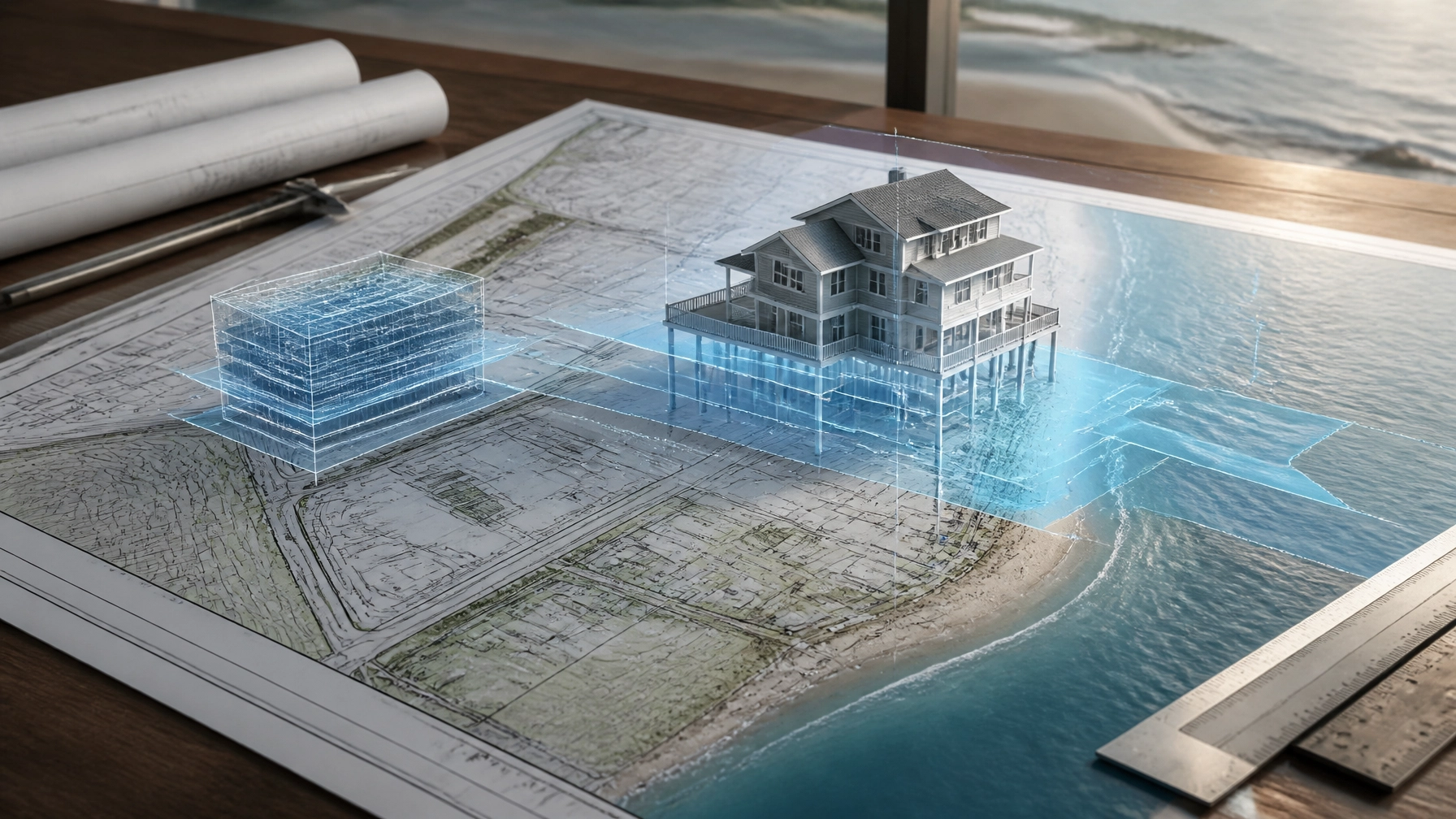
For developers and property owners in New Jersey, the clock just got a little more time. On June 1, 2026, the New Jersey Department of Environmental Protection (NJDEP) filed a formal rulemaking proposal to extend the "legacy period" for the Resilient Environments and Landscapes (REAL) rules.
Instead of the original deadline of July 20, 2026, the NJDEP is proposing to push that window out to July 20, 2027.
This isn’t just a clerical change. It’s a vital breathing room for the New Jersey development community. If your project qualifies, you could still have your permit applications evaluated under the environmental land use regulations that were in effect prior to January 20, 2026. This allows you to bypass some of the most stringent new elevation and coastal inundation requirements: at least for now.
At Envicon Group, we don’t just sell reports; we sell cleared paths. Understanding the nuances of this extension is the difference between a buildable site and a project stalled by regulatory red tape.
What Are the REAL Rules?
The REAL rules represent a fundamental shift in how New Jersey handles coastal and flood hazard development. Triggered by the increasing frequency of extreme weather and rising sea levels, these rules amended several key areas, including the Coastal Zone Management, Freshwater Wetlands, Stormwater Management, and Flood Hazard Area Control Act rules.
There are two major technical hurdles that the REAL rules introduced:
- The 4-Foot Elevation Mandate: The rules generally require new habitable buildings to be elevated at least 4 feet above the FEMA Base Flood Elevation (BFE). This is known as the Climate Adjusted Flood Elevation (CAFE).
- Inundation Risk Zones (IRZ): These are areas mapped to show where daily tidal flooding is expected in the future due to sea-level rise. Development in these zones is significantly restricted, with an emphasis on making ground floors "floodable" rather than habitable.
According to the official NJDEP filing, the proposed extension gives the industry more time to align with these rigorous standards.
"Integrity is not just ethical behavior: it is about delivering the truth and never cutting corners. In the context of REAL, that means being honest about the technical challenges of your site before you commit capital." : Jason Pancoast, CEO, Envicon Group.
The One-Year Extension: Why It Matters
The legacy period is the "grandfathering" window. If you submit a qualifying, administratively and technically complete permit application by the deadline, your project is reviewed under the old rules.
By proposing to extend this from July 20, 2026, to July 20, 2027, the NJDEP is acknowledging the complexity of the transition. For a developer in Jersey City, Hoboken, or the Jersey Shore, this extra year can save millions in construction costs related to foundation design, pile driving, and lost floor-area ratio (FAR) due to increased elevation.
Key Dates to Track:
- June 1, 2026: Rulemaking proposal published.
- July 7, 2026: Virtual public hearing (at 6:00 p.m.).
- July 31, 2026: End of the 60-day public comment period.
- July 20, 2027: The proposed new deadline for legacy applications.
How to Qualify for the Legacy Window
It isn't enough to just "apply." To secure your spot under the pre-REAL standards, your application must be:
- Eligible: This applies to Individual Permits, General Permits, Verifications, and Letters of Interpretation (LOI).
- Complete: The application must be deemed both administratively and technically complete. This means all forms, site plans, and engineering reports are submitted correctly.
- Paid: All associated NJDEP fees must be paid in full before the cutoff.
If your application is rejected for being incomplete after the deadline passes, you will likely be forced to redesign under the REAL standards. This is where most projects fail when using large, "black box" consulting firms. They submit a report to check a box, but they don't have the regional fluency to ensure it passes the reviewer’s desk on the first try.
The Cost of Inaction: Why You Can’t Wait
Every week of delay incurs carrying costs. If you miss the July 20, 2027 window, the impact on your project's pro forma is immediate:
- Increased Construction Costs: Elevating a building an additional 4 feet requires significant structural changes and more expensive materials.
- Lender Hesitation: Banks are becoming increasingly wary of projects in coastal inundation zones. A "legacy" permit provides certainty that a REAL-compliant design might not.
- Market Timing: A redesign can push a project start back by 6 to 12 months, missing a key market cycle.
Envicon’s Approach: Why We Are Different
When you hire a large national firm, you often talk to a partner during the pitch and never see them again. Your project gets handed to a junior staffer who is using a cookie-cutter playbook designed for any market, not specifically for the intricacies of the NJDEP reviewers.
At Envicon Group, we bring 20 years of direct agency relationships. We don't just know the rules; we know the people who review them. We work directly with architects, attorneys, and local officials to ensure alignment. We use proprietary project management technology that gives our clients a real-time dashboard of their project's status. You’ll know exactly where your application stands in the queue.
“Collaboration is not a buzzword: it's how we work. We don't just deliver services; we help transform underused and contaminated properties into thriving assets.”
What Should Developers Do Now?
Even with an extra year, the clock is ticking. The process of taking a site from due diligence to a complete permit application takes time: especially when soil and groundwater management or remedial design is involved.
- Audit Your Pipeline: Look at every site you have under contract or in planning. Determine which ones fall within the new CAFE or IRZ maps.
- Run a Risk Screen: Use tools like our Risk Screener to identify if your project is at risk of being sidelined by the REAL rules.
- Mobilize Early: Don't wait for the 2027 deadline to start your field investigations. Secure your Letter of Interpretation (LOI) or Flood Hazard Area (FHA) verification now.

Summary: A Cleared Path Forward
The NJDEP’s proposal to extend the REAL rules legacy period to July 20, 2027, is a significant win for the New Jersey real estate and construction industry. It provides a window to lock in existing standards and avoid the costly requirements of the new Climate Adjusted Flood Elevations.
However, "grandfathering" is not a right: it is a race. To qualify, your application must be bulletproof.
Takeaways:
- Extension Date: Proposed for July 20, 2027.
- The Stakes: Bypassing a 4-foot elevation increase and coastal inundation restrictions.
- The Requirement: A technically and administratively complete application submitted and paid before the deadline.
- The Solution: Partnering with a firm that prioritizes precision and direct regulatory coordination over bloated reports.
We specialize in turning environmentally challenged sites into buildable assets. Whether you are dealing with a complex brownfield redevelopment or need a Stormwater Pollution Prevention Plan (SWPPP), we are here to ensure your project keeps moving.
Ready to Secure Your Project’s Future?
Don't let your project get caught in the 2027 rush. Secure your legacy status today with a team that knows the NJDEP inside and out.
- Book a free consultation: https://envicongroup.com/contact
- Try our Risk Screener tool: https://envicongroup.com/risk-screener?utm_source=website&utm_medium=nav_megamenu&utm_campaign=resources&utm_content=risk-screener
- Call us directly: tel:9177642171
Leave a Reply