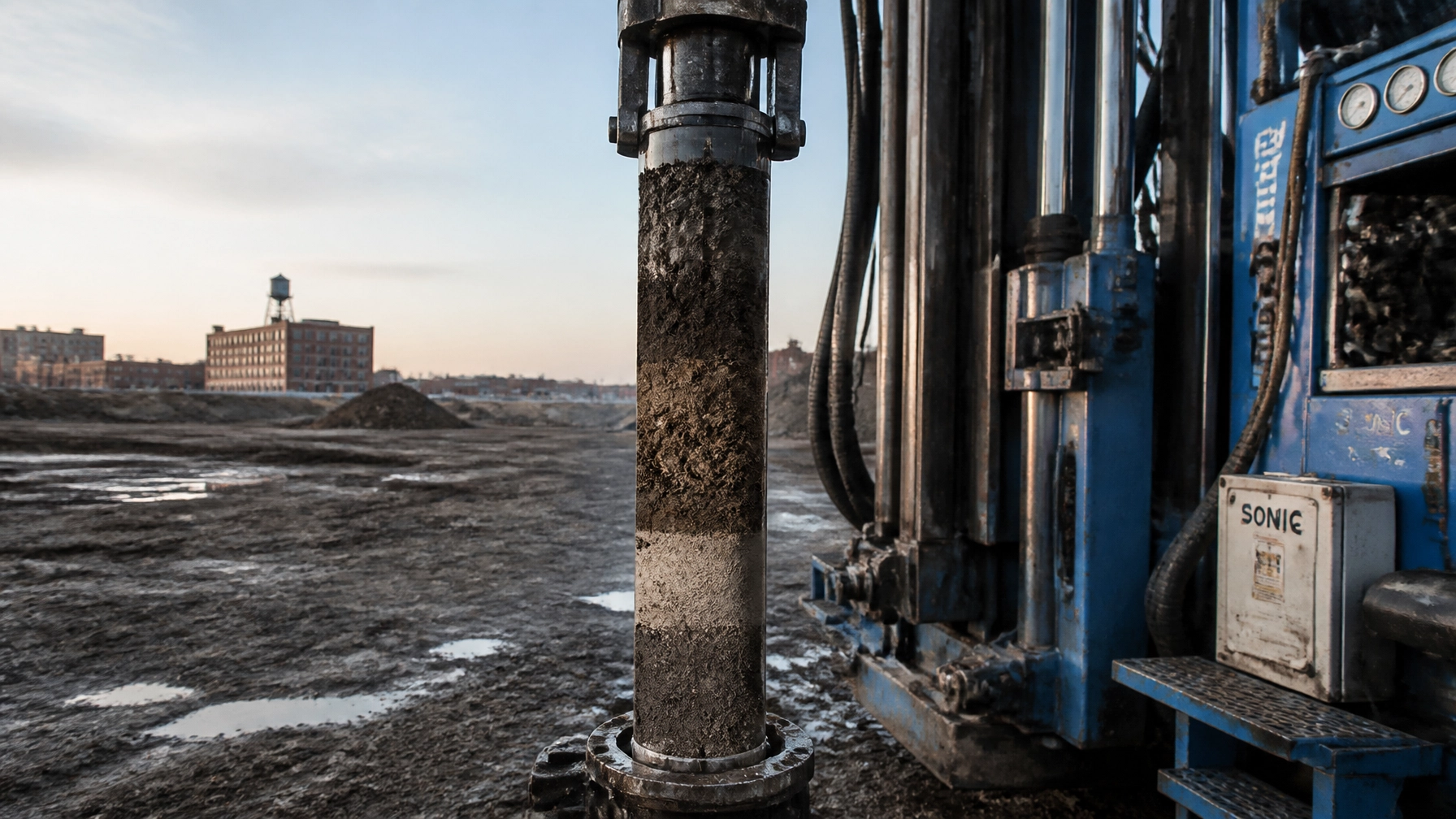
If you’ve been tracking environmental regulations in New Jersey, you know the "interim" grace period for PFAS is officially over. As of June 15, 2026, the New Jersey Department of Environmental Protection (NJDEP) has formally adopted numeric soil and soil leachate remediation standards for four major per- and polyfluoroalkyl substances (PFAS).
This isn't just another layer of paperwork. This is a fundamental shift in the compliance floor for every developer, lender, and attorney operating in the NJ/NYC metro area. For years, PFAS was a "known unknown": something we knew was there, but without a codified standard, it was often left in the realm of "investigation only." That changed this month. These standards are now the mandatory cleanup criteria under the New Jersey Spill Compensation and Control Act.
At Envicon, we don’t sell defensive, bloated reports designed to protect us. We sell cleared paths designed to move your project. If you’re sitting on a site with a history of industrial use, or if you’re in the middle of due diligence, the ground just shifted under your feet. Here is what you need to know about the new standards and how to navigate them without stalling your project.
The Four Key Contaminants: PFNA, PFOA, PFOS, and GenX
The NJDEP has focused its regulatory teeth on four specific PFAS compounds that have been linked to significant environmental and health risks:
- Perfluorononanoic acid (PFNA)
- Perfluorooctanoic acid (PFOA)
- Perfluorooctanesulfonic acid (PFOS)
- GenX (HFPO-DA)
While these have been treated with "interim" standards since late 2022, their formal adoption into the Site Remediation Standards (SRS) at N.J.A.C. 7:26D means they are now as binding as Lead or Benzene. There is no longer a path to an Unrestricted Use Response Action Outcome (RAO) without addressing these four compounds if they are present on your site.

Understanding the "Soil Leachate" Standard: The DAF 20 Rule
The most technical: and often most frustrating: part of the new regulations is the Migration to Groundwater (MTGW) pathway. In New Jersey, we don't just care about what's in the soil; we care about what can wash out of the soil and into the aquifer.
For PFAS, the NJDEP has set the soil leachate standard using a Dilution Attenuation Factor (DAF) of 20. This means the allowable concentration in the leachate (the liquid that filters through the soil) is tied directly to the state's stringent groundwater quality standards.
- PFOA: 14 parts per trillion (ppt) in groundwater = ~280 ppt in soil leachate.
- PFOS: 13 ppt in groundwater = ~260 ppt in soil leachate.
- PFNA: 13 ppt in groundwater = ~260 ppt in soil leachate.
If your soil fails the Synthetic Precipitation Leaching Procedure (SPLP) test at these incredibly low thresholds, you are looking at a remediation obligation. This is a "parts per trillion" game. To put that in perspective, one part per trillion is roughly equivalent to one drop of water in 20 Olympic-sized swimming pools. The margin for error is zero.
The Spill Act Implications: Why You Can’t Wait
Under the New Jersey Spill Act, liability is strict, joint, and several. If you own the property, you own the PFAS.
The formal adoption of these standards means that Phase I and Phase II Environmental Site Assessments must now explicitly evaluate PFAS as a potential Contaminant of Concern (COC) based on historical site use. If your consultant isn't looking for it, your lender likely will be. We’ve seen projects stalled at the closing table because a "big-box" firm used a generic playbook and ignored the emerging PFAS risk, only for a lender's reviewer to flag it at the eleventh hour.
At Envicon, we work directly with architects, attorneys, and construction managers to ensure alignment. We know the regulator's reviewers at NJDEP by name. We don't just hand you a report with an exceedance; we give you a strategy for the migration-to-groundwater pathway that keeps your construction schedule intact.

Big-Box Friction vs. The Envicon Path
When you hire a national firm with 10,000 employees, your project is a number. They’ll likely tell you that "PFAS is complicated" and suggest months of additional "characterization" before even talking about a remedy. That is a defensive strategy designed to maximize their billable hours while minimizing their risk.
We take a different approach. Our field-first, PE-led model is built for speed and technical precision.
- Direct Principal Access: You aren't talking to a junior staffer. You're talking to a Professional Engineer who has been on your site at 7:00 AM and knows the soil strata.
- Proprietary Tech: We use real-time project reporting dashboards that give you full visibility into your sampling data, schedule, and budget. No more waiting for a PDF that’s already three weeks out of date.
- Actionable Outcomes: We don't sell "investigation." We sell "cleared paths." If we find PFAS, we’re already looking at the Remedial Design: whether that's a cap, a soil removal plan, or a more sophisticated remedial action.
The Action Plan: What to Do Now
If you are currently managing a site or looking at a new acquisition in New Jersey, here is your immediate checklist:
- Audit Your Due Diligence: If your Phase I was completed more than six months ago, it likely didn't account for these formal standards. Re-evaluate the potential for PFAS based on historic site operations (firefighting foams, plating, textiles, electronics, etc.).
- Run the SPLP: Don't just rely on "Total PFAS" in soil. The leachate (SPLP) result is what determines your migration-to-groundwater obligation. It’s often the difference between a minor issue and a major remediation project.
- Consult Your LSRP: Your Licensed Site Remediation Professional is now legally obligated to use these adopted standards. Ensure they have a clear plan for evaluating PFAS that won't trigger unnecessary "scope creep."
- Check Your Carry Costs: Every week of delay in NJ remediation is a week of carrying costs and lender pressure. Speed is your most valuable asset.

Summary: A New Era of NJ Compliance
The June 2026 adoption of PFAS soil and leachate standards isn't a suggestion: it's the law. The NJDEP has set the bar high, and the technical requirements for leachate testing (DAF 20) mean that many sites previously thought to be "clean" may now require remediation.
Key Takeaways:
- PFNA, PFOA, PFOS, and GenX are now formally codified in the NJ SRS.
- The migration-to-groundwater (leachate) threshold is incredibly low, tied to ppt groundwater standards.
- Spill Act liability is immediate for owners and responsible parties.
- Success requires a consultant who understands the local regulatory landscape and moves with urgency.
We believe in doing the work right, standing behind our word, and keeping projects moving. Whether you’re dealing with a complex brownfield redevelopment or a time-sensitive transaction, Envicon is built to resolve these challenges with precision.
Stop paying for bloated reports and start paying for cleared paths.
Contact Envicon Group today to review your site data against the new June 2026 standards and ensure your project stays on track.

Ready to Move Your Project Forward?
If your site is facing PFAS questions, lender pressure, or NJDEP compliance issues, we’re ready to help you get to a clear next step.

Leave a Reply