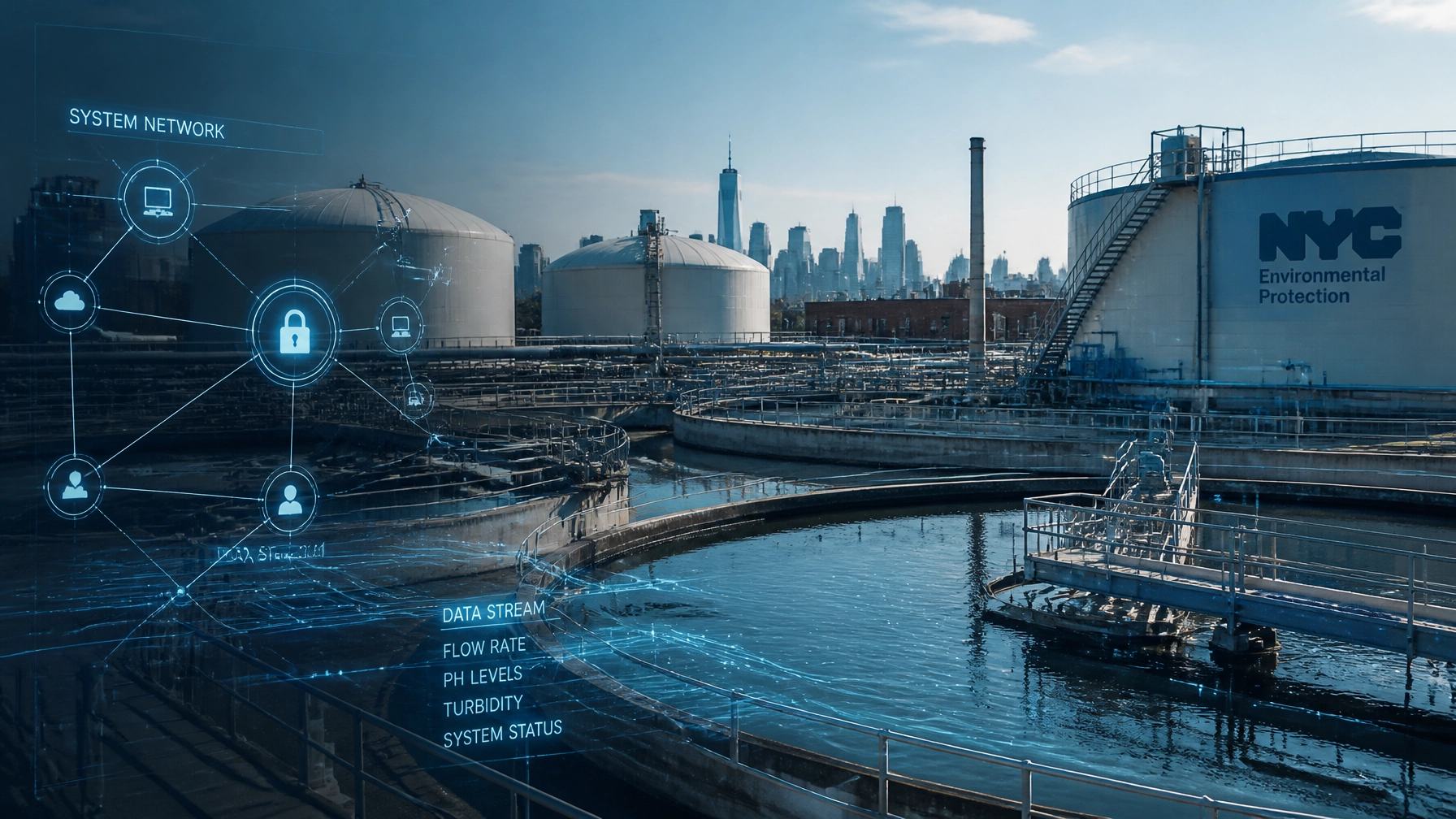
For decades, the primary concern for New York wastewater treatment operators was physical: flow rates, nitrogen levels, and structural integrity. As of March 2026, the regulatory landscape has shifted. The New York State Department of Environmental Conservation (NYSDEC) has officially adopted amendments to 6 NYCRR Parts 616, 650, and 750, establishing the state’s first mandatory cybersecurity framework for wastewater facilities.
The headline requirement is clear: if you experience a cybersecurity incident, you have 24 hours to report it.
This is no longer a suggestion or a "best practice." It is a permit requirement. For utility providers, contractors, and engineers across New York, the clock is now ticking on compliance. At Envicon Group, we’ve spent 20 years navigating the intersection of infrastructure and regulation. We know that when the DEC moves this quickly, it’s because the risk to public health and site viability is immediate.
The 24-Hour Rule: Rapid Incident Reporting (Part 750)
Effective March 26, 2026, all State Pollutant Discharge Elimination System (SPDES) permittees: whether publicly or privately owned: must change how they handle digital disruptions.
Under the new 6 NYCRR 750-2.7(h), any "cybersecurity incident" must be reported orally to your Regional Water Engineer (RWE) within 24 hours of discovery. This oral notification must then be followed by a comprehensive written report within 30 days.
A "cybersecurity incident" isn't just a full-scale system lockout. According to the DEC, it includes any event that jeopardizes the integrity, confidentiality, or availability of your operational technology (OT) or information technology (IT) systems. If a breach affects your ability to monitor discharge or control treatment processes, the state needs to know: and they need to know now.
"We remove the obstacles between you and a buildable, compliant site. In the new digital era, cybersecurity is the biggest obstacle most operators aren't seeing yet." : Jason Pancoast, CEO, Envicon Group.
Why Your Big-Box Consultant Might Fail You Here
When new regulations like this drop, large national firms often respond with a 200-page "defensive report" written by someone in a satellite office three states away. They’ll tell you what the law says, but they won't be on-site at 7:00 AM to help you map your SCADA network or talk to your Regional Water Engineer by name.
At Envicon, we don’t just deliver reports; we deliver cleared paths. We understand the NYSDEC because we sit at the table with them daily. While a national firm might treat your cybersecurity compliance as a generic checklist, we treat it as a critical infrastructure requirement specific to the Hudson Valley, Long Island, or New York City regulatory environment.

Technical Controls and the March 2027 Deadline
While the reporting requirements are immediate, the DEC has provided a lead-in period for the more structural changes. By March 11, 2027, all Publicly Owned Treatment Works (POTWs) must implement baseline cybersecurity controls aligned with the NIST Cybersecurity Framework (CSF) 2.0.
These requirements include:
- Emergency Response Plans (ERP): Every POTW must establish, maintain, and implement an ERP that specifically addresses cyber threats.
- Access Controls: Mandatory multi-factor authentication (MFA) for any remote access to operational technology.
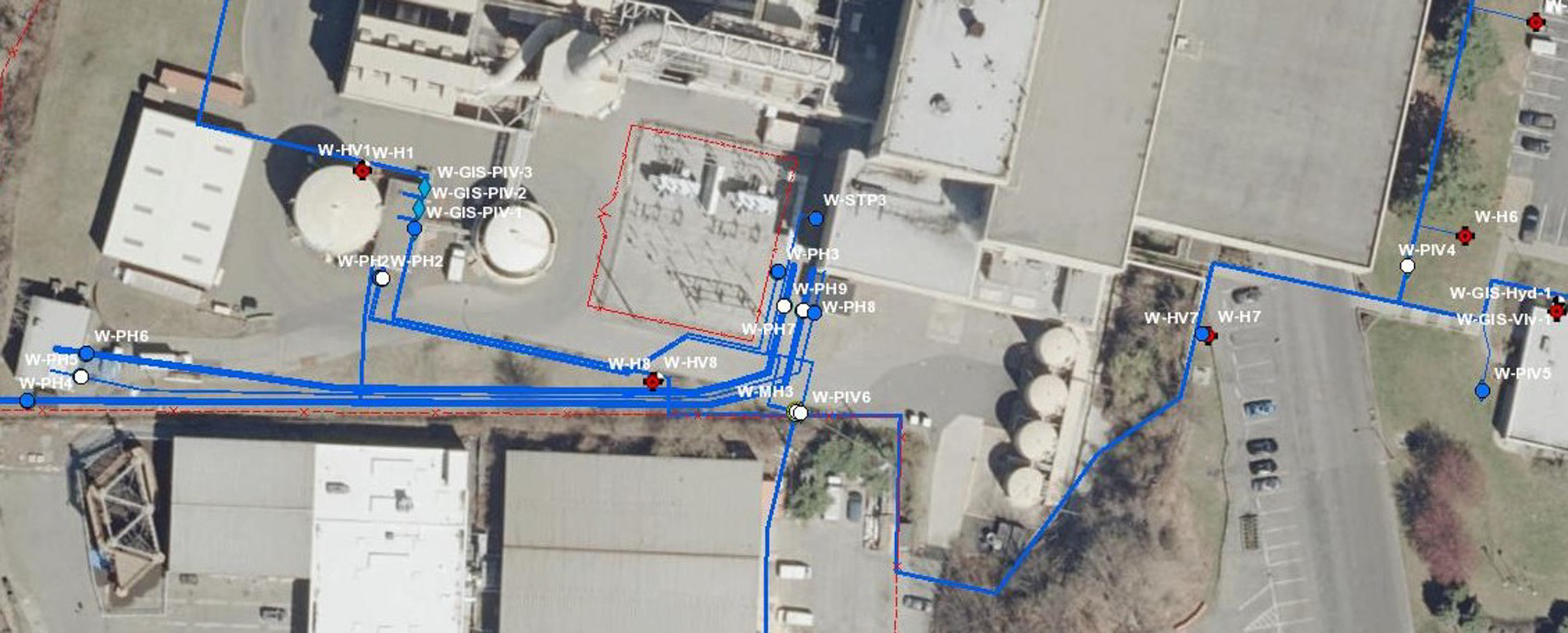
- Network Segmentation: A written description of your network structure, showing how you separate critical treatment controls from the public internet.
- Annual Certification: Starting in 2027, facilities must certify annually that they are in compliance with these Part 750 amendments.
For facilities with a design flow of 10 million gallons per day (MGD) or greater, the rules are even stricter, requiring active network monitoring and logging unless your OT is entirely air-gapped from external networks.
Mandatory Cybersecurity Training for Operators (Part 650)
The regulation acknowledges that the strongest firewall is a trained workforce. 6 NYCRR Part 650 now mandates cybersecurity training for all NYS-certified wastewater operators.
This isn't an obligation for the municipality to provide training: it is an individual requirement for credential maintenance. Operators must complete a minimum number of training hours on DEC-accepted topics. This ensures that the people on the ground: the ones Envicon works with every day: are the first line of defense against digital interference.

Protecting Your Sensitive Information (Part 616)
A common concern among utility providers is that by reporting vulnerabilities to the state, they are creating a roadmap for future attackers through the Freedom of Information Law (FOIL).
NYSDEC addressed this by amending 6 NYCRR Part 616. Cybersecurity information is now explicitly recognized as "critical infrastructure" information. When you submit these details to the DEC, you can request an exception from disclosure. This protection is vital for maintaining the security of your facility while remaining transparent with your regulators.
The Envicon Resolution: From Risk to Compliance
Most consultants will hand you a list of problems and walk away. Envicon takes ownership. Whether we are conducting a Phase I or Phase II Environmental Site Assessment or managing a complex Brownfield Redevelopment, we focus on the actionable outcome.
For wastewater facilities facing these new mandates, our approach is three-fold:
- Immediate Audit: We help you identify if your current "incident response" meets the 24-hour oral reporting threshold.
- Gap Analysis: We map your existing OT/IT infrastructure against the NIST-aligned requirements due in 2027.
- Regulatory Liaison: We leverage our 20 years of direct agency relationships to ensure your ERP and technical controls hold up under scrutiny.
Summary: What You Need to Do Now
The NYSDEC's adopted amendments represent a fundamental change in how wastewater infrastructure is managed in New York. You cannot afford to wait until a breach occurs to figure out who your Regional Water Engineer is or how to document a network map.
- Update your internal SOPs to include oral reporting within 24 hours.
- Verify that your certified operators are tracking their cybersecurity training credits.
- Begin the "Identify and Protect" phase of your NIST alignment before the 2027 deadline.
Don't let a "defensive report" from a national firm be the only thing standing between you and a regulatory violation. Work with a firm that is field-first and regulator-facing.

Resolve Your Regulatory Challenges Today
Envicon Group specializes in clearing the path for high-stakes development and infrastructure projects. Let’s ensure your wastewater facility is compliant, secure, and ready for the next 20 years.
- Call now: tel:9177642171
- Book a free consultation: https://envicongroup.com/contact
- Risk screener tool: https://envicongroup.com/risk-screener?utm_source=website&utm_medium=nav_megamenu&utm_campaign=resources&utm_content=risk-screener
Leave a Reply