To move from "Page 7" to "Page 1," we are deploying these 10 technical deep-dives over the next few weeks. Each post is engineered to target high-intent search terms that your ideal clients (developers, attorneys, and lenders) are searching for when they face a bottleneck.
- NYC OER vs. NYSDEC: The Strategic Choice for Brownfield Tax Credits
Targeting: High-value keywords around NYC Brownfield incentives. - Phase I ESA and ASTM E1527-21: Is Your Due Diligence 2026-Ready?
Targeting: New ASTM standards and "stale" report risks. - Soil Management Plans (SMP): The Developer’s Shield Against Disposal Surprises
Targeting: Construction oversight and soil management cost-containment. - Vapor Intrusion Mitigation in NJ: Passive vs. Active System ROI Analysis
Targeting: Remedial design keywords and NJDEP technical compliance. - LSRP Mandatory Timeframes: Navigating the NJDEP ‘Red Zone’
Targeting: NJ regulatory compliance and project schedule management. - Stormwater Management 2.0: Balancing Green Infrastructure and Buildability
Targeting: Civil engineering, SWPPP, and NJ green infrastructure rules. - NYC Parks Permits: Clearing the Path for Utility and Site Construction
Targeting: Niche regulatory permitting that stalls NYC projects. - Site Investigation ROI: Why Precision Sampling Saves Millions in Excavation
Targeting: Geotechnical and site characterization efficiency. - Lender-Ready Remediation: Securing Financing for Environmentally Challenged Assets
Targeting: Environmental due diligence for financing and acquisition. - The Technology Edge: Why Real-Time Dashboards Beat Monthly PDF Reports
Targeting: Modern project management and transparency-seeking clients.
2026 PFAS Remediation Costs in NJ: Budgeting for the Invisible Risk
If you’re developing in New Jersey in 2026, the term "PFAS" has likely shifted from a vague regulatory buzzword to a line item that can break a project’s pro forma. Known as "forever chemicals," Per- and Polyfluoroalkyl Substances are no longer just an "emerging" concern: they are a central driver of remediation costs.
At Envicon, we see the frustration daily. A developer picks up a prime industrial asset in Hudson or Middlesex County, runs their due diligence, and suddenly faces a NJDEP LSRP case that includes PFAS. The "invisible risk" becomes very visible when the first remediation bill arrives.
The challenge isn't just the technical cleanup; it's the budgeting. In a landscape of fluctuating disposal rates and tightening NJDEP regulations, how do you predict the cost of something you can't even see?
The 2026 NJ Regulatory Landscape: The ISRS Factor
As of mid-2026, the NJDEP’s Interim Soil Remediation Standards (ISRS) for PFOA, PFOS, PFNA, and GenX are in full effect. These aren't just suggestions. If your site investigation identifies these compounds above the threshold: often as low as 0.047 ppm for PFNA: you are officially in the remediation game.
The real budget-killer in 2026 isn't just the direct contact standards; it's the Migration to Groundwater (MGW) pathway. Under current rules, if PFAS is in your soil, you must prove it isn't leaching into the groundwater. This requires Synthetic Precipitation Leaching Procedure (SPLP) testing, a technical hurdle that most "big-box" firms use to justify months of additional, expensive reporting.
At Envicon, we don't sell reports. We sell a cleared path. That means knowing exactly which site investigation tools to use early: so you aren't surprised by a leaching issue three months before your scheduled closing.

Groundwater Treatment: GAC vs. Ion Exchange Costs
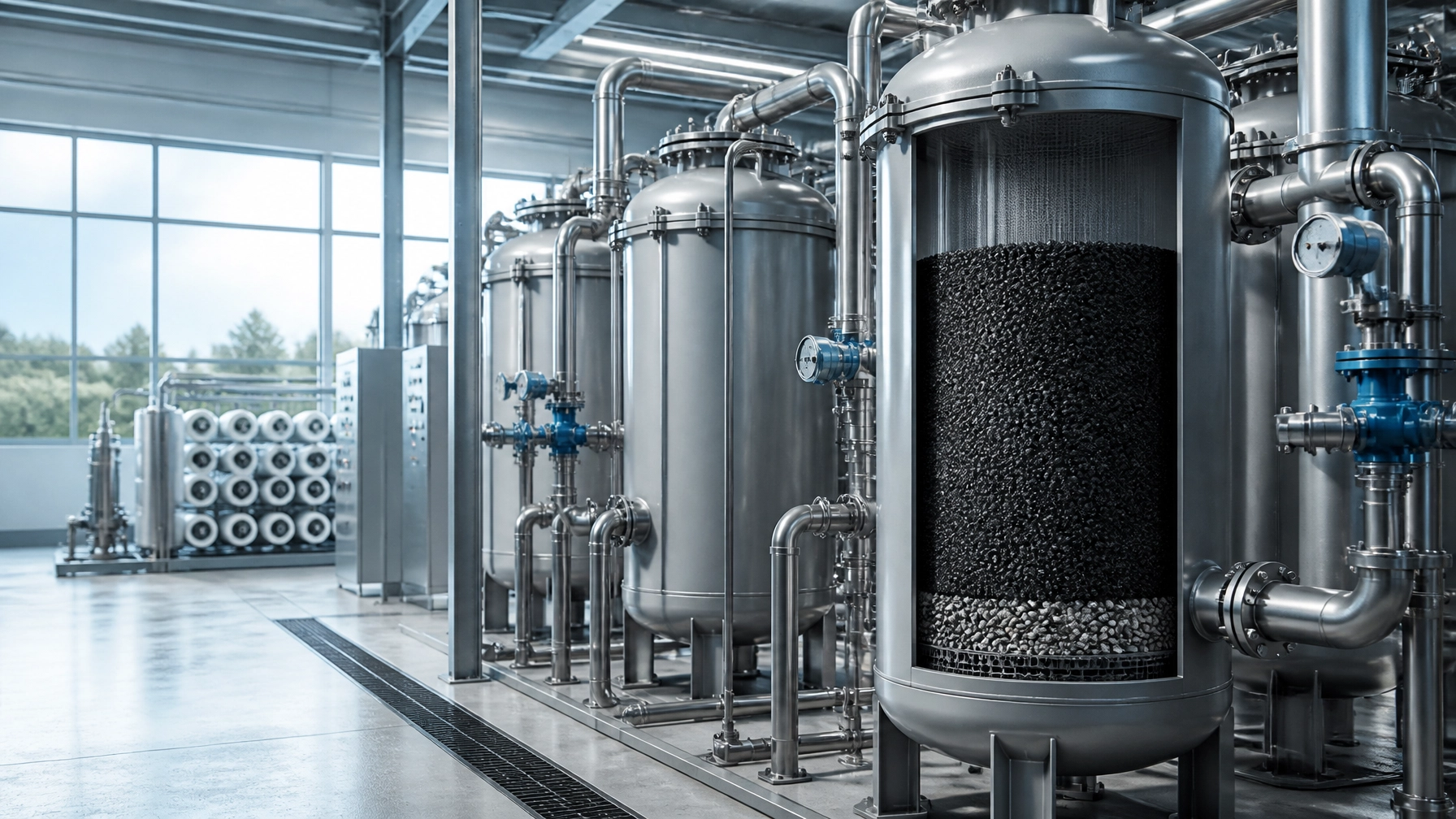
When PFAS hits the groundwater, the complexity: and the cost: scales exponentially. In 2026, the two primary heavy hitters for treatment are Granular Activated Carbon (GAC) and Ion Exchange (IX).
If you are looking at a "Pump and Treat" scenario for a typical NJ redevelopment site, here is how the numbers are currently shaking out:
- Operating Costs: Generally, you’re looking at $0.50 to $5.00 per 1,000 gallons treated.
- Capital Costs: Installing a full-scale treatment train (vessels, pumps, piping) for a medium-sized site typically ranges from $500,000 to $5 million.
- Annual O&M: Expect to budget $50,000 to $500,000 per year for media change-outs, power, and oversight.
Why the Cost Variance?
The $0.50 vs. $5.00 gap depends on water chemistry. If your site has high levels of "competing" organic matter or solids, your GAC media will "blind" or exhaust much faster. This is where a junior staffer at a national firm can cost you hundreds of thousands: they often fail to account for pre-filtration needs, leading to premature (and expensive) media replacements.
GAC is the workhorse. It’s reliable and handles long-chain PFAS well. Ion Exchange is often more efficient for short-chain PFAS but carries a higher upfront media cost. The "Envicon Way" involves upfront bench-scale testing to determine which media actually moves the needle for your specific plume, rather than applying a cookie-cutter playbook.
Soil Remediation: The Source Zone Headache
If your project involves a "source zone": a concentrated area of PFAS-contaminated soil: the costs can jump into the $10 million to $30 million range for significant industrial sites.
In 2026, your options are becoming more limited:
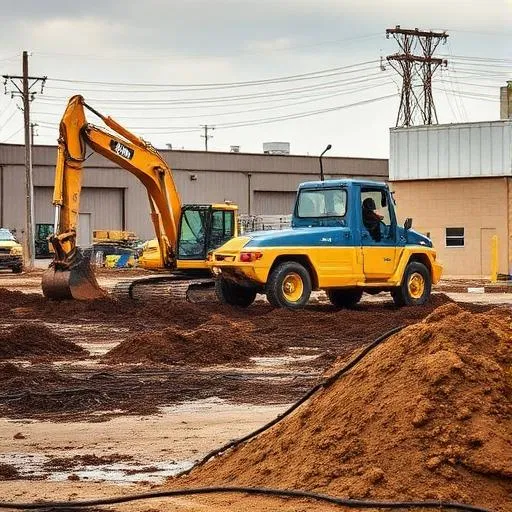
- Excavation & Disposal: This is the most certain path but the most expensive. With fewer landfills accepting PFAS-laden soil, transportation and disposal (T&D) rates are at an all-time high.
- On-site Stabilization: Using specialized reagents to "lock" the PFAS in place. This can be cheaper than T&D but requires rigorous NJDEP approval and long-term monitoring.
- Capping: If you can meet the engineering requirements, capping the site can mitigate the direct contact risk, but it doesn't always solve the migration-to-groundwater issue.
Budget Predictability: Avoiding the "Consultant Black Box"
The biggest complaint we hear from real estate investors who have been "burned" by national firms is the lack of transparency. You get a monthly PDF report that tells you what happened thirty days ago, usually accompanied by a change order for "unexpected site conditions."
We’ve fixed that. Envicon provides real-time project dashboards that give you a live view of your remediation budget. You see the flow rates, you see the media saturation levels, and you see the schedule: in real-time.
When a project is stalled, every week of delay incurs carrying costs and tests the patience of your lender. We focus on Actionable Outcomes. If the data shows GAC isn't performing, we don't write a 50-page memo; we talk to the contractor and pivot the strategy at 7:00 AM the next morning.
"In 2026, the most expensive environmental report is the one that tells you there's a problem without offering a clear, budgeted path to the solution."
Summary: Your 2026 PFAS Budgeting Checklist
To keep your NJ project on track, your 2026 pro forma should account for:
- Early Screening: Don't wait for the Phase II. Use high-resolution site characterization to find the "invisible" PFAS early.
- Lifecycle Budgeting: If you need a pump-and-treat system, budget for at least 5-10 years of O&M, not just the capital install.
- Regulatory Fluency: Ensure your consultant actually knows your NJDEP reviewer. Relationships matter when you're negotiating a site-specific soil standard.
- Media Management: Account for the rising costs of "spent" media disposal, which is now treated with much higher scrutiny by waste facilities.

Moving Forward
Navigating PFAS in New Jersey isn't about finding a firm that sells the most reports: it's about finding a team that takes ownership of the outcome. Whether you're managing a complex brownfield redevelopment or performing due diligence for an acquisition, you need precision and urgency.
Don't let the "invisible risk" stall your next build. Contact Envicon Group today for a technically sharp, no-fluff assessment of your site's PFAS liability and a clear path to closure.
Call to Action
If you're budgeting for PFAS risk, here are three fast next steps:
- Try the Cost Estimator tool: https://envicongroup.com/cost-estimator?utm_source=website&utm_medium=nav_megamenu&utm_campaign=resources&utm_content=cost-estimator
- Visit our website: https://envicongroup.com
- Visit our Insights page: https://envicongroup.com/blog?utm_source=website&utm_medium=nav_megamenu&utm_campaign=resources&utm_content=blog-insights
Leave a Reply