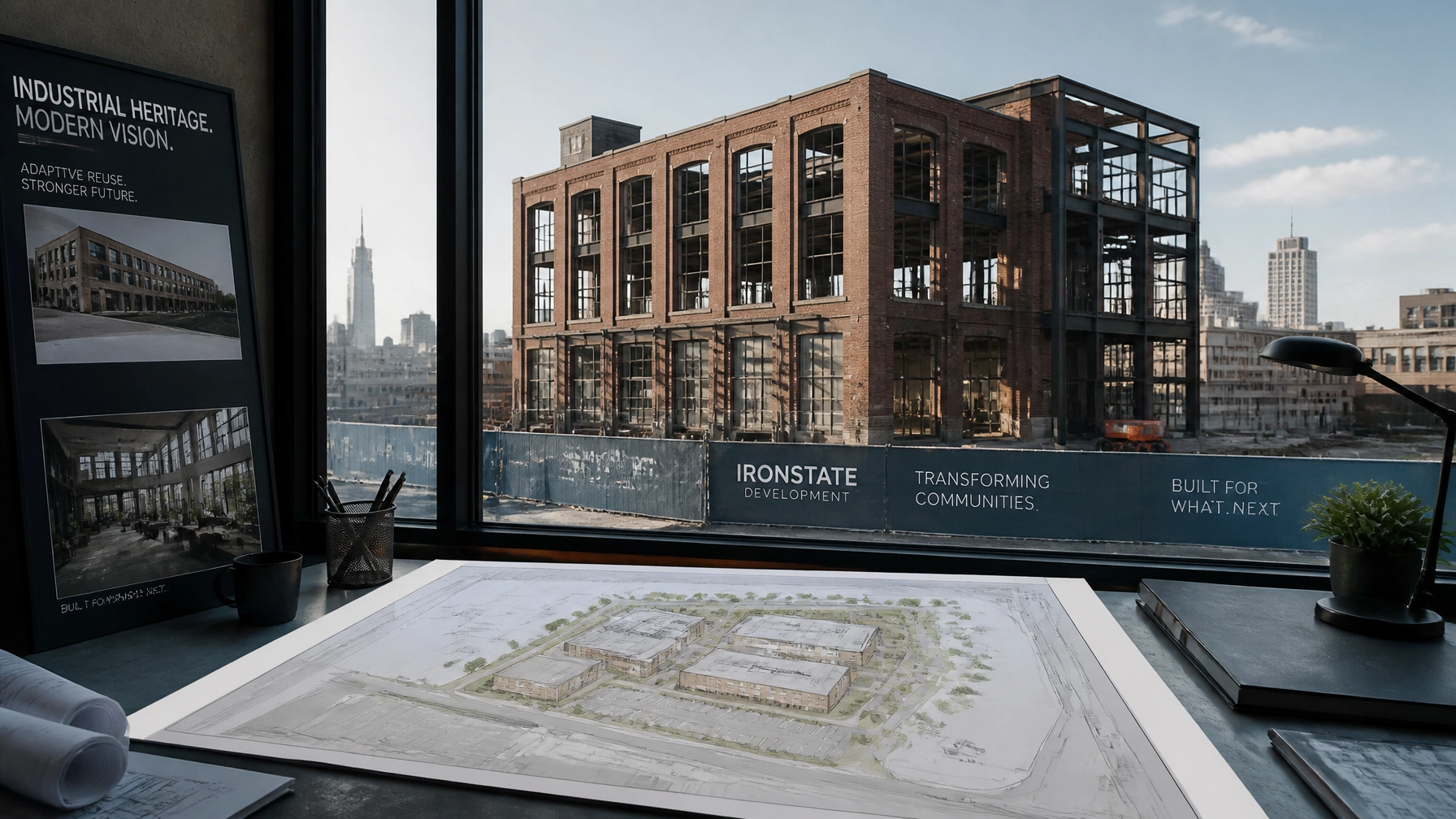
If you’re a developer in New Jersey, you know the drill: the best sites are rarely the cleanest. Those prime, transit-oriented acres in Jersey City, Newark, or Paterson almost always come with a "history."
In the old days, that history was just a line item on your balance sheet: a massive cleanup cost that ate your margins. But today, brownfield redevelopment in NJ has shifted. Through the Brownfield Redevelopment Incentive Program (BRIP), the state is effectively offering to foot a massive portion of your remediation bill.
We’re talking about tax credits that can cover up to 50%: and in some cases 60%: of your eligible remediation costs. On a $5 million cleanup, that’s up to $3 million back in your pocket.
But here’s the catch: the NJEDA doesn't hand out million-dollar credits for "trying hard." This is a highly technical, competitive, and regulator-heavy process. If your consultant is just delivering "bloated reports" instead of a cleared path to NJEDA approval, you aren't just paying for bad advice: you’re leaving millions on the table.
What is the NJ Brownfield Redevelopment Incentive Program (BRIP)?
The BRIP is the flagship incentive under the NJ Economic Recovery Act. It was designed to turn "underused and contaminated properties into thriving assets": a phrase we live by here at Envicon.
Unlike the old reimbursement programs that took a decade to pay out, the BRIP offers a one-time tax credit. It’s a game-changer for brownfield cleanup and redevelopment planning for NJ developers, but it requires a level of technical precision that most big-box firms simply aren't equipped to handle with their junior-staff models.
The Numbers You Need to Know:
- Standard Sites: Up to 50% of eligible remediation costs, capped at $4 million.
- Government Restricted Municipalities (GRMs): Sites in Atlantic City, Paterson, or Trenton can get up to 60%, capped at $8 million.
- Qualified Incentive Tracts: High-need areas also qualify for the 60% bump.

Navigating NJ Brownfield Tax Credit Eligibility
The biggest mistake we see? Developers assuming they qualify just because their dirt is dirty. The NJ Brownfield Tax Credit eligibility criteria are rigid. If you trip over a single technicality during the application phase, your project is dead in the water for that funding round.
1. The "Non-Liable" Party Rule
You cannot be the party responsible for the contamination. If you (or an affiliate) spilled the chemicals, you’re paying for the cleanup yourself. This is why environmental due diligence and a clean chain of title are non-negotiable before you even think about applying.
2. The Financing Gap
For projects with remediation costs over $5 million (outside of the GRMs mentioned above), you have to prove that the project isn't economically feasible without the tax credit. This isn't just a letter from your accountant; it’s a rigorous financial modeling exercise that must align with your Remedial Investigation Report (RIR).
3. Site Control and Municipal Support
You need a letter of support from the local governing body. In the competitive landscape of brownfield redevelopment NJ, local alignment is everything. We work directly with local officials because we know that project movement depends on alignment, not just paperwork.
4. Green Remediation Standards
NJ is serious about sustainability. To qualify for the credit, your cleanup must comply with specific green remediation and building standards. This means your remedial action workplan preparation for NJ brownfield sites needs to integrate sustainable practices from day one: not as an afterthought.
The LSRP’s Role: Precision Over "Fishing Expeditions"
In New Jersey, the Licensed Site Remediation Professional (LSRP) is the gatekeeper. For BRIP, the NJEDA and NJDEP rely heavily on LSRP certifications to verify that your costs are "reasonable and appropriate."
This is where the "Big Firm" model fails. At a national firm, you might have an LSRP signing off on a report written by a junior staffer who has never stood on your site. The result? Defensive, bloated reports designed to protect the consultant’s liability, not to secure your tax credit.
At Envicon, our LSRP services for brownfield redevelopment in New Jersey are built on direct leadership. When the NJEDA looks at your "Total Cost of Remediation" budget, they are looking for precision. Our team uses high-resolution site characterization to map plumes with surgical accuracy. We don't guess; we model. This technical depth ensures that when we tell the state a cost is necessary, it sticks.

The Data Advantage: Transparency as a Strategy
Most consultants treat the NJEDA coordination like a black box. You hand over the data and hope for the best. We think that’s a recipe for a $0 credit.
Our clients use our proprietary digital solutions to stay ahead of the curve. Instead of waiting for a monthly PDF that’s already outdated, you get a real-time dashboard.
When you’re applying for the NJ Brownfield Redevelopment Incentive Program, you need to prove every dollar spent. Our tech stack tracks:
- Field-level QA/QC: Real-time data from the drill rig to the dashboard.
- Soil Management: Precise tracking of "Clean Soil Bank" usage vs. private disposal: critical for eligible cost verification.
- Milestone Tracking: Ensuring your remediation schedule aligns perfectly with the NJEDA's redevelopment agreement.
This transparency isn't just a "nice to have." It’s how you win. When the state asks for a breakdown of your remedial costs, we don't have to scramble through paper files. We pull the data and deliver the truth.
Preparing for 2026: Why the "Wait and See" Approach Fails
The most recent BRIP application window has closed, and the NJEDA is currently refining the rules for the next round. Many developers will wait until the portal opens in 2026 to start their paperwork.
That is a million-dollar mistake.
To be competitive for nj brownfield remediation tax credits, you need to have your site investigation (SI) and remedial investigation (RI) locked down now. You need your LSRP to have established the remedial strategy, and you need your municipal support letter in progress.
As contaminated site remediation consultants for nj brownfield projects, we’re already working with clients to position their 2026 applications. We are:
- Refining Cost Models: Using current market rates to ensure budgets are "reasonable" yet comprehensive.
- Structuring Ownership: Making sure the applicant entity is squeaky clean regarding liability.
- Green-Lighting the Design: Integrating NJ’s green building standards into the initial civil and site engineering.

Summary: Stop Selling Reports, Start Clearing Paths
The NJ Brownfield Tax Credit isn't just an "incentive": it’s a critical piece of the capital stack for complex NJ redevelopment. Navigating the NJ Brownfield Tax Credit eligibility and the competitive scoring system requires more than a consultant; it requires a partner who understands the regulator’s reviewer by name.
At Envicon Group, we don’t sell you a 500-page report and wish you luck. We sell you a cleared path from a contaminated headache to a compliant, buildable asset.
Key Takeaways for Developers:
- Don't wait for the window: Preparation for the 2026 round starts with an SI/RI today.
- Precision is profit: Accuracy in your remedial action workplan directly impacts your tax credit amount.
- Tech matters: Use real-time data to prove your costs and defend your milestones.
- LSRP leadership: Ensure your LSRP is a hands-on lead, not a remote signer.
Ready to clear the path for your next project? At Envicon Group, we don’t just deliver reports: we deliver outcomes. Contact us today to discuss your site’s specific challenges.
Leave a Reply