When the New York State Department of Environmental Conservation (NYSDEC) adopted amendments to 6 NYCRR Part 617 on April 24, 2026, it didn’t just tweak paperwork: it fundamentally altered how development projects are evaluated across the state. Taking effect on June 12, 2026, these State Environmental Quality Review Act (SEQRA) amendments operationalize the Environmental Justice Siting Law, introducing mandatory environmental justice impact evaluations for projects affecting Disadvantaged Communities (DACs).
For real estate developers, property investors, and environmental attorneys, this means your early-stage due diligence and site planning just got a lot more complex. If your project sits within or adjacent to a designated DAC, generic environmental assessments and defensive, box-ticking reports will no longer survive agency scrutiny. You need rigorous data, precise screening, and an engineering team that speaks fluent DEC regulations before your application ever hits a reviewer’s desk.
Understanding the June 12, 2026 SEQRA Amendments
The Environmental Justice Siting Law requires SEQRA lead agencies to evaluate whether a proposed action may cause or increase a disproportionate pollution burden on disadvantaged communities. The June 12, 2026 effective date establishes a hard regulatory boundary. Unless your project received a formal determination of significance or an accepted draft Environmental Impact Statement (EIS) on or before June 12, 2026, your approvals are fully subject to these new mandates.
National consulting firms love to treat regulatory changes like this as background noise, billing hours while they figure out the rules on your dime. At Envicon Group, we don’t read about regulations after they pass: we operate inside them daily. As a PE-led, field-first firm with 20 years of direct agency relationships across New York and New Jersey, we sit at the table with NYSDEC, NYC OER, and local planners. We know how these amendments change threshold determinations, and more importantly, how to keep your capital moving.

Enter the DACAT Tool: How Screening Works
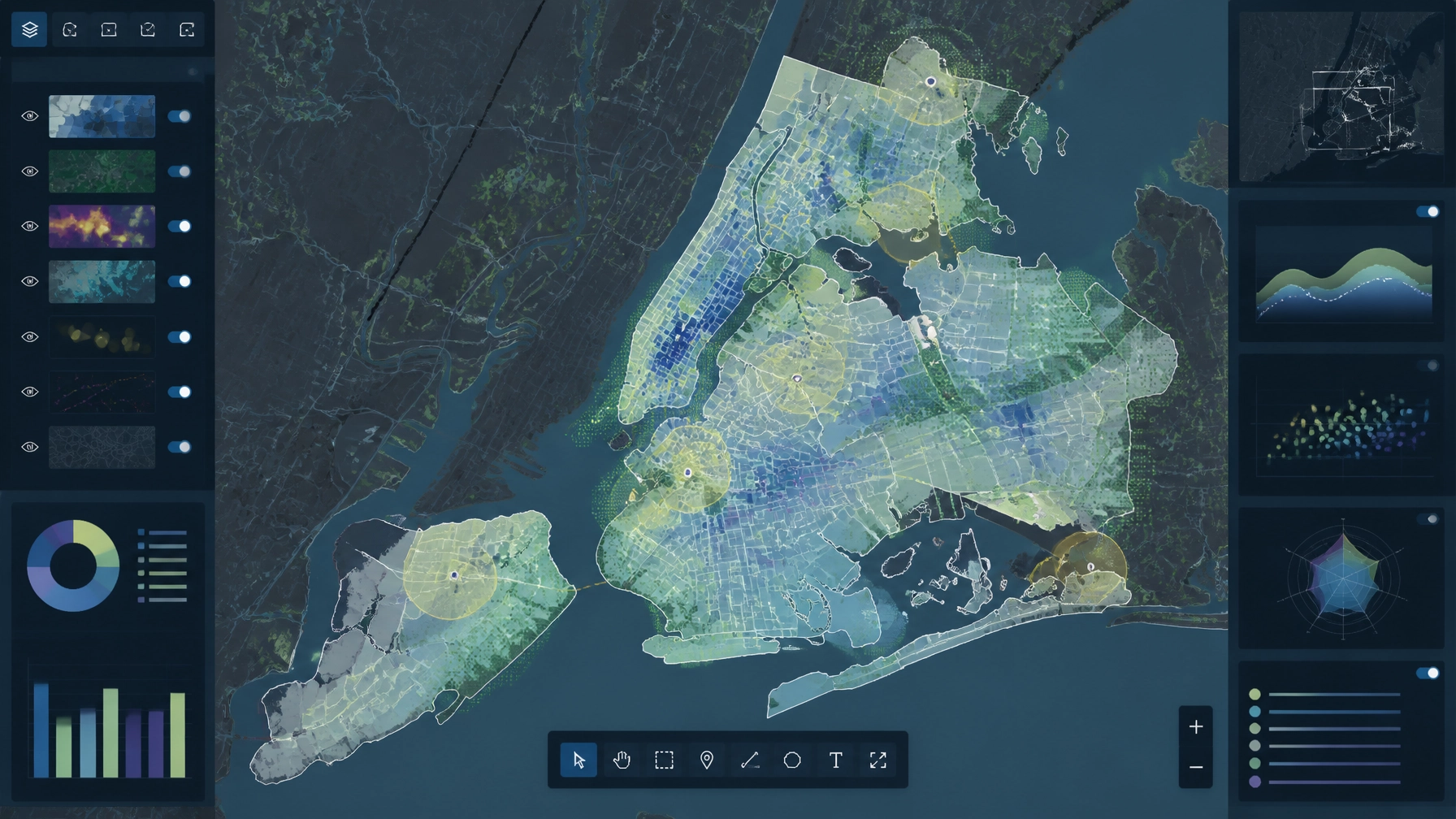
At the center of this new regulatory framework is the Disadvantaged Community Assessment Tool (DACAT). Developed by NYSDEC, DACAT is a GIS-based screening mechanism designed to help lead agencies determine whether a proposed action may have an increased likelihood of causing a moderate or large impact on a DAC census tract.
The tool relies on the Climate Justice Working Group (CJWG) disadvantaged community mapping dataset and evaluates three distinct metrics for every census tract:
- Combined Score: An overall measure of existing environmental burdens and population vulnerabilities.
- Environmental Burden Component Score: Quantifies existing pollution exposures, historical industrial impacts, and environmental stressors.
- Population Vulnerability Component Score: Assesses socio-economic factors, health vulnerabilities, and sensitivity to environmental stressors.
DACAT compares these scores against multiple non-DAC baseline scenarios: statewide urban, statewide rural, regional urban, and regional rural: to establish an aggregate denominator.
The Statistical Thresholds That Trigger Further Review
In its final analytical step, DACAT applies rigid percentage difference thresholds. Understanding these numbers is critical for structuring your project site plan and environmental impact assessments:
- If a DAC census tract’s Combined Score is more than 25% higher than its aggregate denominator, and
- Either its Environmental Burden Component Score or its Population Vulnerability Component Score is more than 35% higher than its aggregate denominator, or the tract is designated as Indigenous land,
- Then DACAT flags the area as having an increased likelihood of moderate or large impacts (typically displayed in orange within the tool).
When DACAT flags your project location in orange, the lead agency is primed to demand rigorous mitigation, enhanced public participation plans, and extensive alternatives analysis. Conversely, tracts falling below these thresholds are designated in blue, indicating a comparatively lower baseline burden: though a blue classification is never an automatic free pass.

Updated Environmental Assessment Forms (EAFs) and Project Sponsor Obligations
NYSDEC has also updated the state’s Environmental Assessment Forms (EAFs) to incorporate direct inquiries regarding disadvantaged communities. When preparing Part 1 of the Short or Full EAF, project sponsors must now explicitly identify proximity to DACs, review DACAT screening results, and document existing baseline conditions.
If you are relying on a large-box national engineering firm, you run a severe risk here. Big firms often hand your EAF preparation off to junior staff who run canned software without understanding local ground conditions or historical industrial contexts. When the lead agency’s environmental reviewer cross-references your EAF with their own DACAT screening, discrepancies lead to immediate incompleteness letters, re-filings, and months of costly project delays.
"Collaboration is not a buzzword: it's how we work. We do not just deliver services: we help transform underused and contaminated properties into thriving assets."
Why the Envicon Approach Changes the Game for Developers
Navigating the post-June 12, 2026 SEQRA landscape requires more than GIS mapping software; it demands strategic foresight and active engagement with municipal and state regulators. When you partner with Envicon Group, you eliminate the friction that stalls high-stakes developments:
- Direct Access to Leadership: You talk directly to licensed professional engineers and environmental scientists who manage your project from initial due diligence to final agency sign-off: never a revolving door of junior project managers.
- Proactive Regulatory Navigation: Because we maintain ongoing relationships with NYSDEC reviewers, we anticipate environmental justice concerns before they become roadblocks, aligning your site engineering with agency expectations from day one.
- Real-Time Transparency: Through our advanced digital project management and reporting infrastructure, you maintain complete visibility over schedule, deliverable status, and regulatory milestones. No black boxes, no surprises.
- Defensible Deliverables: We produce clean, robust documentation engineered to withstand intense regulatory scrutiny and public comment periods, protecting your investment and maintaining lender confidence.

Key Action Items for Project Sponsors
To protect your timeline and budget under the new SEQRA environmental justice rules, take these actionable steps immediately:
- Screen Early: Run the DACAT tool during your initial Phase I ESA and site due diligence phase: before you finalize acquisitions or site layouts.
- Integrate EAF Strategies: Ensure your environmental consultant incorporates DACAT findings directly into your Full EAF Part 1 submission to avoid completeness delays.
- Plan for Community Engagement: If your site triggers the 25%/35% thresholds, proactively develop robust mitigation and public outreach plans to address lead agency and community concerns.
- Partner with Local Experts: Retain a field-first environmental engineering firm with proven regional fluency in New York jurisdictions to manage complex agency coordination.
Summary and Takeaway
NYSDEC’s June 12, 2026 SEQRA amendments and the DACAT tool represent a permanent shift in New York development. Environmental justice evaluations are no longer optional considerations or late-stage add-ons; they are core components of project feasibility. By understanding the screening thresholds, updating your EAF preparation protocols, and partnering with an experienced, hands-on engineering team, you can clear the path from initial acquisition to a fully compliant, buildable site.
Ready to Navigate the New SEQRA Mandates with Confidence?
Don't let environmental justice screening stall your next acquisition or financing milestone. Partner with Envicon Group to secure a clear, compliant path forward.
- Book a free consultation with our engineering team today
- Explore our instant cost estimator tool for due diligence and remediation
- Call our New York & New Jersey experts directly at (917) 764-2171

Leave a Reply