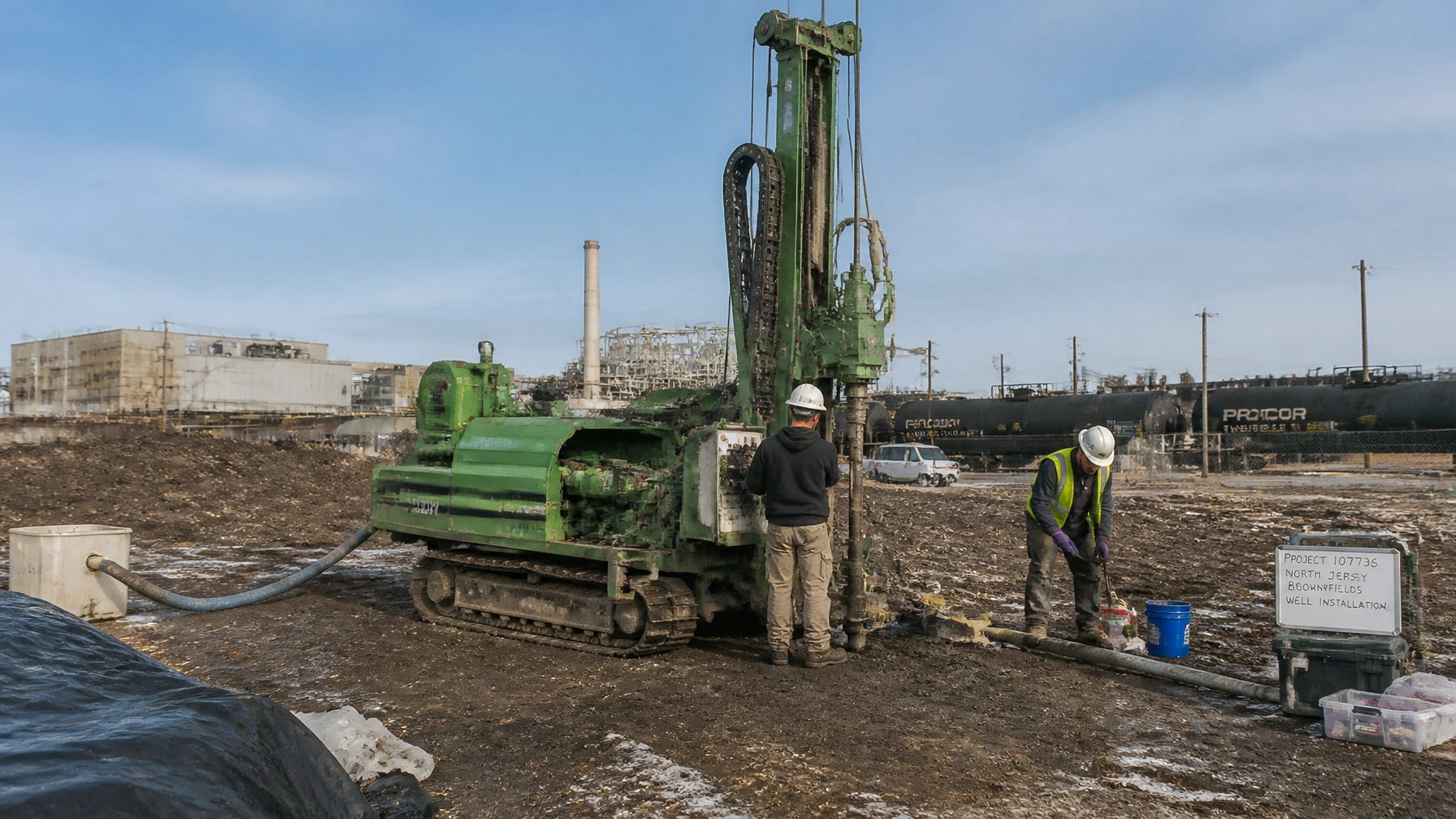
On June 15, 2026, the New Jersey Department of Environmental Protection (NJDEP) officially adopted final, enforceable remediation standards for per- and polyfluoroalkyl substances (PFAS) under N.J.A.C. 7:26D, alongside critical amendments to N.J.A.C. 7:9C (Ground Water Quality Standards) and N.J.A.C. 7:26E (Technical Requirements for Site Remediation).
For years, Licensed Site Remediation Professionals (LSRPs), property owners, and real estate developers across the Garden State have navigated a shifting landscape of interim advisory levels. Those days are officially over. The rules are now codified, binding, and fully enforceable across every active remediation site in New Jersey.
If you are closing on a commercial acquisition, trying to secure financing for an urban redevelopment project, or managing an open Preliminary Assessment (PA) or Site Investigation (SI), these promulgated standards change your liability baseline overnight. Let’s break down what the numbers mean, how the technical testing requirements impact your field strategy, and why navigating this regulatory shift requires more than a generic checklist from a big-box consulting firm.
Decoding the Numbers: Promulgated Standards Under N.J.A.C. 7:26D and 7:9C
The June 15 rulemaking transitions previous interim criteria into permanent, enforceable regulatory thresholds for four core PFAS compounds: PFNA (Perfluorononanoic acid), PFOA (Perfluorooctanoic acid), PFOS (Perfluorooctanesulfonic acid), and GenX (HFPO-DA).
Promulgated PFAS Remediation Standards Overview
| Contaminant | Soil Ingestion-Dermal Residential (mg/kg) | Soil Ingestion-Dermal Non-Residential (mg/kg) | Soil Leachate Migration-to-Groundwater (µg/L) | Groundwater Standard (µg/L) |
|---|---|---|---|---|
| PFNA | 0.047 | 0.67 | 0.26 | 0.013 |
| PFOA | 0.13 | 1.8 | 0.28 | 0.014 |
| PFOS | 0.11 | 1.6 | 0.26 | 0.013 |
| GenX (HFPO-DA) | 0.23 | 3.9 | 0.40 | 0.020 |
Note: For migration-to-groundwater (MGW) soil pathways, generic soil MGW numbers are largely replaced by site-specific evaluations or area-of-concern analyses under N.J.A.C. 7:26D-6.3, making robust laboratory leaching procedures critical.
Crucially, GenX now carries an explicit ground water quality standard of 0.02 µg/L under N.J.A.C. 7:9C Appendix Table 1. These ultra-low thresholds mean that even minute historical background impacts from historic industrial discharges, firefighting foam (AFFF) usage, or atmospheric deposition can instantly trigger mandatory delineation and remediation obligations.

The Technical Challenge: The PFAS Pathway & SPLP Testing Requirements
Understanding how PFAS moves through subsurface environments is essential for meeting NJDEP expectations. Because these "forever chemicals" exhibit unique surfactant properties, high aqueous solubility, and exceptional persistence, standard total metals or VOC investigation playbooks will not cut it.
When evaluating soil and groundwater at sites with potential historical PFAS usage, LSRPs must implement rigorous testing protocols:
- Synthetic Precipitation Leaching Procedure (SPLP): Because generic soil cleanup numbers alone do not capture whether vadose-zone contamination will leach into underlying aquifers, NJDEP heavily relies on SPLP testing (EPA Method 1312) to evaluate the migration-to-groundwater pathway.
- Targeted Analytical Methods: Laboratories must utilize advanced methods (such as modified EPA Method 533 or 537.1) capable of detecting ultra-low nanogram-per-liter (ng/L) concentrations without matrix interference.
- Hydrogeological Cross-Sections: Delineation requires meticulous mapping of soil strata, perched water tables, and confining layers to track how aqueous plumes migrate across property boundaries.

At Envicon Group, we don't just pull samples and cross our fingers; we deploy field-first engineering strategies designed to isolate source areas, predict contaminant fate, and prevent costly scope creep before it hits your balance sheet.
Direct Implications for LSRPs and Site Owners
The codification of these standards under N.J.A.C. 7:26E means that open Response Action Outcomes (RAOs), ongoing Remedial Investigations (RIs), and even previously closed cases where PFAS was unaddressed must be re-evaluated.
Here is what property owners and developers need to anticipate:
- Due Diligence and Phase I/II ESAs: Lenders across the NY/NJ metro area are aggressively scrutinizing commercial and industrial acquisitions for historical PFAS risks. A Phase I Environmental Site Assessment that ignores recognized environmental conditions (RECs) related to historical plating, manufacturing, textile finishing, or AFFF storage will be flagged immediately during underwriting.
- Re-mobilization and Re-sampling: If your site investigation was completed under older interim guidelines, verify whether your data meets the newly promulgated N.J.A.C. 7:26D leachate and groundwater criteria. A rejected submittal or missed pathway means expensive re-mobilization, extended project delays, and mounting carrying costs.
- Regulatory Timelines: NJDEP reviewers are enforcing these standards rigorously. Sitting in a bureaucratic queue with a consultant who doesn't know your reviewer by name is a fast track to missed transaction deadlines and stalled capital.
The Big-Firm Trap vs. The Envicon Difference
When facing complex regulatory shifts like the finalization of N.J.A.C. 7:26D, many developers instinctively turn to large national engineering firms. It feels like the safe, institutional choice.
Unfortunately, that choice often comes with hidden traps:
- The Bait-and-Switch: You talk to a senior partner during the pitch, but your project is immediately handed off to junior staff who are reading regional playbooks they don't fully understand.
- Defensive Reporting: Big firms write bloated, overly cautious reports designed to protect the consultant from liability rather than moving your project to a clear path for closure.
- The Black Box: Regulatory coordination becomes an opaque mystery. You never know who is talking to your NJDEP case manager or when your submittal will actually be reviewed.
At Envicon Group, we operate differently. We are a family-owned, PE-led, field-first firm with 20 years of direct, daily relationships with NJ DEP, NYC OER, NYSDEC, and local agencies. When you partner with us, you get direct access to seasoned professionals who sit at the table with regulators: not behind a queue.
We combine decades of hands-on field experience with proprietary technology infrastructure, including real-time project reporting dashboards that give you complete visibility into schedule, budget, deliverable status, and field activity. No surprises, no bloated change orders, and no guesswork: just cleared paths to buildable sites.

Summary & Actionable Takeaways
The June 15, 2026 adoption of N.J.A.C. 7:26D remediation standards for PFNA, PFOA, PFOS, and GenX marks a permanent turning point for New Jersey real estate development and environmental compliance. To protect your investment and maintain deal momentum, keep these action items in mind:
- Audit Active Portfolios: Review all open Phase II ESAs, RIs, and RAO applications against the new promulgated soil leachate and groundwater criteria.
- Upgrade Due Diligence: Ensure your environmental team is utilizing rigorous SPLP testing and advanced laboratory methods to evaluate migration-to-groundwater pathways accurately.
- Partner with Regional Experts: Eliminate regulatory guesswork by working with a hands-on, agile team that knows the NJDEP landscape inside and out.
Collaboration is not a buzzword: it's how we work. Whether you need an urgent Phase II assessment, a tailored remedial design, or expert LSRP guidance through the latest NJDEP standards, Envicon Group is ready to remove the obstacles between you and a buildable site.
Ready to Navigate the New PFAS Standards?
- Call now: (917) 764-2171
- Book a free consultation: Schedule with our engineering team
- Explore your site risk: Use our Risk Screener Tool
Leave a Reply