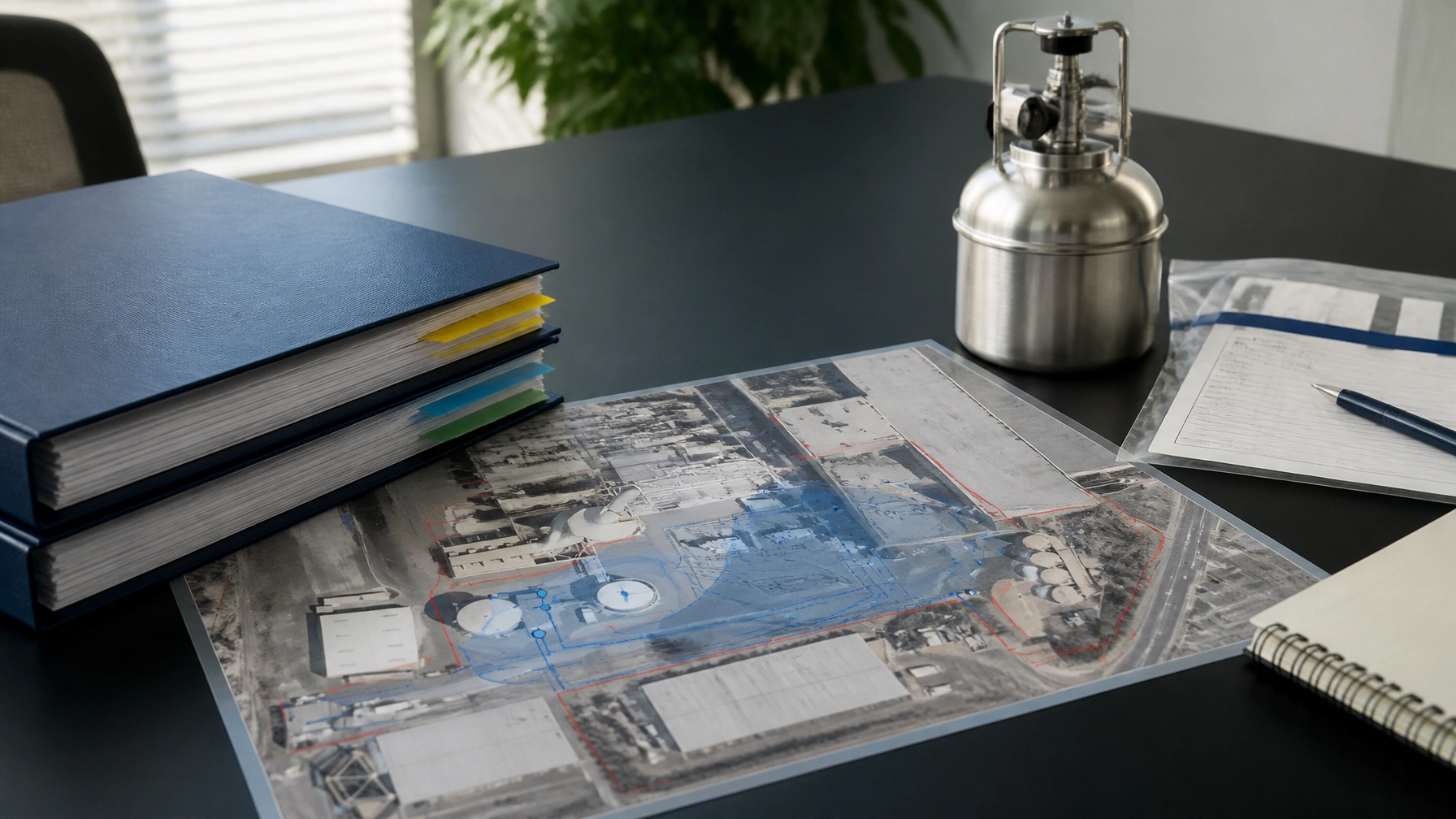
New Jersey’s SRRA 2.0 rule changes are now affecting how contaminated property owners, developers, attorneys, and LSRPs prepare remedial action permits and transaction files.
The changes are implemented through amendments to N.J.A.C. 7:26C, including Subchapter 7 for institutional controls and remedial action permits. The current NJDEP courtesy copy identifies a last amended date of February 15, 2026. NJDEP also continues to update the CSRR forms library throughout 2026.
For a property in Newark, Jersey City, Hoboken, Bayonne, Hudson County, Bergen County, or Essex County, the practical issue is straightforward:
A RAP application that was acceptable under an older process may not be complete under the current framework.
What SRRA 2.0 changes for New Jersey transactions
SRRA 2.0 originates from P.L.2019, c.263 and updates the administrative structure surrounding New Jersey’s Site Remediation Reform Act program.
The most important transaction-related changes include:
- Indoor air is now expressly addressed as a remedial action permit component.
- Indoor Air Notification Areas, or IANAs, are incorporated into the institutional-control framework.
- RAP applications are organized around soil, groundwater, and indoor air media components.
- NJDEP has issued revised forms for new RAPs, technical modifications, administrative changes, permit combinations, and media-component termination.
- Biennial protectiveness certifications require more complete documentation of sampling and monitoring changes.
- RAP, RAR, GIS, notification, financial assurance, and RAO documentation must work together as one defensible file.
The legal requirements come from the rule. The forms and instructions provide the Department’s current filing mechanics. Those are related, but they are not the same thing.
Rule requirements versus current NJDEP filing instructions
This distinction matters during a closing.
| Requirement | Where to verify it | Why it matters |
|---|---|---|
| Institutional controls and RAP obligations | N.J.A.C. 7:26C | Establishes the legal framework |
| Current application and certification forms | NJDEP CSRR Forms Library | Identifies the form version NJDEP currently accepts |
| Indoor Air Notification Area materials | NJDEP IANA guidance | Provides project-specific implementation details |
| Technical sampling and vapor intrusion work | NJDEP Guidance Library | Supports LSRP technical decisions |
| Electronic submissions | NJDEP Online Services | Controls portal-based filing requirements |
A project-specific instruction from NJDEP or a case manager does not replace the rule. Likewise, downloading a current form does not eliminate the need to evaluate the applicable rule, technical guidance, permit conditions, or site history.
NJDEP RAP forms in 2026
NJDEP’s current forms library lists separate documents for the major RAP actions. As of September 8, 2026, key forms include:
- RAP Initial or New Media Component Application, Version 1.2, July 27, 2026
- RAP Technical Modification Application, Version 1.2, June 15, 2026
- RAP Administrative Changes Application, Version 1.3, June 15, 2026
- RAP Application to Administratively Combine RAPs, Version 1.1, June 15, 2026
- RAP Termination or Removal of a Media Component Application, Version 1.1, June 15, 2026
- Remedial Action Protectiveness and Biennial Certification Form, Version 1.2, May 8, 2026
- Indoor Air Monitoring Plan Spreadsheet, Version 1.0, February 17, 2026
- Indoor Air Notification Area Fact Sheet Form, Version 1.1, May 15, 2026
Form versions can change during an active transaction. Always confirm the version and update log immediately before filing.
“Users of this information should not consider these materials the sole source of information sufficient in itself to dictate any outcome or decision on the remediation of a contaminated site.”
NJDEP, CSRR Forms Library
That warning applies directly to acquisition and closing work. A form is a filing tool. It is not a substitute for an LSRP’s review of the remedy.
Indoor air is now a RAP media component
The SRRA 2.0 framework treats indoor air as a distinct component of remedial action permitting.
That matters when a property has:
- A vapor mitigation system.
- Ongoing indoor-air monitoring.
- A sub-slab depressurization system.
- A vapor barrier or other engineering control.
- A continuing vapor intrusion pathway.
- Indoor-air conditions that require notification and long-term management.
The practical change is that soil, groundwater, and indoor air can be managed within a coordinated RAP structure. This helps avoid fragmented files, but it also requires better coordination between the remedial action report, monitoring plan, permit application, and long-term obligations.
For a Newark warehouse conversion or a Jersey City mixed-use project, the LSRP should confirm whether the existing file addresses indoor air as a current or potential exposure pathway. A historic soil or groundwater RAP may not fully describe what a new residential or commercial use requires.
Envicon’s vapor intrusion assessment service combines sub-slab investigation, indoor-air sampling, laboratory analysis, and regulatory documentation. The objective is not to generate another report. It is to determine whether the property has a defensible path to occupancy, redevelopment, and closure.
NJDEP indoor air notification area requirements
An Indoor Air Notification Area, or IANA, is an institutional control used to identify and communicate an area where indoor-air or vapor intrusion conditions require continuing notification or management.
An IANA may require:
- A defined geographic boundary.
- GIS-compatible mapping.
- Documentation of the buildings, parcels, and receptors within the area.
- Indoor-air, sub-slab, soil-gas, or related sampling information.
- Notification to applicable municipalities, counties, owners, tenants, or occupants.
- A fact sheet or other public communication.
- Coordination with the RAP and any applicable monitoring plan.
- Continuing certification that the remedy remains protective.
The IANA requirements are not automatically triggered by every vapor-related detection. The LSRP must evaluate site-specific conditions, the exposure pathway, building use, sampling results, mitigation status, and applicable NJDEP guidance.
This is especially important in dense areas such as Hoboken, Bayonne, Jersey City, Newark, and older industrial corridors in Hudson, Bergen, and Essex Counties. A mapped notification area can extend beyond the parcel where the original discharge occurred if the technical record supports a broader vapor or indoor-air concern.
The IANA fact sheet and mapping should be reviewed alongside the property’s title records, deed notices, leases, site management documents, and transaction representations. A buyer should understand not only where contamination remains, but also who must be notified and who must maintain the control.

RAP and RAR coordination
A RAP application does not replace the remedial action report.
The RAR documents what was implemented and whether the remedial action achieved the required objectives. The RAP establishes the continuing requirements for controls, monitoring, maintenance, inspections, certifications, and financial assurance.
A coordinated file should connect:
- The approved or certified remedial action workplan.
- Field documentation and construction records.
- Sampling results and laboratory data.
- As-built drawings and GIS-compatible maps.
- The remedial action report.
- The RAP application and applicable supplemental certification.
- The operation, maintenance, and monitoring plan.
- Financial assurance documentation, when required.
- The RAO and its conditions.
- Any deed notice, IANA notification, or other institutional control.
A missing connection can delay a closing even when the physical remedy is complete.
For example, an owner may have a functioning vapor mitigation system but lack a current indoor-air monitoring plan. Another property may have a deed notice that does not match the latest site plan. A third may have an RAO that does not eliminate ongoing RAP obligations.
Technical modifications versus administrative changes
Use the correct RAP pathway.
A technical modification is appropriate when the substance of the remedy or permit conditions changes. Examples can include:
- Changing the engineering control.
- Revising monitoring locations or frequencies.
- Modifying a vapor mitigation system.
- Adding or changing a media component.
- Revising remedial objectives or technical conditions.
An administrative change is intended for non-technical updates, such as:
- Contact information.
- Ownership or permittee information.
- Administrative corrections.
- Other changes that do not alter the protectiveness or operation of the remedy.
The distinction should be made before filing. Using an administrative form for a technical change can create an incomplete submission and force a second filing.
Biennial protectiveness certifications
RAP obligations continue after the transaction closes.
Under the updated framework, biennial protectiveness certifications should address more than whether a control remains in place. The certification process can require:
- Current site and property-use information.
- Inspection and maintenance records.
- Monitoring results.
- Additional sampling performed during the certification period.
- Changes to monitoring plans or schedules.
- Changes in ownership, occupancy, or site conditions.
- Financial assurance and operation-and-maintenance obligations.
- Any new information affecting protectiveness.
A buyer in Jersey City or Hoboken should request the full biennial certification history during due diligence. A seller should identify upcoming certification dates before finalizing representations and closing conditions.
Electronic filing checklist for 2026
Before submitting a RAP package, confirm the following:
- Current NJDEP form version downloaded from the CSRR Forms Library.
- Correct RAP action selected: initial, new media component, technical modification, administrative change, combination, or termination.
- Soil, groundwater, and indoor air components identified consistently across all documents.
- RAR and RAP dates, case numbers, program interest numbers, blocks, and lots match.
- LSRP certifications and responsible-party signatures are complete.
- Indoor-air monitoring plan included when required.
- IANA boundary, fact sheet, notifications, and GIS files included when applicable.
- Laboratory data deliverables and electronic data submissions are complete.
- Required maps are GIS-compatible.
- Financial assurance and cost estimates are updated where engineering controls remain.
- NJDEP fees are confirmed.
- Submission method is correct, whether NJDEP Online, email, or another Department-directed process.
- Proof of submission is saved in the transaction file.
N.J.A.C. 7:26C-1.6 generally requires electronic copies of forms, documents, maps, laboratory data deliverables, sampling data, and GIS-compatible maps unless NJDEP provides different instructions.
What this means for RAO readiness
An RAO is not just a closing document. It is the LSRP’s professional conclusion that the remediation complies with applicable requirements and protects public health, safety, and the environment.
For restricted-use or limited-restricted-use remedies, an RAO may remain tied to:
- A RAP.
- A deed notice.
- An IANA.
- An engineering control.
- Long-term monitoring.
- Biennial certifications.
- Financial assurance.
- Continuing owner and operator duties.
The safest transaction strategy is to perform a RAP file review before the purchase agreement becomes final. That review should identify missing forms, outdated controls, unrecorded notices, open monitoring obligations, and any conflict between the intended redevelopment and the existing remedy.
Envicon provides NJ LSRP services for owners, developers, attorneys, and investors that need a clear path through NJDEP compliance. Our team works directly across Newark, Jersey City, Hoboken, Bayonne, Hudson County, Bergen County, and Essex County.
Official sources
- NJDEP CSRR Forms Library
- NJDEP N.J.A.C. 7:26C courtesy rule
- NJDEP Indoor Air Notification Area guidance
- NJDEP Site Remediation Guidance Library
- NJDEP Online Services
- Envicon NJ LSRP Services
- Envicon Vapor Intrusion Assessment
- Envicon Jersey City environmental consulting
Request a RAP file review
If your property has an existing RAP, vapor mitigation system, IANA, deed notice, or pending RAO, do not wait until the closing deadline to discover a documentation gap.
Request a RAP file review through Envicon. You can also call us at (917) 764-2171 or use our proprietary project risk screener.
The rule changes are technical. The business impact is simple. A complete, coordinated file protects the property, supports the transaction, and keeps the project moving.

Leave a Reply