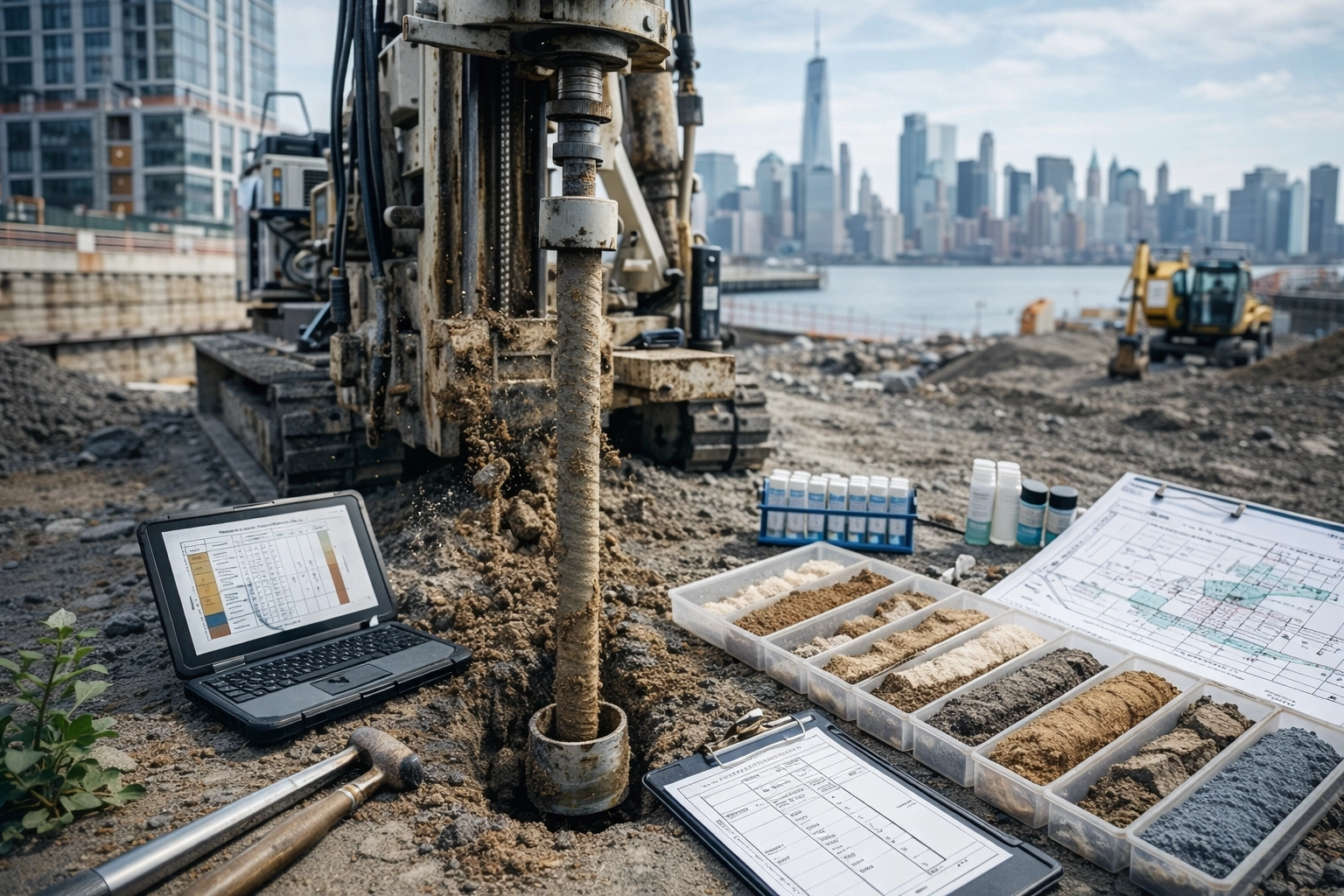
If you’ve spent any time developing property in North Jersey or the five boroughs, you know the drill, literally. You hire an environmental firm to handle your Phase II and an engineering firm to handle your geotech. Then, you spend the next six weeks playing "telephone" between two consultants who aren’t talking to each other.
The environmental guy is worried about NJDEP soil standards and PFAS levels. The geotech guy is focused on blow counts and bearing capacity. Meanwhile, you’re looking at two separate invoices for mobilization, two separate drill rigs taking up space on a tight urban site, and a "black box" of data that doesn't seem to line up.
At Envicon Group, we see this as a massive, avoidable drain on your capital. When you break down geotechnical investigation costs in NJ and NY, the biggest line item isn't usually the lab fees or the drill rig: it’s the friction caused by fragmented engineering.
Here’s why integrated engineering isn't just a "nice to have," but a tactical necessity for keeping your budget from spiraling.
The High Cost of the "Silo" Mentality
In the traditional model, environmental and geotechnical investigations are treated as two different animals. You hire a big-box environmental firm for your due diligence because your lender suggested them. Then, you hire a separate civil engineering firm for your site plan and foundation design.
The result? Redundancy.
We’ve seen sites where an environmental consultant drills ten holes on a Tuesday, and a geotech consultant drills eight more on a Thursday: often just feet away from each other. You just paid for mobilization twice. You paid for two field technicians to stand in the rain twice. And most importantly, you now have two sets of data that haven't been reconciled.
When your geotech report says one thing and your environmental remediation plan says another, the person who pays for that gap is you. It usually shows up as a $50,000 change order during excavation because the "soil management plan" didn't account for the structural needs of the foundation.
Why Integra
ted Engineering Trims the Fat
When we talk about integrated engineering, we’re talking about having one firm handle both the subsurface environmental hazards and the structural requirements of the earth. Here is how that actually saves you money:
1. The "Single Mobilization" Advantage
This is the low-hanging fruit. Drilling is expensive. Between the rig rate, the support truck, and the crew, mobilization can eat up a huge chunk of your initial budget. By combining geotech and environmental borings into one mobilization, we cut that cost in half. One rig, one crew, and a field technician trained to look for both contamination and soil classification.
2. Unified Data Analysis
Research shows that integrated engineering teams significantly reduce costs by identifying issues early. When our engineers look at a boring log, they aren't just looking for "is there oil in the dirt?" They are looking at the moisture content, the density, and the presence of historic fill.
By analyzing this data through a single lens, we can tell you on Day One if your remediation strategy will conflict with your foundation design. This prevents the "Project Stall" that happens when a civil engineer realizes three months later that the soil they planned to build on is actually a regulated waste that needs to be hauled off-site.
3. Ending the "Black Box" of Coordination
As a developer, you shouldn't be the one explaining an environmental site assessment (ESA) to a civil engineer. When the coordination happens internally at a firm like Envicon, that "black box" disappears. We take ownership of the outcome, not just the report.
"Collaboration is not a buzzword: it’s how we work. We don't just deliver services; we help transform underused properties into thriving assets by removing the obstacles between you and a buildable site."
Leveraging Technology to Lower Costs
We don't just guess where the problems are. Advanced technology is the great equalizer when it comes to geotechnical investigation costs in NJ and NYC.
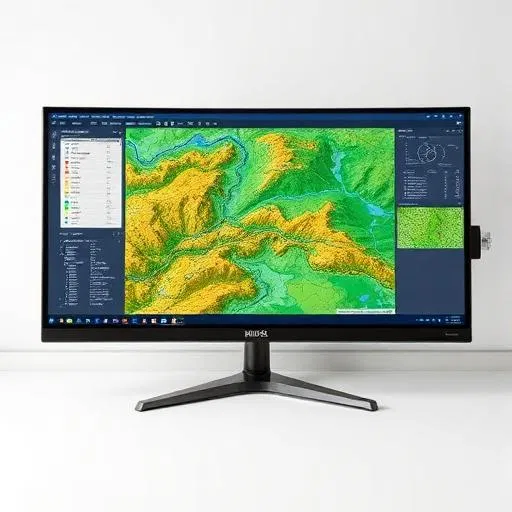
By using GIS analysis and 3D modeling, we can visualize the subsurface conditions before the first boring is even drilled. We look at historical topographical maps, previous site uses, and regional geological data to pinpoint exactly where we need to sample.
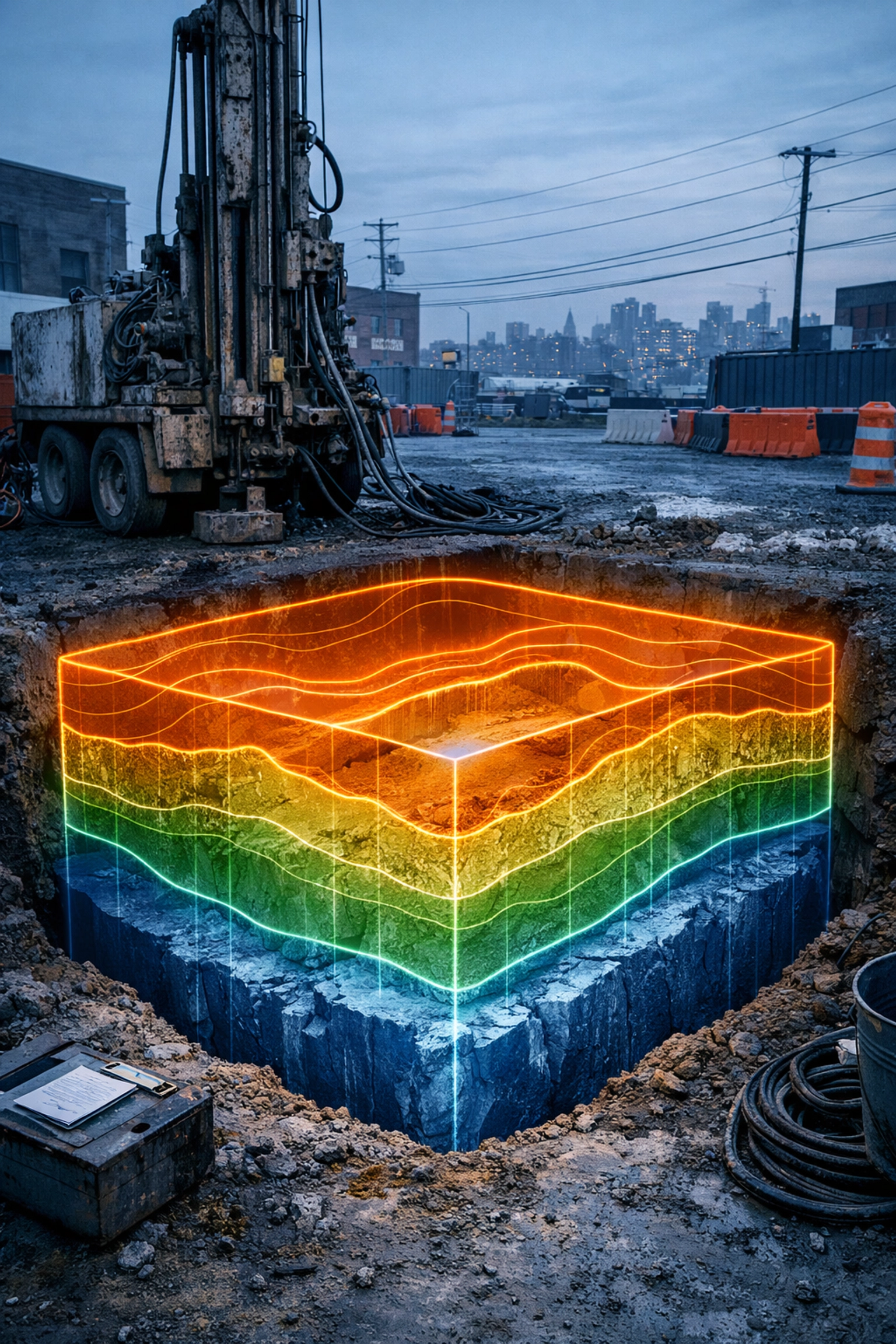
According to industry data, AI-based platforms and advanced data management have helped some commercial projects achieve a 20-30% reduction in evaluation costs. At Envicon, we use these tools to ensure we aren't drilling unnecessary holes. We collect high-quality data once and use it throughout the entire project lifecycle: from Phase I ESA to the final Certificate of Occupancy.
The Hidden Costs of "Cheap" Geotech
We often see developers go with the lowest bidder for a geotech report, only to get a "cookie-cutter" document that is so vague it’s useless. A big national firm might send a junior staffer who’s never seen a NJDEP soil log to your site. They’ll give you a report that is written defensively: full of "maybes" and "further investigation required."
That isn't a report; it's a liability.
A "cheap" investigation that misses a pocket of peat or a layer of contaminated historic fill will cost you ten times the initial "savings" once the excavators are on-site. Every day your machine is sitting idle at $500 an hour because of an "unexpected subsurface condition," your ROI is bleeding out.
At Envicon, we are PE-led and field-first. We know the regulators at the NJDEP and the NYC OER. We know what they are going to look for, and we make sure our geotechnical investigations are robust enough to stand up to their scrutiny while remaining focused on your bottom line.
Real-World Impact: The Developer’s Bottom Line
Let's look at the numbers. On a typical mid-sized redevelopment project in Hudson County:
- Traditional Approach: Environmental ($15k) + Geotech ($12k) + Coordination Friction/Delays ($10k+) = $37,000+
- Envicon Integrated Approach: Combined Subsurface Investigation ($22k) + Streamlined Engineering ($5k) = $27,000
You aren't just saving $10,000. You are gaining weeks of time. In the world of high-stakes development, time is the only commodity you can't buy back.
Summary: How to Optimize Your Geotech Spend
If you want to keep your geotechnical investigation costs under control, stop hiring consultants in a vacuum.
- Integrated Teams: Hire a firm that understands both the civil and environmental side of the dirt.
- Preliminary Research: Use historical data and GIS to narrow your scope before you mobilize.
- Technology: Use firms that leverage digital modeling to predict risks.
- Local Fluency: Work with people who know the local geology and the local regulators.
At Envicon Group, we don’t sell reports. We sell cleared paths. We sit at the table with the architects and the contractors to ensure that what we find in the ground doesn't stop your project in its tracks.
Ready to get a handle on your site's subsurface risks without the big-firm fluff? Contact us today and let’s talk about your next project.
Takeaway Checklist for Developers:
- Does my environmental consultant talk to my geotech engineer?
- Am I paying for two mobilizations on the same site?
- Is my soil management plan aligned with my foundation design?
- Does my consultant have direct experience with NYC OER or NJDEP reviewers?
- Is the data I'm paying for being used to move the project forward, or just to check a box for the lender?
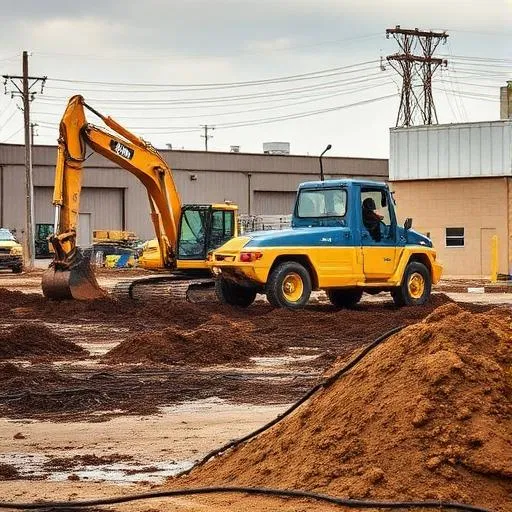
Whether you’re dealing with a complex brownfield redevelopment or a straightforward commercial build, the goal is the same: a clean, buildable site, delivered on time and on budget. That’s the Envicon difference
Leave a Reply