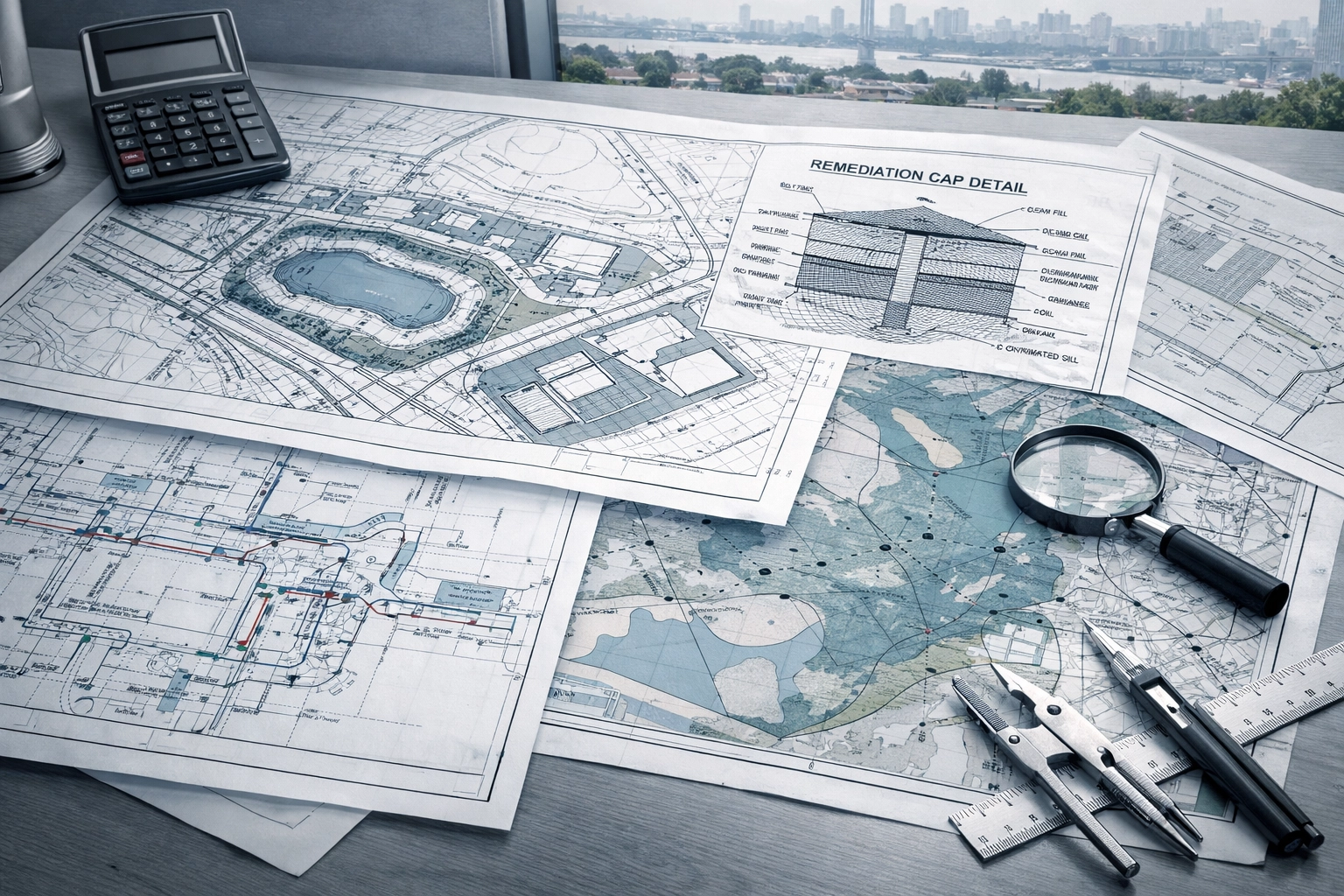
If you’ve spent any time developing in New Jersey, you know the drill. You find a strong site, the numbers work, and then the approval process starts pulling your schedule in three different directions. In NJ, that pressure usually comes from the NJDEP, local planning boards, stormwater rules, and legacy site conditions that don’t care about your closing date.
For years, the standard setup has been split teams. One consultant handles grading, drainage, and utility design. Another handles the Phase I ESA, Phase II sampling, remediation, or LSRP coordination. On paper, that looks organized. In practice, it often creates delay.
Here’s the issue: a siloed process is one of the biggest reasons projects stall during permitting, redesign, or construction.
At Envicon, we take a different approach. We integrate site civil and environmental engineering in NJ from the start so your layout, due diligence, remediation strategy, and approval path work together. That matters when you need integrated site civil and environmental engineering NJ, NJ site development and environmental permitting support, and brownfield site civil engineering and remediation planning NJ under one roof.
As we often tell clients, "The fastest approval path is usually the one that solves civil and environmental issues at the same time." When those disciplines stay aligned, you cut rework, protect your budget, and keep momentum.
The Hidden Cost of the "Silo" Mentality
In NJ, the environment and the infrastructure are inextricably linked. You can’t move a yard of dirt on a brownfield site without triggering a dozen environmental protocols. Conversely, you can’t design a remediation cap without knowing exactly how your stormwater management system is going to sit on top of it.
When these teams work in isolation, the project suffers from "retrofitting." The civil team designs a beautiful site layout, only for the environmental team to realize three weeks later that a proposed bioswale sits right on top of a legacy plume. Now you’re back to the drawing board, your permit clock restarts, and your carrying costs are climbing.
"A project's success in New Jersey isn't determined by how well you design a site, but by how well you integrate that design into the state's rigid regulatory framework from day one."
By integrating civil and site engineering NJ expertise with environmental due diligence for developers NJ, we eliminate that friction. We also support clients looking for NJ environmental and civil engineering for commercial redevelopment, site planning and environmental compliance consulting NJ, and civil engineering and remediation coordination for NJ developers. We aren't just checking boxes; we're lining up design decisions with compliance decisions before they become expensive problems.
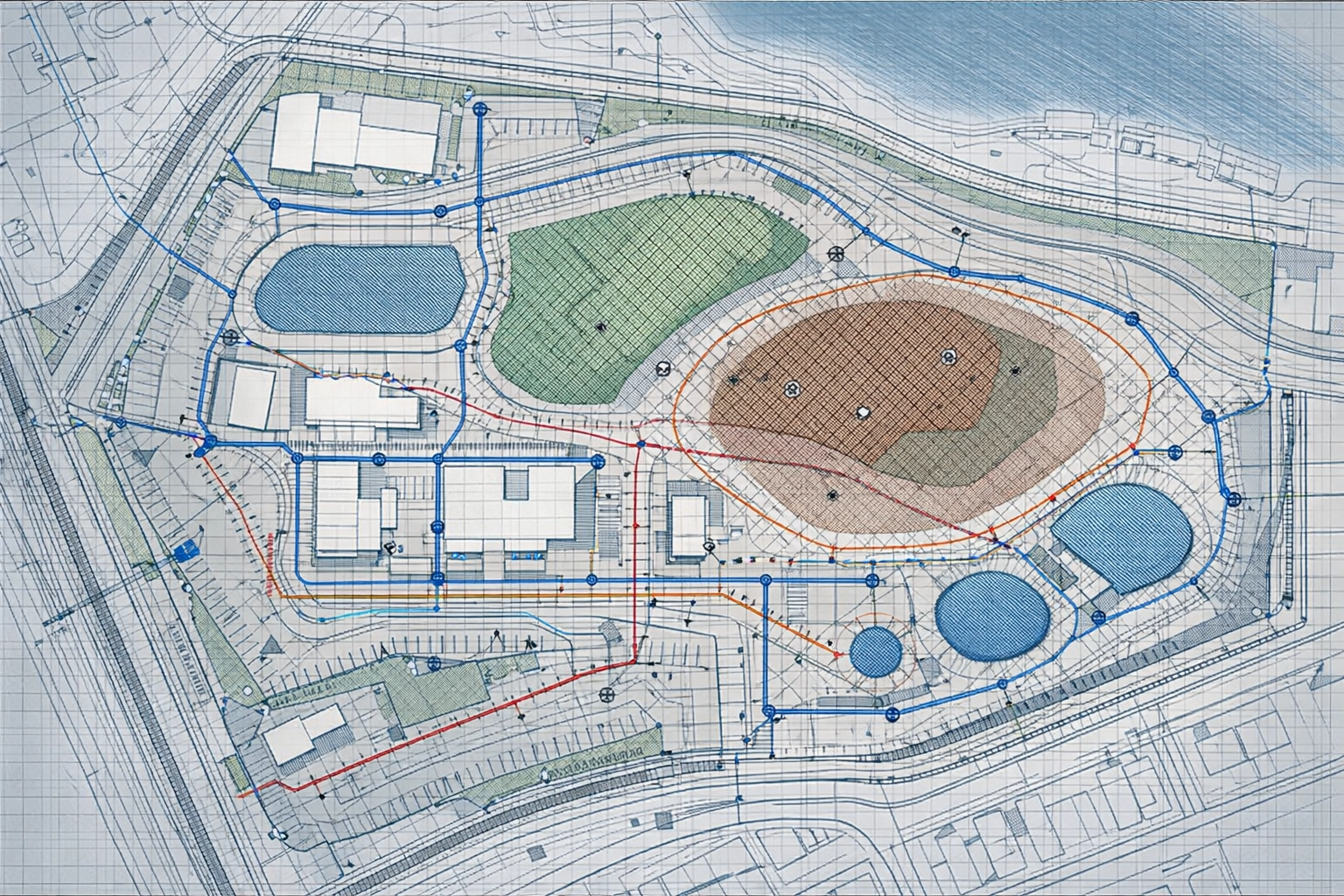
Navigating the NJDEP Regulatory Maze
New Jersey remains one of the toughest states for land use and redevelopment. Between the Flood Hazard Area Control Act rules, the Freshwater Wetlands Protection Act rules, and the state’s Stormwater Management rules, the margin for error stays small.
A unified approach lets us run feasibility reviews that are actually useful. We don’t just study topography. We review soil conditions, groundwater constraints, historic fill, drainage impacts, and likely permitting triggers together.
On a site in Newark, Jersey City, or anywhere in North Jersey, that matters. Utility trenching can affect vapor pathways. Stormwater features can conflict with capped areas. Grading changes can influence remedial design limits. If those issues get reviewed by separate teams at separate times, your project pays for it later.
A simple rule we follow is this: "If the civil set and the environmental strategy don’t agree early, the field will force the conversation later." And field fixes are always more expensive.
Environmental Justice: The New Frontier of NJ Approvals
If you haven't been paying attention to New Jersey’s Environmental Justice (EJ) Law, you need to start. New Jersey was the first state in the nation to require the DEP to deny permits for certain facilities if they pose a disproportionate environmental or public health risk to "overburdened communities."
This isn't just a "check the box" requirement. It requires a deep dive into environmental stressors: air quality, contaminated sites, and water pollution.
When you have a unified team, the EJ impact statement isn't a separate, scary report that shows up at the end. It’s a design constraint that informs the site layout from the beginning. We help our clients choose materials, site layouts, and green infrastructure that actively mitigate these stressors, making the approval process much smoother when it reaches the state level.
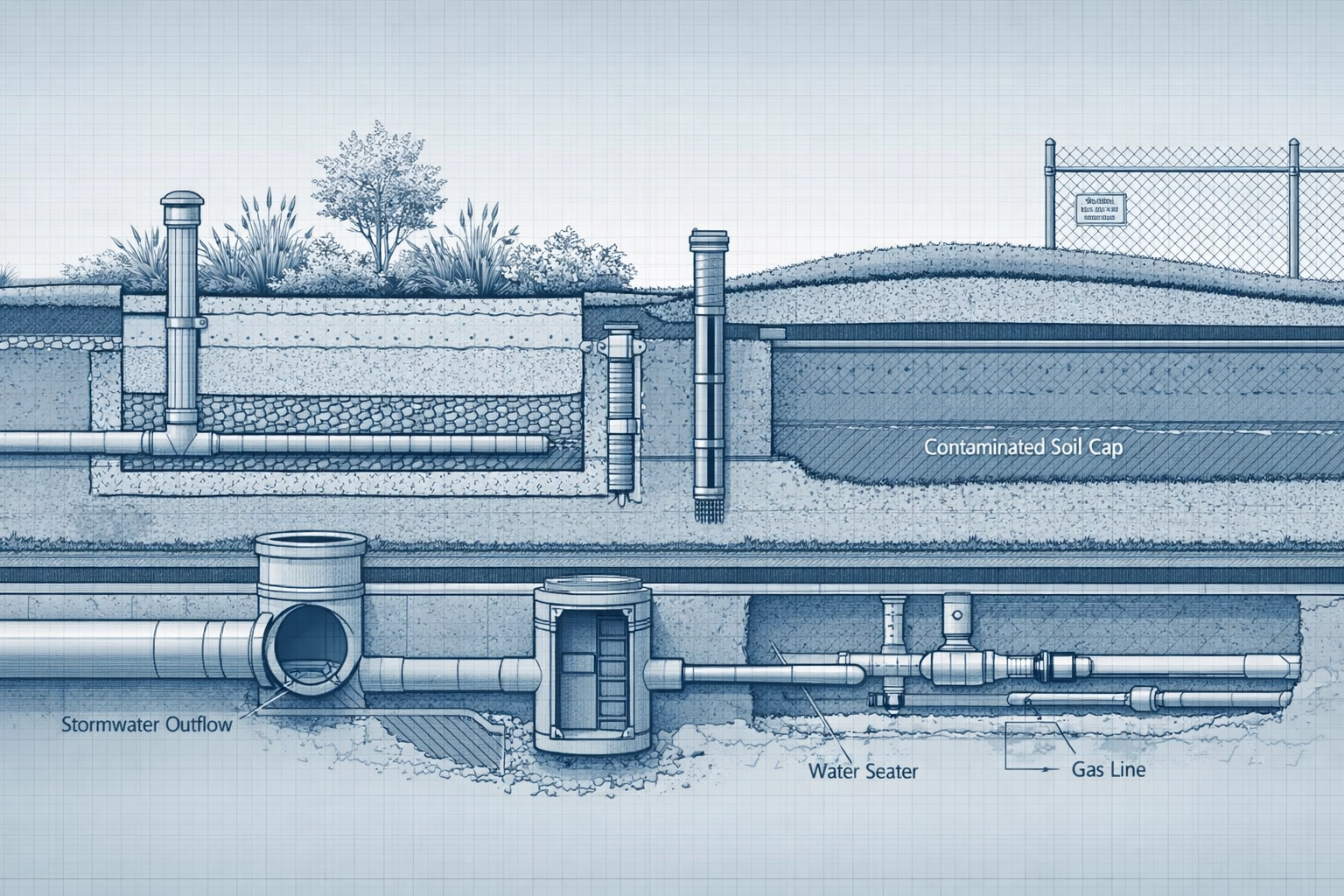
Technical blueprint visual showing how stormwater controls, utility layouts, and remediation details need to work together on a New Jersey redevelopment site.
Stormwater and Remediation: A Delicate Dance
New Jersey’s recent shift toward mandatory Green Infrastructure (GI) has changed the game for site design. You can’t just dig a big hole and call it a detention basin anymore. You need pervious pavement, rain gardens, and bioretention systems.
Now, imagine trying to install a bioretention system on a site that has a soil cap as part of a remediation plan. If the water infiltrates through the GI and hits the contaminated soil, you’ve just created a massive groundwater problem.
This is where the unified approach shines. Our engineers and environmental specialists work together to design "lined" green infrastructure or strategically locate basins in clean zones. This level of coordination is something the "big box" consulting firms often struggle with because their departments are too far apart. At Envicon, we’re all at the same table.
Why Envicon is the Alternative to the "Big Box" Consultant
We know who the big players are. You’ve probably hired them before. They have 5,000 employees and a massive office in a skyscraper. But here is the question: when the NJDEP sends a deficiency letter on a Friday afternoon, who is actually looking at it? Is it a junior staffer who is juggling ten other projects, or is it a partner who understands your business goals?
Our clients come to us because they are tired of being a number. They want:
- Accountability: When the civil and environmental teams are the same team, there is no finger-pointing. We own the project from start to finish.
- Responsiveness: In the NJ development world, a week’s delay can cost tens of thousands of dollars. We move at the speed of your project, not the speed of a corporate bureaucracy.
- Local Authority: We don't just know the regulations; we know the people who enforce them. We’ve built trust with regulators across New Jersey, and that trust translates into smoother approvals for you.
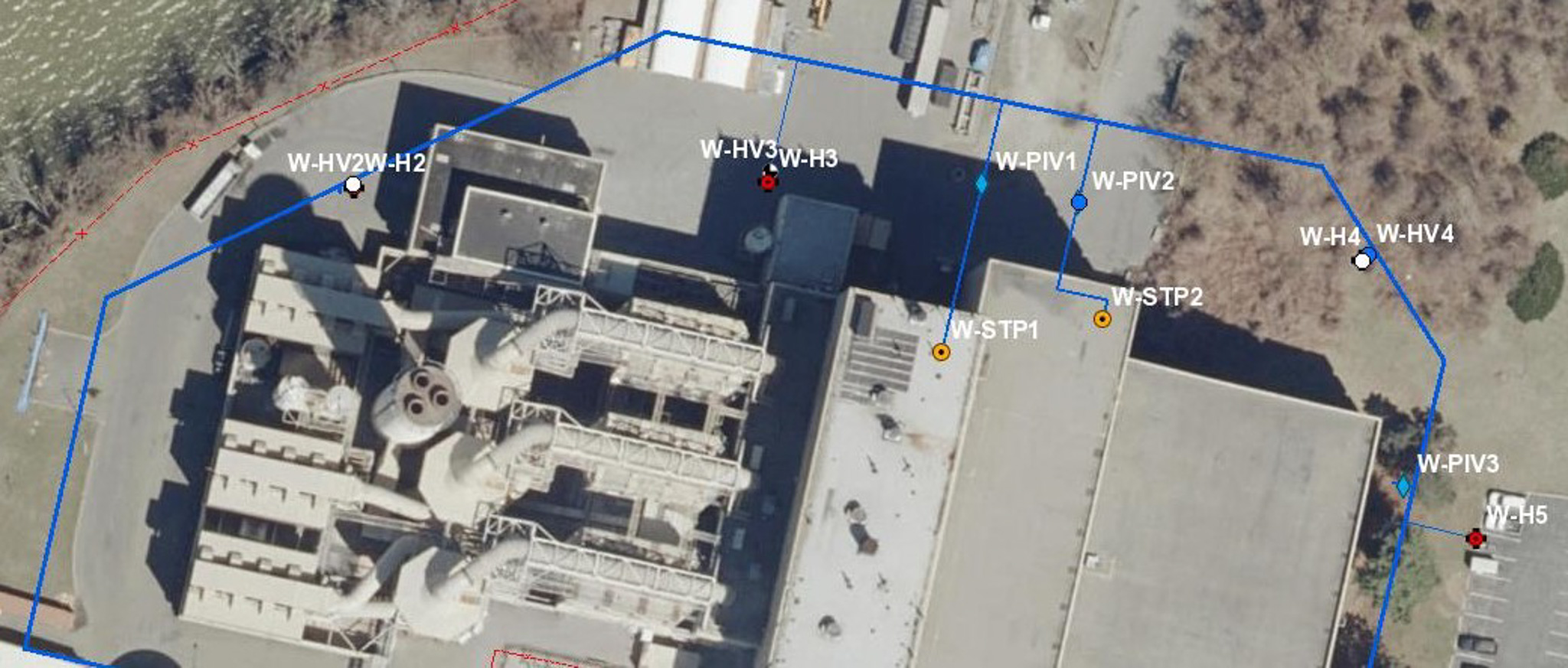
- Integrated Technology: We use advanced GIS mapping and 3D modeling to visualize how site engineering and environmental remediation intersect before a single shovel hits the ground.
Summary: The Unified Path Forward
The "New Jersey Tax": the cost of doing business in a high-regulation environment: is real. But it’s a tax you can minimize with the right strategy. By choosing a unified approach to site civil and environmental engineering, you are:
- Reducing Redesign Costs: Catching conflicts during the concept phase, not the construction phase.
- Accelerating Timelines: Concurrent permitting and data sharing mean faster submissions to the NJDEP and local boards.
- Mitigating Risk: Ensuring that your civil design doesn't accidentally compromise your environmental compliance (and vice versa).
- Building Community Trust: Utilizing Environmental Justice and Green Infrastructure as tools for project advocacy rather than hurdles to clear.
At the end of the day, development is about vision. You see what a site could be. Our job is to give you a practical path to get there without unnecessary redesign, avoidable delays, or consultant handoffs that slow everything down.
Stop managing two teams that only compare notes after a problem shows up. Switch to a partner that sees the whole site from day one. That’s how you move faster, respond better to NJDEP comments, and protect your timeline.
Key takeaway: if you want smoother approvals, fewer surprises, and better coordination, integrated site-civil and environmental engineering in NJ is not a luxury. It’s the smarter operating model.
Ready to streamline your next NJ project? Contact Envicon today and let’s discuss how our unified approach can shave months off your approval timeline.
Explore our Services or check out our Projects to see how we’re changing the landscape of NJ development.
Contact Envicon Group
- Website: https://wp.envicongroup.com
- Contact: https://wp.envicongroup.com/contact

Leave a Reply