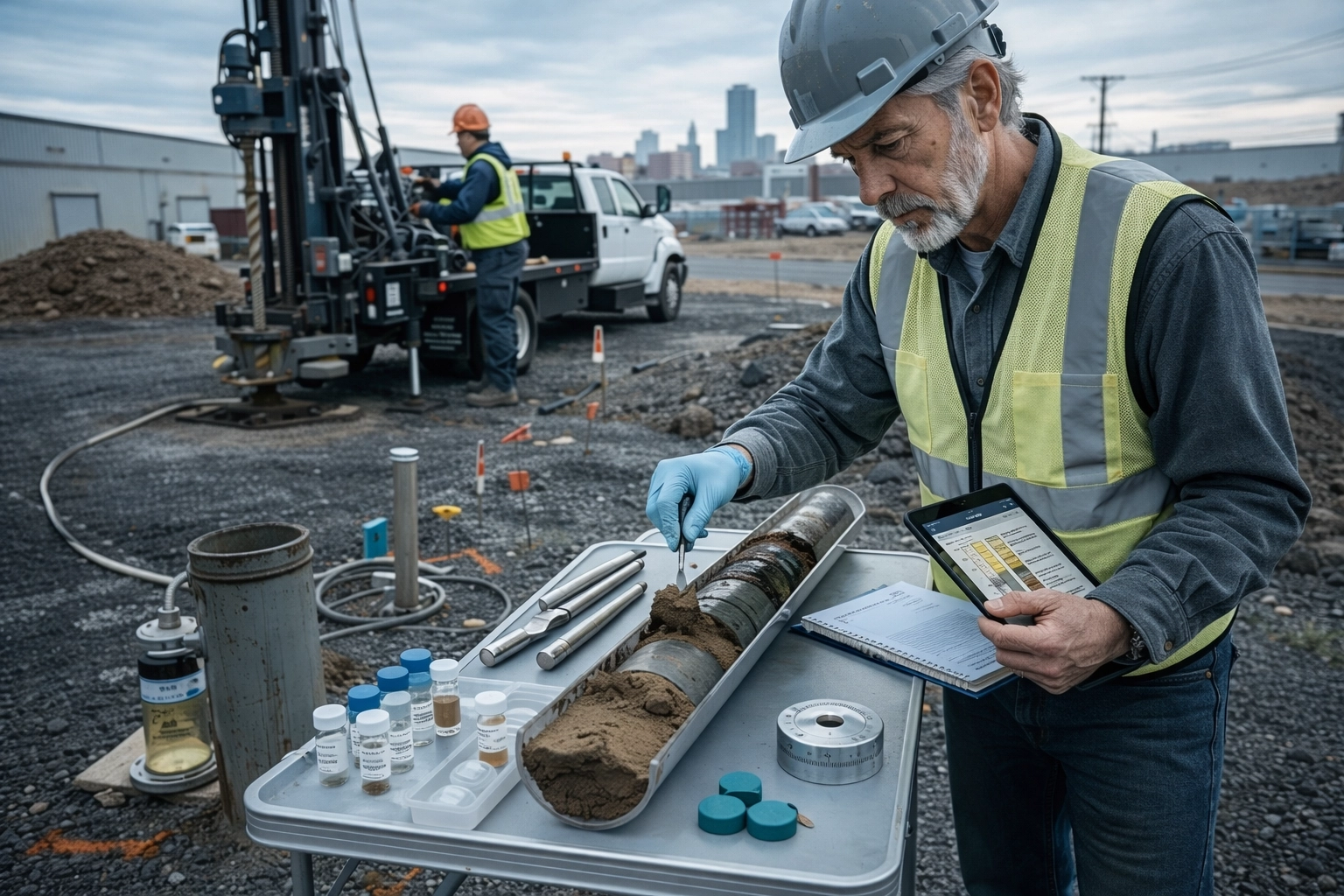
You’re staring at a spreadsheet where the "Carry Costs" line item is growing faster than your foundation. Your lender is asking for the final Remedial Investigation Report (RIR), your equity partners are losing patience, and your consultant just told you the lab is "backed up."
In the New Jersey development world, a stalled Phase II Environmental Site Assessment (ESA) isn't just a technical delay: it’s a financial bleed. Every week your project sits in a regulatory or analytical queue, you’re burning through interest and missing your market window.
At Envicon Group, we don’t look at a Phase II as a checklist of soil borings. We look at it as the primary obstacle between you and a buildable site. If your current LSRP (Licensed Site Remediation Professional) is treating your project like a science experiment rather than a real estate transaction, you have a problem.
Here is the truth about why Phase II investigations stall in New Jersey and how we move the needle when the big-box firms get stuck.
The "Surface Pain": Why You’re Not Closing
Most developers expect a Phase II to take three to four weeks. When that stretches into three months, the "surface pain" is obvious: the deal won't close. But the root causes are often hidden in how the investigation was designed.
1. The Lab Processing Trap
Standard lab turnaround is typically 5 to 10 business days. However, if your consultant waited until the last minute to mobilize, or if they didn't pre-schedule lab capacity for a large-scale site investigation, you’re at the mercy of the pile. We’ve seen projects sit for an extra two weeks simply because a junior staffer at a national firm didn't flag "expedited" on a chain of custody for a critical closing.
2. The New 2025 Regulatory Hurdles
The NJDEP doesn't make things easy. We are currently navigating a massive shift in standards. As of February 3, 2025, more stringent Groundwater Quality Standards went into effect. Following that, the updated Soil Remediation Standards became effective on August 4, 2025.
If your Phase II was scoped using 2024 numbers, your data might already be obsolete. A consultant who isn't ahead of these dates will hand you a report that your lender’s counsel will shred, forcing a re-mobilization and re-sampling. That’s a month of your life you’ll never get back.
The Business Impact: The High Cost of "Wait and See"
When a Phase II Environmental Site Assessment in NJ stalls, the impact ripples far beyond the environmental department.
- Lender Fatigue: Banks hate uncertainty. If you can't provide a clear "Response Action Outcome" (RAO) path, your financing terms can shift, or worse, the loan committee walks.
- NJDEP Direct Oversight: This is the ultimate "bogeyman." Under the Site Remediation Reform Act (SRRA), if you miss mandatory remedial timeframes, the NJDEP can pull your project into "Direct Oversight." This means you lose the flexibility of an LSRP and the State starts calling the shots. This adds years: not months: to your timeline.
- Opportunity Cost: While you're arguing over a "limit of confidence" in a soil sample, your competitors are breaking ground.
The LSRP "Secret": It’s About the Relationship, Not Just the Rules
In New Jersey, your LSRP is the gatekeeper. They have the power to issue the RAO, but they also carry the professional liability. This leads many big-firm LSRPs to be overly "conservative": which is code for "slow and expensive." They’ll recommend three more borings just to be safe, even if the data already tells the story.
The Envicon Difference: We believe integrity is about delivering the truth, not hiding behind extra billable hours. Because we are a licenced professional-led, relationship-driven firm, we don't just guess what the NJDEP wants. We know the reviewers. We understand the specific nuances of Hudson County vs. the Pine Barrens.
When a site is complex, we don't send a junior tech to talk to the state. We sit at the table with the regulators. We frame the data in a way that shows compliance while keeping the project moving. We don't sell reports; we sell cleared paths.

Why Big-Box Consultants Fail New Jersey Developers
If you’re working with a national firm, you’re likely experiencing the "Big-Box Pain":
- The Junior Staff Shuffle: You met a Senior Partner at the pitch, but a 22-year-old with six months of experience is the one actually supervising your soil borings. They don't know how to pivot when they hit a refusal at 4 feet.
- The Change Order Culture: Big firms lowball the initial Phase II bid and then hit you with change orders the moment a sample comes back "hot."
- Defensive Writing: Their reports are 500 pages of fluff designed to protect their legal team, not to help you get a building permit.
At Envicon, we focus on Construction Oversight and remedial design from the jump. We assume the site has issues: that's why you hired us. Our job is to quantify that risk and give you a number you can take to the bank.

Caption: Envicon uses advanced data modeling to visualize subsurface plumes, allowing us to target samples and reduce unnecessary drilling.
How We Speed Up the Phase II Process
- Direct Agency Face-Time: We don’t wait in a queue. We proactively communicate with the NJDEP to ensure our remedial strategies align with their current expectations, especially regarding PFAS and emerging contaminants.
- Integrated Site-Civil Thinking: Because we handle civil engineering as well as environmental, we look at your Phase II through the lens of your future foundation. We don't just sample soil; we look at how that soil impacts your grading and drainage plans.
- Technology as a Catalyst: We use digital field tools to track data in real-time. If we see a hit in the field, we can step out and delineate immediately, rather than waiting a week for lab results and then re-mobilizing.
"Collaboration is not a buzzword at Envicon: it’s how we survive the NJDEP regulatory maze. We treat the developer’s capital as if it were our own." : Jason Pancoast, CEO.
Moving Toward the Close
If your project is currently stalled, it’s time to ask your current consultant some hard questions:
- "Are we on track for the mandatory NJDEP remedial investigation timeframe?"
- "How do the February 2025 groundwater standards change our RAO path?"
- "Who is our specific point of contact at the Department, and when was the last time we spoke to them?"
If you get "corporate speak" in response, you’re losing money.
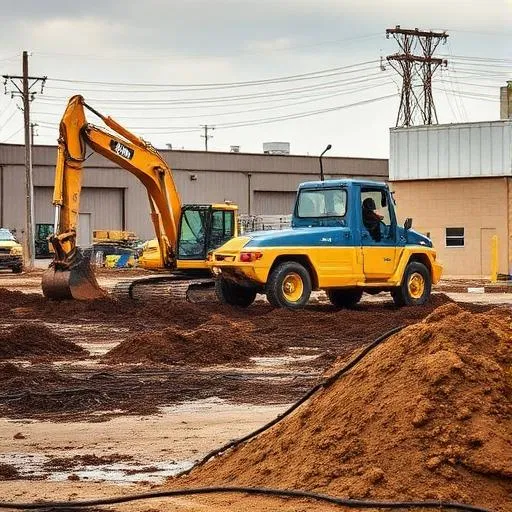
Summary & Takeaways
The Phase II investigation doesn't have to be the death of your deal. By understanding the regulatory landscape and hiring a firm that prioritizes your closing date over their own billable hours, you can navigate even the messiest NJDEP requirements.
- Be Proactive with 2025 Standards: Don't let old data kill a new deal. Ensure your sampling plans account for the latest NJDEP soil and water thresholds.
- Avoid Direct Oversight: Keep a tight leash on mandatory timeframes. Once the State takes control, your costs will triple.
- Choose Authority Over Size: A large firm provides a "safe" name for the lender, but a boutique, expert-led firm like Envicon provides the actual results that get the project built.
Your Phase I found a "Recognized Environmental Condition" (REC). That was the warning. Don't let the Phase II become the funeral.
Ready to move your project forward? Stop waiting on a report and start looking for a cleared path. Contact Envicon Group today to discuss how we can get your NJDEP case to the finish line.

For more resources on navigating New Jersey's complex regulatory environment, visit our Resource Center or check out our Industry FAQ.
Leave a Reply