If you’ve been in the Tri-State development game for more than a minute, you know the feeling. You’ve got the site, you’ve got the funding, and you’ve got a "Big Box" consulting firm telling you they’ve submitted the paperwork. Then, you wait. Weeks turn into months. Your carry costs are mounting, your lender is asking for updates you don't have, and your consultant’s only answer is, "It’s with the agency."
In the world of New York and New Jersey redevelopment, a technical report is just a piece of paper unless it’s moving through the right hands. At Envicon Group, we call this Agency Fluency. It’s the difference between having a project that is technically compliant and a project that is actually moving toward a shovel-ready state.
Whether you are dealing with the New Jersey Department of Environmental Protection (NJDEP), the New York State Department of Environmental Conservation (NYSDEC), or the NYC Office of Environmental Remediation (OER), the rules of engagement are vastly different. If your consultant doesn't know the reviewer by name, your project isn't a priority: it’s just another file in a very deep stack.
The Regional Divide: NJDEP vs. NYC OER
The regulatory frameworks in New Jersey and New York City are built on entirely different philosophies.
In New Jersey, the NJDEP relies heavily on the Licensed Site Remediation Professional (LSRP) program. It was designed to privatize the process and move projects faster. On paper, the LSRP has the authority to issue a Response Action Outcome (RAO), effectively "closing" a site. However, the NJDEP still retains significant audit power. A consultant who doesn't understand the specific preferences of the NJDEP auditors can leave you vulnerable to a re-opened case three years after you thought you were done.
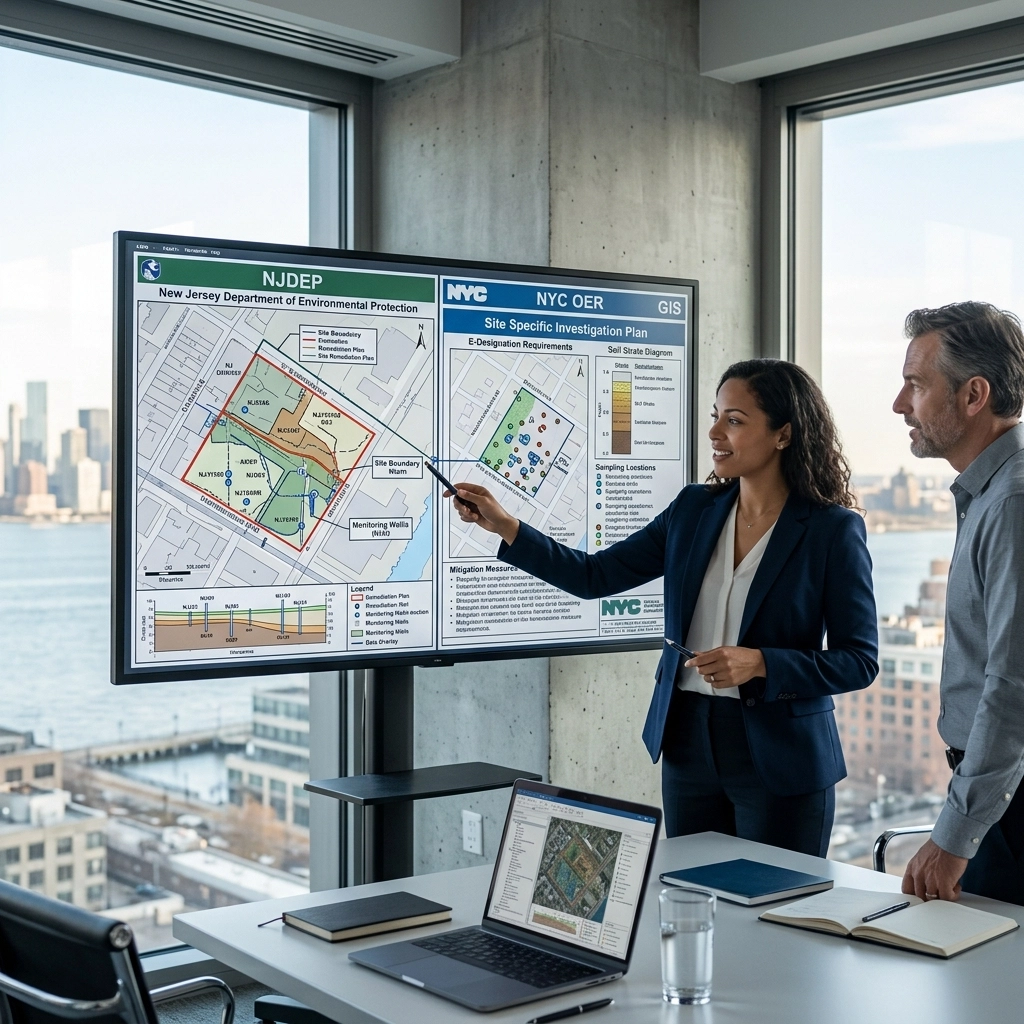
Across the river, the NYC OER operates the "E-Designation" program and the Voluntary Cleanup Program (VCP). This is a much more hands-on, prescriptive process. You aren't just following general guidelines; you are working within a specific city-mandated workflow that requires precise milestones: from the Remedial Investigation Report (RIR) to the Remedial Action Work Plan (RAWP) and finally, the Notice of Satisfaction.
If your consultant treats an OER project like an NJDEP project, you’re going to hit a wall. NYC OER reviewers are meticulous about local city standards that state-level agencies might overlook. Knowing how to speak "OER" versus "NJDEP" is a specialized skill set.
Why Knowing the Reviewer Matters
We don’t believe in the "black box" approach to regulatory coordination. Large national firms often submit a report and wait for a formal response. They view the agency as an adversary or a faceless entity. We view them as stakeholders in the project’s success.
Agency Fluency means we know who is sitting across the table. We know that "Dave" at the NYSDEC has a specific concern about vapor intrusion thresholds that goes beyond the standard guidance. We know that "Sarah" at the NYC OER wants to see the GIS mapping data presented in a specific format to expedite her review.
When a project stalls, a Big Box firm sends an email to a general inbox. We pick up the phone. Because we’ve spent 20 years in these trenches, those reviewers know that an Envicon report is going to be clean, accurate, and ready for approval. That trust is what clears the path. It’s not about "favors": it's about professional credibility and delivering documentation that makes the reviewer’s job easier.
"A report written for a filing cabinet is a waste of money. A report written for a reviewer’s desk is an investment in your timeline." : Jason Pancoast, CEO of Envicon Group.
The Technical Edge: GIS Mapping and Real-Time Data
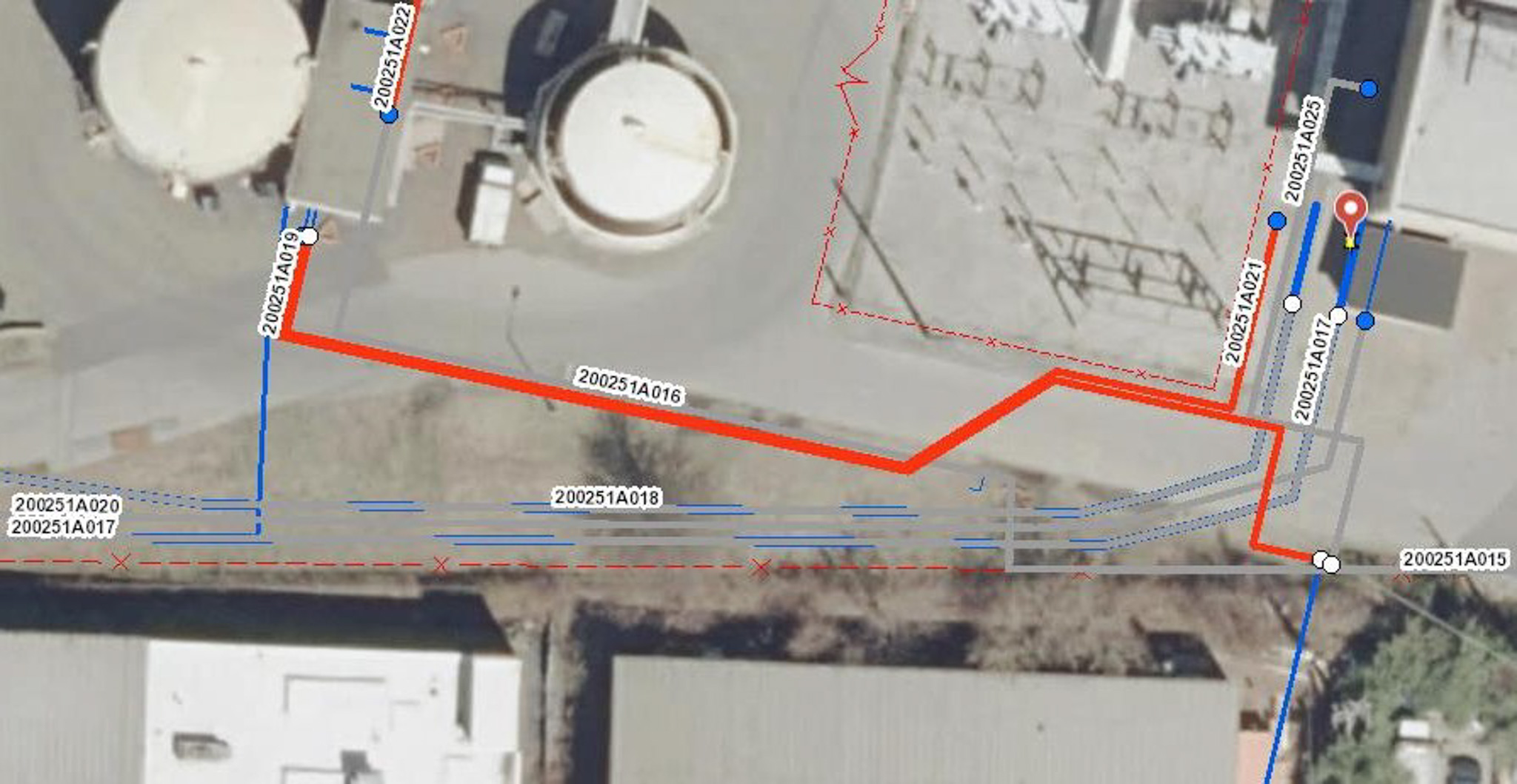
One way we bridge the gap with agencies is through superior data visualization. When we present a site to the NJDEP or OER, we aren't just handing over a 200-page PDF of data tables. We use advanced GIS mapping to overlay contamination pathways, utility corridors, and historical site usage.
By showing the regulator exactly where the risks are: and more importantly, where they aren't: we can often narrow the scope of required remediation. This "surgical" approach to environmental consulting saves our clients hundreds of thousands in unnecessary soil disposal and groundwater treatment.

(Visual: An advanced industrial filtration system being installed on-site, showcasing active remediation technology in a complex urban environment.)
The "Big Box" Pain vs. The Envicon Answer
Why do developers keep hiring national firms only to be disappointed? It usually comes down to the pitch. You meet the senior partner who tells you they have "global reach," but the person actually writing your report is a junior staffer in a regional satellite office who has never stepped foot on your site.
The Big Box Pain:
- Defensive Reporting: They write reports to protect themselves from liability, not to get you a permit.
- The Queue: Your project is one of five hundred. If the agency asks a question, it sits in a queue for two weeks before anyone looks at it.
- Scope Creep: You get hit with change orders every time the agency asks for a clarification.
- Academic Tone: Their reports sound like a chemistry thesis. Regulators want actionable data, not a history lesson.
The Envicon Answer:
- Action-Oriented: Every document we produce has one goal: the next step in your construction schedule.
- Direct Access: You have the cell phone number of the lead engineer and the principal in charge.
- Regional Fluency: We don’t just work in NYC and NJ; we are from here. We understand the local politics and the local geology.
- Field-First: We are PE-led and field-active. We see the site with our own eyes before we ever put pen to paper.
Navigating the NYSDEC and NYC Parks Intersection
Sometimes, the complexity isn't just one agency: it's the overlap. We recently managed a site that required coordination between the NYSDEC for soil remediation and NYC Parks because the property bordered a public greenway.
A generalist consultant would have struggled with the conflicting requirements for soil capping and landscape restoration. Because we maintain relationships across these departments, we were able to facilitate a joint meeting, align the technical requirements, and keep the project moving. We don't just deliver a service; we act as the primary coordinator between your legal team, your architects, and the government.
Precision, Urgency, and Integrity
At the end of the day, you aren't paying for a Phase II Environmental Site Assessment. You are paying for a buildable site. You are paying for the removal of the obstacles that stand between your current land and your future asset.
We believe in doing the work right the first time. Integrity in this business means delivering the truth, even when it’s tough. If a site has a significant issue, we don't sugarcoat it: we build a plan to fix it. That's why lenders and developers trust us. They know that when Envicon says a site is ready, it’s ready.

Takeaways for Your Next Project
If your project is currently sitting in a regulatory "black hole," it’s time to ask your consultant some hard questions:
- Who is our specific reviewer at the agency?
- When was the last time you spoke to them directly?
- What is the specific technical hurdle preventing the next approval?
If they can't give you a straight answer, you don't have a partner: you have a vendor.
Summary:
- NJDEP and NYC OER have fundamentally different workflows and cultures.
- Agency Fluency is the ability to navigate these differences through relationships and technical credibility.
- Big Box firms often lack the local, hands-on attention required to navigate complex NY/NJ hurdles.
- Envicon Group provides PE-led, field-first consulting that focuses on "cleared paths," not just reports.
Don't let a lack of agency fluency be the reason your project dies in the planning phase. If you're ready to move past the reports and start moving dirt, contact Envicon Group today. Let’s get your project back on track.
Leave a Reply