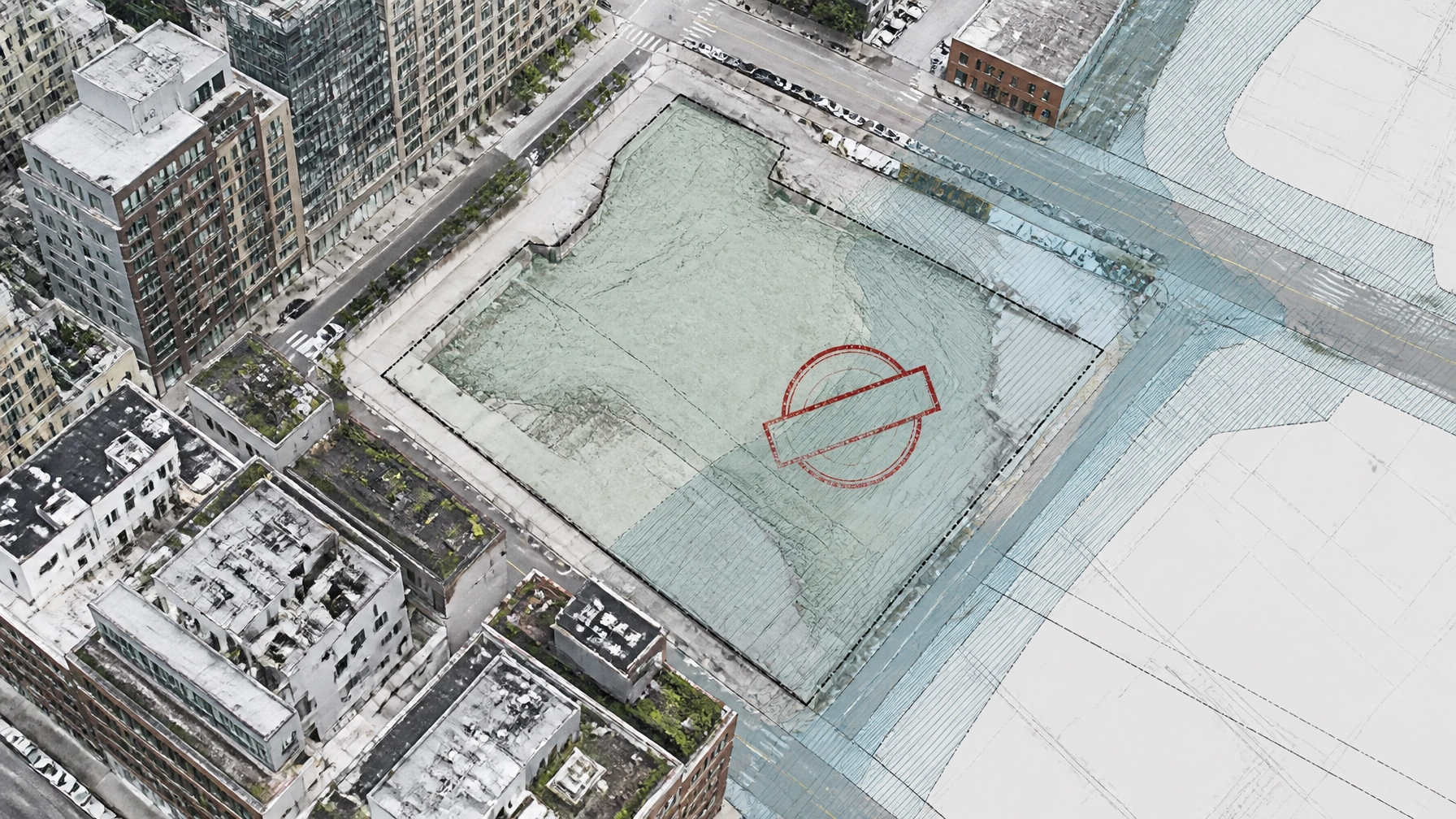
An NYC E-designation can turn a promising development site into a financing problem.
The designation appears in zoning records because a prior zoning action identified potential requirements related to hazardous materials, air quality, or noise. Until those requirements are addressed, your project may face delays with building permits, certificates of occupancy, lender approval, closing, or redevelopment planning.
The good news: an NYC OER E-designation isn’t permanent. With the right investigation, remedy, documentation, and agency coordination, you can move from (E) to a property with the designation administratively removed from the Zoning Resolution.
The process is technical. It isn’t mysterious. The key is defining the correct endpoint before work begins.
“OER can remove all E-Designations from a property that achieves a high level of cleanup and fully meets air quality and noise requirements.” : NYC Office of Environmental Remediation
What an NYC E-Designation Means
New York City places an E-designation on a property as a result of a zoning action. The designation identifies environmental requirements that must be investigated and addressed before redevelopment can proceed.
The NYC Office of Environmental Remediation manages three primary categories:
- Hazardous materials: Soil testing, site investigation, and: if contamination is confirmed: an OER-approved Remedial Action Plan.
- Air quality: Requirements may affect boiler fuel, stack placement, or other building systems.
- Noise: Requirements may include specific window and wall attenuation, alternate means of ventilation, or acoustic design measures.
The designation can affect more than construction. It can also raise questions during:
- Acquisition due diligence
- Lender underwriting
- Title review
- Environmental insurance placement
- Construction budgeting
- Sale or refinance discussions
An E-designation doesn’t automatically mean the property is contaminated. It means the City requires environmental conditions to be evaluated and resolved before the site reaches its approved development outcome.
That distinction matters. A vague consultant report may confirm that an E exists. It won’t necessarily tell you how to remove it.
The Standard for NYC OER E-Designation Removal
Under 43 RCNY § 1475, OER must determine that the applicable environmental requirements have been completed and that the site meets the conditions for removal.
In practical terms, full E-designation removal generally requires three things:
- The site remedy is complete.
- The property reaches its full zoning development potential.
- All applicable hazardous materials, air quality, and noise requirements are satisfied and certified by OER.
The remedy must also meet OER’s standard for a high level of cleanup. If the property requires an active soil vapor management system, that can affect eligibility for full removal. The project may need to continue operating under the applicable control requirements until OER confirms that all conditions have been satisfied.
This is why your desired endpoint needs to be discussed at the beginning: not after soil is excavated, the building is designed, or financing is already under pressure.
The Roadmap from (E) to Clean Title
Step 1: Confirm the Designation and Tax Lots
Start by confirming exactly what applies to the property.
Review the relevant zoning records, tax lots, and environmental documents. Use NYC’s E-designation resources and “Do I Have an E?” tools to identify whether the designation relates to:
- Hazardous materials
- Air quality
- Noise
- Multiple environmental categories
- One or more tax lots within a larger zoning action
A designation may apply differently across a development assemblage. Treating an entire project as one uniform site can create avoidable gaps in investigation and documentation.
You also need to identify whether a restrictive declaration, prior remedial document, or other recorded obligation affects the property.
Step 2: Define the Business Objective
Not every owner needs the same outcome.
Some projects need an OER-approved pathway to obtain permits and a certificate of occupancy. Others need the designation removed before a closing, refinance, disposition, or long-term hold.
Those are different objectives.
A remedy that allows construction to proceed may still rely on:
- A vapor barrier
- An active sub-slab depressurization system
- A soil or groundwater management plan
- A cap or other engineering control
- An environmental restrictive declaration
- Long-term operation and maintenance requirements
Those controls may be appropriate for the project. But they can prevent the property from reaching the “clean title” endpoint that a buyer, lender, or investment committee expects.
Before selecting a remedy, ask:
- Do we need permit clearance, full E-designation removal, or both?
- Will the proposed remedy require active controls?
- Does the design achieve the property’s full zoning development potential?
- Will air and noise requirements be fully installed and documented?
- What will remain on title after completion?
Envicon helps clients answer those questions before they commit to a cleanup strategy.

Step 3: Choose the Right OER Pathway
Most projects follow one of two paths.
E-Designation Compliance
Under the standard NYC OER E-designation process, the project team investigates the site, prepares the necessary plans, implements the approved remedy, and submits final documentation for OER review.
For hazardous materials, that may include:
- Phase I Environmental Site Assessment
- Phase II or Remedial Investigation
- Soil, soil gas, and groundwater sampling
- Sampling and Analysis Plan
- Remedial Action Plan
- Construction Health and Safety Plan
- Community Air Monitoring Plan
- Remedial Closure Report
Air and noise requirements may require separate design and installation documentation, including information from architects, mechanical engineers, acoustical consultants, and contractors.
NYC OER Voluntary Cleanup Program
The NYC OER Voluntary Cleanup Program can provide a structured alternative for eligible properties.
The VCP may offer:
- Liability protection tied to the OER-approved remedy
- Assignable protections for successors and assigns that follow program requirements
- City grants typically ranging from $25,000 to $50,000
- Free soil disposal through the Clean Soil Bank, aside from trucking costs
- Exemption from applicable New York State hazardous waste fees
- A formal Notice of Completion after successful program completion
The VCP isn’t automatically the best choice for every E-designated property. The right program depends on contamination, ownership, redevelopment plans, schedule, liability concerns, and the desired title outcome.
Step 4: Investigate the Site to the Correct Standard
A Phase I report alone rarely resolves an E-designation.
The investigation must give OER enough information to understand the nature, extent, and potential exposure pathways at the site. Depending on conditions, that may require:
- Soil borings across suspected source areas
- Groundwater monitoring wells
- Soil vapor points
- Indoor or sub-slab vapor evaluation
- Laboratory analysis for petroleum, VOCs, SVOCs, metals, PCBs, or other constituents
- Confirmation sampling after excavation
- Off-site disposal or reuse documentation
The scope should reflect the property’s history and proposed development: not a generic template.
For a former industrial site in Brooklyn, Queens, the Bronx, or Hudson County, the likely concerns may differ from those at a former dry cleaner, auto repair facility, manufactured gas plant, or commercial property with historic fuel storage.
That is where local experience matters. A technically correct investigation can still lose time if it doesn’t answer the questions OER will ask next.
Step 5: Implement and Document the Remedy
Once OER approves the applicable plan, the remedy must be implemented in the field.
This is where many projects separate the report from the result.
Environmental oversight should track:
- Soil excavation limits
- Stockpile management
- Waste characterization
- Trucking and disposal records
- Confirmation sample locations
- Imported clean fill
- Vapor mitigation installation
- Air monitoring
- Field changes and contractor coordination
- As-built conditions
All project filings go through the EPIC Environment portal. The documentation must be organized so OER can verify what happened, where it happened, and whether the completed work matches the approved remedy.
A missing manifest, inconsistent sampling location, or undocumented field change can create another review cycle. That means more time, more mobilization, and more cost.

Step 6: Obtain OER Certification and DCP Removal
After the remedy and applicable air and noise requirements are complete, the project submits its closeout package to OER.
For an E-designation project, OER may issue a final Notice of Satisfaction or equivalent certification confirming that the environmental requirements have been met.
For a VCP project, OER may issue a Notice of Completion. If the property also carries an E-designation, the project must still satisfy the requirements for that designation and obtain the appropriate OER confirmation.
Once OER certifies completion, the Department of City Planning administratively removes the E-designation from the Zoning Resolution for the applicable property or tax lots. The City then updates the relevant records and notifies the agencies responsible for enforcing the designation.
This is the step that converts technical completion into a meaningful zoning outcome.
It’s also important to use precise language. E-designation removal is not the same as a guarantee that a property has no environmental history or that every title issue has disappeared. It means the property has satisfied the applicable NYC E-designation requirements and achieved the conditions for administrative removal.
Your attorney and title company should review the final agency documents and recorded instruments as part of the transaction.
Why the Consultant Matters
Large firms often make NYC OER compliance feel like a black box. You receive a report, wait for an update, and discover late in the process that the proposed remedy won’t support full removal.
Envicon takes a different approach.
We coordinate directly with developers, investors, attorneys, architects, engineers, contractors, and agency reviewers. Our team stays close to the field conditions and the closing or construction deadline. We don’t just document the problem. We build a path to resolution.
That includes:
- Defining the removal endpoint early
- Matching the investigation to the property’s actual history
- Coordinating OER submissions through EPIC
- Tracking field work and closeout documentation
- Identifying vapor, air, noise, and title constraints before they become surprises
- Giving clients clear status visibility instead of outdated monthly summaries
- Taking responsibility from the first investigation through agency closeout
We’ve spent 20 years working across New York and New Jersey. We understand that a project can’t wait for a consultant’s internal queue.
What to Do If an E-Designation Is Delaying Your Deal
Before you accept another extension or approve another round of consulting fees, gather:
- The property address and tax lot numbers
- The E-designation type
- Prior environmental reports
- Existing OER correspondence
- Any Notice of Satisfaction or Notice of Completion
- Restrictive declarations or other title documents
- Proposed development plans
- Current lender or buyer requirements
- Known soil vapor, air quality, or noise controls
Then have an experienced NYC environmental consultant map the remaining steps to the actual business objective.
The Takeaway
NYC OER E-designation removal requires more than completing a Phase II or submitting a closure report.
You need a coordinated process that connects:
- Site investigation
- Remedy design
- Field implementation
- Air and noise compliance
- EPIC filings
- OER certification
- DCP administrative removal
- Title and transaction requirements
The earlier you define the endpoint, the fewer surprises your project will face.
Envicon Group helps developers, investors, and attorneys turn environmentally constrained properties into clean, buildable, compliant assets. We solve environmental and engineering challenges with precision, speed, and trust: and we stay at the table until the path is clear.
Talk with Envicon About Your NYC E-Designation
- Call Envicon now: (917) 764-2171
- Use our proprietary cost estimator
- Read more environmental and engineering insights
Leave a Reply