Blog

  • Vapor Intrusion Mitigation: Protecting the Asset, Not Just the Building

    Vapor Intrusion Mitigation: Protecting the Asset, Not Just the Building

    If you’re developing in the New York/New Jersey metro area, you already know that what’s under the slab is just as important as what’s going up on top. But for many developers, vapor intrusion mitigation in NYC is treated like a late-stage tax: a regulatory box to check so the lender stays happy.

    That’s a mistake.

    Vapor intrusion (VI): the migration of volatile organic compounds (VOCs) from contaminated soil or groundwater into an overlying building: isn’t just an environmental hurdle. It’s a structural liability that can stall a closing, trigger an Immediate Environmental Concern (IEC) with the NJDEP, or land your project in a permanent "E-designation" limbo with the NYC OER.

    At Envicon Group, we don’t just deliver a report telling you that you have a problem. We design the path out of it. Whether you are dealing with a complex sub-slab depressurization system design for a high-rise or navigating the latest NJDEP vapor intrusion technical guidance, you need engineering that protects the asset, not just the building envelope.

    The Physics of the Problem: Why "Radon Style" Systems Fail

    Most big-box consulting firms treat VI mitigation like a beefed-up radon system. They throw some perforated pipe in a gravel bed, hook up a fan, and hope for the best.

    But urban sites in Hudson County or Brooklyn aren't suburban basements. You’re dealing with high water tables, varying soil strata (from Manhattan schist to historic fill), and tight property lines. A "cookie-cutter" design usually leads to one of two things: a system that doesn’t actually pull a vacuum across the entire slab, or a system that’s so over-engineered it eats your O&M budget alive for the next thirty years.

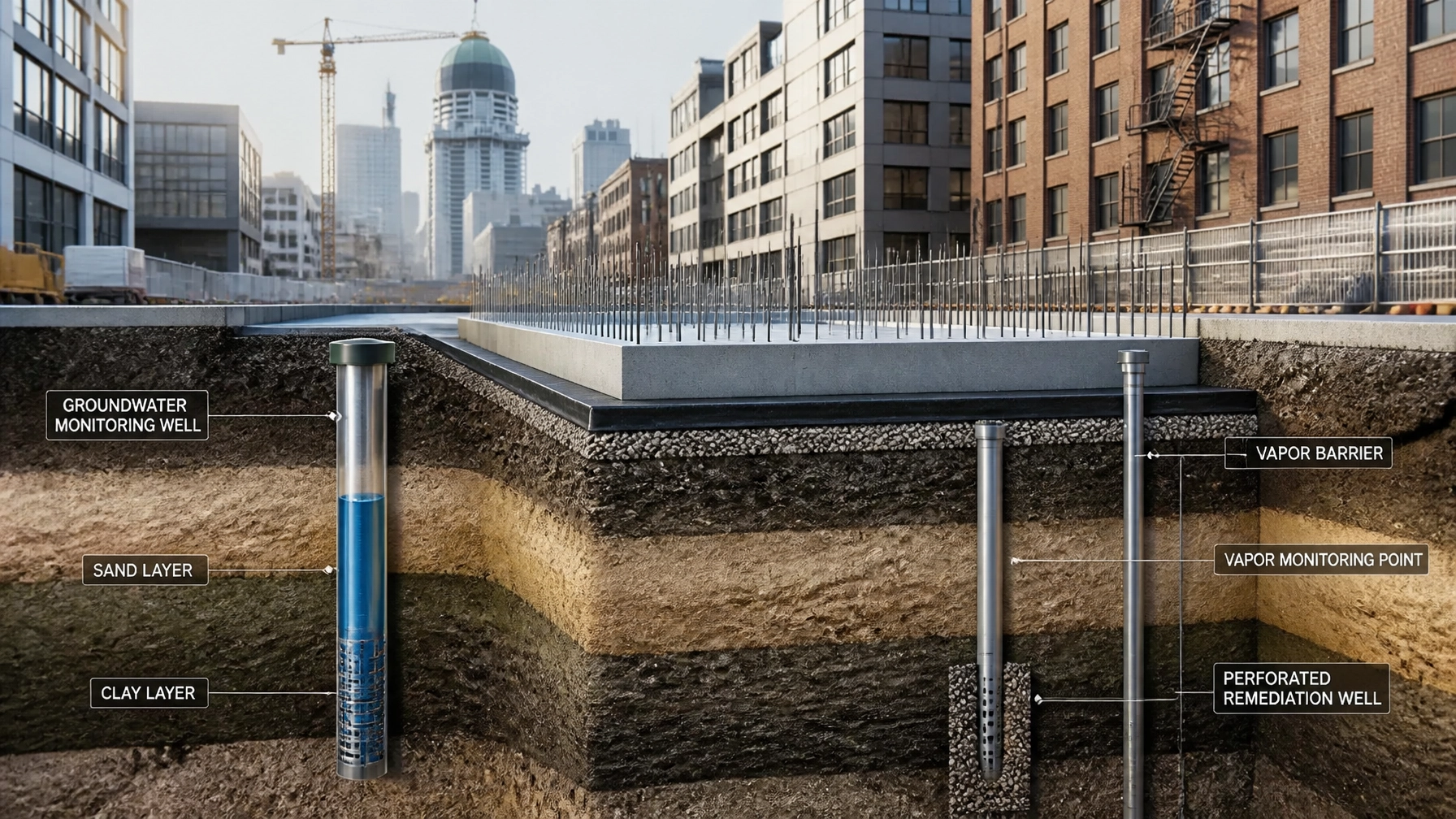
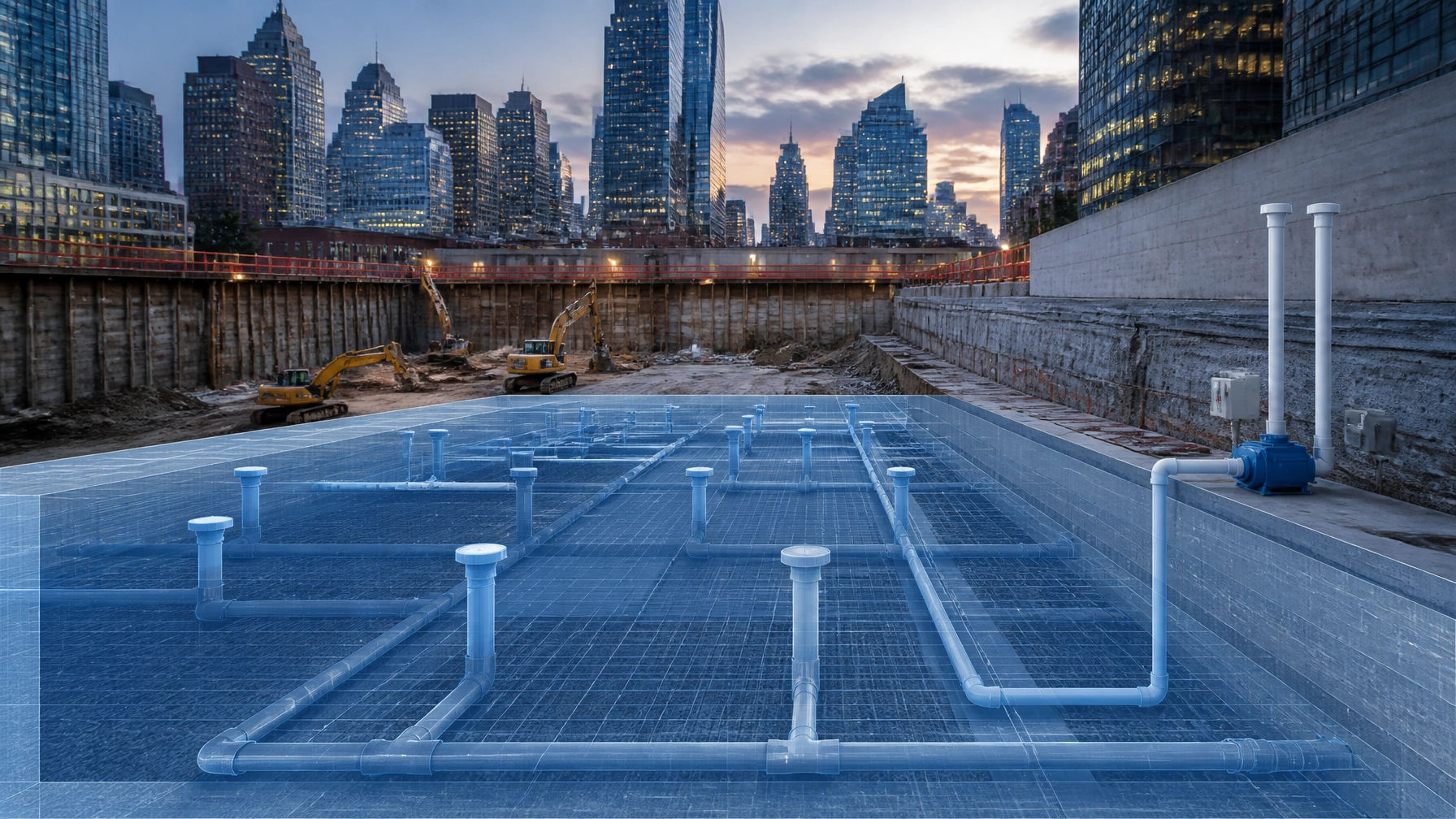
    Effective sub-slab depressurization system design starts with the physics of the site. We look at:

    • Pressure Field Extension (PFE) Testing: We don’t guess. We perform diagnostic testing to see exactly how much air moves under your specific slab.
    • Slab Geometry: Grade beams, interior footings, and elevator pits aren’t just structural elements; they are barriers to airflow that need dedicated suction points.
    • Contaminant Load: Are we dealing with a legacy dry cleaner (PCE/TCE) or a former gas station (BTEX)? The chemistry dictates the fan specs and the discharge requirements.
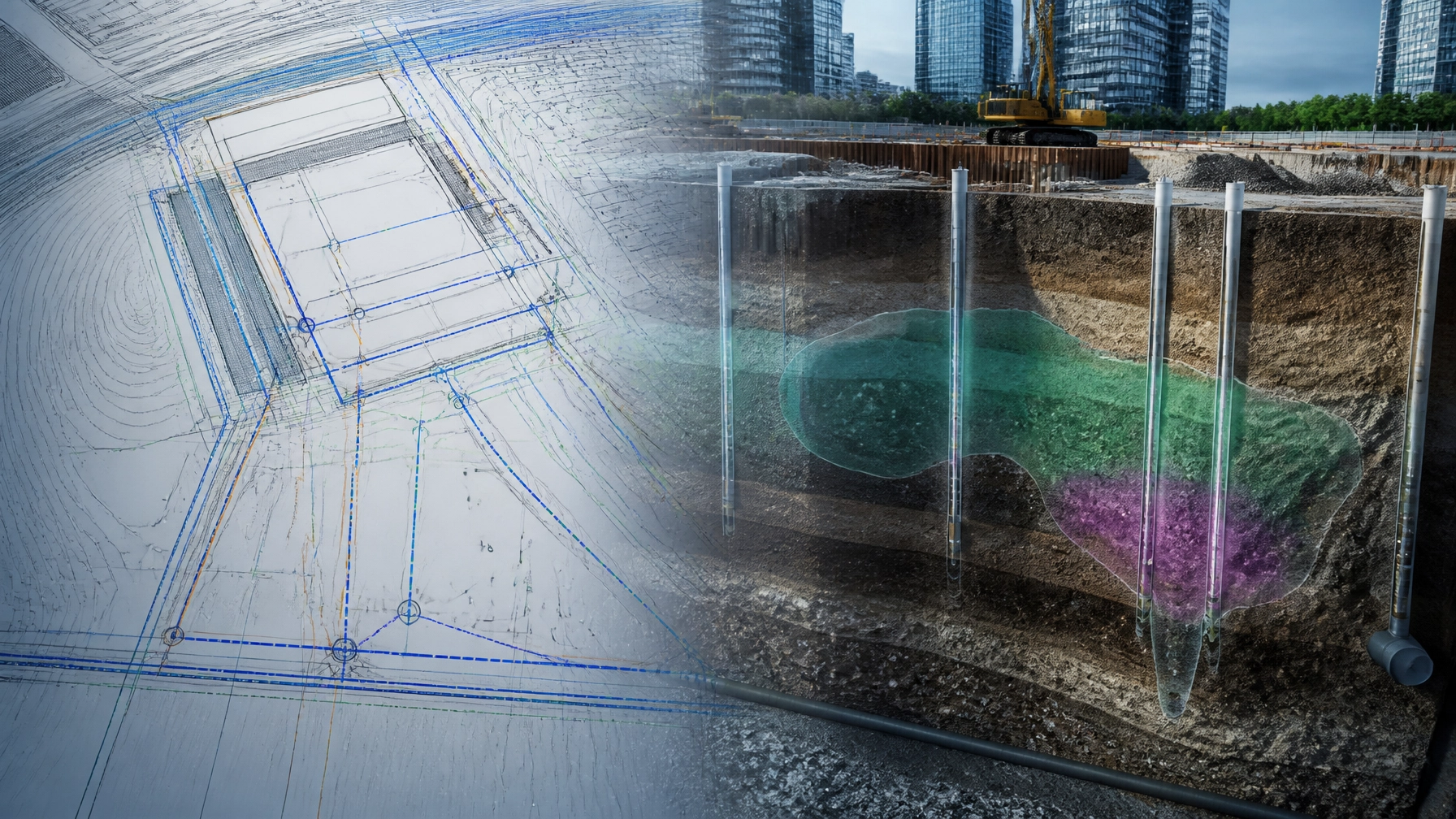
    Detailed 3D GIS mapping showing a subsurface VOC plume model for a remediation site

    Navigating the Regulatory Minefield: NYC OER vs. NJDEP

    The technical requirements for a vapor intrusion mitigation system (VIMS) vary wildly depending on which side of the Hudson you’re on.

    In New York City:

    If your site has an E-Designation for hazardous materials, the NYC Office of Environmental Remediation (OER) is your primary gatekeeper. You’ll need a Remedial Investigation Report (RIR) followed by a Remedial Action Work Plan (RAWP) that clearly outlines your VI mitigation strategy.

    • Point of Difference: Large firms often get stuck in a "comment loop" with OER reviewers. Because we sit at the table with OER daily, we design systems that align with their specific expectations for vapor barriers and active SSDS from the jump.

    In New Jersey:

    The NJDEP LSRP (Licensed Site Remediation Professional) program places the burden of "Technical Impracticability" or "Remedial Action" squarely on the consultant’s shoulders. If your site is classified as a Vapor Concern (VC) or, worse, an Immediate Environmental Concern (IEC), the clock starts ticking. You have strict regulatory timeframes to mitigate the risk and notify occupants.

    The Tech Stack: Transparency over "Black Box" Engineering

    One of the biggest frustrations for developers is the "black box" of environmental consulting. You pay for a system, it gets installed, and then you get a PDF report three months later telling you it's working.

    We’ve changed the dynamic. At Envicon, we integrate proprietary technology and real-time monitoring into our remedial design and implementation oversight.

    1. Remote Telemetry: Our systems can be equipped with sensors that monitor vacuum pressure and fan status 24/7.
    2. Real-Time Dashboards: Our clients get access to project reporting dashboards. Instead of waiting for a quarterly inspection report, you can see the health of your vapor intrusion mitigation NYC system on your phone.
    3. Data-Driven O&M: We use this data to optimize fan speeds, reducing energy costs and extending the life of the mechanical components.

    Field technician installing a sub-slab monitoring point for pressure field extension testing

    Managing the Bottom Line: Vapor Intrusion Mitigation Costs

    Let’s talk numbers. The cost of a VI system isn't just the PVC pipe and the fan. It’s the long-term remedial action permit (RAP) fees, the annual certifications, and the potential impact on property value.

    A poorly designed SSDS can cost a developer hundreds of thousands in "re-mobilization" costs if the initial system fails its post-construction commissioning. We focus on precision and urgency. By getting the design right the first time: verified through rigorous PFE testing: we ensure your site gets its Response Action Outcome (RAO) or Notice of Satisfaction without the typical big-firm "change order" creep.

    The Envicon Difference: We Don't Just Sell Reports

    When you hire a national firm, you’re often paying for a partner's signature and a junior staffer's field notes. At Envicon, you’re getting hands-on leadership from professionals who have been navigating the NY/NJ landscape for 20 years.

    We understand that your goal isn't just to "mitigate vapor." Your goal is to build, lease, and sell. Our service offerings, from Phase I ESAs to complex civil engineering, are all geared toward that single objective: clearing the path.

    Key Takeaways for Developers:

    • Early Integration: Don't wait until the foundation is poured to think about your SSDS. Integrate VI mitigation into your initial civil and structural plans to avoid architectural rework.
    • Demand Diagnostics: If your consultant isn't performing sub-slab pressure field extension testing, they are guessing with your money.
    • Focus on Outcomes: A report that "identifies a problem" is a liability. An engineering plan that "resolves a risk" is an asset.

    Vapor intrusion doesn't have to be the thing that stalls your project. With the right technical approach and a firm that understands the local regulatory reviewers by name, it becomes just another managed step in the development process.

    Ready to clear the path for your next project? At Envicon Group, we don’t just deliver reports: we deliver outcomes. Contact us today to discuss your site’s specific challenges.
    Envicon Strategic Solutions logo - MAIN

  • The SWPPP Trap: Why Cookie-Cutter Stormwater Plans Lead to Fines and Construction Stalls

    The SWPPP Trap: Why Cookie-Cutter Stormwater Plans Lead to Fines and Construction Stalls

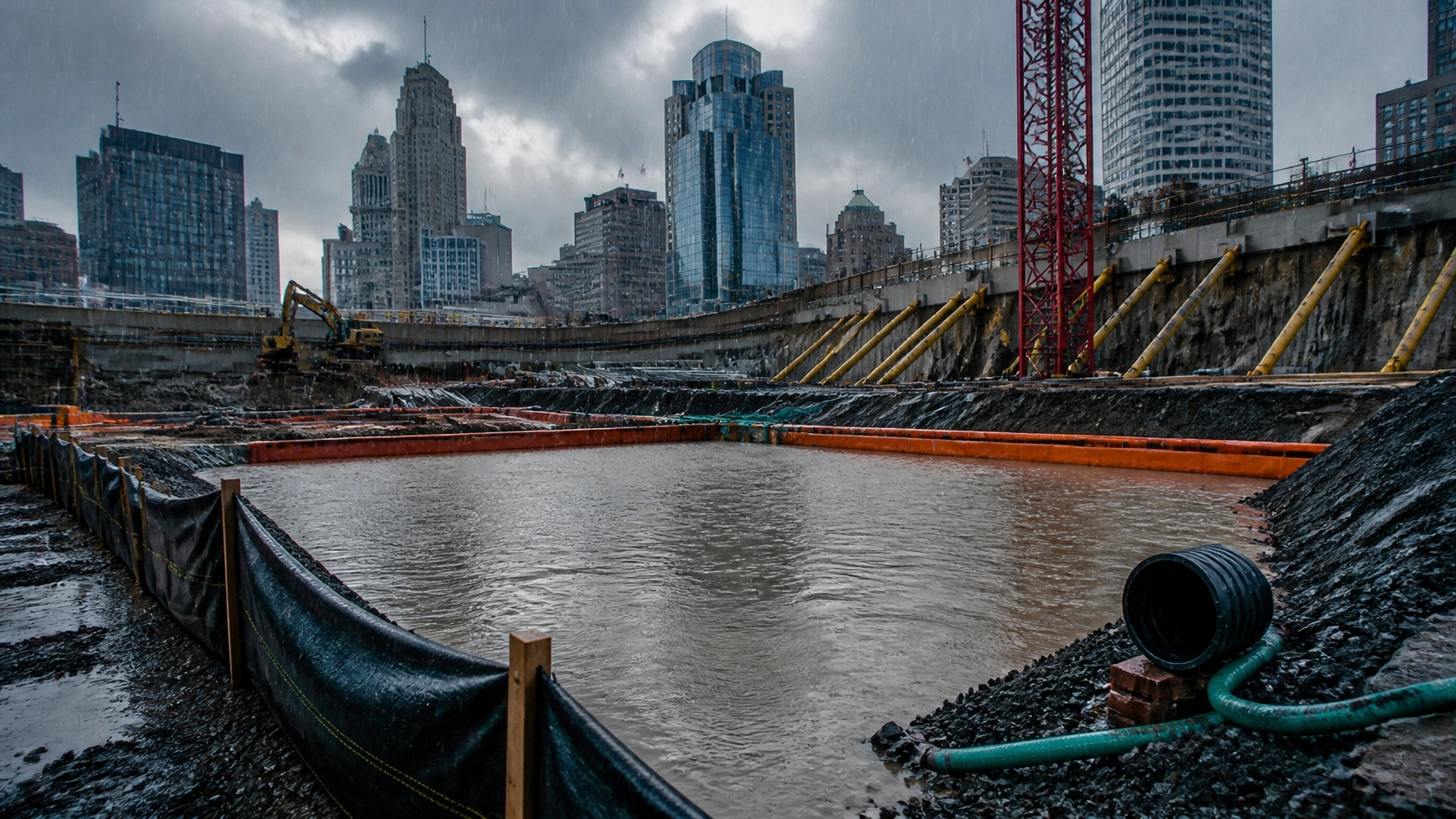
    It’s 7:00 AM on a Tuesday in Hudson County, and it’s pouring. You’re standing on the edge of your job site, watching a plume of silty, brown water bypass a flimsy silt fence and head straight for the municipal storm drain. Behind you, a local inspector is already stepping out of their truck with a clipboard and a camera.

    You look at the Stormwater Pollution Prevention Plan (SWPPP) your national consultant handed you three months ago. It’s 150 pages of boilerplate text, generic diagrams, and "best management practices" (BMPs) that seem to describe a flat field in the Midwest, not a tight, high-stakes urban redevelopment project in New Jersey or New York City.

    This is the SWPPP Trap.

    At Envicon Group, we see it constantly. Developers hire a "big box" firm because the name is recognizable, only to receive a cookie-cutter plan that looks good in a binder but fails the moment the first shovel hits the dirt. In our world, a SWPPP isn't just a regulatory checkbox; it’s the insurance policy that keeps your project moving. When that policy is written by someone in a satellite office who has never walked your site, you aren’t just buying a bad report: you’re buying a stop-work order.

    The Anatomy of a "Cookie-Cutter" Failure

    When a large national firm handles your stormwater permitting, they often apply a one-size-fits-all playbook. They use the same templates for a suburban warehouse in Ohio as they do for a complex brownfield site in Brooklyn.

    The problem? NYC and NJ don't play by generic rules.

    A generic SWPPP often fails because it ignores the specific soil strata of the Northeast, the extreme density of our urban environments, and the hair-trigger sensitivity of local regulators like the NJDEP and NYSDEC.

    Why Templates Kill Timelines:

    • Irrelevant BMPs: Your plan might call for a massive sediment basin that your site physically doesn't have room for.
    • Static Logic: The plan assumes a "typical" rain event, ignoring the flash-flooding reality of the 2026 climate landscape.
    • Zero Field Context: The person who wrote the plan didn't account for the existing utility corridor or the specific slope of your neighbor’s lot, leading to runoff where you least expect it.

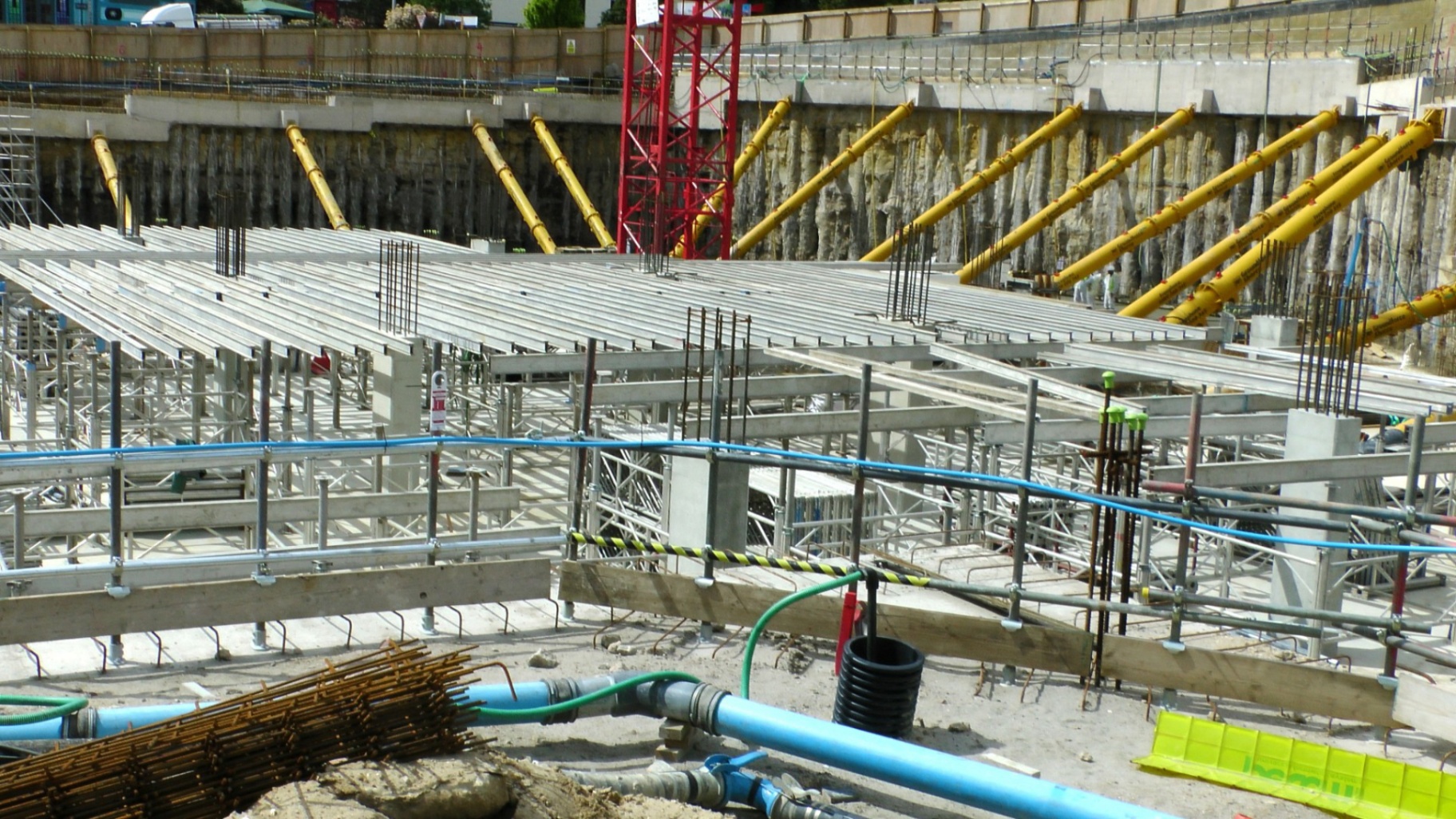
    Active construction site showing excavation support and site safety controls

    The High Cost of Being "Generic"

    In 2026, the regulatory landscape in New York and New Jersey has shifted from "compliance-focused" to "enforcement-heavy." If your stormwater controls fail, the financial impact is immediate and compounding.

    1. Daily Fines That Stride Into the Thousands

    Under the Clean Water Act and local state regulations, fines for stormwater violations are no longer a slap on the wrist. In New York, fines for operating with a deficient SWPPP or without proper permit coverage start at thousands of dollars per day.

    In NYC, the Stormwater Penalty Schedule is even more direct:

    • 1st Offense: $2,500
    • 2nd Offense: $5,000
    • 3rd Offense: $7,500

    These local fines are often tacked on top of state and federal penalties. If your consultant wrote a report for CYA (Cover Your Assets) instead of a path to closure, you’re the one holding the check.

    2. The Stop-Work Order Death Spiral

    The fine is often the cheapest part of a violation. The real killer is the stop-work order. Every day your machines are silent, your carrying costs are ticking. Lenders lose patience, market timing shifts, and your subcontractors start looking at other jobs. A "cheap" $3,000 templated SWPPP can easily lead to a $100,000 construction delay.

    New Rules for 2026: NJPACT and NYC Thresholds

    If you haven't updated your approach to stormwater in the last 12 months, you are likely already out of compliance.

    In New Jersey, the NJPACT / REAL rules (Resilient Environments and Landscapes) effective January 20, 2026, have fundamentally changed the definition of "major development." Now, the simple reconstruction of more than 0.25 acre of existing impervious surface (like a parking lot) triggers full compliance with updated stormwater standards. You can no longer just "patch and pave" without a robust, engineered plan.

    In NYC, the threshold for permit coverage has dropped to just 20,000 square feet of soil disturbance. If you’re building on a small urban lot, you are now under the same microscope as a massive infrastructure project.

    Comparison of failed generic silt fence vs. professional engineering controls

    The Envicon Difference: Engineering for the Field, Not the File

    At Envicon, we don't do "templates." We are PE-led and field-first. When you hire us for Compliance & Permitting, you aren't getting a junior staffer’s best guess. You’re getting a senior engineer who knows your regulator’s reviewer by name.

    1. Precision Over Boilerplate

    We design SWPPPs that actually work within the constraints of your site. If space is tight, we engineer vertical filtration or enhanced chemical flocculants rather than suggesting a sediment pond that will never fit. Our plans are "permit-ready" because they are built on actual site conditions, not optimistic assumptions.

    2. Real-Time Transparency

    Most consultants hand you a PDF and walk away. Envicon provides real-time environmental dashboards. Our field teams use proprietary technology to log inspections, track BMP maintenance, and provide you with a live view of your site’s compliance status. If a storm is coming, you’ll know exactly which controls need attention before the clouds break.

    3. Direct Agency Coordination

    At a national firm, regulatory coordination is a black box. At Envicon, we sit at the table with NYC OER, NYSDEC, and NJDEP. We align with your architects and construction managers to ensure the SWPPP isn't an obstacle to your foundation design: it's an integrated part of it.

    Engineer using a real-time environmental dashboard on a construction site

    Case Study: Rescuing the Stalled Warehouse

    A client recently came to us with a warehouse redevelopment in Brooklyn that had been stalled for six months. Their previous "big-box" consultant couldn't navigate the NYC DEP's hydrologic modeling requirements. The project was racking up thousands in carrying costs while the permit sat in a queue.

    We stepped in, redesigned the stormwater management system to match the actual site grade, and secured the permit in just five weeks. We didn't just deliver a report; we cleared the path so they could start pouring concrete.

    Summary: Don't Let Your SWPPP Be a Trap

    A Stormwater Pollution Prevention Plan should be a roadmap, not a liability. If your current consultant is giving you 50 pages of fluff and 0 minutes of field time, you’re at risk.

    The Key Takeaways:

    • Templates are dangerous: Local NYC/NJ rules are too complex for one-size-fits-all plans.
    • Fines are compounding: Expect $2,500-$7,500 per offense in NYC, plus daily state penalties.
    • 2026 is a new era: NJPACT and new NYC thresholds mean more projects require professional SWPPPs than ever before.
    • Speed and Trust matter: You need an engineer who picks up the phone and stands on your site at 7 AM.

    Stop paying big-firm overhead for junior-staff execution. If you need a SWPPP that holds up under regulatory scrutiny and keeps your project moving, contact Envicon Group today. We don't just deliver services: we help transform contaminated or challenging sites into thriving assets.

    Aerial view of an active brownfield remediation site with water management


  • Clock’s Ticking: Navigating NJDEP LSRP Mandatory Remediation Timeframes

    Clock’s Ticking: Navigating NJDEP LSRP Mandatory Remediation Timeframes

    If you own or are developing contaminated property in New Jersey, the state doesn't just care about how you clean it up: they care exactly when you do it. Under the Site Remediation Reform Act (SRRA) and the updated SRRA 2.0 rules, New Jersey Department of Environmental Protection (NJDEP) deadlines are not suggestions. They are legal triggers.

    Missing a Mandatory Remediation Timeframe (MTF) is one of the fastest ways to lose control of your project, blow your budget, and end up in the regulatory "penalty box" known as Direct Oversight.

    At Envicon Group, we don’t just write reports; we manage schedules. We know that for a developer, a missed deadline isn't just a compliance issue: it’s a financial catastrophe. Here is the technical reality of NJDEP timeframes and how to keep your project from hitting the wall.

    Regulatory vs. Mandatory: Understanding the Buffer

    The NJDEP’s Administrative Requirements for the Remediation of Contaminated Sites (ARRCS) establishes two tiers of deadlines. Understanding the difference is the first step in risk management.

    1. Regulatory Timeframe (RTF): These are the primary deadlines for specific milestones, such as completing a Preliminary Assessment (PA), Site Investigation (SI), or Remedial Investigation (RI).
    2. Mandatory Timeframe (MTF): This is the "drop-dead" date. In most cases, the MTF is exactly two years after the Regulatory Timeframe.

    If you miss a Regulatory Timeframe, your Licensed Site Remediation Professional (LSRP) is required to notify you in writing. If you miss a Mandatory Timeframe, your LSRP must notify both you and the NJDEP. That second notification is the one that brings the heat.

    The Consequences: Direct Oversight and the $20k/Day Risk

    What actually happens when that clock hits zero? It isn't just a stern letter. The NJDEP has a suite of enforcement tools designed to strip away your flexibility.

    1. NJDEP Direct Oversight

    This is the ultimate project killer. Normally, your LSRP directs the remediation and issues a Response Action Outcome (RAO) without needing the NJDEP to sign off on every move. Under Direct Oversight, the NJDEP takes the wheel. They select the remedy, they dictate the schedule, and they review every single document before it's finalized. You lose the ability to value-engineer your cleanup.

    2. Mandatory Remediation Funding Source (RFS)

    If your site falls into Direct Oversight due to a missed MTF, you are typically required to establish a trust fund or other financial assurance for the entire remaining cost of the remediation. For a multi-million dollar cleanup, having that much cash tied up in a state-controlled account can paralyze a developer’s liquidity.

    3. Civil Penalties

    The NJDEP can and does levy fines. Under SRRA 2.0, civil penalties for non-compliance can reach up to $20,000 per day. Those costs don't build buildings; they just drain your pro forma.

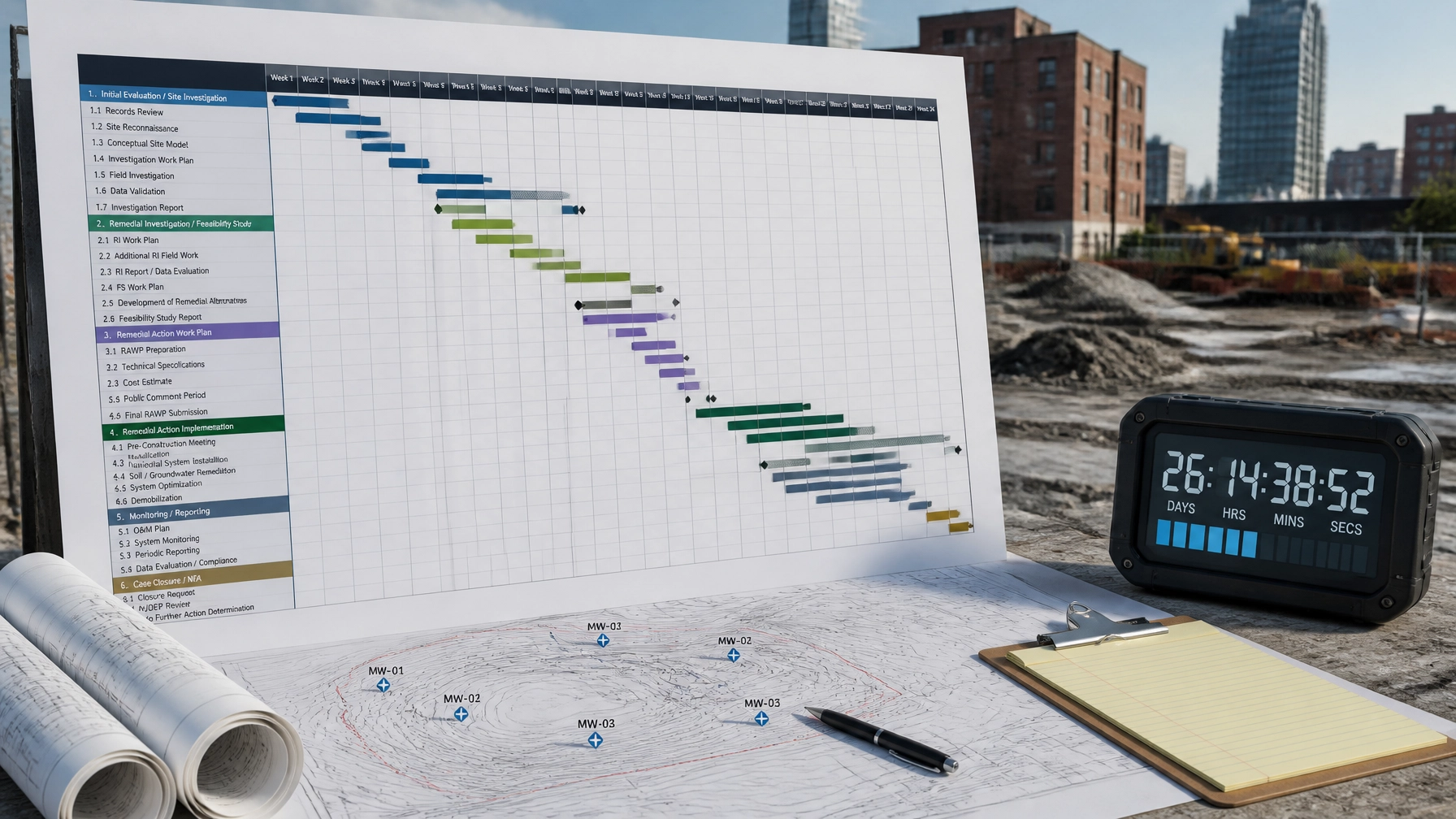
    Regulatory timeline workflow with site map, sampling points, and remediation milestone tracking

    The Critical Deadlines: RI and RA

    While there are dozens of sub-deadlines, two major milestones dominate the risk profile for New Jersey projects:

    • Remedial Investigation (RI): For many "older" sites (discharges discovered prior to May 2011), the mandatory RI deadline has already passed or is rapidly approaching. Failing to submit a complete Remedial Investigation Report (RIR) by the MTF is a primary trigger for Direct Oversight.
    • Remedial Action (RA): Once the investigation is done, the clock starts on the cleanup. For soil-only contamination, the MTF is generally 5 years from the RIR due date. If groundwater or other media are involved, you typically have 7 years.

    If your current consultant is "working on it" but can't give you a hard date for these submittals, you are in the danger zone.

    Why Big-Box Firms Risk Your Assets

    We see it constantly: a developer hires a massive national firm, only to have their project managed by a junior associate who doesn't know the reviewer at NJDEP.

    At a large firm, your project is a line item. If a deadline is missed, they cite "complexity" and "regulatory hurdles" while they prepare a change order for the extension request. They write reports to protect themselves, not to move your project forward.

    At Envicon, we treat your schedule as our own. We understand that alignment is how projects actually get done. We don't wait for the deadline to approach; we work backwards from the MTF to ensure every field sampling event and lab analysis is completed with a buffer for regulatory review.

    The Envicon Advantage: Real-Time Transparency

    Most consultants hand you a report and leave you to figure out what it means for your closing date. We’ve built digital solutions that take the mystery out of the process.

    • Real-Time Dashboards: Our clients don't wait for a monthly PDF to see if they're on schedule. They log into a dashboard that shows exactly where every remediation oversight task stands against the NJDEP mandatory clock.
    • Direct LSRP Access: You aren't talking to a project coordinator. You are talking to the LSRP who is signing the forms. Direct coordination means faster decisions and zero "black box" regulatory interaction.
    • Proactive Extension Management: If a legitimate technical delay occurs, we don't wait until the last minute. NJDEP requires extension requests at least 60 days before the MTF. We handle the paperwork and the justification before the deadline becomes a crisis.

    Summary: Protecting Your Path to Closure

    NJDEP mandatory remediation timeframes are the guardrails of your project. If you ignore them, you go off the cliff into Direct Oversight and financial penalties.

    • Know your dates: Audit your PA, SI, and RI submittal dates immediately.
    • Check your MTF: Ensure your LSRP has a clear path to the "drop-dead" date.
    • Demand transparency: If you don't know your project's regulatory status today, your consultant is failing you.
    • Take ownership: Transition to a firm that prioritizes your schedule and your bottom line.

    Don't let a "corporate" consultant's slow turnaround turn your buildable site into a state-managed liability. We specialize in turning complex, environmentally challenged sites into clean, compliant assets: on time, every time.

    Is your project nearing a mandatory deadline? Contact Envicon Group today to audit your current timeframe status and secure a cleared path to closure.

    Envicon Strategic Solutions logo - MAIN

  • Stormwater & Green Infrastructure: Turning NY/NJ Compliance Into a Site Amenity

    Stormwater & Green Infrastructure: Turning NY/NJ Compliance Into a Site Amenity

    For decades, stormwater management in the NY/NJ metro area has been treated as a box to check. Install some catch basins, lay some pipe, route it to the municipal system, and move on to the real work. But here's the thing: that "check-the-box" mindset is leaving money on the table and missing a massive opportunity.

    What if your SWPPP compliance infrastructure could also be a selling point for tenants? What if your stormwater system could increase property values instead of just draining your budget? That's not wishful thinking: it's the reality of modern green infrastructure design.

    We're not just cleaning up the past anymore. We're designing for the future.

    The Old Way is Costing You More Than You Think

    Traditional gray infrastructure: concrete pipes, detention basins, underground storage tanks: gets the job done. But it does exactly one thing: move water from Point A to Point B. That's it. No added value. No aesthetic appeal. No competitive edge in a crowded real estate market.

    Worse, aging gray infrastructure across NYC and New Jersey is increasingly overwhelmed during storm events. Combined sewer overflows (CSOs) remain a persistent problem, and regulators are tightening the screws. NYC's Department of Environmental Protection and the NJDEP are both pushing developers toward more sustainable solutions: not because it's trendy, but because the old approach simply isn't working at scale.

    The developers who recognize this shift early aren't just staying compliant. They're turning a regulatory requirement into a genuine site amenity.

    Lush bioswale integrated into a modern NJ/NYC sidewalk streetscape

    Green Infrastructure: Compliance That Actually Adds Value

    Green infrastructure isn't a single technology: it's a toolkit of nature-based solutions that manage stormwater while delivering multiple co-benefits. We're talking about:

    • Rain gardens and bioswales that filter runoff through engineered soil media while adding landscaping appeal
    • Permeable pavement for parking lots and walkways that eliminates standing water and reduces heat island effects
    • Green roofs that capture rainfall, reduce cooling costs, and extend roof membrane lifespan
    • Tree plantings and urban canopy expansion that intercept rainfall before it ever hits the ground
    • Curb extensions and bioretention bump-outs that calm traffic while treating street runoff

    Each of these systems treats stormwater as a resource rather than waste. During dry weather, they prevent pollutants from reaching waterways. During storms, they filter runoff through soil and vegetation where natural processes break down contaminants. The result? Cleaner water, reduced flooding, and a more attractive property.

    "Green infrastructure practices create functional and appealing site drainage that delivers benefits far beyond regulatory compliance."

    For NYC developers navigating NYC OER requirements or dealing with E-Designations, integrating green infrastructure early in the design process can actually streamline the path to shovel-ready status. It demonstrates environmental stewardship that regulators want to see.

    Meeting NY/NJ Stormwater Requirements the Smart Way

    Let's get specific about compliance. In New York City, any new development or major renovation must meet stormwater performance standards that increasingly favor green infrastructure approaches. The NYC Green Infrastructure Program has been expanding for over a decade, and developers who incorporate these systems often find smoother approvals and faster timelines.

    In New Jersey, the NJDEP's stormwater management rules require on-site retention and treatment for new development. Green infrastructure solutions can meet: and often exceed: these requirements while reducing the footprint of traditional detention systems.

    Here's what smart developers are doing:

    • Integrating permeable pavers in parking areas to meet infiltration requirements without sacrificing usable space
    • Installing bioretention planters along building perimeters that double as attractive landscaping
    • Designing green roofs on commercial and multifamily projects that reduce stormwater fees and utility costs simultaneously
    • Using tree trenches and silva cells in streetscape improvements that satisfy both DOT and DEP requirements

    The key is approaching stormwater not as an afterthought but as a design opportunity from day one. That's where integrated environmental engineering expertise makes the difference.

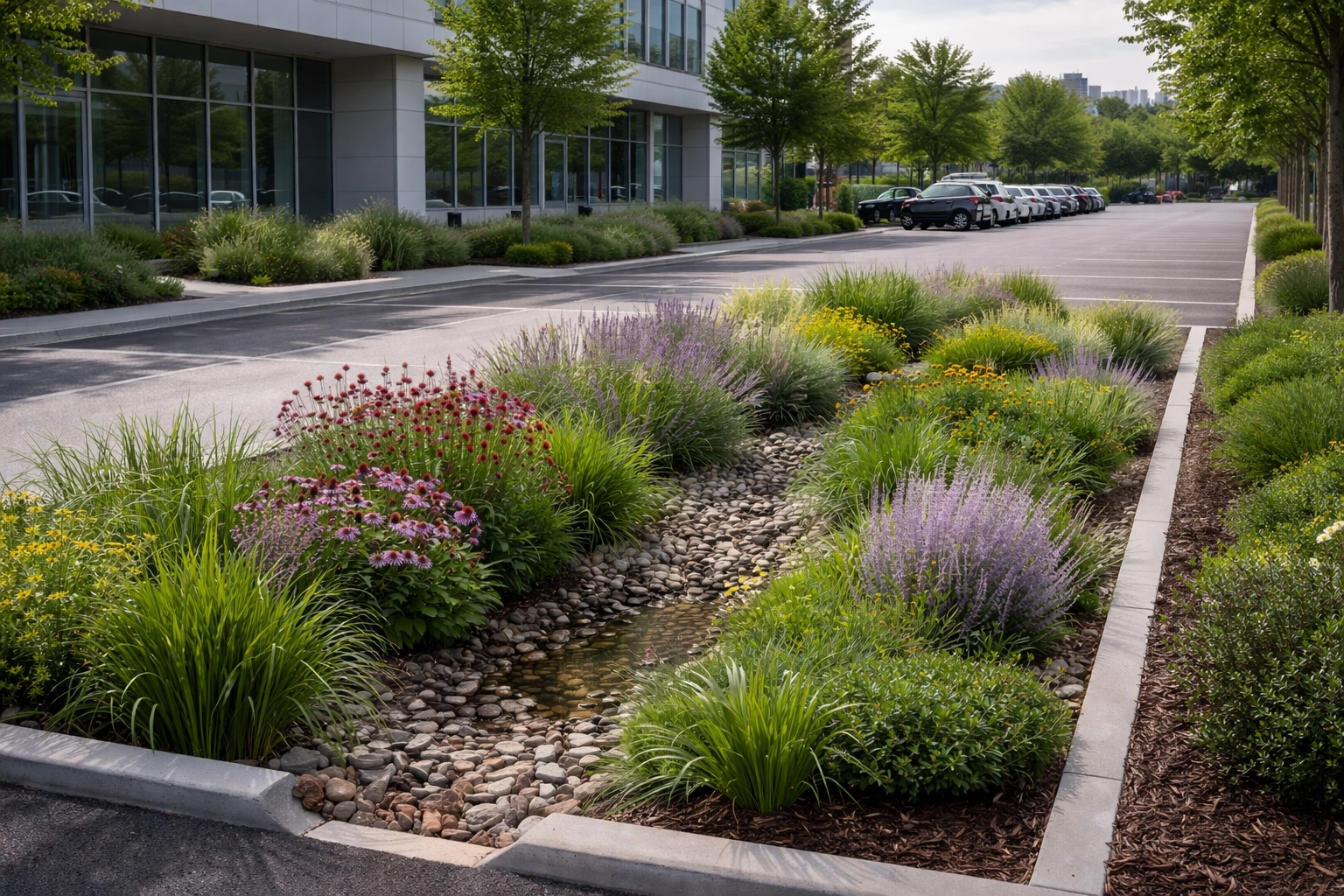
    Permeable pavers and rain garden integrated into a modern commercial courtyard

    The Business Case: Why Green Infrastructure Pays Off

    We get it: you're not developing property to win environmental awards. You're developing property to generate returns. So let's talk dollars and cents.

    Green infrastructure compliance can be achieved at comparable cost to traditional gray infrastructure like storage tanks, with several distinct advantages:

    Phased implementation. Unlike a massive underground detention system that requires full capital outlay upfront, green infrastructure can be installed in phases that match available funding and deliver immediate community benefits.

    Reduced long-term maintenance. Properly designed rain gardens and bioswales require less maintenance than mechanical stormwater systems. No pumps to replace. No confined space entries. Just seasonal landscaping care.

    Increased property values. Multiple studies have shown that properties with visible green amenities: tree canopy, attractive landscaping, green roofs: command premium rents and higher sale prices. Your stormwater system becomes a marketing asset.

    Stormwater fee reductions. Both NYC and many NJ municipalities offer fee credits for properties that reduce impervious surface or install certified green infrastructure. These savings compound year after year.

    Tenant attraction and retention. In competitive multifamily and commercial markets, sustainability features matter to tenants. A beautifully landscaped bioretention area tells a different story than a chain-link fence around a detention pond.

    "Green infrastructure can be incorporated into street improvements, including bump-outs and curb extensions, which also serve as 'complete streets' features for traffic calming and pedestrian safety."

    Modern multi-family development with curb extension bioretention and street trees

    SWPPP Inspection Requirements: Don't Let Compliance Become a Liability

    Here's where many projects stumble. You can design the most beautiful green infrastructure system on paper, but if your SWPPP inspection requirements aren't met during construction, you're exposing yourself to violations and costly delays.

    Green infrastructure systems are particularly sensitive during the construction phase. Sediment-laden runoff can clog permeable pavement. Heavy equipment can compact bioretention soils. Improper staging can damage tree root zones before trees are even planted.

    That's why SWPPP compliance for green infrastructure projects requires specialized attention:

    • Pre-installation soil testing to verify infiltration rates match design assumptions
    • Phased inspections that protect green infrastructure elements as they're installed
    • Post-construction verification to ensure systems are functioning as designed
    • Maintenance training for property management staff

    A "check-the-box" approach to SWPPP inspections is a recipe for costly fines: and for green infrastructure that fails within years of installation. We've seen it happen. The developers who succeed treat construction-phase environmental compliance as seriously as the design itself.

    Bringing It All Together: Integrated Environmental Engineering

    The magic happens when civil engineering, environmental engineering, and landscape architecture work together from project inception. That's the Envicon approach.

    When we evaluate a site for stormwater management, we're not just calculating required detention volumes. We're looking at:

    • Soil conditions and infiltration potential from our geotechnical investigations
    • Existing contamination that might affect green infrastructure placement
    • Regulatory pathways including NYC OER requirements and NJDEP standards
    • Site programming to identify where green infrastructure can enhance rather than compete with development goals
    • Long-term maintenance realities that make or break system performance

    Urban streetscape with tree trench style green infrastructure and healthy street trees

    This integrated perspective is how we help clients find value engineering wins: like the NJ site where relocating a bioretention area allowed for additional parking while actually improving stormwater performance. Or the Brooklyn mixed-use project where a green roof met both stormwater requirements and provided a rooftop amenity space that commanded premium rents.

    The Future is Already Here

    The regulatory trajectory is clear. NYC and New Jersey are both moving toward stricter stormwater standards, more emphasis on green infrastructure, and greater scrutiny of conventional gray systems. Developers who get ahead of this curve aren't just avoiding future compliance headaches: they're creating properties that stand out in the market.

    Stormwater doesn't have to be a cost center. With the right green infrastructure design and environmental engineering expertise, it becomes a competitive advantage.

    Ready to turn your next project's stormwater requirements into a genuine site amenity? Reach out to our team to discuss how integrated green infrastructure design can work for your NY/NJ development.

  • Cross-River Development: NYC VCP vs. NJ Brownfield Cleanup Program

    Cross-River Development: NYC VCP vs. NJ Brownfield Cleanup Program

    Developing on either side of the Hudson River requires a tolerance for complexity. But if you’re a real estate developer or property investor working in both New York City and New Jersey, you know that the "complexity" isn't just about the soil: it’s about the vastly different regulatory engines driving your project toward a buildable site.

    The choice between the NYC Voluntary Cleanup Program (VCP) and New Jersey’s Brownfield Cleanup framework isn't just an administrative checkbox. It’s a strategic business decision that impacts your closing timeline, your lender’s comfort level, and millions of dollars in potential incentives.

    At Envicon Group, we don’t just fill out the forms. We navigate these two distinct ecosystems every day. Whether you're dealing with an E-Designation in Brooklyn or a legacy industrial site in Jersey City, the goal is the same: clearing the path from a contaminated liability to a compliant asset.

    The NYC VCP: Speed, Certainty, and the OER Reviewer

    The NYC Voluntary Cleanup Program, run by the NYC Office of Environmental Remediation (OER), is widely regarded as one of the nimblest municipal programs in the country. It was designed specifically for "E-Designation" sites: parcels flagged during rezoning for potential hazardous materials, air quality, or noise issues.

    The Strategic Upside of VCP

    The VCP is built for speed. If your project is moderately contaminated (think typical NYC urban fill), the VCP is often your best bet for a predictable schedule.

    • Liability Protection: This is the big one. Upon completion, you receive a Notice of Completion (NOC). Because of a Memorandum of Understanding (MOU) between the City and the NYSDEC, this NOC provides a City liability release and a state "no further interest" letter. Lenders love this. It effectively satisfies the NYSDEC without the grueling timelines of the state-level Brownfield Cleanup Program (BCP).
    • Green Property Certification: Sites that complete the VCP receive a "Green Property Certification," which adds a layer of marketability and ESG (Environmental, Social, and Governance) value to the project.
    • BIG Grants: The Brownfield Incentive Grants (BIG) provide upfront money for investigation and remediation. While smaller than NJ tax credits, they are easier to access and help offset the immediate costs of a Phase I or Phase II ESA.

    The Reality Check

    You aren't working with a private consultant in a vacuum here. You are working with an OER reviewer. At a large national firm, your "project manager" might never have met the reviewer assigned to your Brooklyn site. At Envicon, we sit at the table with OER. We know their technical thresholds and what they need to see in a Remedial Investigation Report (RIR) to keep the project moving.

    New Jersey Brownfields: Scale, Incentives, and the LSRP Model

    Cross the river, and the game changes entirely. New Jersey doesn’t have a "municipal" equivalent to the VCP. Instead, remediation is governed by the NJDEP under the Site Remediation Reform Act (SRRA).

    The LSRP Factor

    In NJ, the "regulator" is often the Licensed Site Remediation Professional (LSRP) you hire. The LSRP has the authority to issue a Response Action Outcome (RAO), which is the NJ equivalent of a clean bill of health.

    • Scale of Incentives: New Jersey’s brownfield incentives are often more capital-intensive than NYC’s. Through programs like the Brownfield Redevelopment Tax Credit or the Hazardous Discharge Site Remediation Fund (HDSRF), developers can often recoup a significantly higher percentage of their remediation costs compared to NYC BIG grants.
    • Flexibility: Because the LSRP drives the day-to-day decisions, you aren't always waiting on an agency reviewer to clear a minor field change. However, this puts an immense amount of pressure on the LSRP’s technical judgment and their ability to defend that judgment if the NJDEP audits the file later.

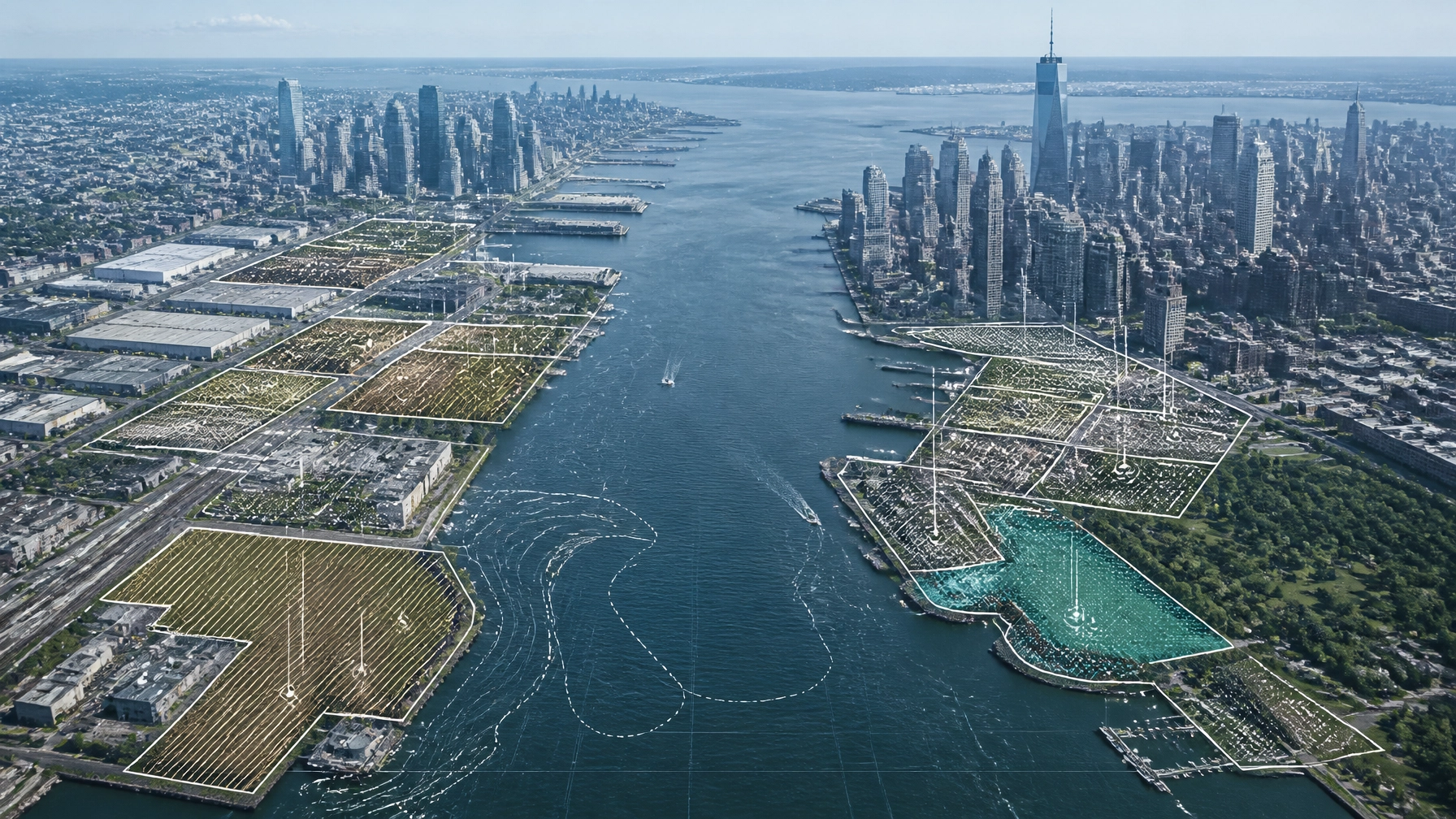
    High-resolution technical site plan visualization comparing NYC and New Jersey development constraints with parcel layout, utility corridors, boring points, remediation zones, and Hudson corridor context in a professional GIS and civil engineering style.

    Head-to-Head: A Strategic Comparison

    Feature NYC Voluntary Cleanup Program (VCP) NJ Brownfield Framework (NJDEP/LSRP)
    Primary Oversight Direct OER Agency Reviewers Licensed Site Remediation Professional (LSRP)
    Best Site Profile Small to mid-size urban infill; E-Designations Large-scale industrial; complex soil/groundwater
    Liability Relief City Release + NYSDEC "No Further Interest" RAO issued by LSRP (State-level protection)
    Financial Hook Upfront BIG Grants (Investigation/Remediation) Significant Tax Credits & HDSRF Grants
    Public Process Formal Citizen Participation Requirements Dependent on redevelopment area status
    Speed Extremely nimble for moderate contamination Highly dependent on LSRP efficiency

    Why the "Big Firm" Approach Fails Cross-River Developers

    If you’re using a massive national consulting firm, you’re likely feeling the friction of the "Black Box" model.

    1. The New York Problem: Large firms often treat NYC OER as a burden. They write 400-page reports that are defensively worded to protect the consultant’s liability, rather than focusing on the specific "cleared path" OER needs to see. This leads to endless rounds of comments and stalled permits.
    2. The New Jersey Problem: At a big firm, the LSRP who signed your proposal is rarely the one looking at your sampling data at 7:00 AM. Your project is handed off to junior staff who don't understand the local geology or the specific nuances of the NJDEP Field Sampling Procedures Manual.

    At Envicon, we remove these obstacles. We don't just "hand you a report." We give you value-add work that moves the project forward. Whether it's coordinating directly with your architect to align a Soil Management Plan with your foundation design, or sitting with a local official to explain why a specific remedial strategy is the best fit for the community, we take ownership of the outcome.

    A field technician holding a sledgehammer with heavy gloves in the foreground. In the background, another worker in full protective equipment is performing site work. Illustrates hands-on site assessment and remediation.

    The Digital Edge: Transparency on Both Sides of the Hudson

    One of the biggest pain points for developers is the lack of visibility. "Where is my report?" "Is the lab data back?" "What's the status of the OER submittal?"

    We solved this with our proprietary project management infrastructure. Our clients don't wait for a monthly PDF. They have real-time access to dashboards that show:

    • Regulatory Status: Exactly where your submittal sits in the OER or NJDEP queue.
    • Field Activity: Real-time updates from soil borings and groundwater sampling.
    • Budget vs. Actuals: No more "surprise" change orders at the end of the quarter.

    This transparency changes the dynamic. It moves the relationship from "client and vendor" to "strategic partners."

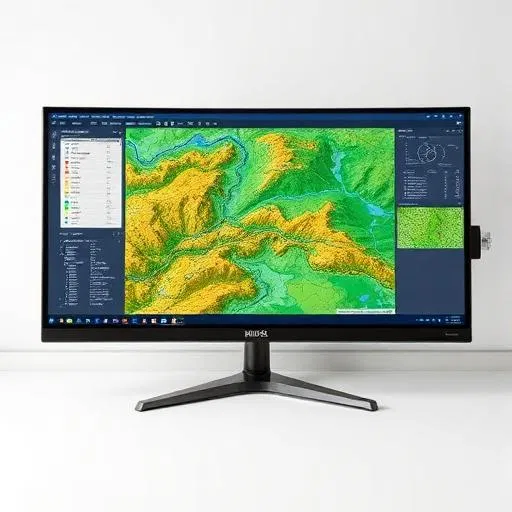
    Widescreen monitor displaying detailed topographic and geospatial data analysis with 3D terrain modeling and GIS layers. Essential for site condition identification and remediation planning in NJ/NYC.

    Technical Takeaways for Your Next Project

    Before you commit to a remedial path, consider these three variables:

    1. Site Constraints: In NYC, the VCP is almost always the correct path for E-Designation sites. In NJ, your choice of LSRP is more important than the program itself: you need a partner who understands your specific industry, whether it's warehousing or multi-family.
    2. Lender Requirements: Some lenders are strictly "NYC VCP or State BCP only" for New York projects. Ensure your environmental consultant is talking to your financing team early.
    3. Soil Management: Soil disposal is often the single largest environmental cost. Whether you’re utilizing the NYC Clean Soil Bank or navigating NJ’s "Fill" definitions, your civil engineering and environmental teams must be perfectly aligned to minimize off-site disposal costs.

    Summary: From Liability to Asset

    The Hudson River divides two of the most complex regulatory environments in the world. Success requires more than technical knowledge; it requires regional fluency.

    • NYC VCP provides the fastest route to liability relief for urban redevelopment.
    • NJ Brownfield programs offer massive financial incentives for large-scale industrial projects.
    • Envicon Group provides the technical precision, urgency, and direct agency relationships to bridge the gap between both.

    Stop paying for bloated reports and defensive consulting. Get a cleared path to a buildable site.

    Ready to de-risk your next NYC or NJ project? Contact Envicon Group today to discuss your site characterization and remediation strategy. We don't sell reports. We sell cleared paths.

    Envicon Strategic Solutions logo - MAIN

  • NYC OER E-Designation: The 3 Hidden Reasons Your Removal is Stalled

    NYC OER E-Designation: The 3 Hidden Reasons Your Removal is Stalled

    If you are developing in the five boroughs, you know the "E" tag is more than a footnote in the Zoning Resolution. It is a financial anchor. Whether it is for Hazardous Materials, Air Quality, or Noise, an E-Designation on your lot means you are in the NYC Office of Environmental Remediation (OER) loop.

    You might have a Remedial Action Plan (RAP) on file. You might even have your building out of the ground. But if your Notice of Satisfaction (NOS) is sitting in a queue and your lender is breathing down your neck about the open environmental restriction, your project is effectively stalled.

    At Envicon Group, we don’t look at E-Designations as "reports to be filed." We look at them as obstacles to be removed. We’ve spent 20 years sitting at the table with NYC OER, not waiting in their queue. We’ve seen exactly why developers get stuck in this loop, and it usually isn’t because of the dirt: it’s because of the process.

    Here are the three hidden reasons your E-Designation removal is stalled and how to clear the path.

    1. The "Investigation Lite" Trap: Failing the RIWP

    Most developers try to minimize the front-end cost of a Phase II Site Investigation. It makes sense on paper. Why drill 15 holes when you can drill 5?

    The problem is that OER does not grade on a curve. If your Remedial Investigation Work Plan (RIWP) is thin, or if your consultant "guessed" on the soil vapor intrusion risk to save a few thousand dollars in lab fees, OER will find the gap. When they find that gap, they won't just ask for more data; they will kick your Remedial Investigation Report (RIR) back to the bottom of the pile.

    We recently handled a project at 1985 Jerome Ave in the Bronx where the previous consultant had provided a report that left too many "maybes." We stepped in with an expedited, DER-10 compliant investigation that gave OER exactly what they needed to see. We didn't give them a 200-page "defensive" report; we gave them a clean dataset that justified the removal.

    The Fix: Don’t let a junior staffer from a big-box firm "copy-paste" your RIWP. You need a Licensed Professional Engineer (PE) who knows the specific reviewer at OER and understands the data density they require for your specific tax lot.

    soil-boring-rig

    2. The MEP and Architectural Silo (Air & Noise Failures)

    For many developers, the "Hazmat" part of the E-Designation is the scary one, so they ignore the Air and Noise requirements until it's too late. This is a massive mistake.

    An Air E-Designation usually dictates your fuel type (natural gas only) and your stack height. A Noise E-Designation dictates your window attenuation (OITC/STC ratings) and your alternate means of ventilation.

    Your E-Designation removal stalls when:

    • The MEP Engineer selects a boiler that doesn't match the fuel requirements in the E-text.
    • The Architect chooses windows based on aesthetics or cost that don't meet the OITC 35 rating required by the CEQR determination.
    • The Contractor swaps out the specified HVAC unit for a "similar" model that doesn't meet the OER-approved ventilation plan.

    At Envicon, we don't work in a vacuum. We coordinate directly with your architects and MEP engineers from day one. If the design doesn't meet the OER Notice to Proceed (NTP) requirements, we flag it before the first brick is laid.

    The Fix: Ensure your environmental consultant is reviewing your mechanical and architectural shop drawings. If you wait until the Installation Report phase to find out your windows are "too loud," you aren't just stalled: you're looking at a multi-million dollar retrofit.

    architect-engineer-collaboration

    3. Documentation Decay: The "Notice of Satisfaction" vs. "Final Removal"

    There is a critical distinction that many developers miss: Satisfying the E-Designation is not the same as removing it.

    Under 43 RCNY § 43-1475, OER can issue a Notice of Satisfaction (NOS) that allows the Department of Buildings (DOB) to issue your Certificate of Occupancy. However, if your remediation required "engineering controls" (like a vapor barrier or a cap), the E-Designation stays on the lot.

    Your removal is often stalled because your consultant didn't plan for the "Final NOS." They got you the CO and walked away, leaving the E-tag to haunt your title and complicate your future refinancing or sale.

    Common documentation failures that stall the Final NOS include:

    • Missing manifests for soil disposal.
    • Lack of "as-built" drawings for vapor barriers or composite caps.
    • Photos that don't clearly show the installation of noise-rated windows.
    • Inconsistent lab data that hasn't been properly validated.

    The Fix: You need a firm that provides Construction Oversight and Environmental Monitoring with field-level QA/QC. At Envicon, we are on-site documenting the work as it happens, not trying to reconstruct the story from a contractor's blurry cell phone photos six months later.

    window-installation-tech

    The Envicon Difference: Why Big Firms Can't Clear Your Path

    If you’ve hired a large national firm, you likely talked to a partner during the pitch and haven't seen them since. Your OER submittals are being drafted by a junior associate in a regional satellite office who might not even know what a NYC "tax lot" looks like.

    To OER, that looks like a lack of ownership. When OER has questions, they want to talk to the person who was on the site.

    At Envicon, you get:

    • Direct Access: You have the PE’s cell phone number. When OER calls us, we have the answer, not a "we'll check the file and get back to you."
    • Agency Fluency: We know the reviewers at OER, NYC DEP, and NYC Parks by name. We understand their internal workflows and what they need to see to push a file to the top of the stack.
    • Zero-Fluff Reporting: We don't write defensive, 500-page reports designed to protect us. We write technical deliverables designed to get you a "Notice of Satisfaction."

    We believe in doing the work right, standing behind our word, and keeping projects moving. Collaboration is not a buzzword: it’s how we prevent your project from becoming a case study in regulatory delay.

    Your NYC OER Checklist to Get Moving

    If your project is currently stuck, go through this checklist today:

    1. Check your E-text: Do you have the exact CEQR number and the specific requirements for Hazmat, Air, and Noise? (Check the E-Designation list here).
    2. Verify your MEP/Architectural alignment: Have your window and boiler specs been cross-referenced with your approved RAP?
    3. Review your RIWP: Is your investigation data dense enough to satisfy a skeptical reviewer?
    4. Audit your field documentation: Do you have every soil manifest and as-built drawing ready for the Remedial Closure Report?

    Summary: Stop Selling Reports, Start Clearing Paths

    An E-Designation is a hurdle, but it shouldn't be a wall. The difference between a project that closes on time and one that sits in a regulatory black box is the quality of the engineering leadership behind it.

    Don't pay big-firm overhead for junior-staff execution. If you are tired of your Phase I or your OER submittal sitting in someone’s queue while your carrying costs climb, it’s time to change the way you work.

    Ready to clear the path? Contact Envicon Group today for a direct consultation with our senior engineering team. We’ll look at your E-Designation, identify the bottleneck, and give you a clear path to closure.


    Take Action Now:

  • The Civil-Environmental Handshake

    The Civil-Environmental Handshake

    You’ve seen it happen. You’re six months into a high-stakes redevelopment project in Jersey City or Brooklyn. Your environmental consultant hands you a Remedial Action Plan (RAP) that clears the site for construction. Then, your civil engineer submits a grading and drainage plan that: completely inadvertently: requires excavating right through the clean-fill cap the environmental team just designed.

    Suddenly, the "all clear" turns into a six-figure change order. The environmental guy blames the civil guy for not checking the cap depth. The civil guy blames the environmental guy for not providing the CAD files. You, the developer, are left holding the bill while your project sits in a regulatory queue.

    At Envicon Group, we call the solution to this mess the Civil-Environmental Handshake. It’s the intentional, technical, and early-stage coordination between remediation strategy and site design. When these two disciplines don't talk, your project loses money. When they shake hands, you unlock the full potential of your site.

    The Hidden Cost of the "Big Box" Silo

    When you hire a large national firm, you’re often hiring two different departments that barely know each other exists. The environmental team is focused on Phase I & Phase II Site Assessments and regulatory checkboxes. The civil team is focused on pipe slopes and parking lot grades.

    Because they operate in silos, they produce "defensive" reports designed to protect the consultant’s liability rather than move your project forward. This lack of coordination leads to:

    • Redundant Earthwork: Excavating soil twice because the remediation plan didn't account for the utility corridor depth.
    • Permit Conflicts: Finding out the Stormwater Management (SWPPP) design conflicts with the groundwater monitoring well network.
    • Budget Creep: Constant change orders as one discipline "discovers" what the other has been doing for months.

    We don't sell reports; we sell cleared paths. And a cleared path requires one team that sees the whole board.

    Close-up of professional groundwater monitoring well caps installed in a concrete slab, representing the environmental oversight in an integrated project.

    Why Unified Site Design is a Non-Negotiable

    In the NY/NJ market, space is a luxury. You are often building on sites with historical contamination, tight property lines, and aggressive regulatory oversight from the NJDEP or NYC OER. You cannot afford the "wait and see" approach.

    1. Remediation That Informs Grading

    A smart environmental strategy uses the site’s natural topography and the proposed civil grading to minimize soil disposal costs. If we know you need to cut three feet for a foundation, we design the remediation to use that excavated material as onsite fill where permitted, rather than shipping it to a landfill at $100 a ton.

    2. Stormwater Systems That Respect the Cap

    If your site has a sub-slab depressurization system (SSDS) or an engineered cap to manage vapor intrusion, your Civil & Site Engineering must be surgical. We design drainage systems that move water away from the building without puncturing the environmental barriers that keep your site compliant.

    3. Utility Corridors as Remedial Trenches

    On some sites, we can actually coordinate utility installation to serve as a remedial action. By strategically placing utility trenches, we can remove localized "hot spots" of contamination during the infrastructure phase. This "one-and-done" approach is only possible when your environmental and civil teams are sitting at the same table.

    A complex stormwater management system being installed in a tight urban site, showing the civil engineering precision required alongside remediation.

    The Regional Fluency Factor: NYC & NJ

    Navigating the regulatory landscape in our backyard isn't just about knowing the law; it’s about knowing the people. Whether it’s NYC OER, NYSDEC, or NJDEP, these agencies want to see a cohesive plan.

    When we submit a permit application, the reviewer knows that our civil drawings and environmental reports are perfectly aligned. There’s no "black box" coordination. We work directly with architects, construction managers, and attorneys to ensure everyone is pulling in the same direction. This regional fluency is built from 20 years of working these jurisdictions daily: not from a satellite office in another state.

    The Envicon Difference: One Team, No Excuses

    Most consultants hand you a report and leave you to figure out what it means for your contractor. Envicon gives you more. We provide value-add work that actually gets you to the next step.

    • Senior-Level Execution: You talk to the Principal Engineer who wrote the report and designed the site. No hand-offs to junior staff who have never stepped foot on your property.
    • Tech-Powered Transparency: Our proprietary Environmental Dashboard gives you real-time visibility into your project’s schedule, budget, and field activity. You’ll see the "handshake" happening in real-time.
    • Field-First Mindset: We’re the firm that’s on-site at 7 AM, talking to the excavator operator and the regulator. We don't just identify problems; we resolve them with precision and urgency.

    A senior engineer and developer reviewing a digital project dashboard, highlighting Envicon's tech-powered and collaborative approach.

    Summary: Stop Paying for Miscommunication

    The "Civil-Environmental Handshake" isn't a buzzword; it’s a business strategy. By integrating these two critical phases of development, you:

    • Reduce carry costs by shortening the permitting and remediation timeline.
    • Eliminate change orders caused by conflicting designs.
    • Protect your investment with documentation that holds up under lender and regulatory scrutiny.

    If your current consultant is handing you reports that don't talk to your site plan, you’re paying for a gap that could swallow your profit margin. It’s time to switch to a team that takes ownership of the entire outcome.

    Ready to clear the path for your next project?

    Contact Envicon Group today to discuss how our integrated civil and environmental solutions can move your project from "stalled" to "start."

  • Transparency in the Field: How Real-Time Reporting Eliminates Construction Surprises

    Transparency in the Field: How Real-Time Reporting Eliminates Construction Surprises

    If you’ve spent any time developing real estate in New York or New Jersey, you know the "Black Box" feeling. You hire a big-name consulting firm, the field crews mobilize, and then… silence. You wait. Two weeks pass, then three. Finally, a 60-page PDF arrives in your inbox.

    By the time you open that report, the data is already three weeks old. The soil that showed a "hot spot" has already been moved, or worse, the delay in finding out about it has stalled your foundation crew for three days while you wait for a "senior partner" to return your call.

    At Envicon Group, we believe that’s a broken way to do business. When you’re dealing with high-stakes environmental site assessments and complex civil engineering, information shouldn’t have a shelf life. That’s why we’ve replaced the "Monthly PDF" with proprietary real-time reporting dashboards that give you a live seat at the table.

    The Problem with the "Monthly PDF"

    Large national firms are designed for defensive reporting. Their goal is often to produce a document that protects the consultant first and moves the project second. This results in bloated, slow-moving deliverables that serve as a historical record rather than a management tool.

    When you rely on a monthly report, you’re essentially driving a car by looking in the rearview mirror. You see where the obstacles were, but you have no idea what’s hitting your front bumper right now. In the world of NJDEP LSRP remediation or NYC OER E-Designation compliance, that lag time is more than an annoyance: it’s a carrying cost.

    Every day your project sits in a "waiting for data" holding pattern, your IRR drops. Your lender loses patience. Your market timing shifts.

    Transparency: Shifting from Reactive to Proactive

    Transparency isn't just a buzzword; it’s a risk-mitigation strategy. By leveraging our Digital & GIS infrastructure, we’ve mapped over 500,000 data points across our projects. This allows us to move environmental management from reactive (fixing problems after they surface) to proactive (adjusting work methods as conditions change).

    Detailed 3D GIS mapping and terrain model of an industrial site showing color-coded soil contamination and groundwater flow

    1. Decision-Making at 7:00 AM

    Imagine standing on your site at 7:00 AM. The drill rig is spinning, and your excavation contractor is asking where to stockpile the next 500 cubic yards of fill. Instead of calling an office and waiting for a project manager to "check the files," you pull up your phone.

    Our real-time dashboards show you exactly where the core samples were taken, what the preliminary field screenings indicate, and which areas are cleared for disposal. You make the call in thirty seconds, the trucks keep moving, and you save $10,000 in standby time.

    2. No More Field Surprises

    Surprises on a construction site usually involve two things: contaminated soil and groundwater. When these are discovered mid-excavation, the traditional firm’s response is to stop work and "investigate."

    Envicon’s tech-first approach integrates site investigation and characterization into a live data feed. If a sensor hits a threshold or a field engineer logs a specific soil strata, the dashboard updates instantly. We coordinate directly with architects and construction managers to adjust the plan on the fly.

    How Real-Time Data Builds Lender and Investor Trust

    If you’re working with private equity or institutional lenders, they don’t just want your word: they want proof. A "Monthly PDF" is a snapshot; a real-time dashboard is a narrative of competence.

    When you can show an investor a live view of the remediation progress, including soil disposal volumes and groundwater treatment status, you eliminate the friction of uncertainty. You’re not just saying the site is being cleaned; you’re showing the path to closure as it happens.

    Environmental sampling equipment including a soil sample vial and field tablet on an active construction site

    Better Data, Better Outcomes

    The precision of our data collection doesn't just make for pretty charts. It leads to actual savings. On average, our remediation strategies have saved clients over $340,000 by using high-resolution site characterization to avoid over-excavating clean soil.

    When you have real-time visibility, you only dig what you need to dig. You only treat what needs to be treated.

    Why We Built This (And Why Big Firms Won’t)

    You might wonder why every firm doesn't work this way. The answer is simple: big firms are built on billable hours and administrative layers. The "monthly report" process is a revenue center for them: hours spent by juniors compiling spreadsheets and seniors reviewing them.

    At Envicon, we’re family-owned and PE-led. We don't sell hours; we sell cleared paths. We built our proprietary technology because we want to spend our time solving your engineering challenges, not formatting PDFs. Our technology enables our team to move faster and work smarter, which is why we can offer 48-hour rush Phase I ESAs and same-day proposal turnarounds.

    Industrial groundwater filtration and GAC tank system on a professional remediation site

    The Envicon Difference: Precision, Speed, and Trust

    In the NY/NJ metro area, regulatory fluency is a requirement. Everyone knows the NJDEP and the NYSDEC. But knowing the rules isn't the same as moving the project.

    Collaboration is not a buzzword: it’s how we work. We sit at the table with NYC OER and NJ DEP, not behind a queue. By providing transparent, real-time data, we empower everyone: from the regulator to the developer: to work from the same set of facts. This alignment is how projects actually get done.

    Summary of Benefits

    • Zero Lag Time: Move from field data to project decisions in minutes, not weeks.
    • Reduced Carry Costs: Avoid construction stoppages through proactive risk management.
    • Lender Confidence: Provide institutional-grade reporting that passes review the first time.
    • Operational Efficiency: One team, one dashboard, and zero excuses.

    Technical diagram of NYC/NJ soil strata showing engineering annotations and environmental sampling points

    Your Project Shouldn't Be a Black Box

    If you’re tired of chasing your consultant for updates or paying premium rates for junior-staff execution and slow turnarounds, it’s time for a change.

    We do not just deliver services: we help transform underused and contaminated properties into thriving assets. We believe in doing the work right, standing behind our word, and keeping projects moving.

    Ready to see your site through a new lens?
    Stop waiting for the next PDF. Contact Envicon Group today to learn how our real-time reporting can clear the path for your next development project.


  • Agency Relationships Matter: Why Knowing Your OER Reviewer by Name Actually Gets Projects Done

    Agency Relationships Matter: Why Knowing Your OER Reviewer by Name Actually Gets Projects Done

    If you’ve spent any time developing in New York City or Northern New Jersey, you know the "Black Box" feeling. You hire a massive national firm, they assign a junior associate to your project, and your submittal disappears into the regulatory void of the NYC Office of Environmental Remediation (OER) or the NJDEP. Weeks turn into months. Your carry costs are mounting, your lender is asking for updates you don't have, and your consultant’s only answer is, "We're waiting for the agency to get back to us."

    At Envicon Group, we don’t "wait for agencies." We sit at the table with them.

    For 20 years, we’ve built our reputation on the fact that we know the reviewers, the supervisors, and the local nuances of the NYC OER, NYSDEC, and NJDEP. When your project is stalled, it’s usually not a technical failure: it’s a communication failure. Knowing the person on the other side of the desk doesn't just make things "nice"; it makes things move.

    The Gatekeepers: Why the "Who" Matters

    In the NY/NJ metro area, regulatory agencies aren't just administrative hurdles: they are the gatekeepers of your building permit.

    • NYC OER (Office of Environmental Remediation): If your lot has an "E-Designation," you cannot get a building permit from the DOB until OER clears you. If your consultant doesn't understand OER’s specific expectations for remedial action plans (RAPs), your project will sit in a queue behind hundreds of others.
    • NJDEP (Department of Environmental Protection): With the recent rollout of the REAL Rules, navigating coastal standards and elevation requirements has become a strategic minefield. You need an LSRP who has spent years closing cases, not someone reading the manual for the first time.
    • NYSDEC (Department of Environmental Conservation): Whether it's Title 6 wetlands or soil cleanup objectives, the NYSDEC has massive discretionary power. A technical disagreement with a reviewer can stall a site for a year.

    The "Big Box" firms treat these agencies as a black box because their staff is often transient. At Envicon, we bring 20 years of direct, regional fluency. We don't just send a report; we pick up the phone and walk the reviewer through the site's unique geological strata.

    Technical soil strata diagram showing NYC/NJ geological layers and remediation barriers

    The 20-Year Advantage: We Don’t Sell Reports, We Sell Cleared Paths

    Large firms are built to sell reports. They are defensive documents written to protect the consultant’s liability, often hundreds of pages of fluff that leave the developer to figure out the "now what."

    Envicon was founded on a different principle: Integrated execution.

    We are one of the few firms that combine environmental cleanup with site-civil engineering. When our remediation team designs a barrier, it is perfectly synced with your civil engineer’s foundation and grading plan. This alignment prevents the classic "field surprise" where the remediation strategy makes the building design impossible to construct.

    We’ve seen it all. We’ve handled over 350 Phase I and II Environmental Site Assessments and closed 75+ contaminated sites in New Jersey alone. This isn't theoretical knowledge; it's scar tissue from being in the trenches.

    7:00 AM on Site: The PE-Led Difference

    When you hire Envicon, you aren't talking to a project manager who is reading notes from a field tech they’ve never met. You get direct cell phone access to the Licensed Professional Engineer (PE) who is actually managing your project.

    Our "Field-First" approach means we are on the ground when the drill rigs arrive. We believe in seeing the soil samples ourselves. It’s the difference between guessing what’s happening underground and knowing for a fact. This level of oversight is why we have a 100% lender approval rate and have had zero report rejections across hundreds of projects.

    Envicon PE on-site at 7 AM with Manhattan skyline background

    Case Study: Solving a 6-Month Stalemate in 5 Weeks

    Consider a recent warehouse redevelopment project in Brooklyn. The client had been stuck in a 6-month permit delay with a previous consultant who couldn't navigate the NYC DEP and OER requirements. The project was hemorrhaging money in carry costs.

    We took over, redesigned the stormwater management system to align with the remedial design, and sat down with the agency reviewer to explain the technical merits of our approach. We didn't wait for a formal response cycle; we proactively cleared the obstacles. The permit was approved in 5 weeks.

    That is the power of alignment.

    Dashboards vs. PDFs: The Tech Edge

    While the big firms are still sending outdated monthly PDFs, our clients use real-time environmental dashboards. You can see every soil sample, every monitoring well, and every budget dollar in real-time.

    Transparency changes the dynamic of a project. When you have full visibility, decisions happen faster. You aren't waiting for a meeting to know if you're on schedule; you already know.

    Comparison between dusty paper reports and a sleek real-time project dashboard

    Why Developers Are Switching to Envicon

    The decision to switch from a "Big Box" consultant to Envicon usually comes down to one of three "Pains":

    1. The "Partner Pitch" Bait and Switch: You met the partner during the RFP, but you haven't seen them since. Your project is being run by an intern in a satellite office.
    2. Defensive Reporting: You got a 500-page report that lists "Areas of Concern" but provides no path to fix them.
    3. Regulatory Static: Your consultant tells you the agency is "slow," but really, your consultant hasn't provided the documentation the agency actually needs.

    The Envicon Answer:

    • Direct Senior Access: The PE you meet at 7 AM is the same one writing your report.
    • Actionable Outcomes: We don't just find problems; we engineer the solution. We help you turn liabilities into buildable assets.
    • Regional Fluency: We know the reviewers by name. We understand the unwritten rules of the NY/NJ agencies.

    Close up of a professional soil sampling kit on a field table at a remediation site

    Summary & Takeaways

    In the high-stakes world of NY and NJ real estate, time is your most expensive line item. Every week your project sits in an agency queue is a week of lost revenue and mounting risk.

    • Relationship > Reports: Direct agency coordination is the only way to move complex projects forward.
    • Integration is Key: Environmental and civil engineering must speak the same language.
    • Demand Transparency: Stop settling for monthly PDFs. Demand real-time data.
    • Field-First Matters: Make sure your engineer is actually on your site, not just in an office.

    At Envicon, we don’t just deliver services: we remove the obstacles between you and a buildable site. Whether you’re navigating an E-Designation in Brooklyn or an LSRP case in Jersey City, we have the direct lines to get you to closure.

    Need a path forward? Get a same-day proposal or use our Risk Screener to assess your property for environmental red flags in seconds.

  • Getting the State to Pay

    Getting the State to Pay

    If you are developing in New Jersey, you already know the story: the best sites are often the messiest ones. Former industrial hubs, old gas stations, and abandoned factories sit in prime locations with one massive obstacle standing in the way: contamination.

    For years, the high cost of remediation has killed projects before they could even break ground. But the landscape has changed. Under the NJEDA Brownfields Redevelopment Incentive (BRI) Program, the state isn't just asking you to clean up these sites; they are offering to foot a massive portion of the bill.

    We aren’t talking about small change. We are talking about tax credits that cover up to 80% of your remediation costs, capped at as much as $12 million per project. If you are building solar on a closed landfill, that number can hit 100%.

    But here is the catch: the state doesn’t hand out checks for just showing up. The application process is rigorous, the eligibility rules are strict, and if you don’t have your numbers: and your strategy: locked in early, you will leave millions on the table.

    What is the NJ Brownfield Tax Credit?

    The BRI Program, administered by the New Jersey Economic Development Authority (NJEDA), is a project-based, transferable tax credit. It was designed to bridge the "financing gap": the difference between what a project costs to build on a contaminated site versus a clean one.

    Unlike older reimbursement programs that were plagued by delays, the BRI is a one-time credit issued in the tax year the remediation is completed. Even better, it’s transferable. If you don’t have a massive New Jersey corporate tax liability to offset, you can sell these credits for cash: typically at 75% to 85% of their face value: to help fund your next phase of development.

    Technical shot of blue GAC groundwater filtration tanks on a New Jersey construction site.

    The Math: How Much Can You Actually Get?

    The amount of the credit depends on two things: where your project is located and what you are building. The program categorizes New Jersey sites into two tiers to determine the "enhanced" benefit levels.

    • In a Government-Restricted Municipality (GRM) or Qualified Incentive Tract (QIT): You are eligible for a tax credit equal to up to 80% of eligible remediation costs, with a maximum award of $12 million.
    • Elsewhere in New Jersey: You are eligible for up to 60% of eligible remediation costs, with a maximum award of $8 million.
    • Solar on Closed Landfills: This is the gold mine. If you are installing a solar panel array on a closed sanitary landfill, the credit can cover 100% of eligible remediation costs, up to the $8M or $12M cap.

    For most developers in urban centers like Newark, Jersey City, or Paterson, you are likely sitting in an 80% zone. On a $5 million remediation job, that’s a $4 million credit. Even after selling it at a discount, that’s over $3 million back in your pocket.

    Who is Eligible? (The "Non-Responsible Party" Rule)

    This is where many developers trip up. To qualify for the NJ Brownfield Tax Credit, the applicant must demonstrate to the NJDEP that they are a "non-responsible party."

    In plain English: you cannot be the one who caused the contamination. You cannot be the corporate successor to the entity that dumped the chemicals. You need to be a "clean" buyer who is taking on the burden of a "dirty" site.

    Additionally, you must:

    • Be in good standing with the NJ Department of Labor and the Department of the Treasury.
    • Obtain a letter of support from the local governing body.
    • Prove that the project is not economically feasible without the tax credit (the "financing gap" test).

    One hard "no" from the NJEDA: Cannabis businesses are currently ineligible. If you are planning a cultivation facility, don't waste your application fee.

    GIS mapping visual on a rugged tablet showing color-coded remediation zones at an urban NJ redevelopment site.

    What Costs Actually Count?

    The state is specific about what they will "pay" for. You can’t just throw every site expense into the bucket. The BRI covers "eligible remediation costs," which typically include:

    • Investigation & Remediation: Soil borings, groundwater sampling, and the actual removal or treatment of contaminated media.
    • Building Abatement: Asbestos assessment and removal, PCB abatement, and handling contaminated wood or lead-based paint.
    • Demolition: If the building needs to come down to get to the contamination, those costs are often eligible.
    • Hazardous Materials Disposal: The high cost of trucking "hot" soil to a licensed facility.

    What doesn't count? Acquisition costs, financing fees, legal fees, and the cost of the "vertical" construction itself. This is why having a firm that understands Soil and Groundwater Management is critical: you need to categorize every dollar correctly from day one.

    The Two Biggest Hurdles: Prevailing Wage and the Gap

    The BRI Program isn't free money; it comes with strings. The two most significant are the prevailing wage requirement and the financing gap analysis.

    1. Prevailing Wage: Every worker on the remediation and the subsequent redevelopment project must be paid prevailing wage. This requirement stays in effect until two years after the tax credit is issued. For residential or commercial building services, that requirement can stretch to 10 years. You have to run the numbers: does the 80% tax credit outweigh the increased labor costs of a prevailing wage job? Usually, on a contaminated site, the answer is a resounding yes, but you need an engineer who can model both scenarios.
    2. The Financing Gap: For projects over $5 million (outside of Trenton, Paterson, or Atlantic City), you have to prove you need the money. The NJEDA will look at your internal rate of return (IRR) and your pro forma. If the project is wildly profitable without the credit, they may deny it.

    Geoprobe drill rig extracting a soil core sample for environmental investigation in New Jersey.

    Strategy: How Envicon Maximizes Your ROI

    Most consultants will hand you a Phase II Environmental Site Assessment and tell you it’s going to cost $2 million to clean up. They stop there.

    At Envicon, we look at the tax credit as a core component of the engineering design. We don’t just deliver reports; we sell cleared paths. Here is how our approach differs from the big-box firms:

    • Integrated Civil and Environmental: Because we handle Civil and Site Engineering alongside remediation, we design your grading, drainage, and utility plans to minimize soil disturbance and maximize the "eligible" portions of the demolition and excavation.
    • Agency-First Mindset: We sit at the table with the NJDEP daily. We know how they view specific remedial strategies, which helps us ensure your Remedial Design is both compliant and optimized for the BRI application.
    • Real-Time Data for the Gap: We provide the precise, field-verified data you need to back up your financing gap claims. When the NJEDA asks why your remediation costs are so high, we point to the soil borings and the Site Investigation data, not a generic estimate.

    The Takeaway

    The NJ Brownfield Tax Credit is the most powerful tool in a New Jersey developer's belt, but it is not a "set it and forget it" incentive. It requires a field-first engineering partner who understands the intersection of regulatory compliance, construction costs, and financial incentives.

    If you are sitting on a site with historical fill, old tanks, or industrial baggage, don't just write a check for the cleanup. Let the state pay for it.

    Ready to unlock the value of your site?

    Stop letting environmental "unknowns" stall your project. Whether you need a Phase I ESA to start the clock or a full-scale Brownfield Redevelopment strategy, we are ready to move.

    Contact Envicon Group Today to see if your project qualifies for the NJ BRI Program.

    A perfectly graded redevelopment site in New Jersey, cleared of contamination and ready for foundation work.