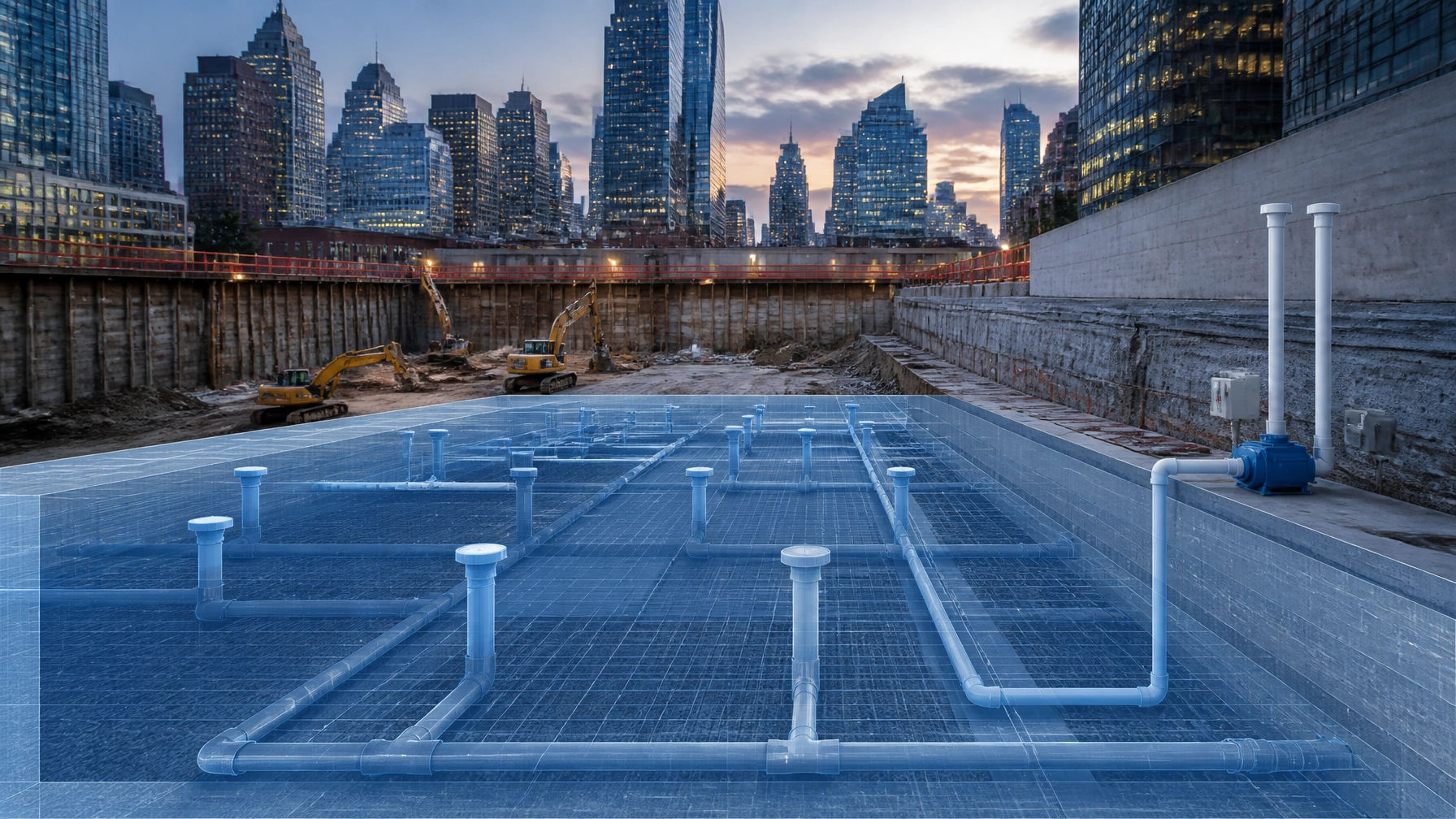
If you’re developing in the New York/New Jersey metro area, you already know that what’s under the slab is just as important as what’s going up on top. But for many developers, vapor intrusion mitigation in NYC is treated like a late-stage tax: a regulatory box to check so the lender stays happy.
That’s a mistake.
Vapor intrusion (VI): the migration of volatile organic compounds (VOCs) from contaminated soil or groundwater into an overlying building: isn’t just an environmental hurdle. It’s a structural liability that can stall a closing, trigger an Immediate Environmental Concern (IEC) with the NJDEP, or land your project in a permanent "E-designation" limbo with the NYC OER.
At Envicon Group, we don’t just deliver a report telling you that you have a problem. We design the path out of it. Whether you are dealing with a complex sub-slab depressurization system design for a high-rise or navigating the latest NJDEP vapor intrusion technical guidance, you need engineering that protects the asset, not just the building envelope.
The Physics of the Problem: Why "Radon Style" Systems Fail
Most big-box consulting firms treat VI mitigation like a beefed-up radon system. They throw some perforated pipe in a gravel bed, hook up a fan, and hope for the best.
But urban sites in Hudson County or Brooklyn aren't suburban basements. You’re dealing with high water tables, varying soil strata (from Manhattan schist to historic fill), and tight property lines. A "cookie-cutter" design usually leads to one of two things: a system that doesn’t actually pull a vacuum across the entire slab, or a system that’s so over-engineered it eats your O&M budget alive for the next thirty years.
Effective sub-slab depressurization system design starts with the physics of the site. We look at:
- Pressure Field Extension (PFE) Testing: We don’t guess. We perform diagnostic testing to see exactly how much air moves under your specific slab.
- Slab Geometry: Grade beams, interior footings, and elevator pits aren’t just structural elements; they are barriers to airflow that need dedicated suction points.
- Contaminant Load: Are we dealing with a legacy dry cleaner (PCE/TCE) or a former gas station (BTEX)? The chemistry dictates the fan specs and the discharge requirements.
Navigating the Regulatory Minefield: NYC OER vs. NJDEP
The technical requirements for a vapor intrusion mitigation system (VIMS) vary wildly depending on which side of the Hudson you’re on.
In New York City:
If your site has an E-Designation for hazardous materials, the NYC Office of Environmental Remediation (OER) is your primary gatekeeper. You’ll need a Remedial Investigation Report (RIR) followed by a Remedial Action Work Plan (RAWP) that clearly outlines your VI mitigation strategy.
- Point of Difference: Large firms often get stuck in a "comment loop" with OER reviewers. Because we sit at the table with OER daily, we design systems that align with their specific expectations for vapor barriers and active SSDS from the jump.
In New Jersey:
The NJDEP LSRP (Licensed Site Remediation Professional) program places the burden of "Technical Impracticability" or "Remedial Action" squarely on the consultant’s shoulders. If your site is classified as a Vapor Concern (VC) or, worse, an Immediate Environmental Concern (IEC), the clock starts ticking. You have strict regulatory timeframes to mitigate the risk and notify occupants.
The Tech Stack: Transparency over "Black Box" Engineering
One of the biggest frustrations for developers is the "black box" of environmental consulting. You pay for a system, it gets installed, and then you get a PDF report three months later telling you it's working.
We’ve changed the dynamic. At Envicon, we integrate proprietary technology and real-time monitoring into our remedial design and implementation oversight.
- Remote Telemetry: Our systems can be equipped with sensors that monitor vacuum pressure and fan status 24/7.
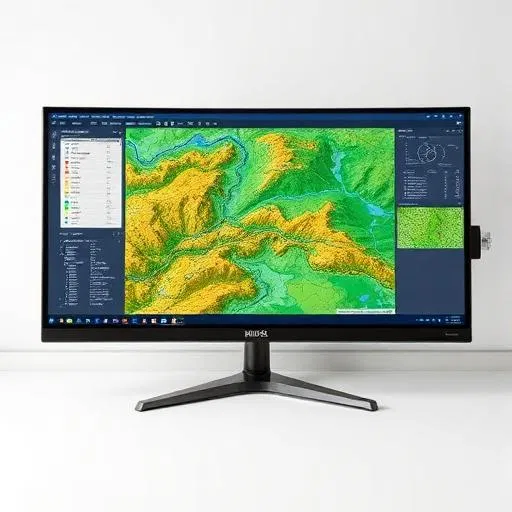
- Real-Time Dashboards: Our clients get access to project reporting dashboards. Instead of waiting for a quarterly inspection report, you can see the health of your vapor intrusion mitigation NYC system on your phone.
- Data-Driven O&M: We use this data to optimize fan speeds, reducing energy costs and extending the life of the mechanical components.

Managing the Bottom Line: Vapor Intrusion Mitigation Costs
Let’s talk numbers. The cost of a VI system isn't just the PVC pipe and the fan. It’s the long-term remedial action permit (RAP) fees, the annual certifications, and the potential impact on property value.
A poorly designed SSDS can cost a developer hundreds of thousands in "re-mobilization" costs if the initial system fails its post-construction commissioning. We focus on precision and urgency. By getting the design right the first time: verified through rigorous PFE testing: we ensure your site gets its Response Action Outcome (RAO) or Notice of Satisfaction without the typical big-firm "change order" creep.
The Envicon Difference: We Don't Just Sell Reports
When you hire a national firm, you’re often paying for a partner's signature and a junior staffer's field notes. At Envicon, you’re getting hands-on leadership from professionals who have been navigating the NY/NJ landscape for 20 years.
We understand that your goal isn't just to "mitigate vapor." Your goal is to build, lease, and sell. Our service offerings, from Phase I ESAs to complex civil engineering, are all geared toward that single objective: clearing the path.
Key Takeaways for Developers:
- Early Integration: Don't wait until the foundation is poured to think about your SSDS. Integrate VI mitigation into your initial civil and structural plans to avoid architectural rework.
- Demand Diagnostics: If your consultant isn't performing sub-slab pressure field extension testing, they are guessing with your money.
- Focus on Outcomes: A report that "identifies a problem" is a liability. An engineering plan that "resolves a risk" is an asset.
Vapor intrusion doesn't have to be the thing that stalls your project. With the right technical approach and a firm that understands the local regulatory reviewers by name, it becomes just another managed step in the development process.
Ready to clear the path for your next project? At Envicon Group, we don’t just deliver reports: we deliver outcomes. Contact us today to discuss your site’s specific challenges.
Leave a Reply