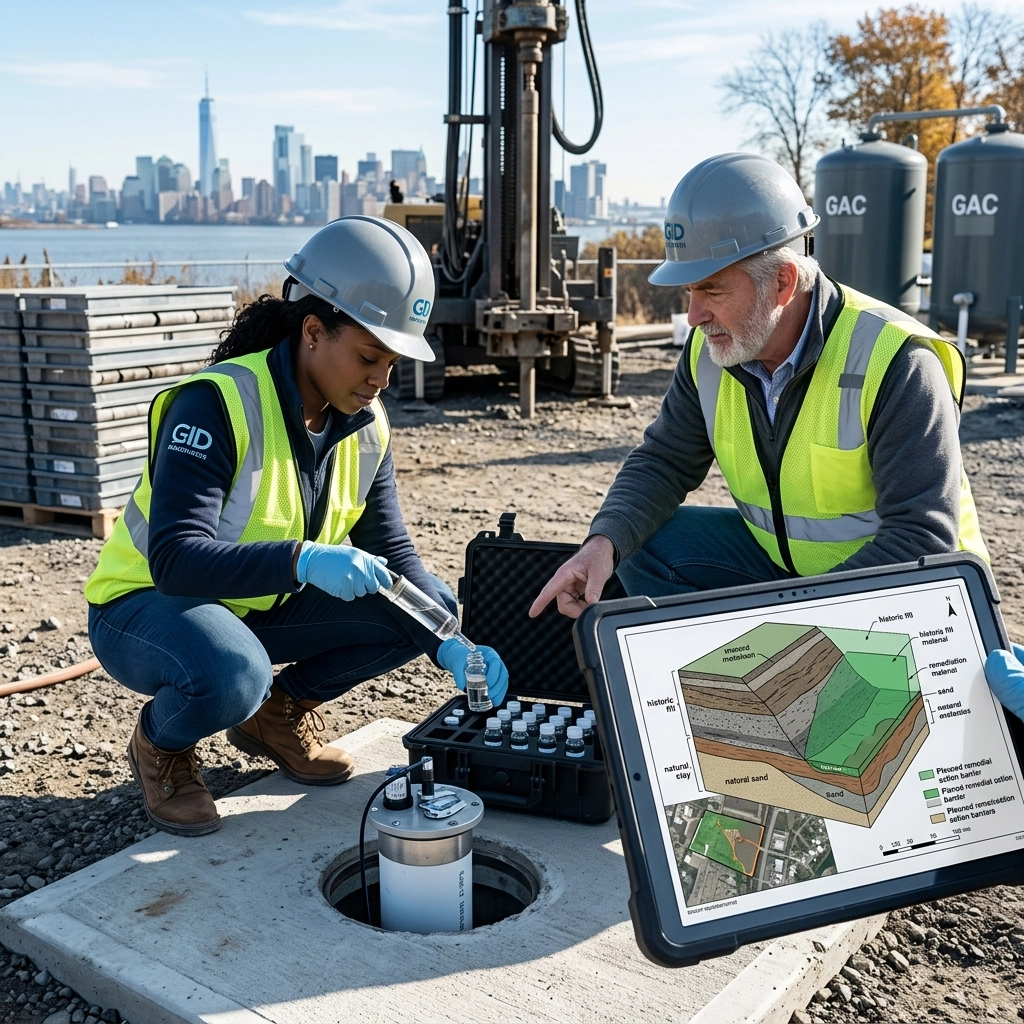
It’s 7:00 AM on a Tuesday in North Jersey. The coffee in your truck’s cup holder is still too hot to drink, and the excavator is already idling. You’re looking at a trench that just turned up a layer of ash, broken brick, and some dark, gritty soil that definitely wasn't in the original site plan.
If you’ve been developing in New Jersey for more than five minutes, you know what that is: historic fill. And if you’re working with a traditional big-box environmental firm, you probably just felt your stomach drop. You’re already calculating the weeks of delays, the "additional characterization" fees, and the possibility of your lender pulling the plug because your Phase I just turned into a nightmare.
But here’s the truth: NJDEP historic fill regulations don't have to stall your project.
At Envicon Group, we see historic fill for what it is: a manageable site condition, not a terminal diagnosis. While other firms are busy drafting 300-page reports that hide behind "coulds" and "mights," we’re focused on the cleared path to your Certificate of Occupancy.

The Big-Box Problem: Reports vs. Results
Let’s talk about the "Consultant Trap." You hire a national firm because they have a fancy logo and 10,000 employees. You meet a senior partner at the pitch, and then you never see them again. Your project gets handed off to a junior staffer who has never stood on a silt-covered site at dawn.
When they find historic fill, their default setting is "defensive." They write reports designed to protect their own liability, not your bottom line. They recommend endless rounds of sampling because they don't have the guts or the regional experience to make a call.
At Envicon, we don’t sell reports. We sell cleared paths. We’ve spent 20 years in the trenches (literally) dealing with the NJDEP. We know the reviewers. We know the guidance. And we know that for a residential developer, time isn't just money: it’s everything.
What Actually is NJDEP Historic Fill?
Before we get into the "how-to," let’s clear up the "what." According to the NJDEP Technical Guidance, historic fill is non-indigenous material: usually a mix of soil, ash, cinders, and construction debris: that was used to raise the elevation of a site before modern regulations existed.
In places like Jersey City, Newark, or Hoboken, almost everything is sitting on historic fill. It’s the rule, not the exception. The NJDEP assumes this stuff is contaminated with Polycyclic Aromatic Hydrocarbons (PAHs) and heavy metals because of where it came from (coal ash, industrial waste, etc.).
The problem isn't the dirt itself; it’s how your consultant handles the NJDEP historic fill guidance for residential developers.

Why Projects Stall (And How We Keep Them Moving)
Projects usually stall for three reasons: slow turnarounds, over-investigation, and a lack of regulatory confidence.
1. The 72-Hour Turnaround
In the world of residential development, you often have a 30-day or 60-day due diligence window. If your consultant takes three weeks just to get a crew on-site to look at the soil, you’re already dead in the water.
Envicon operates on a different clock. We offer a 72-hour turnaround on critical assessments when the stakes are high. We don't wait for a committee meeting to decide our next move. We’re field-first. If we find fill, we identify the limits and the implications immediately so you can make an informed decision before the hard money goes down.
2. Option A vs. Option B: The Strategic Choice
The NJDEP gives you two ways to handle historic fill.
- Option A: Assume it’s contaminated and move straight to capping.
- Option B: Sample it to death to prove it’s "clean" (it almost never is).
Big firms love Option B because it allows them to bill for hundreds of lab samples and weeks of data analysis. We prefer the strategic approach. Why spend $20,000 on lab fees to prove what we already know? We’d rather help you design an engineering control: like your building footprint, parking lot, or two feet of clean soil: that satisfies the NJDEP and keeps your budget intact.
3. Hands-On Leadership
When an issue arises on an Envicon site, you aren't waiting for a "Project Manager" to call you back from a satellite office in another state. You’re talking to our leadership. Our PEs and LSRPs are regulator-facing. We sit at the table with the NJDEP and advocate for your project, using 20 years of built-up trust to get common-sense solutions approved.

The "Cleared Path" to Residential Success
For a residential project, the end goal is a Response Action Outcome (RAO). This is the "all-clear" from your LSRP that says the site is safe for its intended use.
If you have historic fill, getting that RAO usually involves two things:
- Engineering Controls: A "cap" (pavement, building, or clean soil) that prevents people from touching the fill.
- Institutional Controls: A "Deed Notice" that tells future owners the fill is there and the cap needs to be maintained.
Some consultants act like a Deed Notice is a deal-breaker. It’s not. It’s a standard tool in the NJ developer’s toolbox. We work with your legal team to ensure the Deed Notice is drafted correctly and doesn't interfere with your financing or future sales.
"We don’t just deliver services; we help transform underused and contaminated properties into thriving assets. Collaboration isn't a buzzword for us: it’s how we get your project to the finish line." : Jason Pancoast, CEO
Avoiding the Change-Order Merry-Go-Round
The big firms are notorious for low-balling the initial proposal and then hitting you with a barrage of change orders the second things get "complicated."
At Envicon, we pride ourselves on transparent pricing and zero fluff. We account for the complexities of NJDEP historic fill guidance from day one. We’d rather give you the hard truth about your soil management costs upfront than surprise you with a $50,000 bill when you're 50% through construction.

Soil Management: The Hidden Profit Killer
One of the biggest ways a historic fill project stalls is through poor soil management. If you don't have a plan for where every cubic yard of dirt is going, you’re going to end up with stockpiles that shut down your site.
Envicon provides comprehensive soil and groundwater management. We don't just tell you the soil is contaminated; we help you find the most cost-effective disposal or reuse facility and coordinate the logistics. We manage the "fill" so you can manage the "build."
Summary: Take Control of Your Site
Historic fill is a reality of development in the New York and New Jersey markets. You can’t avoid it, but you can choose how you respond to it.
- Don't accept "slow" as the status quo. Demand the 72-hour turnaround.
- Don't pay for "bloated" reports. Demand a clear, actionable strategy.
- Don't settle for a "junior" team. Demand hands-on, expert leadership.
At Envicon Group, we remove the obstacles between you and a buildable site. We don't just identify problems; we resolve them with precision, urgency, and integrity.
Whether you’re in the middle of due diligence or your excavator just hit a layer of ash, give us a call. Let’s get your project back on track and moving toward that RAO.
Key Takeaways for Developers:
- Identify Early: Use a Preliminary Assessment (PA) to spot fill potential before you buy.
- Think Like a Contractor: Design your building and site layout to serve as your "cap" to save on remediation costs.
- Choose the Right Partner: You need an LSRP who understands the "Cleared Path" philosophy, not just the rulebook.
- Manage the Paperwork: Ensure your Deed Notices and Remedial Action Permits are handled early to avoid delays at closing.
Ready to clear the path for your next project? Contact Envicon Group today and experience the difference that 20 years of local expertise can make.
Leave a Reply