You’ve seen the proposal. It looks clean, the price is "competitive," and the firm has a logo you recognize from every office park in America. You sign the contract for a Phase I Environmental Site Assessment (ESA), thinking you’ve checked the box for your lender and your due diligence period is safe.
Then, the "scope creep" starts.
First, it’s a delay because the junior staffer assigned to your site couldn't find the historical Sanborn maps. Then, it’s a "preliminary finding" of a potential Recognized Environmental Condition (REC) that: conveniently: requires a $15,000 Phase II investigation before the Phase I report is even drafted. Suddenly, that low-bid Phase I is the most expensive document in your closing file, not because of the data, but because of the fluff.
At Envicon Group, we see this every day in the New York and New Jersey markets. We call it "Big Box Pain." It’s the result of national firms treating environmental due diligence like a commodity while billing it like a luxury.
The "110-Hour Gap": Where Your Money Goes
Industry data shows a massive discrepancy in how Phase I ESAs are billed versus how much work they actually require. A standard, high-quality Phase I ESA: following the ASTM E1527-21 standard: should take approximately 15 to 20 billable hours of professional time. This includes the records review, the site visit, the interviews, and the report writing.
Yet, many national firms show a "utilization gap" where projects are scoped or billed at nearly double that. Why? Because you aren't paying for the expert's time; you're paying for the firm's overhead, the regional VP’s bonus, and the administrative bloat of a company with 10,000 employees.
Worse, that extra time isn't spent digging deeper into your site’s history. It’s spent on "defensive writing." Big firms write reports to protect themselves from liability, not to help you close a deal. They use vague language to leave the door open for Phase II upselling, effectively holding your project hostage until you agree to more sampling.
Junior Staff vs. Licensed Pros
When you hire a big-box firm, the person who "pitches" you is rarely the person who "performs" for you. You get the Senior Partner at the 11:00 AM Zoom call, but at 7:00 AM on Monday morning, it’s a junior staffer with six months of experience standing on your site.
If that staffer doesn't know how to identify a decommissioned heating oil fill pipe or doesn't understand the nuance of New Jersey’s Linear Construction Program, they’re going to flag everything as a risk. They check boxes. They don't solve problems.
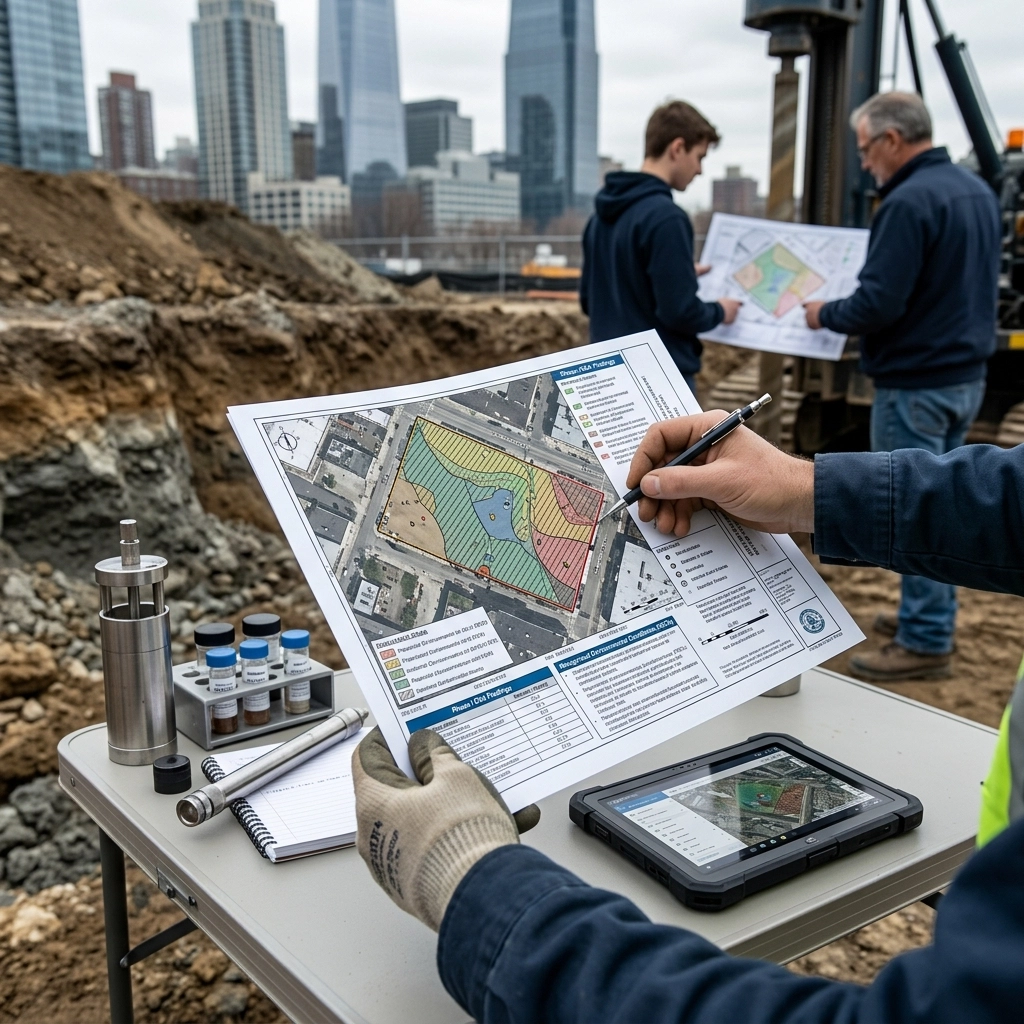
Envicon takes the opposite approach. We are PE-led and field-first. When we walk a site in Jersey City or Brooklyn, we’re looking for a path to "No Further Action" or a "Response Action Outcome (RAO)," not a reason to bill you for more soil borings. We know the regulators at the NJ DEP and the NYC OER by name. We know what they’re looking for, which means we don’t have to guess: and you don’t have to pay for our learning curve.

Caption: Technical visual: A GeoProbe drill rig extracting a 5-foot soil core sample in a clear plastic liner. Professional-grade site characterization requires seeing the stratigraphy firsthand, not just reading old reports.
The Scope Creep Playbook: Three Red Flags
If you’re seeing these three things, you’re being played by the big-box playbook:
- The "Premature" Phase II Recommendation: If a firm suggests a Phase II before they’ve even finished the historical records review, they’re looking at your project as a revenue stream, not a site to be cleared.
- The 180-Day Refresh Game: Under CERCLA, a Phase I has a 180-day shelf life. Big firms often drag their feet on the final report, forcing you into a "refresh" fee just as you're hitting the closing table.
- Vague Proposals: If the scope doesn't explicitly state who is doing the site visit and what specific local databases are being searched, expect change orders.
The Envicon Answer: Precision and 72-Hour Turnarounds
Time is the one thing a developer can’t buy back. Every week your Phase I sits in a corporate queue is a week of carry costs, lender impatience, and market volatility.
We’ve optimized our workflow to provide a 72-hour turnaround on initial site summaries when needed. We don't wait three weeks to tell you there’s a problem. We tell you the day of the site visit, and we provide a solution in the same breath.
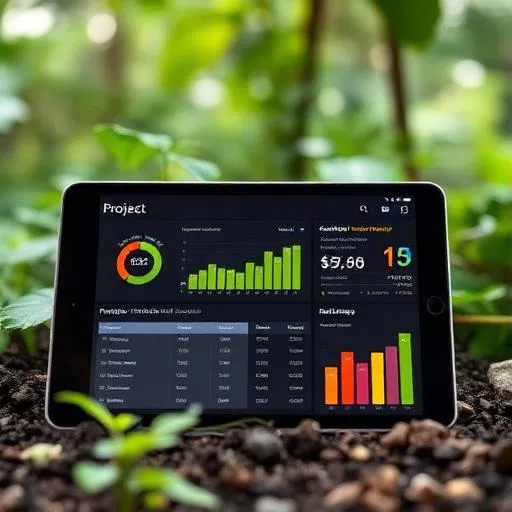
We use integrated technology: like the field tablets shown above: to sync site data directly to our engineers. This isn't just about being "high-tech"; it’s about removing the lag between the field and the final report. While a big firm is still waiting for their junior staffer to upload photos to a central server in another state, our PEs are already reviewing the findings and drafting the executive summary.
Real Value vs. Defensive Reporting
A report that says "There might be a problem, we recommend $20,000 in testing" is a defensive report. It adds zero value to your project.
An Envicon report says: "We identified a former UST location; however, based on the 1994 closure letter we recovered from the municipal archives and our visual inspection of the slab, it does not constitute a REC under ASTM E1527-21. No further action is required for financing."
That is the difference between a consultant who is a partner and a consultant who is a vendor. One clears the path; the other builds a fence.
Why Attorneys and Developers Are Switching
The legal and development communities in NY and NJ are tired of the "Big Box" runaround. They need certainty. They need to know that when they hand a report to a lender, it won't be kicked back for "lack of regional specificity."
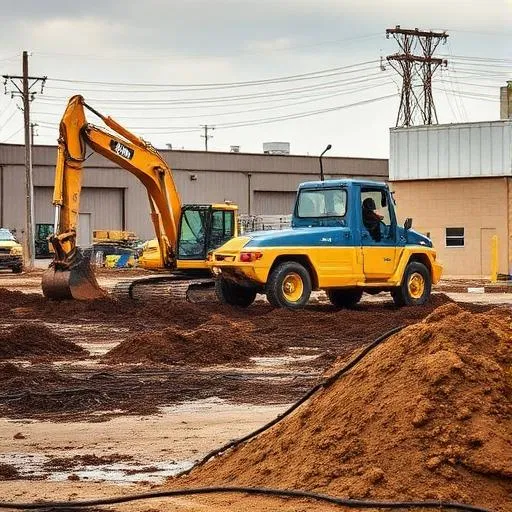
Envicon brings 20 years of direct agency relationships. We don’t just work in these jurisdictions; we live in them. Whether it’s navigating the NYC Voluntary Cleanup Program (VCP) or handling complex soil management in the Meadowlands, we provide the technical confidence that only comes from thousands of hours on-site.
Summary: Stop Paying for Overhead
If you are tired of paying for reports that create more problems than they solve, it’s time to change your approach.
- Demand Senior-Level Site Visits: Ensure a licensed pro: not an intern: is the one actually looking at your dirt.
- Insist on Fixed-Price Scopes: No "administrative" surcharges or vague "consultation" fees.
- Look for Local Fluency: Ensure your consultant knows the specific requirements of the NJ DEP or NYC OER.
- Prioritize Speed: In this market, a 30-day Phase I is a dead project.
At Envicon Group, we don’t sell reports. We sell cleared paths. We remove the obstacles between you and a buildable site, and we do it with the urgency your project deserves.
Ready to see the difference a field-first firm makes?

Caption: An Envicon Professional Engineer in a high-vis vest reviewing a detailed site map on a clipboard at 7:00 AM. We start our day when your project starts, not when the office opens.
The Bottom Line
Don't let "scope creep" eat your project's margin. Switch to a firm that values your timeline as much as you do. Contact Envicon Group today for a Phase I ESA that actually moves the needle.

Leave a Reply