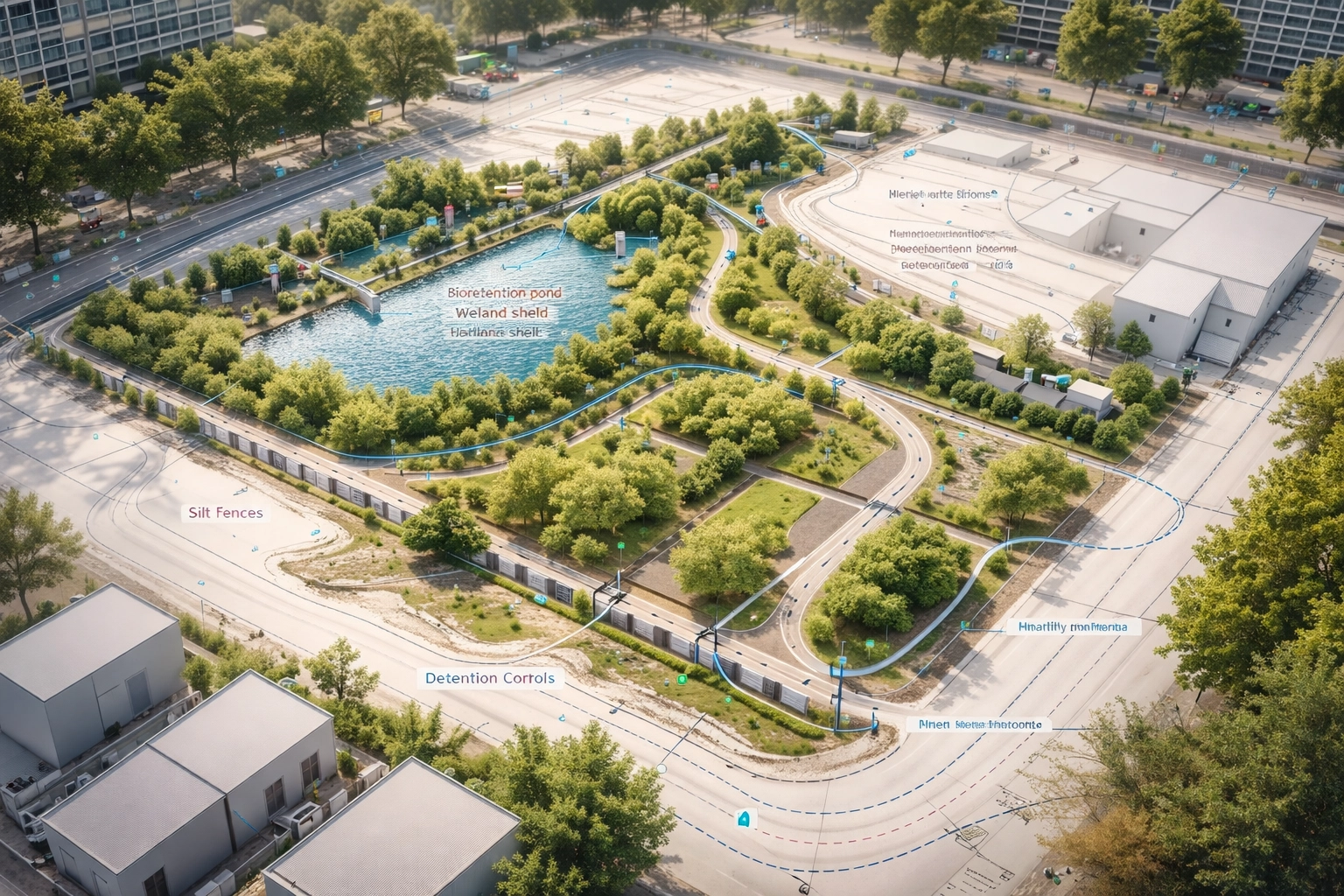
Here's a scenario we see all the time: A developer gets their Phase I ESA back, reviews the civil site plan, and immediately starts looking for line items to slash. The environmental consultant gets siloed. The civil engineer works in isolation. And suddenly, "saving money" means cutting corners that come back to haunt the project six months later.
That's not value engineering. That's cost-cutting dressed up in a hard hat.
The difference between these two approaches can mean hundreds of thousands of dollars on a complex site development, and we're not exaggerating. When civil and environmental engineering work together from day one, the savings compound in ways that isolated cost-cutting simply cannot achieve.
Value Engineering Is Not a Fancy Term for "Cheaper"
Let's clear this up immediately: value engineering is a systematic methodology that improves project outcomes while reducing costs. Cost-cutting just reduces costs, often at the expense of quality, schedule, or regulatory compliance.
When you hire separate firms for civil design and environmental assessment, you're essentially paying two teams to solve problems that are deeply interconnected. Your geotechnical report informs your foundation design. Your environmental investigation dictates your soil management plan. Your stormwater design affects your remediation strategy. These aren't parallel tracks, they're woven together.
"True value engineering maintains or improves quality while reducing expenses. It's about rethinking methods and materials, not compromising performance."
Integrated engineering design brings civil and environmental experts to the same table from project inception. We've seen this collaborative approach identify solutions that neither discipline would discover working alone, and those solutions consistently outperform the "let's just cut the budget" alternative.
Why Integration Beats Isolation Every Time
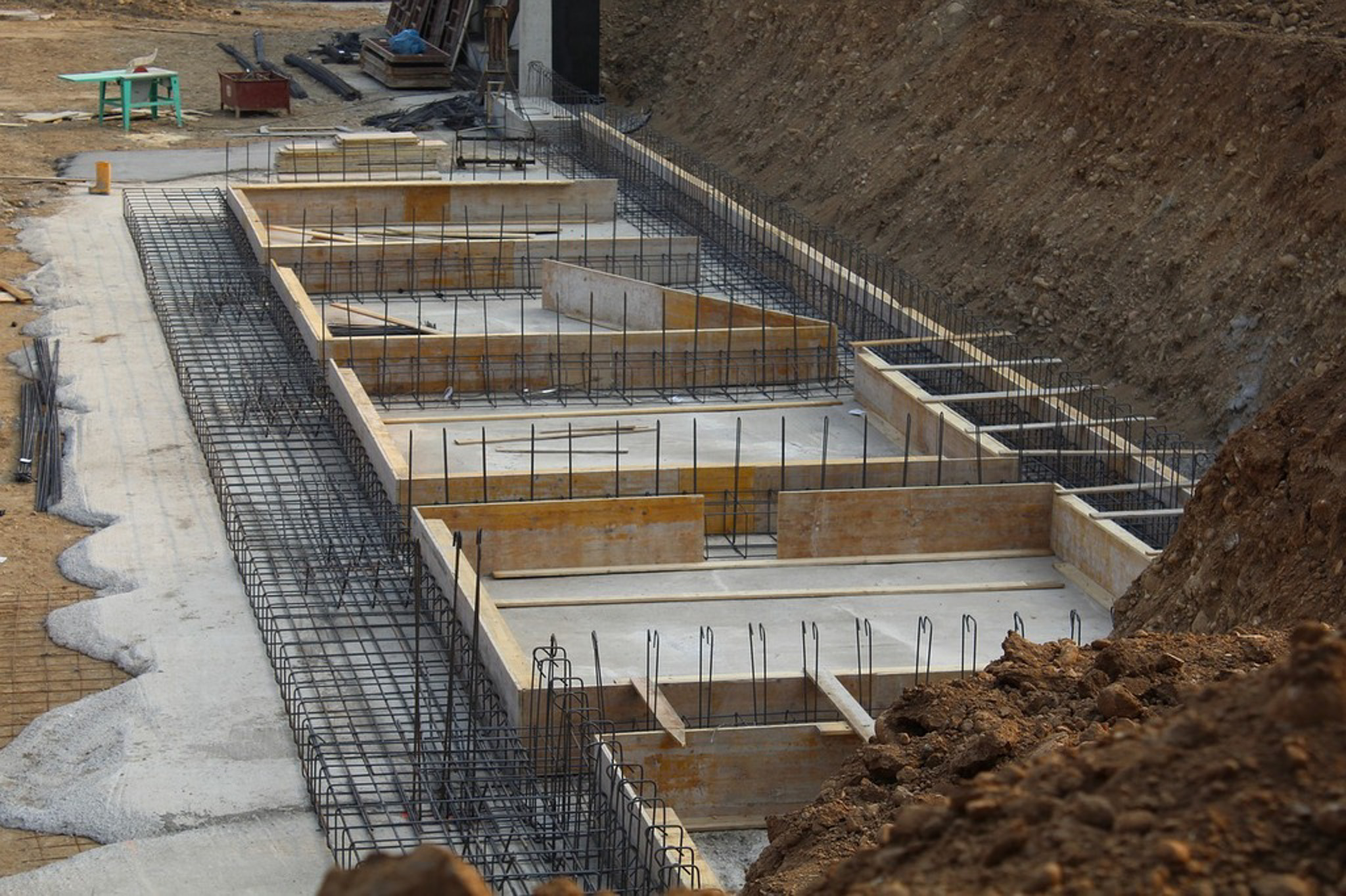
Consider a typical infill development in the Bronx or Hudson County. You've got a former industrial site with known contamination, tight lot lines, challenging subsurface conditions, and aggressive permitting timelines. The traditional approach looks like this:
- Hire an environmental consultant for the Phase I and Phase II ESA
- Hire a civil engineer for the site plan
- Hire a geotechnical firm for the borings
- Watch all three submit reports that don't talk to each other
- Discover conflicts during construction
- Pay change orders to fix them
The integrated approach? One team coordinates the subsurface investigation to serve environmental, geotechnical, and civil design needs simultaneously. The boring locations inform both contamination delineation and foundation design. The remediation strategy gets built into the earthwork plan. The stormwater management system accounts for contaminated soil handling requirements.
This isn't theoretical, it's how we approach every project at Envicon Strategic Solutions. When your environmental assessment team is coordinating directly with your civil design team, you eliminate the costly surprises that plague siloed projects.
The Numbers Don't Lie: Quantifiable Savings
Skeptical? Let's talk data.
Research on integrated design approaches shows that incorporating coordinated engineering strategies can deliver:
- 37% reduction in annual operating costs through smarter system sizing
- 2% reduction in total construction costs through material and process efficiency
- 8-10 year payback periods on upfront investments that cost-cutting would eliminate
One case study found that integrated sustainable features reduced first costs by up to $2.60 per square foot. On a 50,000 square foot development, that's $130,000 in savings, before you even factor in the long-term operational benefits.
But here's where it gets really interesting for developers: integrated civil-environmental design doesn't just save money on construction. It saves money on:
- Permitting delays (coordinated submittals move faster through regulatory review)
- Change orders (conflicts get resolved on paper, not in the field)
- Remediation costs (soil management plans that account for civil earthwork reduce disposal volumes)
- Carrying costs (faster schedules mean less time paying interest)
When we work with clients on complex sites, like our work on the NJ Turnpike or Pulaski Skyway projects, this integrated approach isn't optional. It's the only way to deliver on budget and on schedule.
How Environmental Integration Actually Reduces Costs
Let's get specific about where the savings come from when you integrate environmental considerations into civil design from the start.
Smarter Soil Management
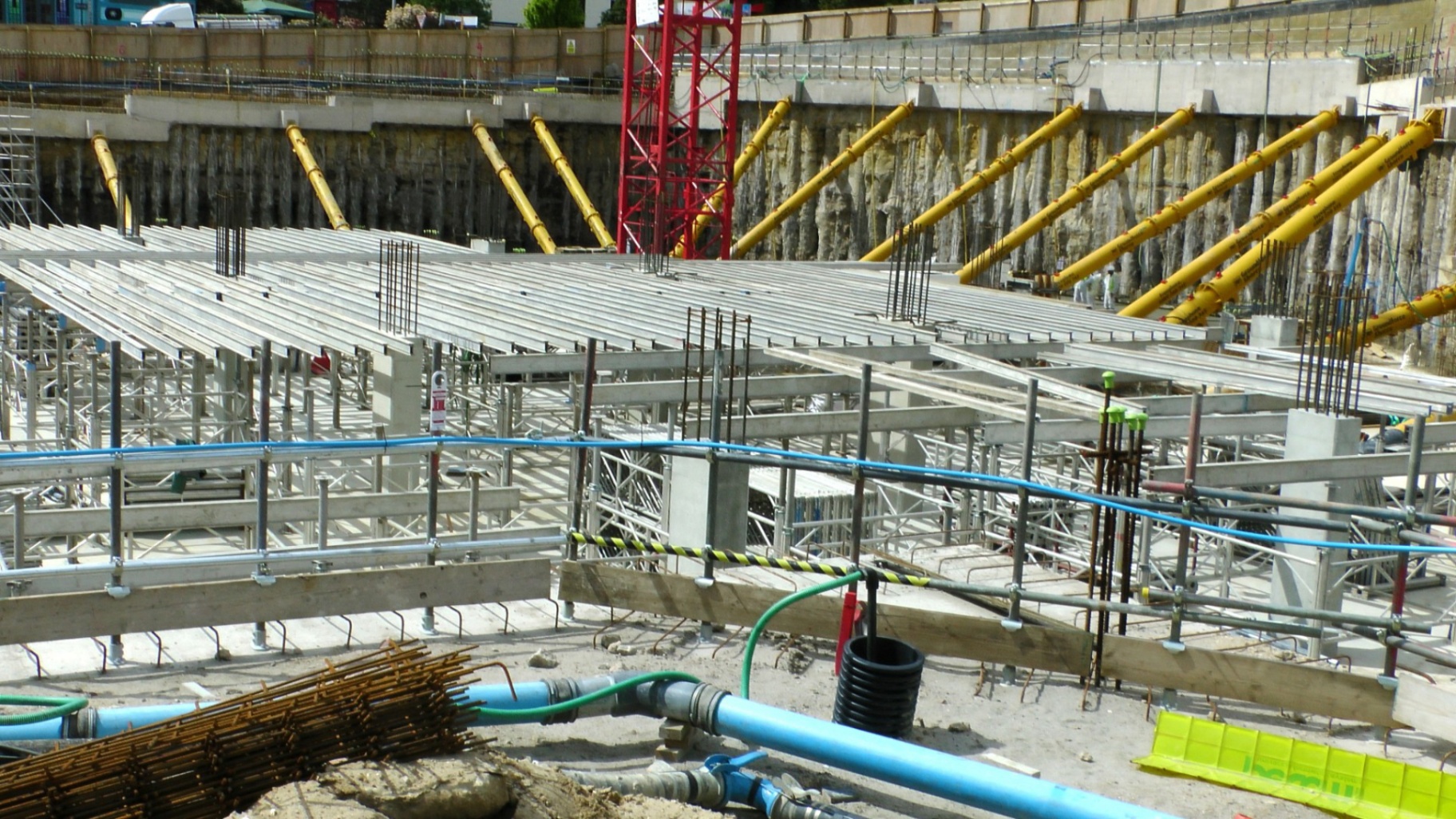
On a contaminated site, your civil earthwork plan and your remediation plan are essentially the same document, or they should be. When they're developed separately, you end up with excavation sequences that don't account for soil segregation requirements, or grading plans that mobilize contaminated material unnecessarily.
Integrated design means your cut-and-fill calculations factor in contamination boundaries. Stockpile locations get planned around soil classifications. Disposal volumes get minimized because clean and impacted material never get mixed. We've seen this approach alone save clients 20-30% on soil disposal costs.
Right-Sized Infrastructure
When environmental constraints inform civil design early, you can optimize your infrastructure systems. Stormwater management features can be designed to avoid contaminated zones. Utility corridors can be routed to minimize exposure to impacted groundwater. Foundation systems can be selected based on actual subsurface conditions rather than conservative assumptions.
"Involving all stakeholders early allows construction waste recycling, eliminates disposal costs, and identifies space-efficient designs that meet all objectives at lower total cost."
Coordinated Permitting
In New York and New Jersey, your environmental permits and your civil permits are reviewed by different agencies, but they affect each other constantly. An integrated approach to compliance and permitting means your SWPPP accounts for your soil management plan. Your NJDEP submissions align with your municipal site plan approval. Your NYC OER deliverables coordinate with your DOB filings.
This coordination doesn't just reduce consultant hours. It dramatically reduces the back-and-forth that causes permitting delays, and on a project with significant carrying costs, that timeline compression is worth real money.
Long-Term Value vs. Short-Term Cuts
Here's the uncomfortable truth about traditional cost-cutting: it usually just shifts costs from today to tomorrow.
Skip the detailed subsurface investigation? Pay for it in change orders when you hit unexpected conditions. Eliminate the environmental oversight during construction? Pay for it when the NJDEP finds a release you should have documented. Separate your civil and environmental teams to "shop for the best price"? Pay for it in coordination failures and schedule delays.
Integrated civil-environmental design takes a lifecycle view. Yes, initial coordination costs may be marginally higher. But the total project cost: including construction, permitting, schedule, and long-term operational considerations: is consistently lower.
This is especially true for brownfield redevelopments, where the interaction between contamination and civil design is constant. Our work on projects like Jerome Ave and SW Brooklyn MTS demonstrates how integrated approaches turn challenging sites into successful developments.
What This Means for Your Next Project
If you're a developer, attorney, or lender evaluating a complex site in the NY/NJ metro area, here's your takeaway:
- Ask your consultants how they coordinate. If your environmental firm and civil engineer have never met, you're setting up for costly surprises.
- Demand integrated investigation programs. Every boring should serve multiple purposes. Every site visit should advance multiple deliverables.
- Evaluate total project cost, not just line-item fees. The cheapest Phase I ESA isn't valuable if it misses issues that blow up your schedule.
- Build value engineering into your approach from day one. It's not something you do at the end to cut costs: it's a methodology that shapes the entire project.
The developers who consistently deliver successful projects in challenging markets understand this. They're not looking for the lowest bidder on each discipline. They're looking for integrated teams that solve problems before they become expensive.
That's the difference between cost-cutting and value engineering. And in a market where margins are tight and timelines are aggressive, that difference is your competitive advantage.
Ready to see how integrated civil-environmental design can improve your next project's bottom line? Explore our services or reach out to discuss your specific site challenges.
Leave a Reply