
Here's the thing nobody talks about at preconstruction meetings: the biggest line item you're overpaying on isn't materials or labor, it's coordination.
When you hire a civil engineer to handle your grading and utilities, then bring in a separate environmental consultant for your Phase I ESA and soil testing, you've just added 15–20% to your site prep budget. Not because either firm is overcharging you. But because they're not talking to each other until it's too late.
We've watched this play out on hundreds of projects across NY and NJ. Two smart teams, working hard, delivering quality work, and absolutely bleeding your budget through redundant mobilizations, conflicting recommendations, and rework that could've been avoided with a single phone call in week one.
Let's break down exactly where that money disappears.
The "Two Firms, Two Plans" Problem
Most developers follow the same playbook: Get your Phase I ESA done first (environmental team), then hand it off to your civil engineer who designs around whatever constraints the environmental report flagged. Sounds logical, right?
Except the civil team doesn't see the soil boring logs until week three. The environmental team doesn't know about the proposed cut-and-fill plan until the drawings are already 60% complete. And nobody realizes there's a conflict until the contractor mobilizes and discovers contaminated soil exactly where the civil plans called for a three-foot excavation.
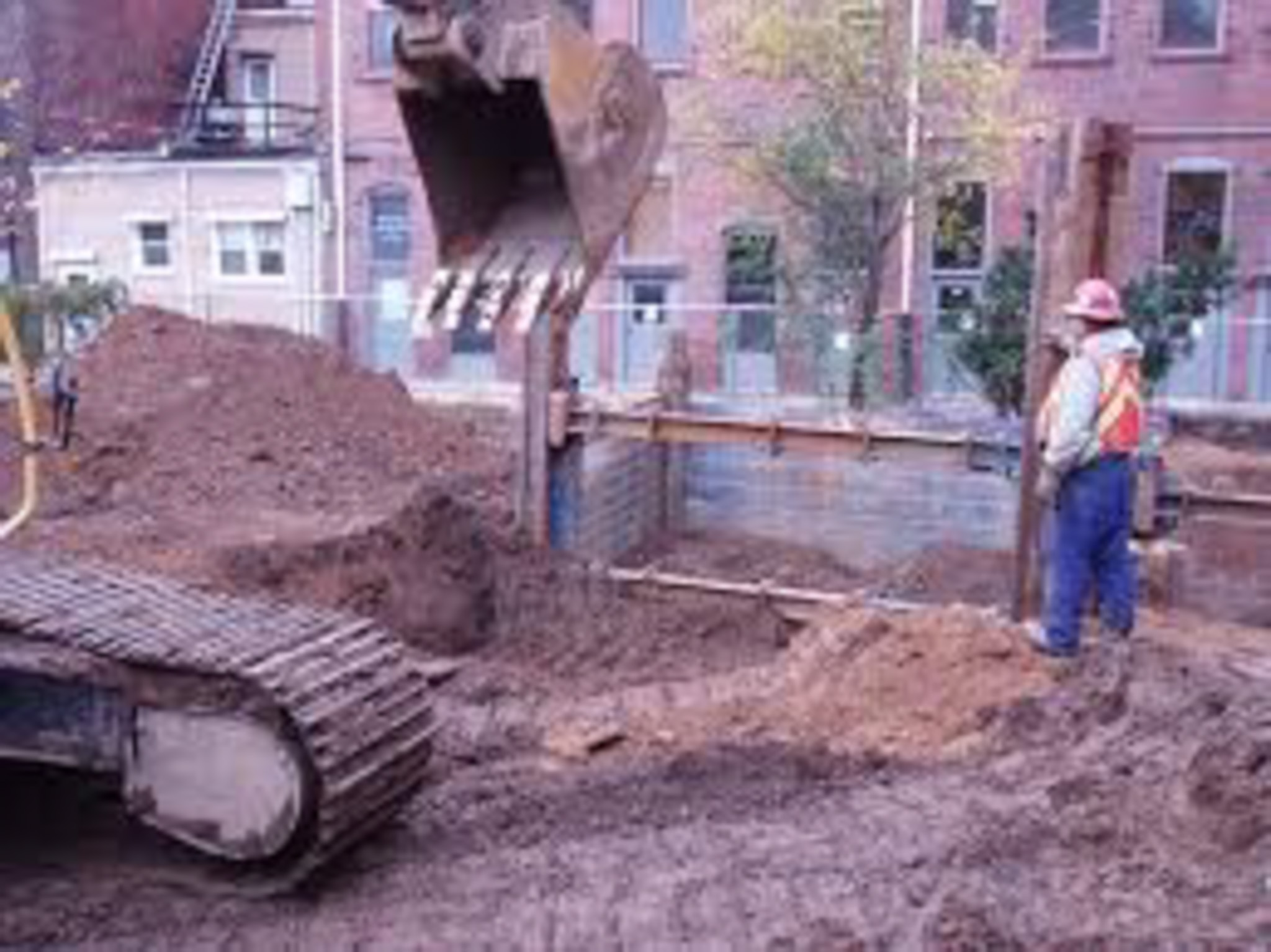
Now you're paying for change orders, schedule delays, and emergency soil characterization, all because two teams designed in sequence instead of in coordination.
Friction Point #1: Mismatched Site Plans
Your civil engineer needs to balance earthwork. Cut from the high spots, fill the low areas, minimize export costs. That's Civil Engineering 101.
Your environmental consultant is thinking about something completely different: Where's the contamination? Where can we safely reuse soil? What needs to go to a landfill versus a clean fill facility?
When these two plans don't align, you get:
- Excavation in clean areas while contaminated soils stay untouched (adding future liability)
- Mixing clean and impacted soils during grading, turning 500 tons of reusable material into 2,000 tons of disposal waste
- Conflicts with remedial action workplans that require the civil team to redesign drainage or foundations mid-project
We've seen projects in Hudson County where the civil team designed a beautiful stormwater detention basin, right on top of a dissolved plume that required vapor mitigation. The fix? Relocate the basin, redesign the drainage network, and add two months to the schedule.
Cost impact: 8–12% of site prep budget in rework and change orders.
Friction Point #2: Double Sampling (And Double Mobilization)
Here's a scenario that plays out almost weekly in northern NJ:
Your environmental team drills four soil borings for the Phase I ESA. Clean report, no recognized environmental conditions. Great.
Two months later, your civil geotechnical engineer comes back to drill six borings for foundation design and bearing capacity analysis.
You just paid for two separate mobilizations, two lab budgets, and two sets of subcontractors: when a single integrated boring program could've done both in one shot.
Even worse: The geotech borings sometimes hit contamination the environmental team missed (because they weren't sampling at foundation depth). Now you're retrofitting environmental testing into a civil investigation, paying rush lab fees, and delaying the project while you figure out what you're dealing with.
Cost impact: 4–7% of site prep budget in redundant fieldwork and lab analysis.
Friction Point #3: Conflicting Soil Reuse Strategies
Let's talk about the most expensive miscommunication in site development: soil disposal.
Your civil team wants to reuse every cubic yard of excavated soil they can. That's how you hit your earthwork balance and avoid $60–$90/ton export fees.
Your environmental team is thinking about contaminant thresholds, NJDEP soil remediation standards, and whether that soil can legally be reused as structural fill under NJAC 7:26E.
When these conversations happen separately, you end up with one of two disasters:
- Over-conservative disposal: The environmental team flags soil as "non-hazardous contaminated" and recommends off-site disposal: even though it could've been engineered for on-site reuse with proper compaction and cover systems.
- Under-conservative reuse: The civil team assumes everything that "looks clean" can be reused, leading to failed NJDEP inspections, stop-work orders, and emergency characterization sampling.
We worked on a Paterson redevelopment project where the developer paid to export 3,200 tons of soil that tested just above residential standards: but well below commercial/industrial thresholds. An integrated team would've designed the site to cap that soil under parking areas. Instead, they paid $240,000 in unnecessary disposal fees.
Cost impact: 5–8% of site prep budget in avoidable soil export and disposal costs.
The 20% Cost Breakdown: Where Your Money Goes
When you add up the friction points, here's what separating civil and environmental design actually costs you:
- Redundant mobilizations and sampling: 4–7%
- Rework and design conflicts: 8–12%
- Inefficient soil management: 5–8%
- Schedule delays and carrying costs: 2–4%
Total cost premium: 19–31% (we're being conservative when we say 20%).
That's not accounting for softer costs like the time your project manager spends playing referee between two firms, or the risk that something gets missed entirely because it fell between the cracks.
The Integration Advantage: How It Actually Works
At Envicon, we've structured our teams to eliminate these friction points entirely. Here's what integrated civil and environmental design looks like in practice:
Week 1: Our environmental and civil engineers sit in the same room during the kickoff. The civil team shares their preliminary grading concept. The environmental team overlays known site history and proposes a boring program that hits both environmental screening depths and geotechnical foundation zones.

Week 3: We drill once. Our borings go deep enough for geotech analysis and include environmental screening at every interval. One mobilization, one set of lab costs, and complete data for both disciplines.
Week 5: The civil team designs the grading plan with environmental constraints baked in from day one. We know exactly where contamination is (if any), what soil can be reused on-site, and what needs to go. The stormwater system is designed around soil permeability data we already collected. The foundation system accounts for any required vapor mitigation.
Result: No surprises. No rework. And a site prep budget that actually matches the estimate.
Real-World Example: The Hoboken Infill Project
We recently worked on a 2.3-acre infill project in Hoboken where the developer initially planned to hire separate civil and environmental teams. We showed them our integrated approach and estimated a $180,000 savings over a 14-month schedule.
The actual savings? $203,000.
Here's what we eliminated:
- One full boring program (saved $28,000)
- Redesign of utilities after discovering a historical UST location (saved $45,000)
- 600 tons of soil export by engineering an on-site consolidation area (saved $54,000)
- Three months of schedule compression by eliminating sequential reviews (saved $76,000 in soft costs)
The developer broke ground four months earlier than originally planned and came in 18% under the original site prep budget.
The Bottom Line
The friction between separate civil and environmental teams isn't anyone's fault. It's a structural problem with how the industry traditionally approaches site development.
But it's costing you real money. And in competitive markets like northern NJ and NYC, that 20% margin is often the difference between a project that pencils and one that doesn't.
The fix isn't complicated: it's about bringing the right expertise into the same room from day one. When your civil engineers and environmental scientists are designing together, reviewing data together, and problem-solving together, the entire project moves faster and costs less.
If you're planning a redevelopment, brownfield conversion, or any project requiring both civil design and environmental due diligence, let's talk about how an integrated approach can save you six figures before you even break ground.
Because in 2026, paying for two separate teams to eventually figure out how to work together isn't value engineering( it's just expensive.)
Leave a Reply